


19th Century Afghan Rug
A 19th century afghan rug brings rich tribal character and deep saturated colour into a room, shaped by nomadic hands.
19th Century Afghan Rug
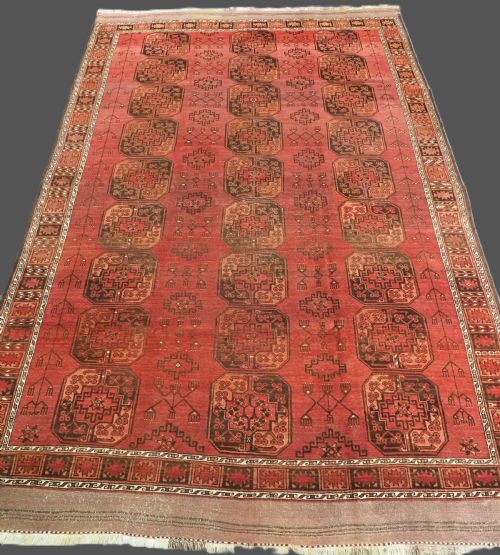
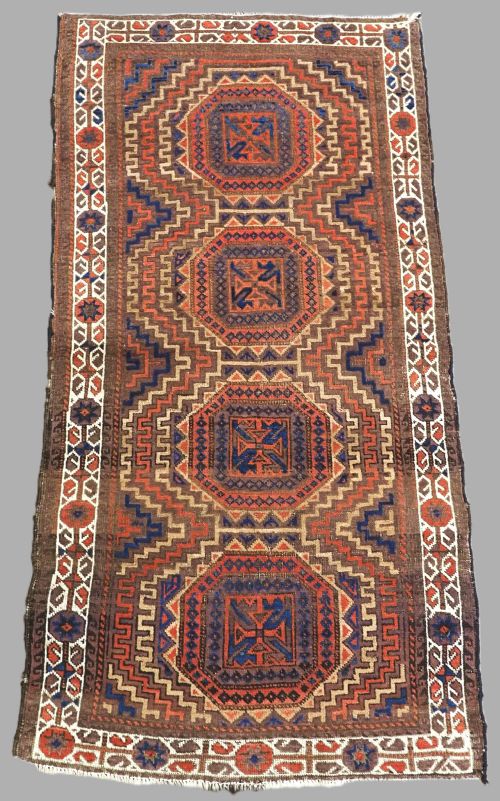
When searching for a 19th century afghan rug, buyers encounter hand-knotted tribal floor coverings originating from western Afghanistan and surrounding regions. The examples seen here span distinct weaving traditions including Ersari Turkmen, Baluch, and Timuri tribal groups.
These pieces primarily manifest as rugs, small main carpets, hall runners, and prayer rugs configured for daily nomadic or village use. The formats range from compact prayer sizes with tree of life motifs to larger main carpets displaying classic guls and geometric repeats.
Most pieces date from the decades between eighteen seventy and nineteen hundred, reflecting nineteenth-century tribal weaving practices. The selection on this page centres on authentic tribal and nomadic expressions rather than later commercial productions.
How they were made
Weavers constructed a 19th century afghan rug using wool pile knotted onto sturdy foundations of wool, goat hair, or horsehair. Camel hair also appears frequently in the pile or ground, providing a natural warmth and variation in texture.
Natural dyes impart the deep rich colours characteristic of these nomadic textiles, ranging from dark blues and reds to warm camel grounds. Artisans spun their wool by hand before dyeing and knotting, ensuring a durable structure designed to withstand generations of floor use.
Materials recorded across the inventory include wool, goat hair, hand-spun wool, camel hair, natural dyes, and horsehair foundations.
What varies in quality
Quality in a 19th century afghan rug rests on the fineness of the knotting, the crispness of tribal designs such as guls or lattice patterns, and the integrity of the foundation. Better pieces retain deep unrubbed pile and precise geometry across motifs like star octagons or tree of life compositions.
The sophistication of the natural dye palette also distinguishes superior examples, where varied tones create depth rather than flat uniformity. Preservation of the original outer borders and selvedges further separates standard domestic weaves from exceptional collector pieces.
The 19th Century Afghan Rug Glossary
- Gul
- A primary octagonal medallion motif repeated across Turkmen and Baluch carpets. These motifs often identify the specific tribal group or clan that made the textile.
- Prayer rug
- A small format rug featuring a mihrab or arch design indicating the direction of prayer. They frequently incorporate tree of life or star motifs.
- Hand-spun wool
- Yarn prepared manually using a drop spindle rather than industrial machinery. This method creates irregular thickness that absorbs natural dyes with rich tonal variation.
- Camel hair
- Natural undyed fibre used in the pile or ground of nomadic rugs. It provides a soft handle and a warm light brown tone.
- Foundation
- The structural framework of a rug comprising warp and weft threads. In these tribal pieces, foundations often incorporate goat hair or horsehair for extra durability.
19th Century Afghan Rug: Frequently Asked Questions
What is an Ersari rug?
An Ersari rug is a tribal weaving produced by the Ersari Turkmen group, typically characterised by large primary guls and geometric field layouts. These main carpets and rugs demonstrate robust construction on wool or goat hair foundations.
They reflect the traditional design vocabulary of Turkmen tribes residing in Central Asia and northern Afghanistan during the nineteenth century.
How do I identify a Baluch rug?
Baluch rugs originate from nomadic and village groups inhabiting the borderlands of western Afghanistan and eastern Iran. They often display deep blue or camel grounds decorated with repeat star patterns, tree of life designs, or Kalam Donneh motifs.
Their format tends to be smaller, encompassing prayer rugs and compact floor coverings with rich, dark colour palettes.
Where were Timuri rugs made?
Timuri rugs come from western Afghanistan, woven by tribes associated with the Timuri confederation. They share stylistic overlaps with Baluch weaving traditions and frequently feature prayer formats or intricate lattice designs.
These pieces date predominantly to the late nineteenth century and showcase hand-spun wool pile on flexible foundations.
How should I care for a antique rug?
An antique tribal rug requires gentle maintenance, starting with regular vacuuming using low suction without a rotating brush bar. Keeping the textile out of direct sunlight prevents the natural dyes from fading over time.
Professional cleaning tailored to antique wool textiles ensures the foundation and natural dyed pile remain stable and clean.
What does prayer rug design mean?
A prayer rug design incorporates a distinct arched niche known as a mihrab, oriented towards Mecca for daily devotions. Artisans often fill the field beneath the arch with a tree of life or vertical floral motifs.
In nineteenth-century nomadic pieces, these symbols served both a devotional purpose and functioned as powerful expressions of tribal artistry.