


Timuri Tribal Carpet
A timuri tribal carpet brings nomadic heritage into a room through deep earthy palettes and geometric motifs woven across the borderlands of Persia and Afghanistan.
Timuri Tribal Carpet
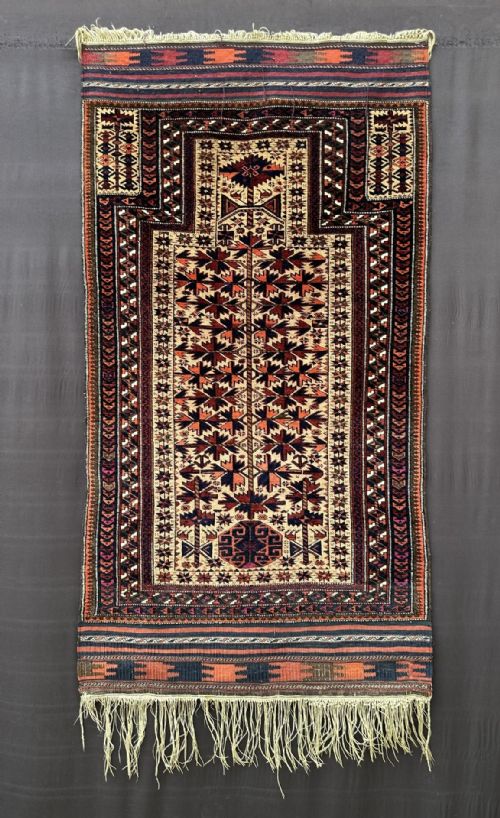
A timuri tribal carpet is a woven textile produced by nomadic and semi-nomadic groups inhabiting the borderlands of north-east Persia and north-west Afghanistan. These pieces range from small prayer rugs and salt bags to larger main carpets featuring traditional geometric patterns.
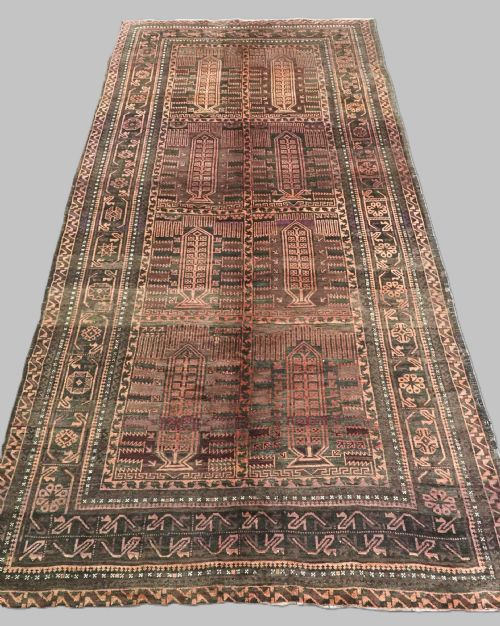
Buyers encountering this phrase will most frequently find nineteenth-century examples originating from western Afghanistan, often associated with Baluch weaving traditions. These rugs typically display classic formats such as the pencil box or Kalam Donneheh design, alongside prayer formats and tree of life motifs.
Materials and construction
Makers utilised hand-spun wool for the pile, frequently incorporating goat hair and camel hair for structural resilience in the warps and selvedges. Cotton foundation threads also appear in specific regional examples.
The wool absorbs natural dyes yielding deep rich colours, ranging from dark indigo blues to camel grounds and warm madder tones.
Nomads wove tiny salt bags alongside massive carpets, ensuring even the table salt travelled in a work of art.
Distinguishing quality
Quality rests in the handling of natural dyes and the crispness of the woven tribal motifs, where deep saturated tones and balanced proportions separate standard pieces from exceptional ones. Finer knotting density and superior wool preparation also elevate the handling of the pile.
Format rarity and the preservation of original borders and selvedges influence how successfully a rug represents its type.
The Timuri Tribal Carpet Glossary
- Prayer rug
- A small format rug featuring a mihrab or arch motif designed to indicate the direction of prayer. These pieces often incorporate tree of life or repeated leaf designs.
- Kalam Donneh
- A traditional pattern also known as the pencil box design, characterised by stacked compartmentalised motifs. It appears frequently in main carpets from the region.
- Dokhtar-e-qazi
- A specific design grouping associated with Baluch and Timuri weaving traditions, often found on small rugs and prayer formats. The name translates traditionally to the judge's daughter.
- Salt bag
- A functional nomadic utilitarian container woven flat or in pile, utilised for storage during tribal migrations. These smaller bags share the iconography of larger carpets.
- Ru korssi
- A specialised cover used over a low traditional Persian table heated by charcoal braziers. These textiles are designed to drape outward into the room.
Timuri Tribal Carpet: Frequently Asked Questions
How do I care for a timuri tribal carpet?
Vacuum gently without a rotating brush roll to protect the hand-spun wool pile and delicate goat hair edges.
Keep the textile out of direct sunlight to preserve the stability of the natural dyes over time.
Where were these carpets originally made?
Weavers produced these textiles across the rugged borderlands situated between north-eastern Persia and north-western Afghanistan.
Nomadic groups moved through these territories carrying portable vertical looms to craft rugs for daily use and trade.
What is a pencil box design?
The pencil box design, or Kalam Donneh, consists of geometric compartments stacked in repeating rows across the field.
This pattern remains a defining characteristic of main carpets attributed to Timuri and Baluch weavers.
Are these rugs made from pure wool?
The pile is typically spun from sheep wool, while structural elements frequently incorporate goat hair and camel hair for added durability.
Cotton foundations also appear in certain nineteenth-century examples from the region.