
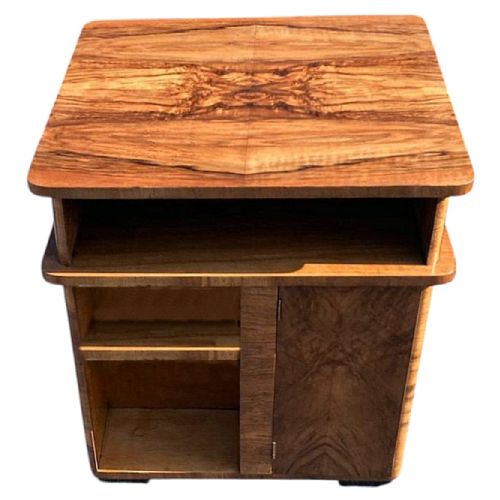


1930s Walnut Bar
A 1930s walnut bar brings period style and clever storage for entertaining, taking the form of cabinets, trolleys and carts.
1930s Walnut Bar
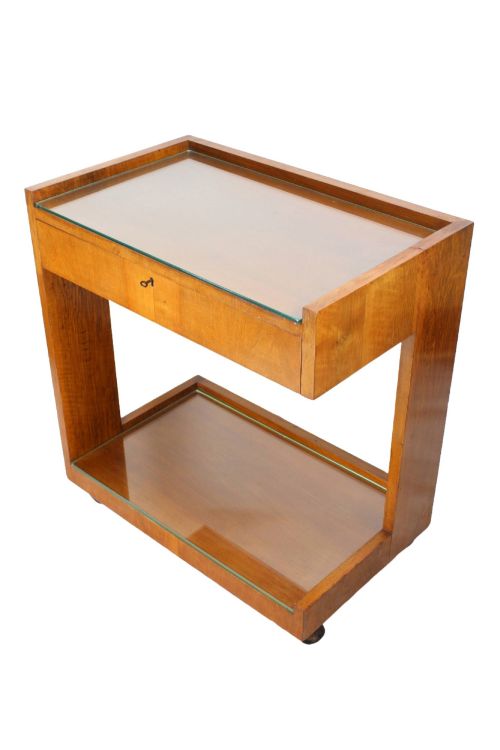
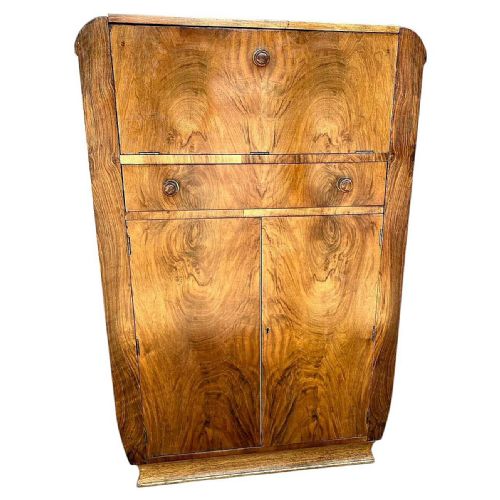
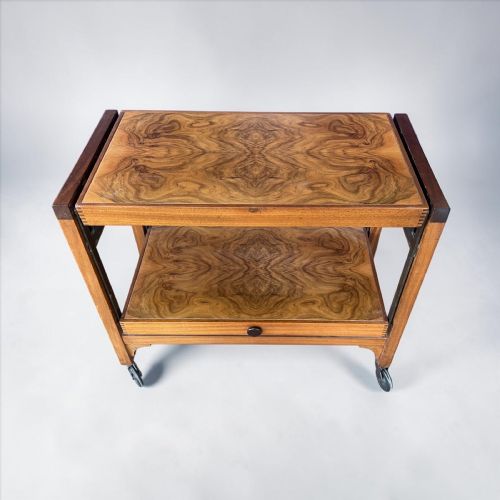
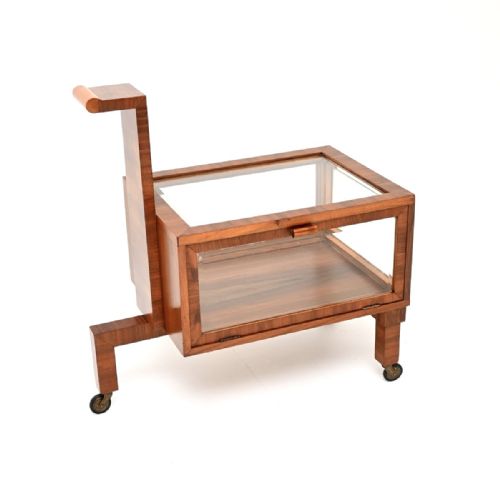
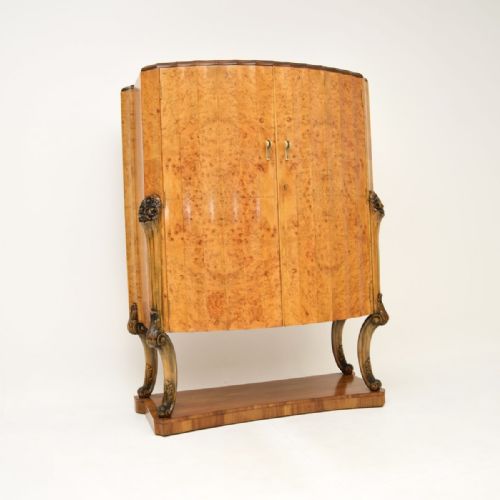
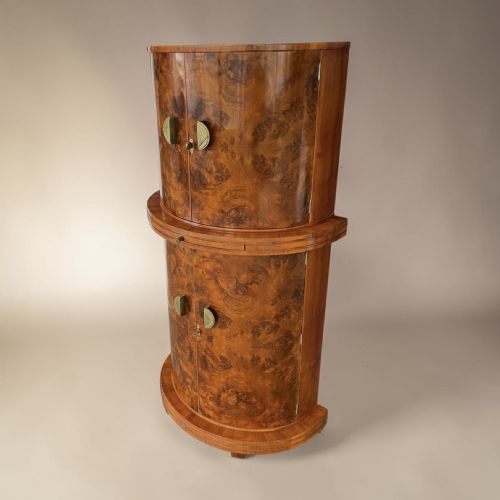
When you search for a 1930s walnut bar, you are looking at items designed for home entertainment during the interwar years, predominantly shaped by the Art Deco movement. These pieces range from substantial cocktail cabinets and drinks chests to mobile serving trolleys and circular bar carts.
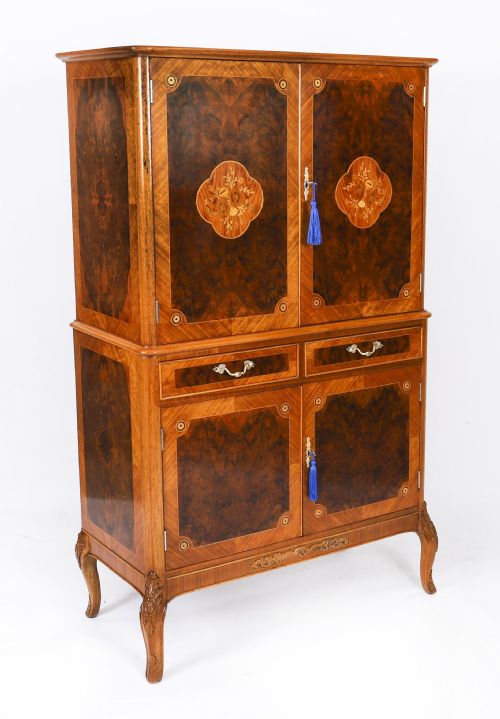
The version you are most likely to meet on this page is the cocktail or drinks cabinet, often standing on a base or sideboard, paired with wheeled trolleys for serving. They emerge primarily from English workshops of the 1930s, though pieces span adjacent decades and styles including Queen Anne Revival.
The forms serve a distinct social function, housing bottles, glassware and mixing accessories behind panelled doors, drop-down flaps or rotating tiers. Their presence in a room immediately establishes a period focal point centred on hospitality.
Materials and construction methods
Cabinet makers utilised solid timber frameworks overlaid with walnut veneer and figured burr walnut, creating striking grain patterns across the primary surfaces. Marquetry inlay occasionally appears to add linear detail to the exterior facades.
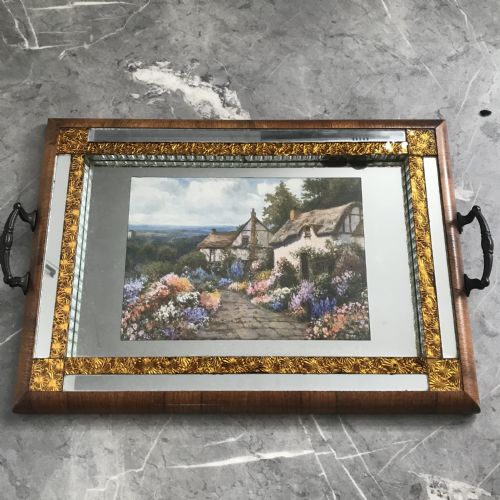
Functional elements rely on contrasting industrial materials, integrating glass, mirrored glass, brass and chrome for serving surfaces, internal shelving and hardware. Metamorphic mechanisms and pop-up trays employ internal metal hinges and tracks to reveal hidden compartments smoothly.
Several trolleys boast circular Savoy designs, ready to roll the cocktail hour right into the middle of the room.
Distinctions in quality
Quality rests upon the selection of the wood veneer and the ambition of the internal engineering. Cabinets featuring highly figured burr walnut with book-matched grain arrangements stand at the top of the range, showing careful planning across the main doors and top surfaces.
The sophistication of the internal fittings defines the tier of craftsmanship. Finer examples include fitted mirrored interiors, pull-out mixing slides, specialised bottle racks and integrated lighting systems, compared to simpler static shelving found in standard utility pieces.
Epstein·Hille·Harry and Lou Epstein·Incorporall
The 1930s Walnut Bar Glossary
- Burr walnut
- A prized timber harvested from the growths on walnut trees, showing swirling, intricate grain patterns used on cabinet facades. It forms the primary decorative surface for many high-end cocktail cabinets.
- Cocktail cabinet
- A dedicated piece of furniture designed to store and serve alcoholic drinks, typically featuring a drop-down flap that serves as a mixing shelf. They often include internal glass shelves and holders for glassware.
- Metamorphic
- A descriptive term for furniture that transforms its shape through folding, sliding or rising mechanisms. These pieces shift from compact sideboards or tables into expanded serving stations.
- Marquetry
- The art of applying pieces of veneer to a structure to form decorative patterns or pictures. It appears on select cabinets to delineate borders and geometric motifs.
1930s Walnut Bar: Frequently Asked Questions
What fits inside a 1930s walnut bar?
These cabinets and trolleys accommodate a range of glassware, spirit bottles, decanters and cocktail accessories. Many feature specific vertical slots for bottles and internal racks for smaller items.
Drop-down shelves provide a dedicated surface for mixing drinks, while mirrored backs reflect the glassware housed within the main compartment.
How do metamorphic drinks trolleys work?
Metamorphic trolleys and side tables use mechanical linkages that allow the top tiers or sides to expand, pivot or rise. This engineering shifts the piece from a compact side table into a larger serving surface.
Users operate these hinges manually to alter the footprint of the furniture depending on whether it is serving or resting against a wall.
Where were these cocktail cabinets placed?
Owners positioned these units in reception rooms, dining spaces and private studies to facilitate entertaining guests. Their decorative burr walnut exteriors ensured they functioned as stylish furniture pieces when closed.
Mobile trolleys allowed hosts to move drinks between rooms during evening gatherings.
How do I care for walnut veneer?
Walnut veneer requires protection from direct sunlight and excessive moisture to prevent warping and fading. Regular dusting with a soft, dry cloth preserves the polished finish.
Applying specialised wax occasionally maintains the lustre of the wood without building up heavy residues on the surface.