


Mirrored Drinks Cabinet
A mirrored drinks cabinet brings glamour to any room, offering polished surfaces and clever storage for your favourite glassware and bottles.
Mirrored Drinks Cabinet
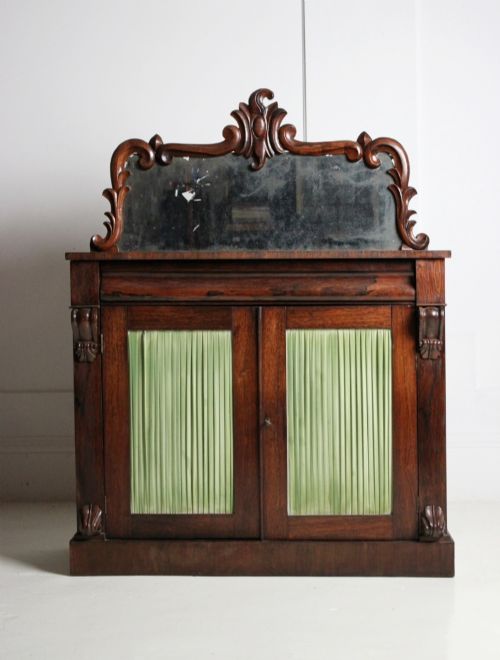
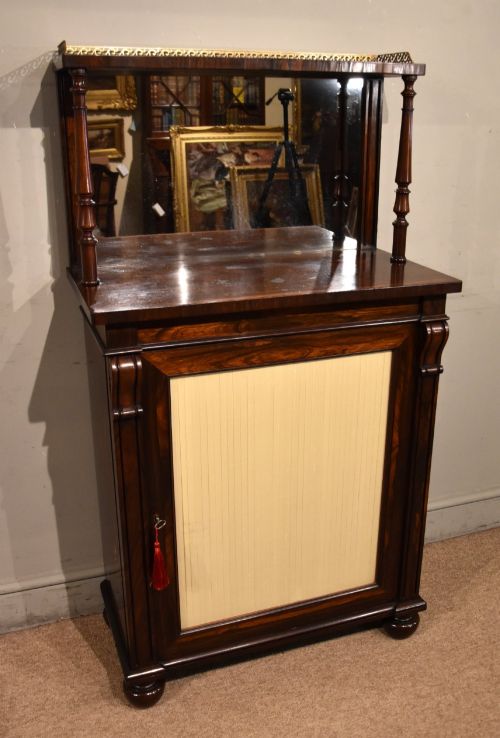
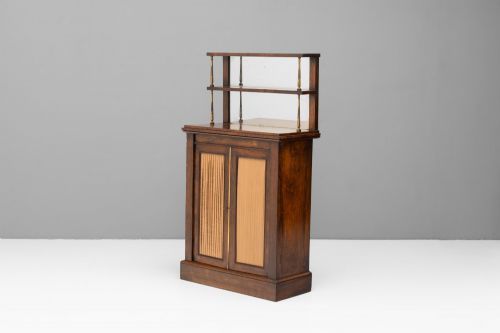
A mirrored drinks cabinet serves as a sophisticated focal point for entertaining, designed specifically to house bottles, decanters and glassware within an elegant enclosure. When you search for a mirrored drinks cabinet, you encounter diverse forms ranging from dedicated cocktail units to adapted chiffoniers and sideboards.
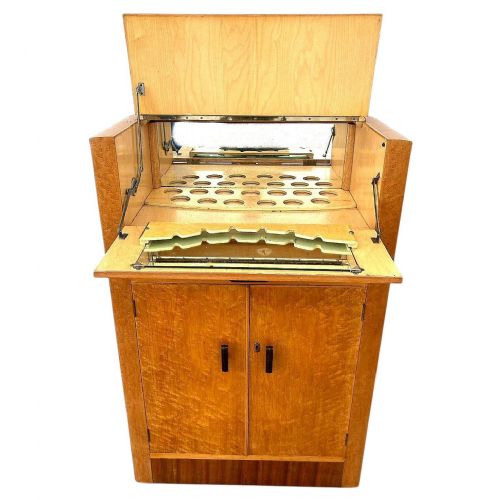
The selection on this page leans heavily towards the striking geometric lines of the Art Deco period, alongside earlier Victorian and Georgian iterations in rich timbers. Many examples incorporate internal mirror panels that catch the light, transforming a practical storage piece into a glittering display.
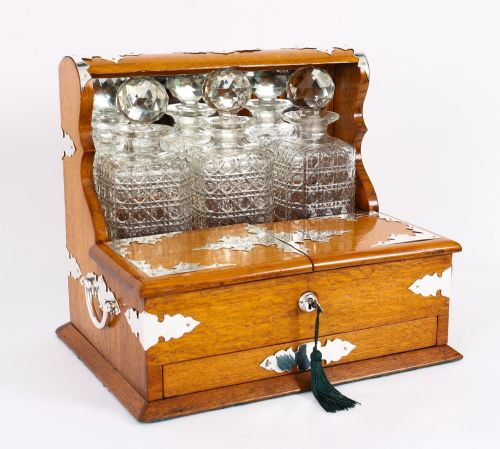
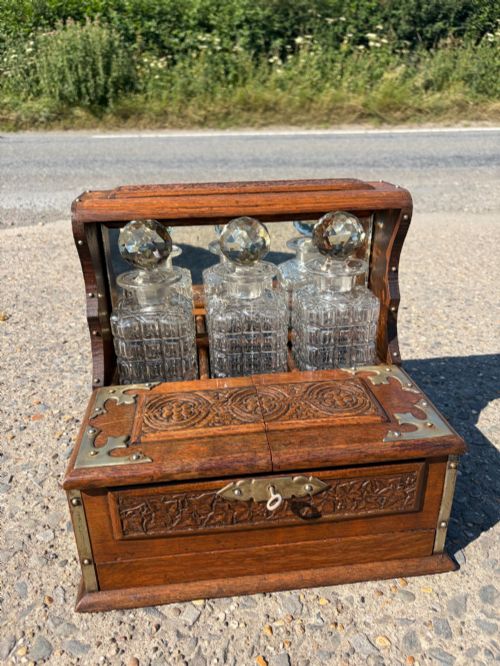
Forms vary from streamlined walnut and maple cocktail cabinets to oak tantalus sets and occasional tables with mirror tops. This variety allows you to select a piece that matches your interior space, whether you prefer the sleek modernity of the 1930s or the traditional warmth of the nineteenth century.
How they were made
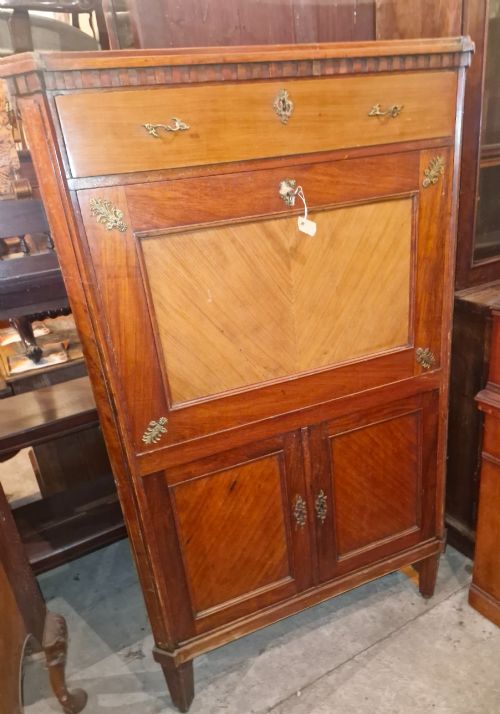
Cabinet makers utilised choice hardwoods such as walnut, rosewood, mahogany and oak, often applying figured veneers like bird's-eye maple and burr walnut to create mesmerising grain patterns. These timbers provided a sturdy structural foundation while offering a rich canvas for polished finishes.
Glass and mirror work formed an essential component of the construction, lining the interior compartments and mixing surfaces to amplify light and reflect glassware. Metal elements in brass and chrome frequently appeared as hinges, handles, locks and electric light fittings in later pieces.
Mirrored Drinks Cabinet Retail Price Guide 2026
Typical asking prices for mirrored drinks cabinet among the pieces listed under this phrase on Sellingantiques today, from the lower quarter to the upper quarter. They describe what is for sale here now, not the wider market.
Listings feature periods spanning from Georgian and Victorian eras through to Art Deco designs of the 1930s.
What varies in quality
Quality reveals itself in the selection of veneers and the precision of the cabinet work, where book-matched timbers and seamless marquetry inlay distinguish finer pieces from standard production. The integration of interior mirrors, specialised shelving and functional drop-down mixing leaves demonstrates superior design execution.
The integrity of the internal fittings, such as secure bottle holders, original glass decanters and well-fitted hardware in brass or chrome, elevates the status of a cabinet. Finer examples often bear attribution to notable workshops or feature advanced electrical integrations suited to mid-twentieth-century entertaining.
Maurice Adams·Holland & Sons·Harry and Lou Epstein·Epstein
The Mirrored Drinks Cabinet Glossary
- Tantalus
- A locking wooden frame holding decanters to display their contents while preventing unauthorised access to the alcohol. These often incorporate games compendiums or mirror backs in nineteenth-century designs.
- Chiffonier
- A compact sideboard developed in the nineteenth century, featuring lower cupboards and frequently adapted for storing bottles and glassware. They appear in rosewood and mahogany across Victorian and Georgian periods.
- Secessionist
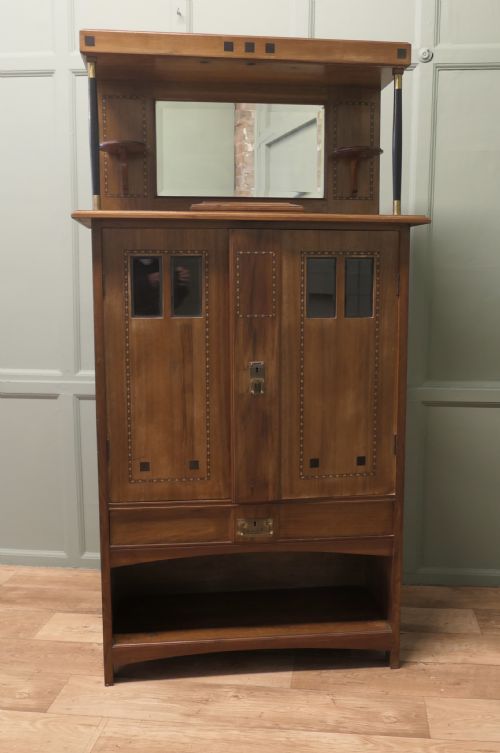
- An early twentieth-century artistic movement focused on geometric simplicity and rejection of historic styles. Pieces from this aesthetic exhibit clean architectural lines and refined decorative details.
- Marquetry
- The art of applying small pieces of veneer to a structure to form decorative patterns and pictures. Skilled artisans utilised contrasting timbers like oak and walnut to create intricate surface designs.
- Bird's-eye maple
- A decorative timber figuring resembling small swirling dots, prized for its distinctive appearance on Art Deco cabinet doors. It provides a pale, reflective surface that complements internal mirror work.
Mirrored Drinks Cabinet: Frequently Asked Questions
What is a mirrored drinks cabinet?
A mirrored drinks cabinet is a specialised storage furniture piece designed to hold bottles, decanters, and cocktail equipment, featuring internal or top mirror panels.
These pieces range from dedicated 1930s cocktail cabinets to nineteenth-century chiffoniers and tantalus sets adapted for entertaining.
How do I date a drinks cabinet?
You can date a drinks cabinet by examining its primary materials, hardware, and stylistic hallmarks like Art Deco geometry or Victorian marquetry.
Looking at the construction of internal shelves, mirror bevelling, and timber veneers also helps place the piece within the 1880 to 1940 span.
Where should I place a drinks cabinet?
These cabinets work best in dining rooms, living areas, or home bars where their reflective surfaces can catch ambient light and display glassware.
Ensure the placement allows drop-down flaps or cabinet doors to open fully without obstruction so you can use the internal mixing space.
What is the difference between a tantalus and a cocktail cabinet?
A tantalus is a locking wooden stand holding exposed decanters, whereas a cocktail cabinet is a fully enclosed piece with doors concealing bottle storage.
Cocktail cabinets often include mirrored interiors, pull-out preparation shelves, and specialised compartments for glassware and barware.