
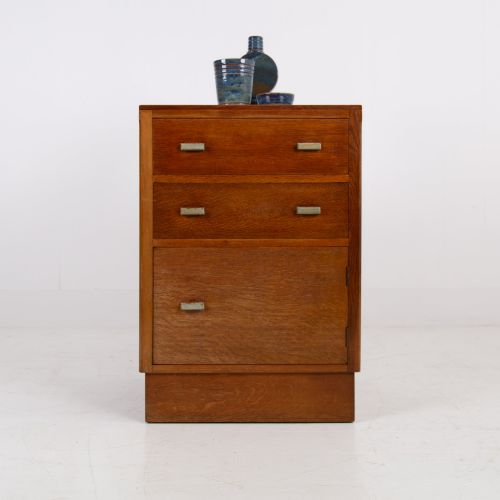
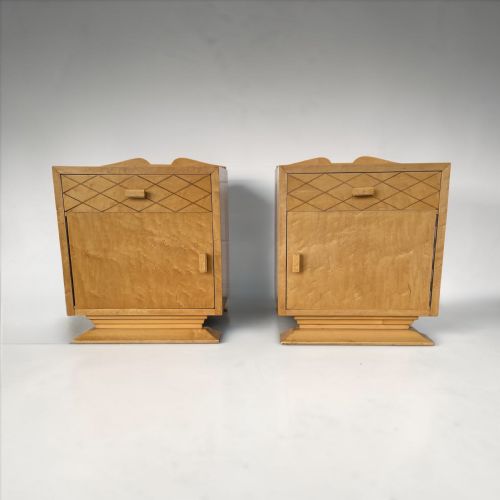
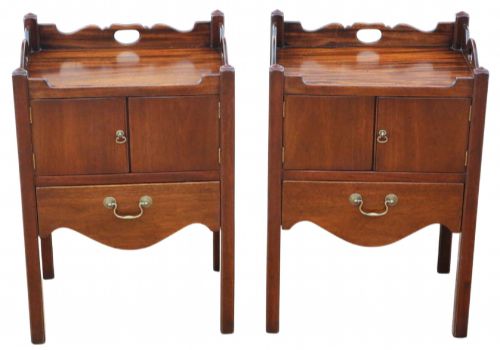
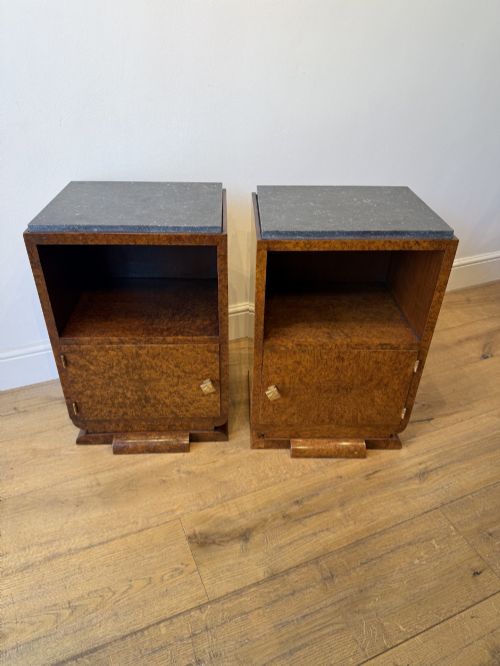
1930s Bedside Cabinets
These 1930s bedside cabinets bring distinct Art Deco geometry and practical bedside storage to a room.
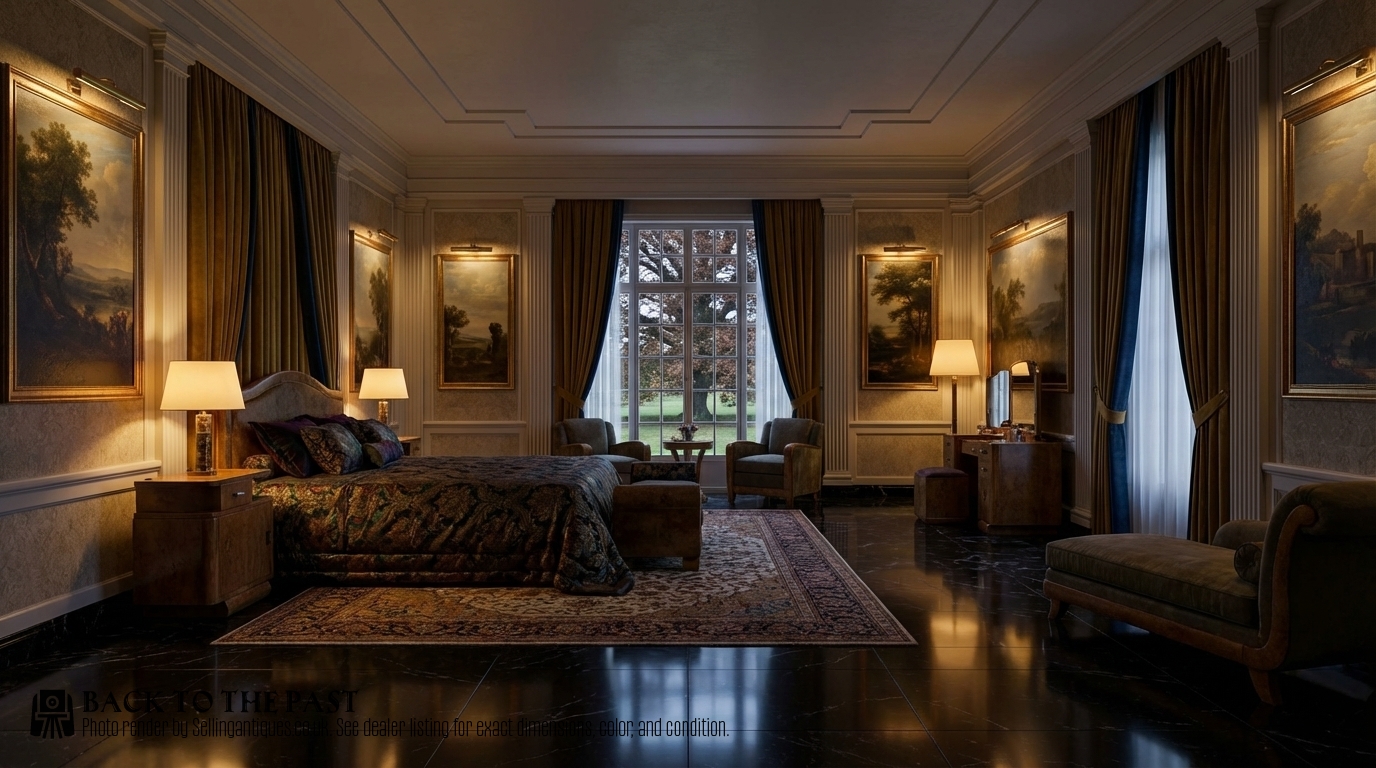
What 1930s bedside cabinets are
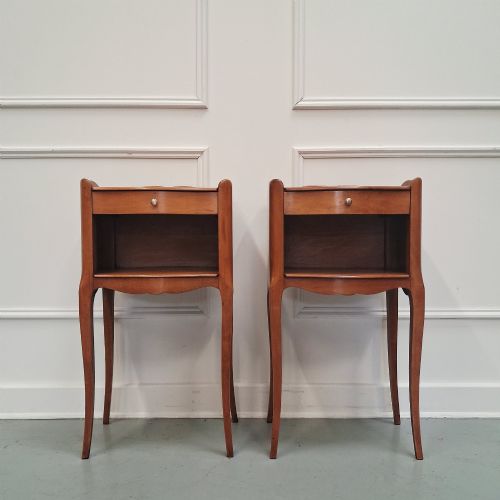
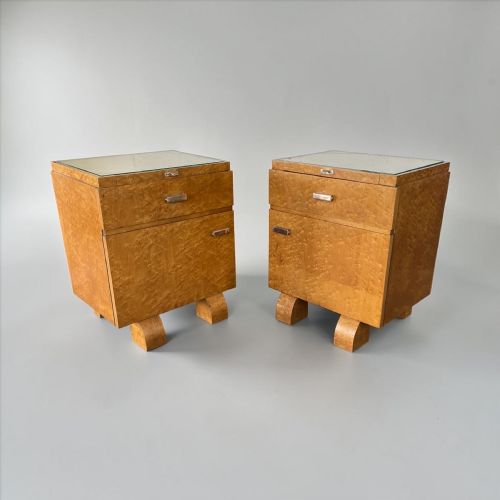
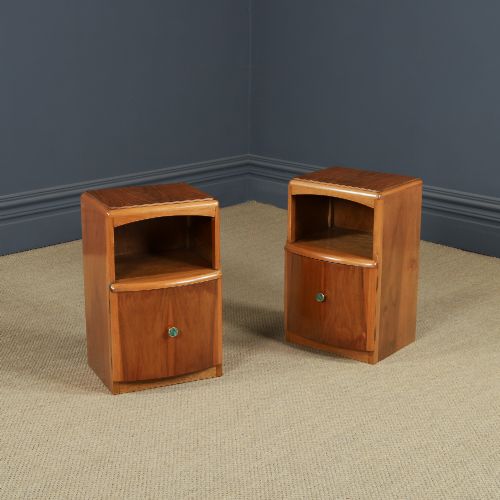
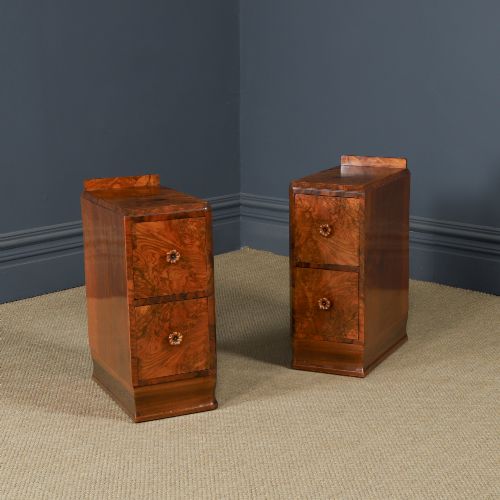
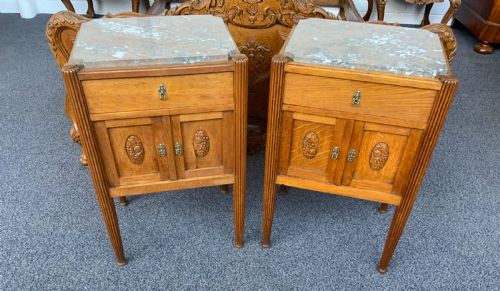
Buyers searching for 1930s bedside cabinets encounter compact storage pieces designed for the interwar bedroom. These items frequently appear as matching pairs, reflecting the symmetrical bedroom layouts of the period.
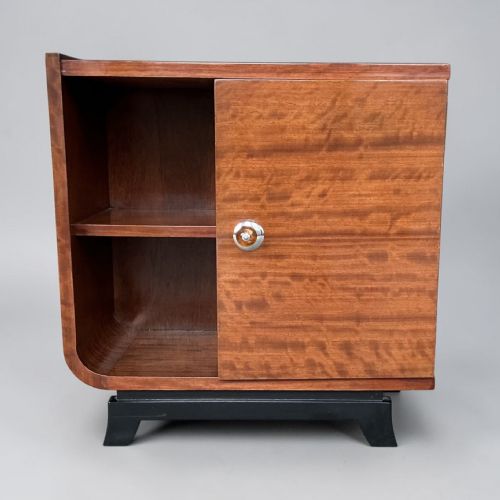
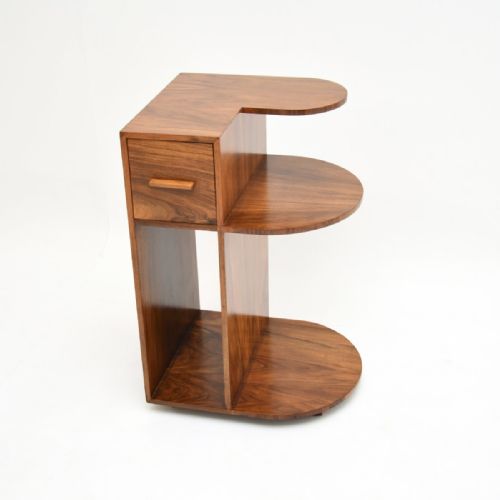
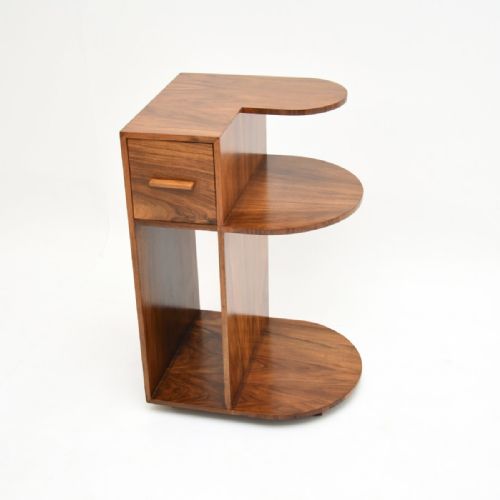
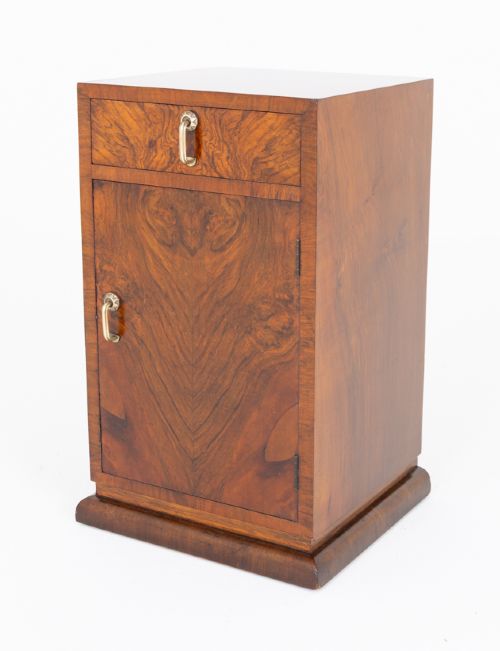
The objects take the form of small cabinets, nightstands and bedside tables, often incorporating a combination of enclosed cupboards, open shelving and drawers. Most examples belong firmly to the Art Deco style, prioritising clean lines and geometric proportion.
Originating largely from English and Italian workshops, these pieces serve as functional bedroom storage while displaying the characteristic decorative restraint of the decade. Single cabinets and matched pairs appear regularly, offering versatile options for bed placement.
How they were made
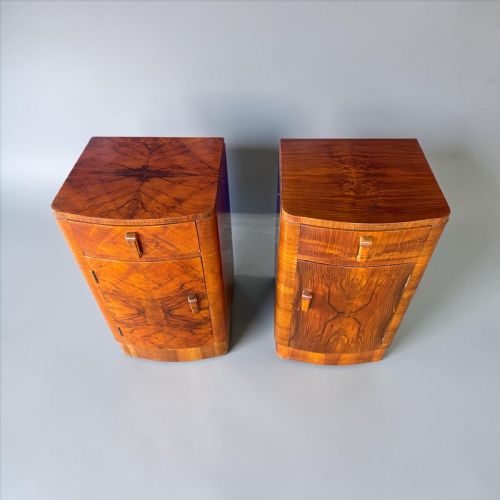
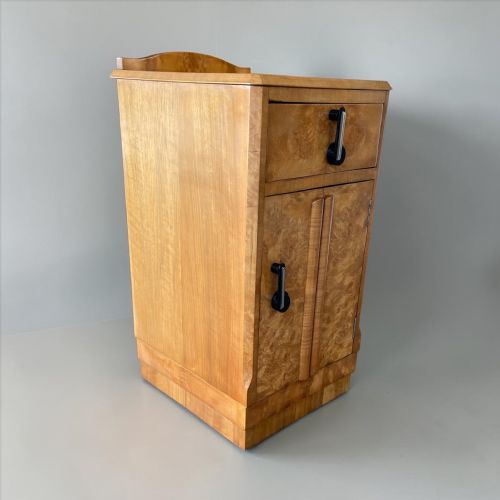
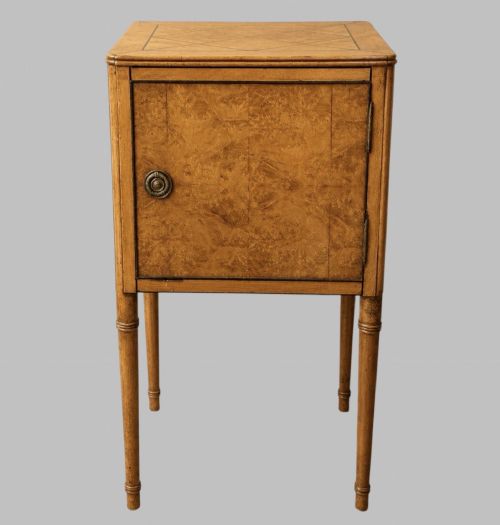
Cabinet makers constructed these pieces using timber frames finished with decorative wood veneers. Walnut, burr walnut, blonde maple, burr elm and birds eye maple provide the prominent surface grain seen across the selection.
Hardware details incorporate brass and chrome elements for handles and pulls, alongside occasional Bakelite components. Wood veneer techniques allowed makers to create striking symmetrical grain patterns across doors and drawer fronts.
Retail Price Guide 2026
Typical UK retail prices for 1930s bedside cabinets, calculated from the Sellingantiques database of over a million retail prices indexed since 2003. This retail price guide relies exclusively on Sellingantiques data; no external sources or auction records are used, so the figures do not describe the wider market.
Listings feature walnut, blonde maple and burr elm veneers alongside brass and chrome hardware.
What varies in quality
The distinction between standard examples and superior pieces rests on the choice of surface timber and veneer selection. Matched burr walnut and blonde maple grain patterns demonstrate higher craftsmanship than plain timber finishes.
Construction integrity is visible in the alignment of drawers, the tight fit of cupboard doors and the precision of the underlying timber work. Original metal hardware and consistent finishes elevate the standing of an individual cabinet.
The 1930s Bedside Cabinets Glossary
- Art Deco
- A design style originating in the early twentieth century characterised by sleek geometric forms, streamlined shapes and modern materials. It dominates the aesthetic of interwar furniture.
- Burr Walnut
- A specialised wood cut from the burl growth of a walnut tree, producing swirling, highly decorative grain patterns. Cabinet makers prized this material for prominent exterior surfaces.
- Veneer
- A thin layer of superior wood glued to a base timber foundation to create patterned decorative surfaces. This technique permitted complex grain arrangements on flat panels.
- Bakelite
- An early synthetic plastic material utilised for handles, knobs and decorative details on interwar items. Its durability made it popular for domestic hardware.
- Nightstand
- An alternative term for a bedside cabinet or small table positioned next to a bed. These objects provide surface space and enclosed storage for nighttime essentials.
Frequently Asked Questions
Are 1930s bedside cabinets usually sold as pairs?
Many examples on the market survive and are offered as matching pairs to maintain bedroom symmetry. Single cabinets also appear frequently for alternative room layouts.
Buyers seeking balanced bedside arrangements tend to focus on these matched sets.
What woods were used for 1930s bedside cabinets?
Cabinet makers utilised a range of timbers including walnut, burr walnut, blonde maple, burr elm and birds eye maple. These woods were chosen for their distinct grain and colour characteristics.
Surfaces were frequently finished as veneers to display decorative natural patterns.
How do I style a 1930s bedside cabinet?
These compact cabinets suit contemporary and traditional interiors alike, adding geometric character to a bedroom scheme. Their neutral wood tones pair easily with various wall colours and fabrics.
Keeping the surface uncluttered highlights the natural veneer grain.
Did bedside cabinets include open areas or cupboards?
Makers produced various internal configurations, incorporating cupboards, drawers, open display areas or combinations thereof. Selection depends on whether concealed storage is preferred over accessible shelving.
Both enclosed and open formats date from the same period.