


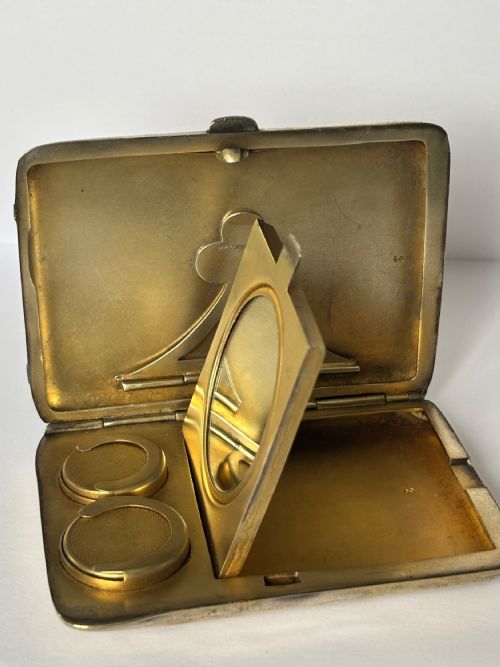


1920s Vanity Mirror
A 1920s vanity mirror offers a distinct look of the period, bringing refined glass and polished brass or wood to the dressing table.
1920s Vanity Mirror
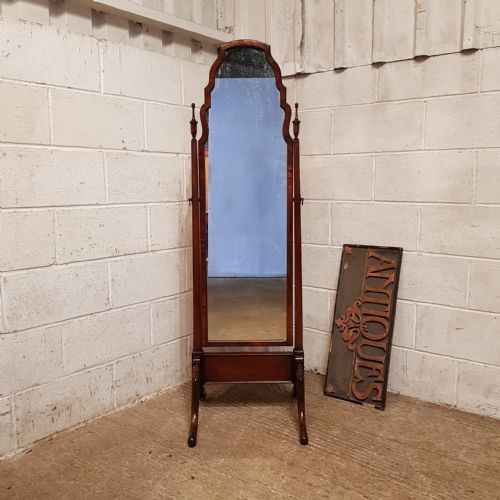
A 1920s vanity mirror is typically found taking the form of a dressing table mirror, a compact, or a cheval mirror designed for daily personal grooming. These pieces originate predominantly from the 1920 and 1930 periods, capturing the shifts in taste between Edwardian styling and the rising Art Deco movement.
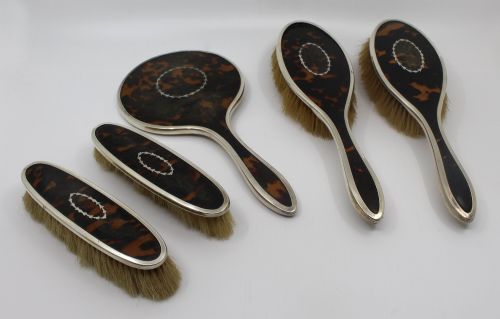
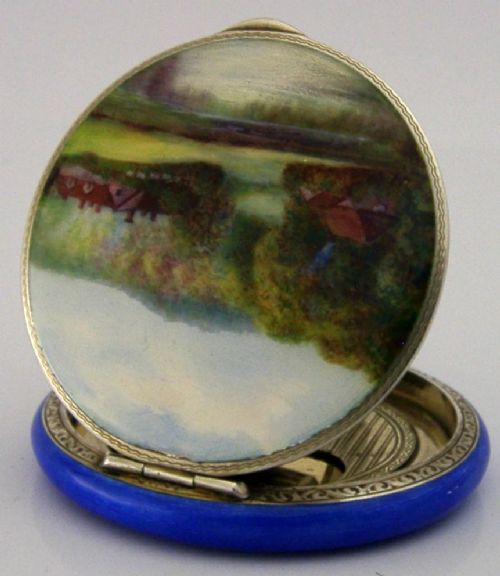
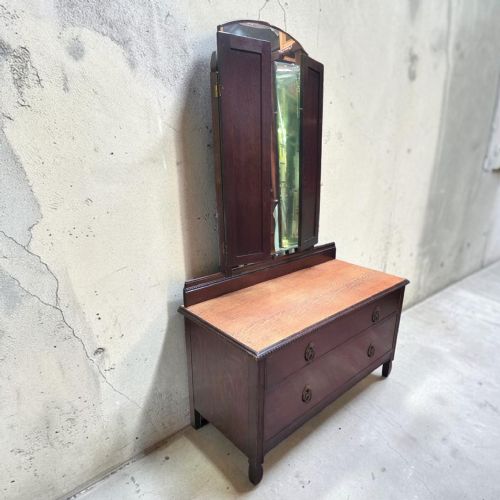
Buyers seeking a 1920s vanity mirror will encounter several distinct variations on this page, ranging from oak or mahogany dressing chest mirrors with multiple drawers to compacts and vanity cases finished in enamel. Some examples integrate materials such as green onyx and brass, reflecting the decorative experimentation of the era.
The assortment on offer also includes larger bedroom suite elements and wall-hung mirrors featuring gesso floral decoration or barley twist supports. These objects served practical functions in domestic dressing rooms while displaying the characteristic craftsmanship of the interwar years.
How they were made
Makers of the period utilised a combination of traditional timbers like oak and mahogany alongside metals such as brass, gilt metal, and sterling silver. Wood surfaces were turned, carved, or limed, whilst metals were frequently cast or plated to support reflective glass panels.
Surface decoration often involved coloured enamel, guilloché patterns, and hand-painted details applied to compacts and dressing accessories. Gesso was likewise modelled onto wooden frames to create relief ornamentation before gilding or painting.
Styles span Art Deco, Jacobean Revival, and Edwardian influences within the interwar period.
What varies in quality
Quality in these pieces is dictated by the fineness of the materials and the precision of the decorative execution. Solid timbers and heavy cast metals denote a higher standard of manufacture compared to lighter plated alternatives.
The intricacy of surface work, such as engine-turned guilloché enamel or hand-painted miniature scenes, separates standard production items from finer luxury examples produced by established makers.
Henry Matthews·Richard Hudnut
The 1920s Vanity Mirror Glossary
- Guilloché enamel
- A decorative technique where a precise geometric pattern is mechanically engraved beneath a translucent layer of coloured enamel. It appears frequently on metal compacts and vanity cases of the period.
- Cheval mirror
- A full-length mirror hung in a frame that allows it to tilt on vertical pivots. These freestanding pieces often stand on four legs or feet within a dressing room.
- Gesso
- A plaster-like mixture applied to wood surfaces to create a smooth base for painting or to be moulded into relief decorations. Floral motifs formed in gesso are typical of decorative mirrors.
- Barley twist
- A type of turned woodwork resembling the spiral shape of a barley grain. It occurs commonly on the upright supports of dressing table mirrors and chest frames from this era.
- Sterling silver
- A silver alloy containing a specific proportion of pure silver and other metals to increase durability. Items bearing hallmarks in silver indicate higher grade precious metal construction.
1920s Vanity Mirror: Frequently Asked Questions
What is a 1920s vanity mirror?
A 1920s vanity mirror is a dressing accessory or furniture glass produced during the 1920 or 1930 periods. These items include portable compacts, small table mirrors, and larger cheval mirrors.
They were designed for personal grooming and domestic dressing rooms, incorporating materials characteristic of the interwar decorative arts.
How do I date a vanity mirror from this period?
Dating these objects relies on identifying stylistic markers such as Art Deco geometric forms or Jacobean Revival turned woodwork. Hallmarks on silver components or makers' stamps on compacts also provide precise manufacturing years.
Construction methods and material combinations help distinguish pieces made around 1920 from later Edwardian survivals.
Where were these mirrors used?
These mirrors were primarily utilised in bedrooms and dressing rooms on top of chests of drawers or dedicated dressing tables. Portable versions such as compacts and vanity cases were carried by women for daily use.
Freestanding cheval mirrors occupied larger floor spaces in domestic dressing areas to provide full-length reflections.
How do I care for antique glass and metal?
Antique glass and metal require gentle cleaning with soft cloths to preserve reflective surfaces and protective platings. Avoid harsh chemical cleaners that can damage delicate enamel work or strip patinated brass.
Wooden frames benefit from occasional treatment suited to period timbers like oak or mahogany to maintain their finish.