

Edwardian Style Mirror
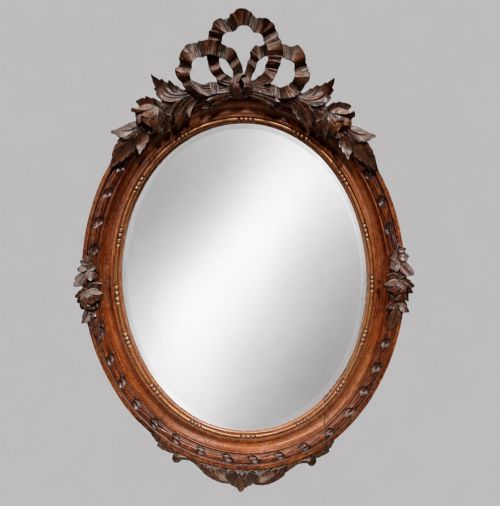
An edwardian style mirror brings distinct period character to a room, ranging from mahogany fretted designs to gilded overmantels.
Edwardian Style Mirror
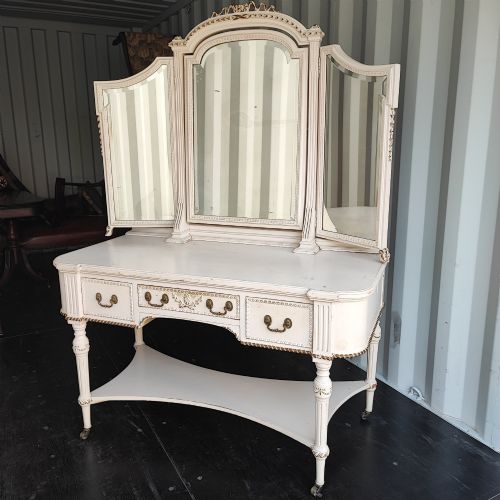
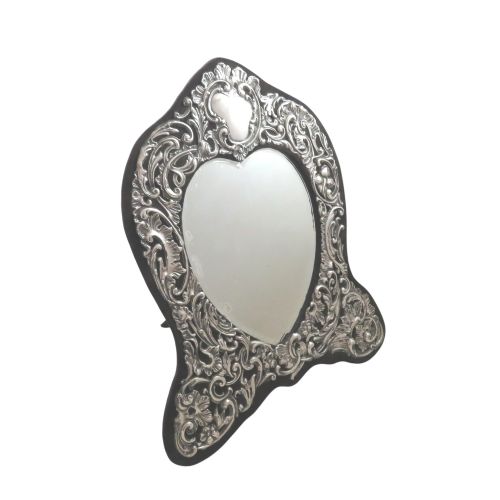
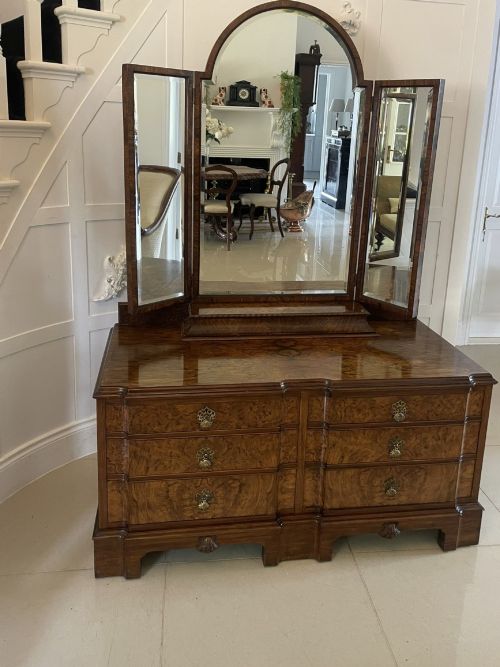
An edwardian style mirror encompasses wall hangings, overmantels, and dressing mirrors rooted in early twentieth-century production and revivals of earlier periods. Pieces draw heavily upon Georgian, Adam, Chippendale, and Sheraton idioms, often reinterpreted through the lens of Edwardian taste.
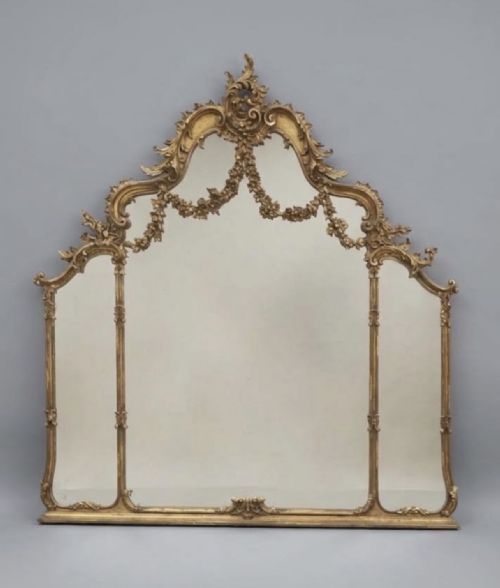
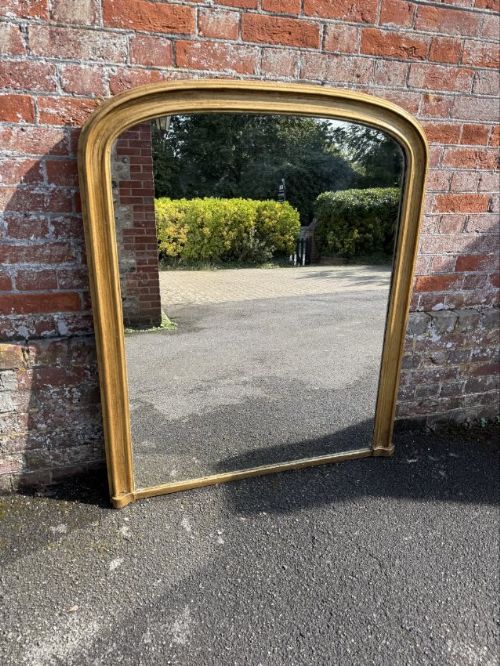
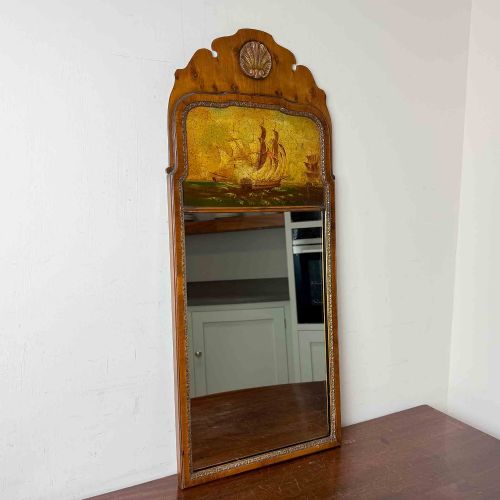
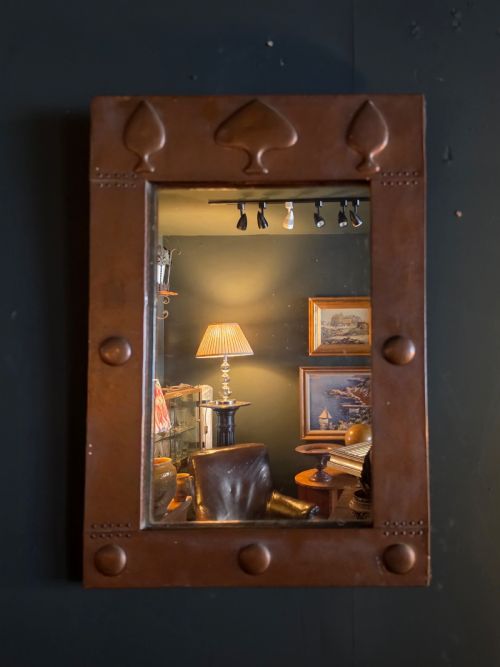
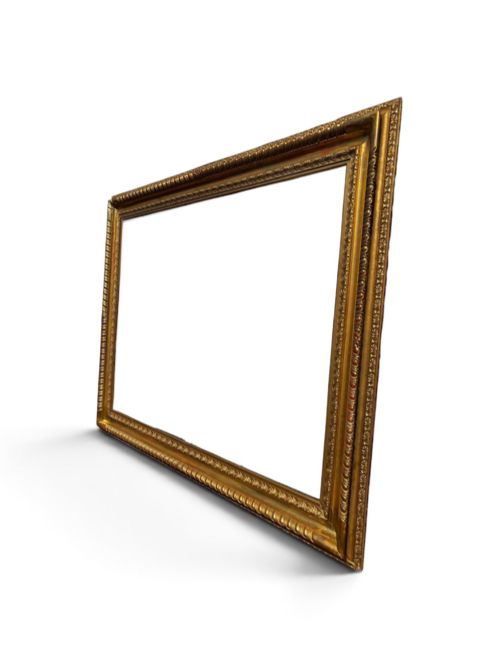
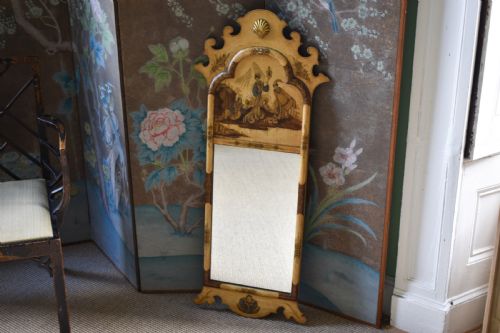
The selection frequently includes mahogany frames with fretwork, giltwood and gesso overmantels with arched or shaped tops, and lighter decorative items incorporating Chinoiserie or Arts and Crafts motifs. These objects served functional and decorative roles in period interiors, placed above fireplaces or upon dressing chests.
Materials and Construction
Frames rely upon traditional timber construction using mahogany, oak, yew, and walnut, frequently enhanced by decorative veneers, stringing, and marquetry inlay. Carved wood and gesso provide the sculptural relief necessary for gilt overmantel frames and classical revival ornament.
Surface treatments range from gold leaf and liquid gilding to original paint finishes and polished wood. Specialised mediums such as copper, brass, bone, and mother of pearl appear on Arts and Crafts and Damascus pieces, adding tactile contrast to glass and timber.
Materials recur across glass, giltwood, gesso, mahogany, brass, gold leaf, oak, copper, bone, and mother of pearl.
Assessing Quality
The distinction between ordinary and superior pieces rests upon the crispness of carved ornament, the depth of gesso moulding, and the precision of mahogany fretwork or inlay. Hand-carved details and genuine gold leaf display greater tonal warmth and depth than mass-produced composition ornament.
Structural integrity of the timber frame and the clarity of the original mirror glass contribute significantly to the standing of an item. Superior examples maintain balanced proportions, intact original backing materials, and harmonious integration of decorative elements.
Edwards and Roberts·Maples of London and Paris·Liberty and Company·Heals·George Walton·Gillow
The Edwardian Style Mirror Glossary
- Overmantel mirror
- A large horizontal mirror designed to hang specifically above a fireplace mantelpiece. These often feature elaborate arched or shaped frames in giltwood and gesso.
- Gesso
- A plaster-like mixture applied to wood frames and carved or moulded into relief ornament before gilding. It provides the smooth base required for gold leaf application.
- Fretwork
- Openwork ornamentation cut from thin boards of wood using a fretsaw. This technique characterises Chippendale and Sheraton style mahogany frames.
- Chinoiserie
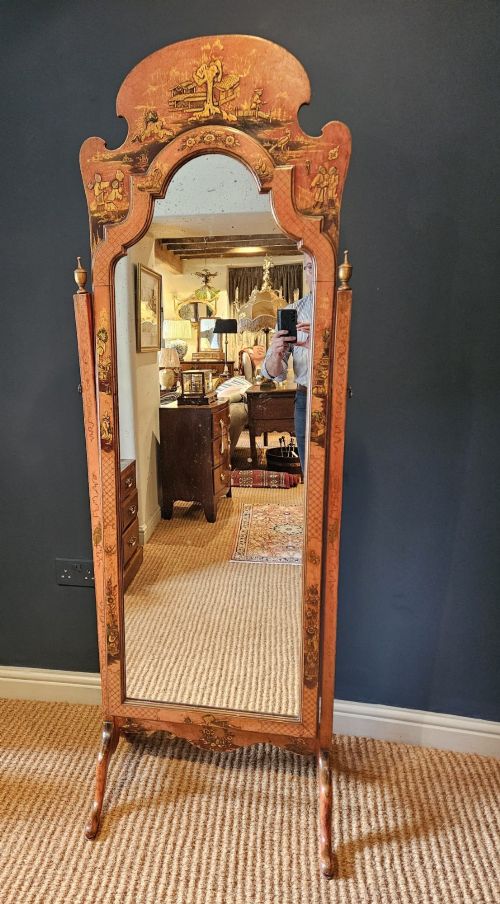
- European theatrical interpretation of Chinese and East Asian artistic traditions. It manifests on mirrors through hand-painted motifs, lacquered surfaces, and stylised landscapes.
Edwardian Style Mirror: Frequently Asked Questions
Where should I hang an overmantel mirror?
An overmantel mirror traditionally anchors the space directly above a fireplace, reflecting light and creating a sense of depth in principal reception rooms.
Ensure the hanging fixings secure safely into structural wall supports, as carved wood and gesso frames carry considerable weight.
How do I identify an Edwardian mirror?
Edwardian mirrors often combine revival styles like Adam or Sheraton with lighter proportions and specific timber selections such as mahogany and inlaid satinwood.
Examine the backboards, fixings, and edge bevels of the glass for indicators of early twentieth-century manufacturing techniques.
Are Chinoiserie mirrors fragile?
Chinoiserie decorated surfaces require careful placement away from direct sunlight and fluctuating moisture to protect the painted or lacquered details.
Dust gently with a dry, soft cloth and avoid chemical cleaners that might compromise the delicate decorative layer.
What is a cheval mirror?
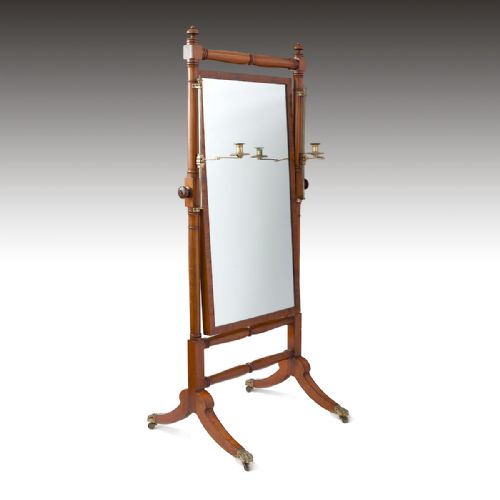
A cheval mirror is a full-length dressing glass suspended on a vertical floor-standing frame, allowing the plate to tilt at different angles.
These pieces function well in bedrooms and dressing areas, providing a complete view while operating as substantial freestanding furniture.