
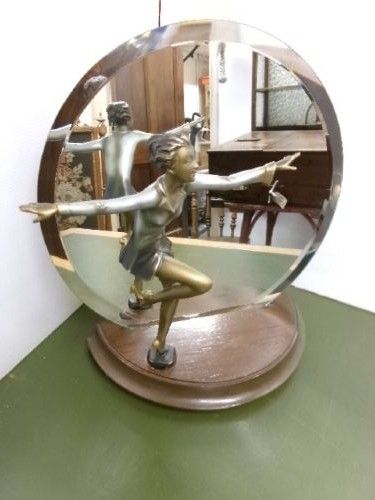
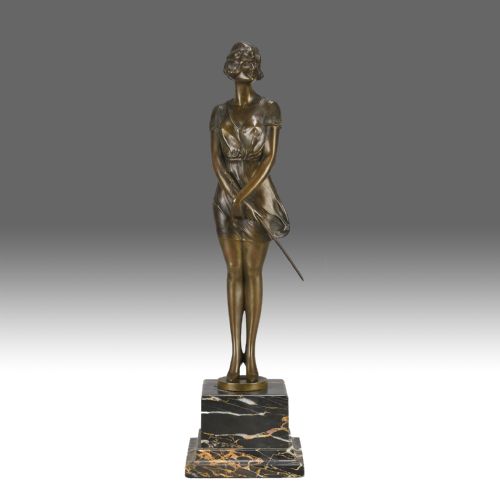
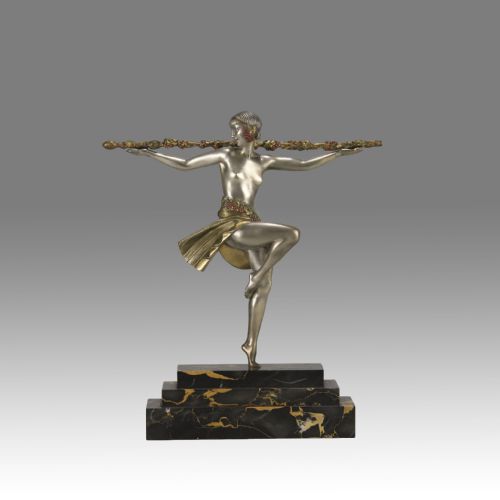
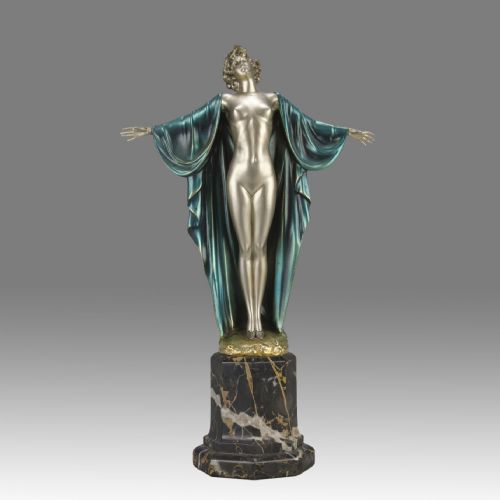
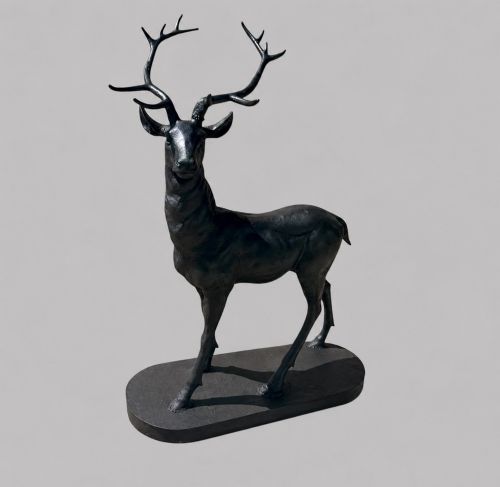


1920s Bronze Statue
A 1920s bronze statue brings the clean lines of early twentieth-century sculpture into a room, offering enduring metalwork and sculpted figures.
Understanding the pieces
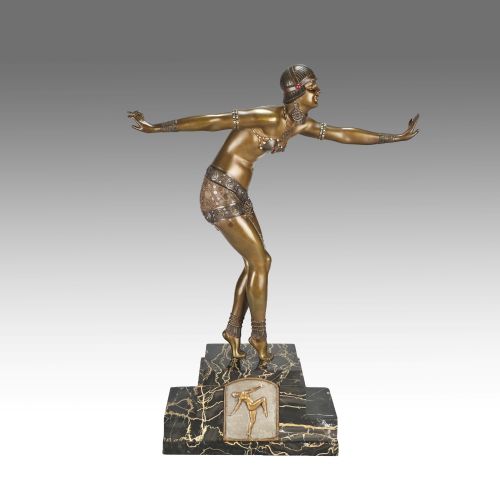
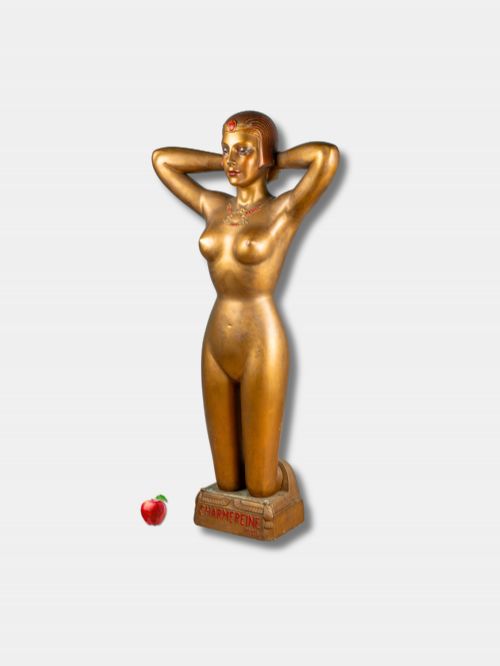
A 1920s bronze statue encompasses figures and sculptures produced during the nineteen-twenties and nineteen-thirties, capturing the aesthetic of the period. These works predominantly reflect the Art Deco movement and early twentieth-century design.
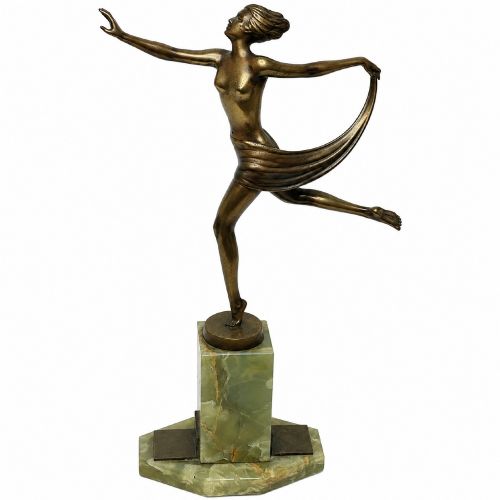
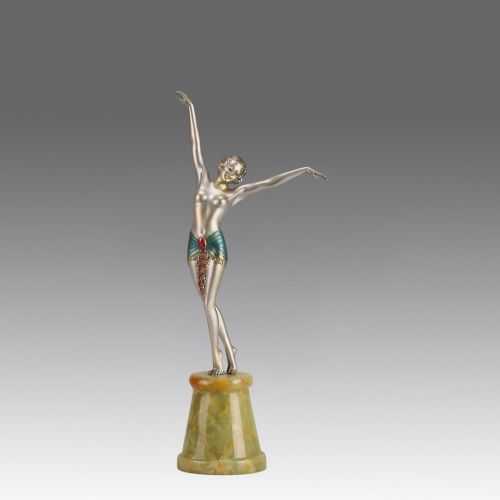
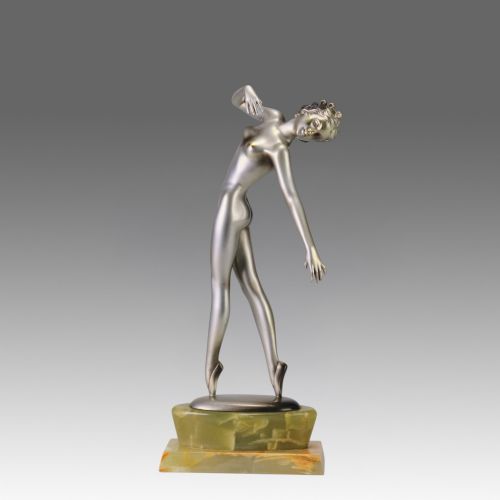
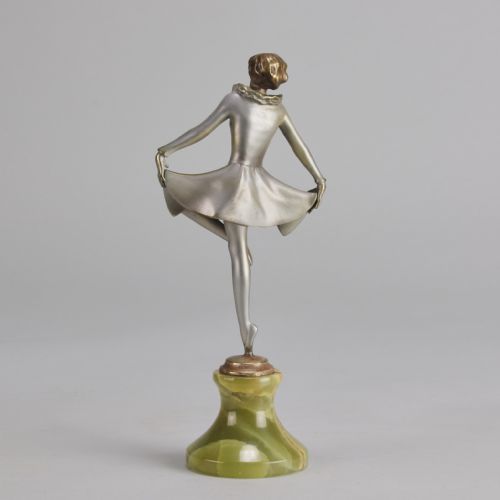
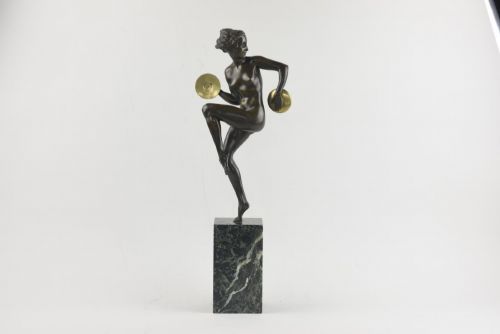
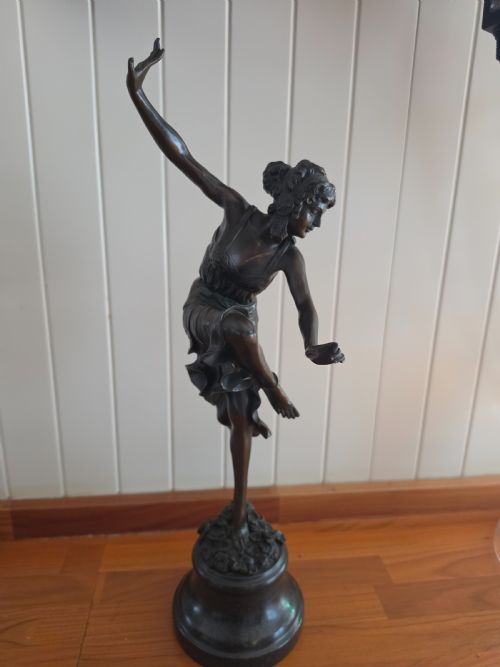
Buyers frequently encounter figurative representations, including dancers, mythological figures such as Diana, and character studies mounted on marble or onyx bases. The subjects range from named dancers to allegorical sculptures.
The inventory on this page demonstrates origins spanning France and Austria, showcasing how different European workshops approached the medium during the interwar years.
Materials and construction
The figures utilise bronze as the primary medium, often enhanced with cold-painted decoration or patinated surfaces to accentuate detail. Enamel elements occasionally appear to add colour and contrast to the metallic forms.
Sculptures are frequently mounted upon heavy bases fashioned from marble or onyx, providing both visual contrast and structural stability to the upright metal figures.
Retail Price Guide 2026
Typical UK retail prices for 1920s bronze statue, calculated from the Sellingantiques database of over a million retail prices indexed since 2003. This retail price guide relies exclusively on Sellingantiques data; no external sources or auction records are used, so the figures do not describe the wider market.
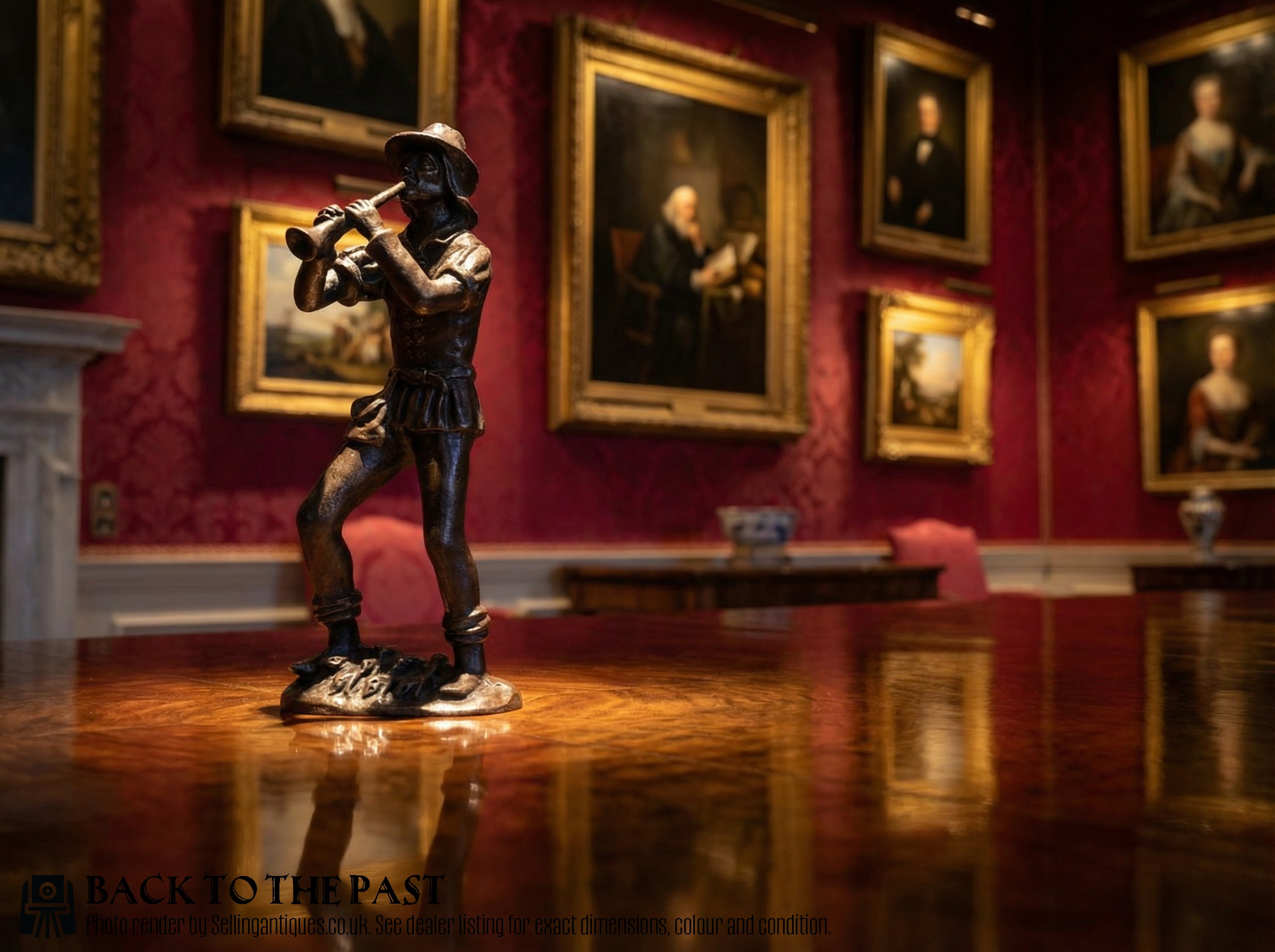
The Pied Piper occasionally marches through the decade, proving that not every dancer in the twenties was doing the Charleston.
Assessing quality
The integration between the bronze figure and its stone base defines the overall composition, where fine-grained marble or banded onyx elevates the piece beyond standard production.
Ferdinand Preiss·Josef Lorenzl·H. Chiparus·Pierre Le Faguays·Ernst Beck
The 1920s Bronze Statue Glossary
- Art Deco
- A design style of the 1920s and 1930s characterised by stylised forms, geometric patterns, and sleek lines. It dominates the aesthetic of these sculptural figures.
- Cold-Painted Bronze
- A technique where paint is applied to cold metal rather than fired in a kiln. This method allows for intricate multicoloured surface decoration.
- Patinated Bronze
- Metal treated with chemical solutions to produce a specific surface colour or aged finish. This process highlights the contours of the sculpture.
- Onyx
- A banded variety of chalcedony used frequently for sculptural bases in this period. Its natural grain patterns complement the dark metallic bronze.
Frequently Asked Questions
What subjects do these statues show?
The pieces frequently depict female dancers, mythological characters like Diana, and allegorical figures reflecting the modern spirit of the interwar period.
These subjects capture movement and theatricality, aligning closely with the stylistic preferences of the nineteen-twenties.
How do I identify a 1920s bronze statue?
Look for characteristic materials such as patinated or cold-painted bronze combined with marble or onyx bases, alongside distinct Art Deco styling.
Signatures or foundry marks inscribed into the bronze or base often point directly to the maker or studio of origin.
Where were these sculptures made?
Many originate from European workshops and foundries in France and Austria, which were major centres for decorative metalwork during the period.
These regions produced both signed artist works and anonymous studio pieces for an international market.
How should I display a bronze statue?
Position the piece on a stable, level surface away from direct heat sources to protect the stone base and metal patination.
Ensure adequate lighting to highlight the intricate details of the cold-painted or patinated surface.