




18th Century Wine Flute
These pieces known as an 18th century wine flute bring slender elegance and historic weight to a table, offering collectors delicate proportions and traditional lead glass craftsmanship.
18th Century Wine Flute
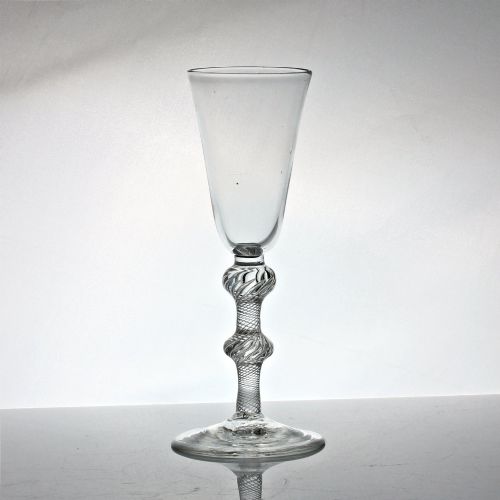
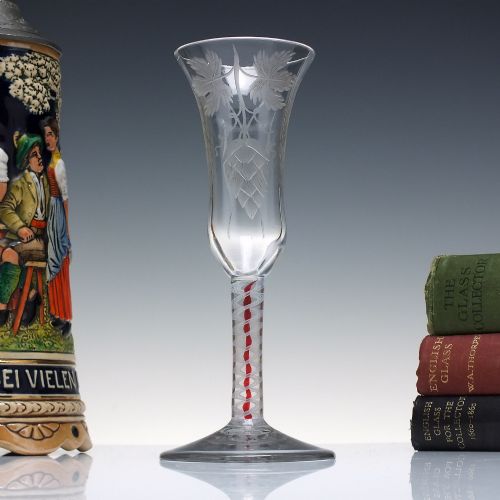
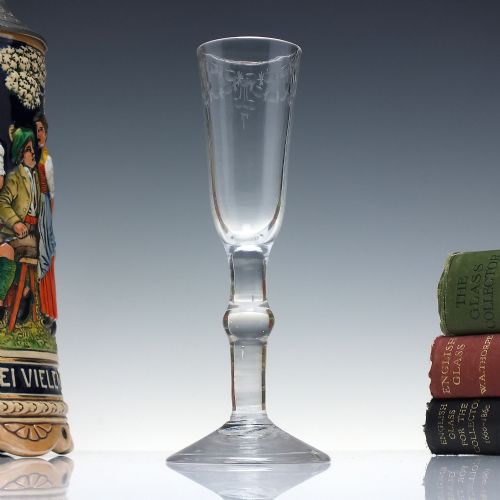
An 18th century wine flute represents a tall, slender vessel designed for fine toasts, appearing alongside related drinking glasses and occasionally tables in the listings. These objects span the Georgian period, often carrying precise mid-century dates such as the seventeen-fifties and sixties.
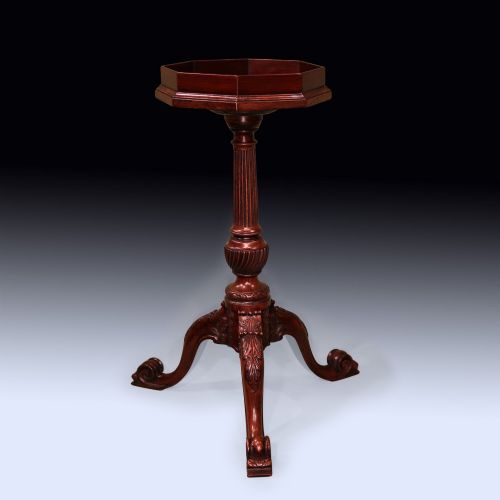
Buyers encountering this phrase find delicate drinking vessels featuring elongated bowls and intricate stems. The selection occasionally bridges categories into table furniture like mahogany candlestands and satinwood tripod tables, though the glassware remains the core focus.
Materials and manufacture
Makers shaped these items using lead glass and hand-blown glass, manipulating the molten material to create slender bowls and fine stems. The presence of lead crystal provided the clarity and weight necessary for delicate decorative elements.
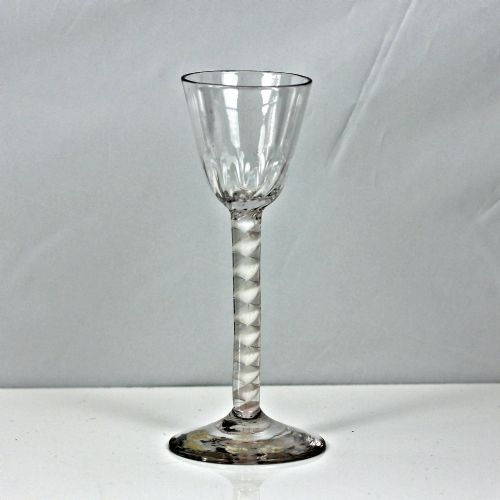
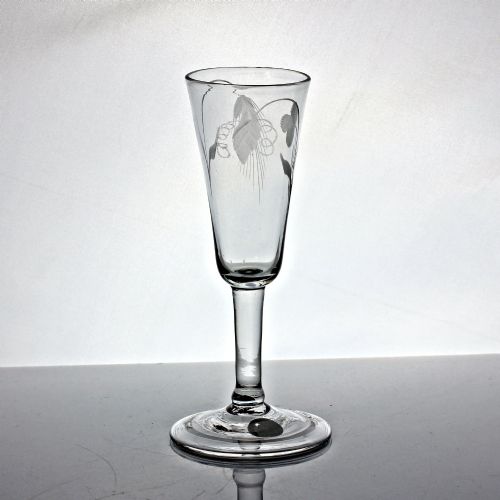
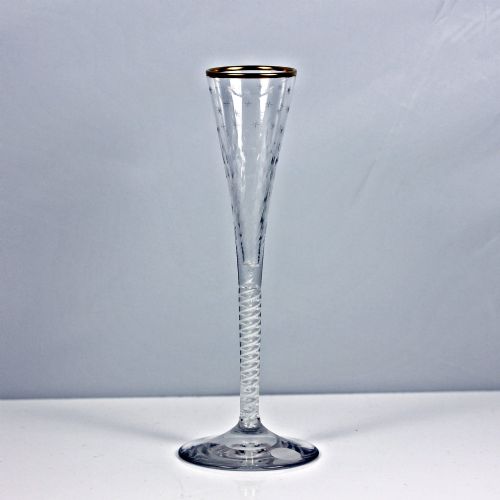
Internal stem decoration was achieved through specialist techniques involving air twists, opaque twists, and mixed twists trapped within the glass. Artisans also utilised flute-moulding on ogee bowls and surface engraving to finish the vessels.
The listings show materials spanning lead glass, hand-blown glass, mahogany, and satinwood across the 18th Century and Georgian periods.
Assessing quality and craftsmanship
Excellence in these vessels rests upon the precision of the stem twist and the symmetry of the bowl. Master glassmakers achieved remarkable regularity in complex air and opaque strands, whereas lesser examples display distortion or cloudiness in the metal.
Proportion and condition dictate the standing of a piece within its period. Crispness in engraved decoration and clean pontil marks indicate superior workshop practice, distinguishing fine collector examples from standard utilitarian ware.
The 18th Century Wine Flute Glossary
- Air twist
- A decorative stem formation containing elongated spiral channels of air trapped inside the glass. This technique gained popularity during the mid-Georgian era.
- Opaque twist
- A stem containing threads of white or coloured enamel glass twisted into patterns. These threads create a stark contrast against clear lead glass.
- Ogee bowl
- A curved drinking vessel shape with a distinctive 'S' profile, turning out at the rim. This form appears frequently on flute-moulded glasses.
- Pontil mark
- A rough scar left on the base of hand-blown glass where the pontil rod was snapped off after shaping. Its presence confirms traditional manufacture.
- Ratafia glass
- A narrow flute designed for sweet cordial or fruit-flavoured liqueurs. These pieces share the slender proportions of champagne flutes.
18th Century Wine Flute: Frequently Asked Questions
How do I identify a genuine 18th century piece?
Examine the weight, the handle of the metal, and the formation of the stem twist. Genuine examples in lead glass display subtle imperfections and wear appropriate to their age.
Look closely at the base for a smooth pontil mark and check the bowl formation against known mid-century domestic forms.
What is the difference between an air twist and an opaque twist?
An air twist contains tiny spiral bubbles pulled through the molten stem to catch the light. An opaque twist incorporates solid white enamel threads instead of air.
Both styles date largely to the middle decades of the Georgian period, though opaque twists generally appeared slightly later than air twists.
Can I use these glasses for daily dining?
These fragile vessels require careful handling and hand washing rather than modern dishwasher use. Their historic lead glass construction makes them susceptible to thermal shock and sudden impacts.
Many collectors prefer to keep them displayed safely or reserve them for very special occasions to protect the delicate stems.
Why are some listed items tables instead of glassware?
Searches for drinking vessels occasionally cross paths with mahogany and satinwood furniture from the same Georgian period. Dealers group items by historical era and material culture rather than strict category boundaries.
Reviewing the specific object type in each listing ensures you find the exact glassware or occasional table you seek.