
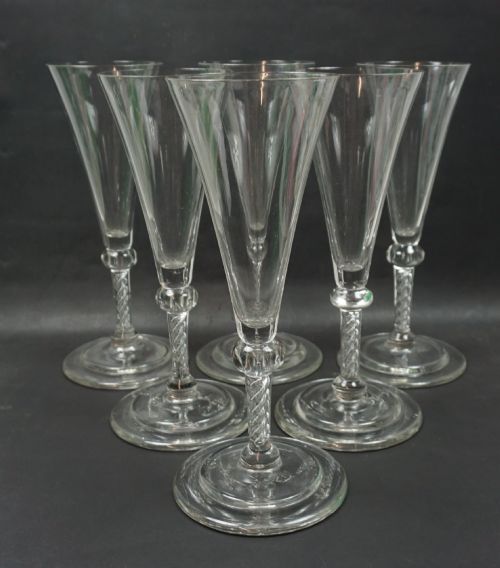


Tall Stem Wine Glass
These tall stem wine glass pieces bring centuries of glassware tradition to the table, offering collectors historic forms with remarkable optical presence.
Tall Stem Wine Glass
A tall stem wine glass encompasses historic drinking vessels defined by elongated stems and varied bowl forms, originating from periods spanning the eighteenth century through to the early twentieth century. When exploring this selection, buyers encounter everything from Georgian air twist champagnes to Victorian green goblets and Edwardian turquoise pieces.
The objects listed show significant stylistic variety, including Georgian revival pieces, Art Nouveau designs, and Bohemian historicism. These glasses serve as functional tableware and decorative display items, drawing the eye with their elevated proportions and period craftsmanship.
The most common forms on this page include eighteenth-century trumpet glasses with folded feet, pale green Bohemian roemers, and crystal hock glasses featuring enamel decoration. Each piece reflects the aesthetic priorities of its era, whether the restrained elegance of the Georgian period or the organic curves of Secessionist glass.
How they were made
Makers utilised traditional glassblowing techniques, shaping lead crystal, clear glass, and coloured metals while molten. Artisans introduced air bubbles, known as air tears, into the stems of eighteenth-century pieces or spun opaque white and coloured canes to create complex twist patterns.
Surface decoration required specialised skills such as enamelling and the application of gold leaf, seen particularly on continental hock glasses from the early twentieth century. Bowls and feet were shaped by hand, leaving subtle variations that distinguish individual vessels from mass-produced wares.
An eighteenth-century cup bowl bears an engraving of a fox alongside the hunting cry Tally Ho.
What varies in quality
Quality in these glass pieces rests upon the clarity of the metal, the precision of the stem formation, and the crispness of any engraved or enamelled ornamentation. Superior examples display balanced proportions where the elongated stem supports the bowl without heavy distortion or excessive weight at the base.
The execution of decorative elements, such as multi-spiral opaque twists or detailed enamel work, dictates the distinction between standard production and exceptional workshop output. Makers like Theresienthal or designers such as Otto Prutscher brought a higher level of artistic intent to their creations.
Theresienthal·Meyr’s Neffe·Otto Prutscher
The Tall Stem Wine Glass Glossary
- Air twist
- A decorative stem formation containing elongated threads of air trapped within the molten glass during manipulation. This technique creates a shimmering internal pattern when light passes through the stem.
- Roemer
- A traditional Germanic drinking vessel featuring a large spherical bowl resting on a cylindrical stem decorated with applied prunts. These glasses frequently appear in pale green tones from Bohemian workshops.
- Hock glass
- A tall wine glass traditionally used for German white wines, often featuring coloured glass bowls and elaborate enamel or gilt decoration. They became popular in elite dining settings during the nineteenth and early twentieth centuries.
- Folded foot
- A manufacturing technique where the rim of the glass foot is folded underneath to create a thickened, stable edge. This method adds weight to the base and prevents chipping on rough wooden tables.
Tall Stem Wine Glass: Frequently Asked Questions
How are air twist stems made?
Makers pierce hot glass with pins to trap air inside the metal, then stretch and twist the material as it cools.
This process elongates the bubbles into fine threads that spiral down the length of the stem.
What distinguishes an eighteenth century glass?
Eighteenth-century examples often feature lead metal with characteristic pontil marks on the underside of the foot.
They rely on optical clarity and structural stem formations rather than heavy surface enamelling.
Can I use antique wine glasses?
Many collectors use sturdy lead crystal and Victorian pieces for dining, provided they receive careful hand washing.
Delicate eighteenth-century vessels and gilded items are better reserved for display and gentle occasional use.
Why are some stems colored?
Glassmakers added metallic oxides to the batch to achieve shades like pale green, deep green, or turquoise.
This coloration was particularly favored in Bohemian and Edwardian workshop traditions.
What is a roemer used for?
Roemers traditionally served Germanic white wines, with the large bowl allowing the aromas to concentrate.
The studded prunts on the stem provided a secure grip for hands during communal feasts.