



Lead Glass Wine Flute
These lead glass wine flute pieces bring centuries of refined drinking vessel heritage straight to the table.
Lead Glass Wine Flute
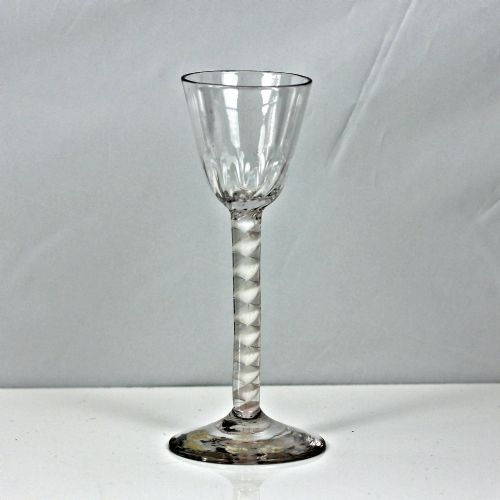
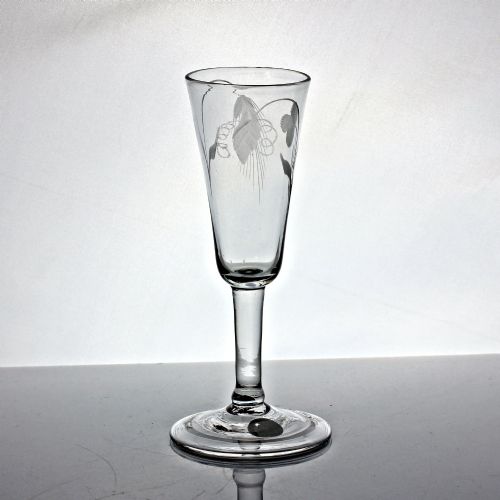
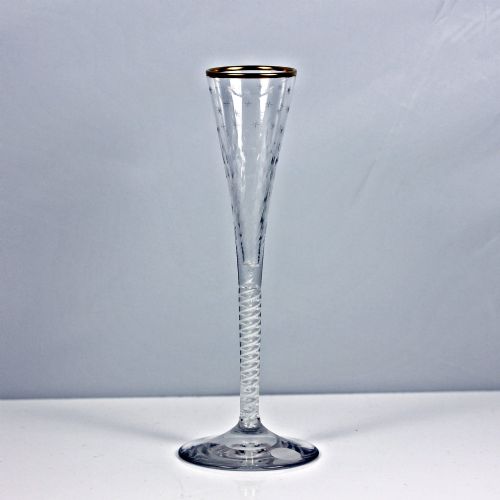
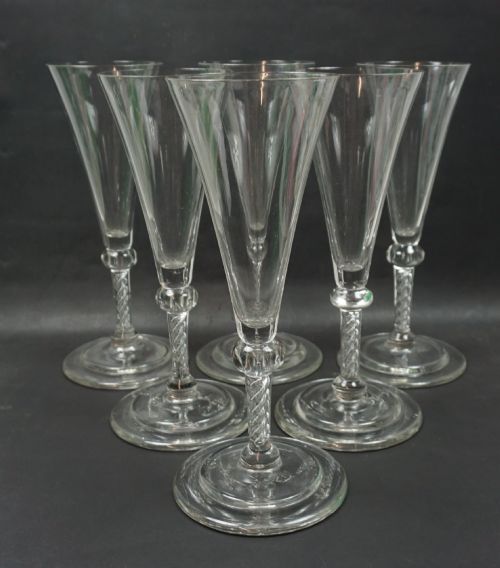
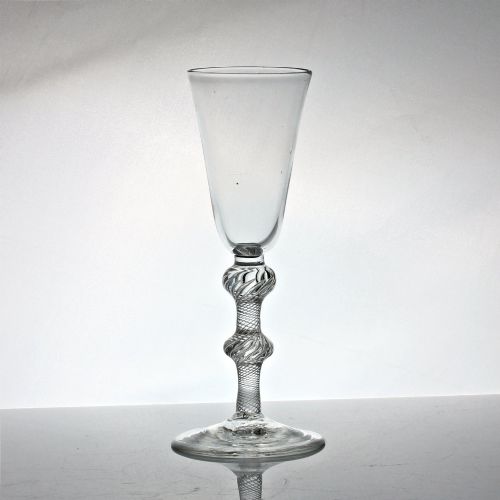
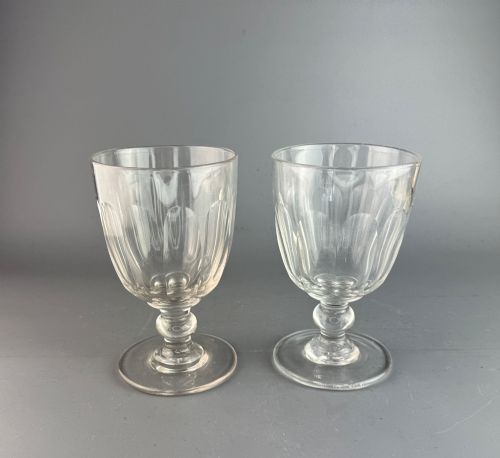
A lead glass wine flute represents a specialised drinking vessel shaped specifically for sparkling wine, champagne, and similar celebratory pours. These items emerge primarily from the Georgian and Victorian eras, alongside later revivals stretching into the twentieth century. The inventory showcases forms ranging from tall air twist stems to flute-moulded ogee bowls and heavy rummers.
How they were made
Craftsmen shaped these drinking vessels using hand-blown glass techniques, manipulating molten lead glass and flint glass while hot. Master glassmakers formed slender stems by trapping tiny air bubbles within the metal and drawing them into spiral twists.
Workers applied surface decoration through wheel-cutting, enamel work, and flute-moulding to create faceted bowls and textured stems. The resulting glass combines exceptional brilliance with the tensile strength required for daily service.
Georgian drinkers kept ratafia glasses purposefully slender so guests could not linger too long over potent fruit liqueurs.
What varies in quality
Quality rests upon the crispness of the cutting, the symmetry of the stem twists, and the optical purity of the metal itself. Superior examples display zero cloudiness and perfectly centred optical effects within the glass.
The weight, balance, and hand-finished pontil mark on the underside distinguish finer period drinking glasses from later reproductions. Masterful execution results in a resonant ring and precise proportions.
The Lead Glass Wine Flute Glossary
- Air twist
- A decorative stem formation created by stretching internal air bubbles into a spiral thread inside the glass. This technique demands immense skill from the glassblower.
- Lead crystal
- Glass containing a high proportion of lead oxide, which increases weight, brilliance, and refractive index. It allows for deeper, sharper cutting.
- Ogee bowl
- An S-shaped contour curving outward at the rim and inward toward the base. This profile helps concentrate aromas.
- Ratafia glass
- A narrow, tall drinking glass traditionally used for sweet fruit liqueurs or cordials. It shares proportions with early champagne flutes.
- Pontil mark
- The rough scar left on the base of a hand-blown vessel where the holding iron was snapped off. Its presence confirms traditional manufacture.
Lead Glass Wine Flute: Frequently Asked Questions
What is a lead glass wine flute?
A lead glass wine flute is a tall, slender drinking vessel designed for sparkling wines and champagne, fashioned from heavy, high-clarity lead crystal.
These pieces use the dense refractive qualities of lead glass to catch the light while maintaining a delicate profile for formal dining.
How do you date an old wine flute?
Dating relies on examining the stem formation, bowl shape, foot rim profile, and manufacturing marks such as pontil scars on the underside.
Eighteenth-century examples often feature air or opaque twists, while later Victorian versions lean towards heavy cut glass and distinct pan top rummer forms.
Are these antique glasses safe to use?
Most antique lead glass vessels remain entirely functional for holding wine, champagne, or water during special dining occasions.
Careful hand washing in lukewarm water preserves the fragile stems and prevents thermal shock or surface scratching.
What is an air twist stem?
An air twist stem contains elongated spiral bubbles trapped inside the clear lead glass during the initial hand-blowing process.
Glassmakers twisted the molten metal while drawing it out to create intricate internal threads that catch the light.
How should I clean antique glass?
Antique glass requires gentle hand washing using mild detergent and warm water, avoiding harsh modern dishwashers entirely.
Dry the pieces immediately with a lint-free linen cloth to maintain their characteristic clarity and brilliance.