



Clear Glass Wine Flutes
Clear glass wine flutes bring historical elegance to the table, offering a slender profile designed for sparkling wine and fine vintages.
Clear Glass Wine Flutes
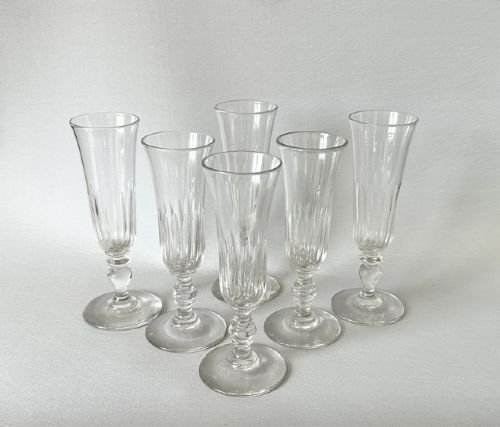
Clear glass wine flutes encompass slender drinking vessels spanning the Georgian, Victorian, Edwardian and 1930s periods.
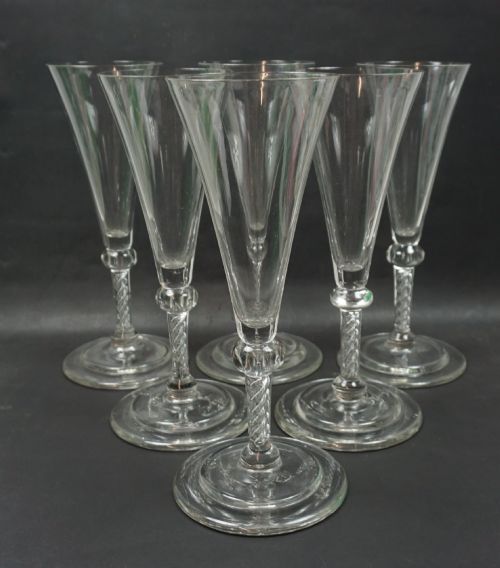
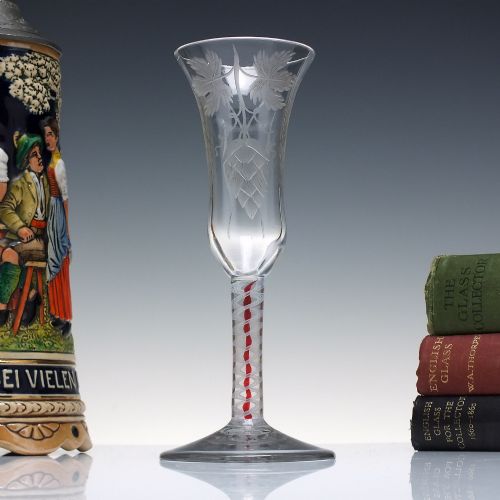
Buyers encountering this group will find tall silhouettes designed for sparkling wine and Champagne alongside Georgian air twist flutes and ratafia glasses.
The selection ranges from eighteenth-century examples with intricate twists to twentieth-century matched sets.
Factors of quality
Quality rests in the precision of the stem formation, particularly the symmetry of air bubbles within air twists and the crispness of wheel cutting.
The resonance of the metal and the purity of the clear glass or lead crystal differentiate standard production from finer work.
Condition of the rim and foot alongside the consistency of matched sets governs desirability.
Some eighteenth-century flute stems contain air channels so thin they resemble frozen breath trapped inside the glass.
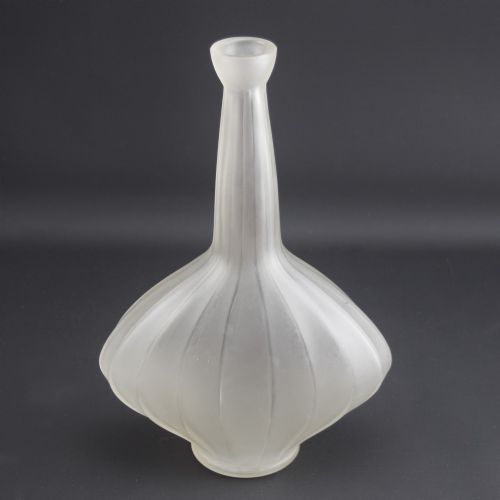
Rene Lalique·Hukin & Heath·Riihimaki
The Clear Glass Wine Flutes Glossary
- Air twist
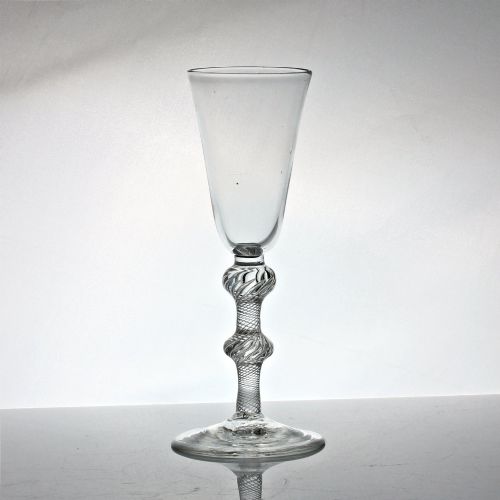
- A stem formation created by drawing out elongated air bubbles within the molten glass during the pulling process.
- Opaque twist
- A stem featuring white or coloured enamel threads enclosed within clear glass.
- Ratafia glass
- A narrow, tall flute designed for sweet cordial or liqueur, prevalent in the eighteenth century.
- Flute-moulded
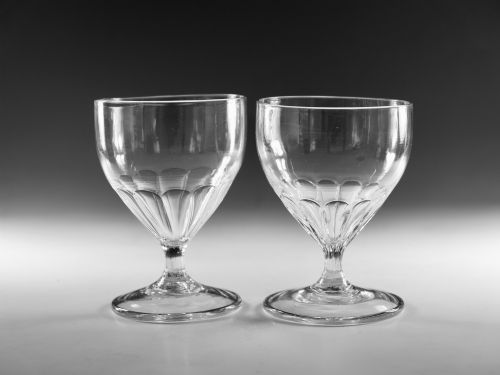
- A bowl decorated with vertical flutes or panels, often seen on eighteenth-century ogee bowls.
- Rummer
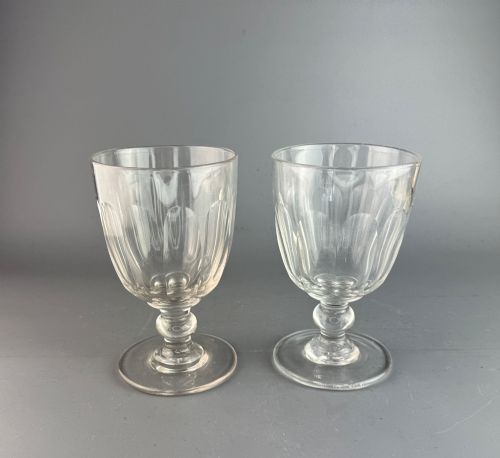
- A heavy, large drinking glass popular during the Georgian and Victorian eras used for ale, wine or spirits.
Clear Glass Wine Flutes: Frequently Asked Questions
How do I identify a Georgian flute?
Georgian flutes typically display hand-blown characteristics, pontil marks on the base, and complex air or opaque twists inside the stem. The glass often contains small trapped air bubbles from the period's manufacturing methods.
Bowl shapes tend to be narrower and taller, designed specifically for early sparkling wines or cordials like ratafia. Examining the weight and foot rim wear helps confirm age.
What is an air twist stem?
An air twist is formed when tiny air bubbles trapped inside the molten glass are elongated as the glassmaker pulls and twists the stem. This creates spiral threads of air running through the clear glass.
Mastering this technique required great skill to maintain uniform thickness and spiral spacing throughout the stem.
Are these glasses suitable for daily use?
Antique and vintage flutes require gentle hand washing and careful handling due to their delicate materials and age. Lead glass and flint glass can scratch or crack with thermal shock or dishwasher use.
Using them for special occasions allows you to appreciate their historical weight and optical clarity while preserving them for the future.
How do Victorian flutes differ from Georgian ones?
Victorian examples often feature heavier lead crystal with deep wheel-cut decoration rather than the stem twists found on eighteenth-century pieces. Matched sets become more common in the Victorian era.
Profiles shift towards sturdier proportions, reflecting changing dining styles and mass-production improvements during the nineteenth century.