




Lead Crystal Champagne Glasses
Lead crystal champagne glasses bring weight and brilliance to a table, offering historic forms made to pour sparkling wine.
Lead Crystal Champagne Glasses
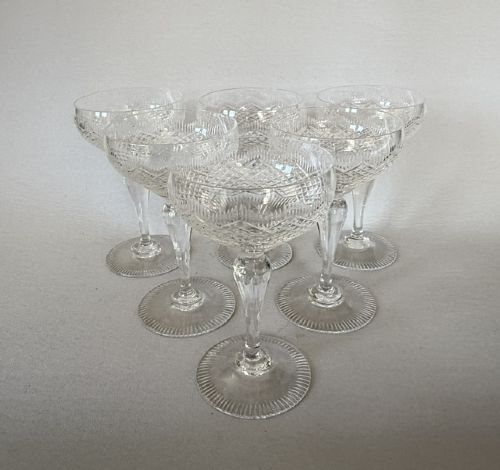
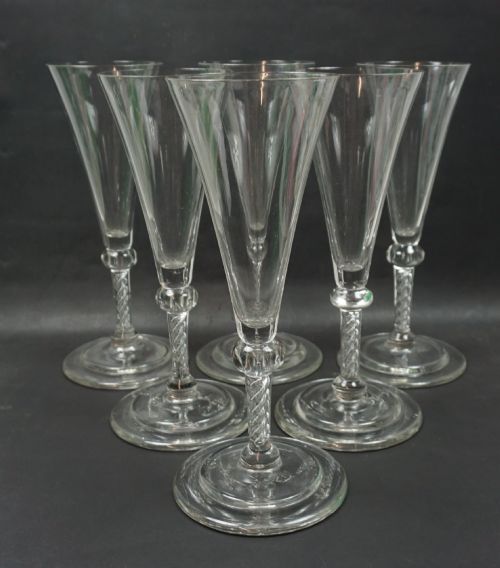
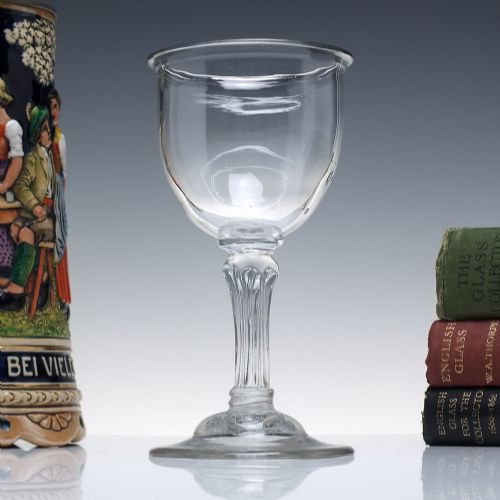
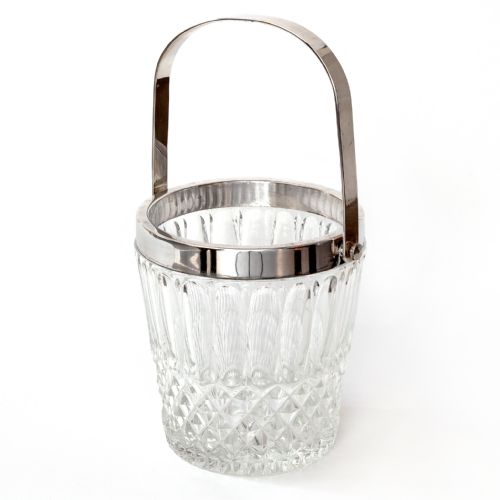
When you search for lead crystal champagne glasses, you encounter everything from Georgian pedestals to heavy twentieth-century ice buckets. These drinking vessels and serving pieces span several eras, bridging formal dining rooms and celebratory gatherings. The selection ranges from nineteenth-century cut coupes to eighteenth-century flutes.
You meet diverse vessel forms on this page, including champagne coupes, tall wine flutes, and substantial silverplate-mounted buckets. The forms vary from shallow bowls designed for sparkling wines to slender stems built to preserve bubbles. Each item reflects the drinking customs and glassmaking standards of its specific period.
The origins stretch across English workshops and international makers, encompassing clear glass, lead crystal, and cut crystal. Pieces emerge in styles such as Georgian, Regency, Victorian, Edwardian, and Art Deco. These distinct aesthetic movements determine the silhouette and decorative motifs of each glass or cooler.
How they were made
Glassmakers shaped these pieces using molten lead crystal and clear glass, blowing and moulding the material into distinct vessels. Artisans formed slender stems, deep bowls, and heavy bases by hand, incorporating air twists into the interiors for visual effect. Cut glass and cut crystal surfaces gained their sharp facets through wheel-cutting techniques.
Complementary metals appear alongside the glass, notably in silverplate mountings applied to heavy ice buckets and coolers. Etching added delicate surface decoration to Edwardian coupes, contrasting with the deep geometric cuts found on Regency and Victorian examples.
Lead Crystal Champagne Glasses Retail Price Guide 2026
Typical asking prices for lead crystal champagne glasses among the pieces listed under this phrase on Sellingantiques today, from the lower quarter to the upper quarter. They describe what is for sale here now, not the wider market.
Listings feature lead crystal and cut glass objects spanning Georgian, Regency, Victorian, Edwardian, Art Deco, and 1940s periods.
What varies in quality
Quality separates simple production items from exceptional vessels through the clarity and weight of the crystal. Superior pieces display deep, crisp wheel-cutting and balanced proportions, particularly along facet-cut stems and pedestal bases. The thickness of the glass and the precision of air twists dictate the refinement of the object.
The integration of secondary materials, such as silverplate fittings on heavy champagne buckets, indicates the standard of manufacture. Finer sets maintain uniform height, consistent bowl capacity, and clear ringing tones when struck lightly, whereas lesser examples show uneven wall thickness and surface striations.
The Lead Crystal Champagne Glasses Glossary
- Air twist
- A decorative stem technique containing spiral threads of trapped air inside the glass. This method required considerable skill during blowing.
- Champagne coupe
- A shallow, broad-bowled glass traditionally used for serving sparkling wine. Its wide rim allows the aromas to release quickly.
- Cut crystal
- Glass decorated by grinding facets or geometric patterns into the surface using rotating wheels. This process enhances the refractive brilliance of the material.
- Pedestal stem
- A raised foot supporting the bowl of a drinking vessel above a distinct knop or column. It elevates the drink and provides balance.
- Wine cooler
- A large vessel designed to hold ice and water for chilling bottles at the table. These pieces often combine heavy lead crystal bodies with silverplate mounts.
Lead Crystal Champagne Glasses: Frequently Asked Questions
How do I care for antique crystal glassware?
Wash these pieces by hand in warm water using a mild detergent, avoiding sudden temperature changes that can crack old glass. Dry them immediately with a lint-free cloth to maintain clarity.
Store them upright on stable shelves rather than stacked to protect fragile rims and delicate stems.
Are these glasses safe to use for dining?
Most historic glass and lead crystal pieces remain suitable for serving beverages during meals. Modern usage requires gentle handling to prevent chipping thin rims or historic stems.
Silverplate components on buckets and coolers benefit from periodic polishing with appropriate non-abrasive cleaners.
How can I tell a Georgian glass from a later reproduction?
Georgian pieces often display tool marks, pontil scars on the base, and variations in wall thickness characteristic of hand-blown manufacture. Eighteenth-century forms also utilise distinct stem constructions like air twists and heavy pedestals.
Later revival pieces tend to show greater uniformity in weight, precise machine finishing, and different chemical compositions within the glass.