



Crystal Air Twist Glasses
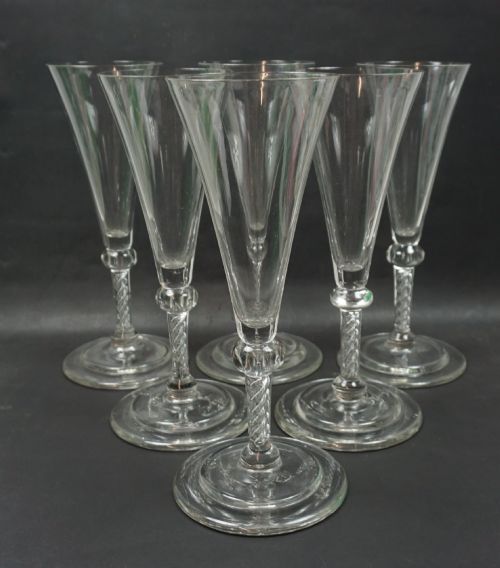
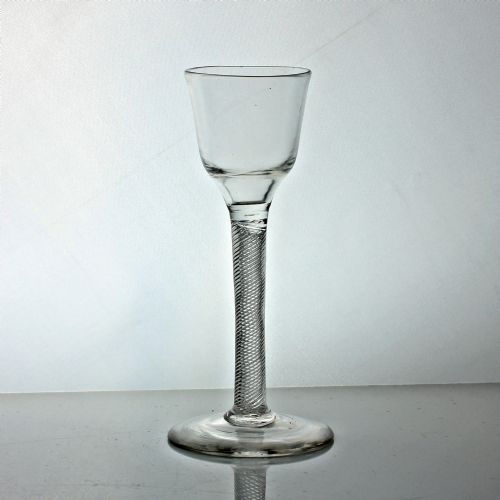
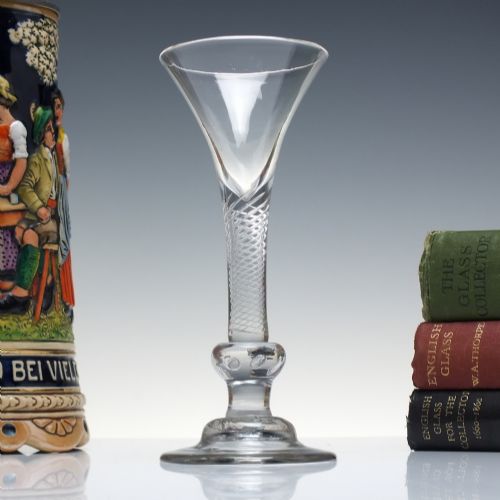
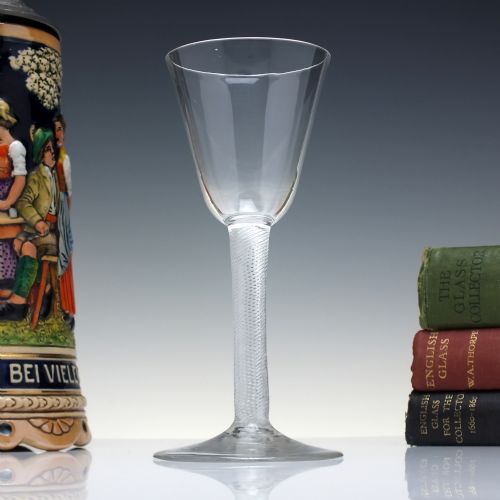
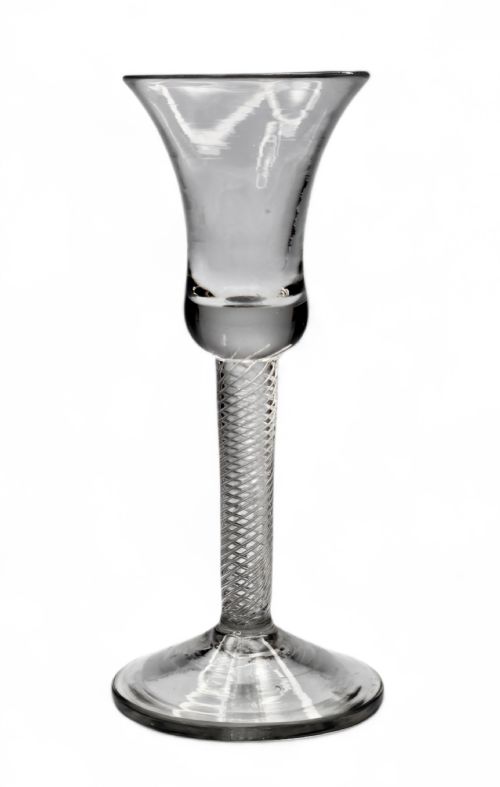
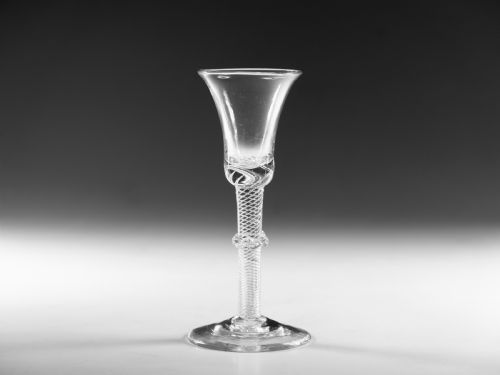
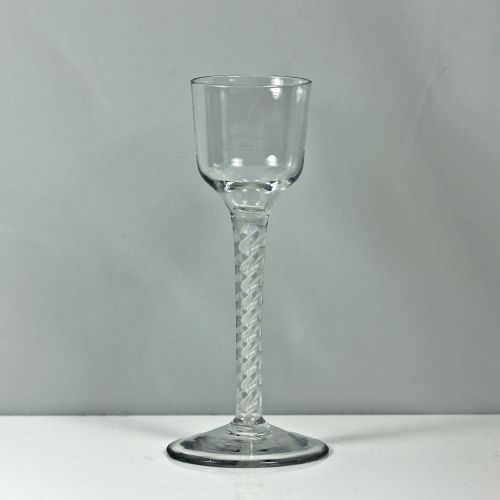
Crystal air twist glasses bring tactile depth to the table, formed by elongated spirals trapped inside lead crystal stems.
Crystal Air Twist Glasses
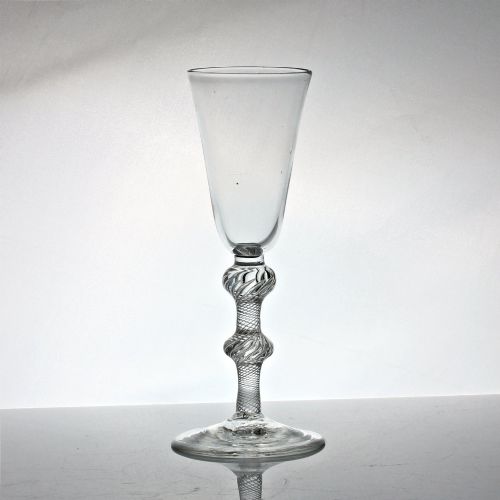
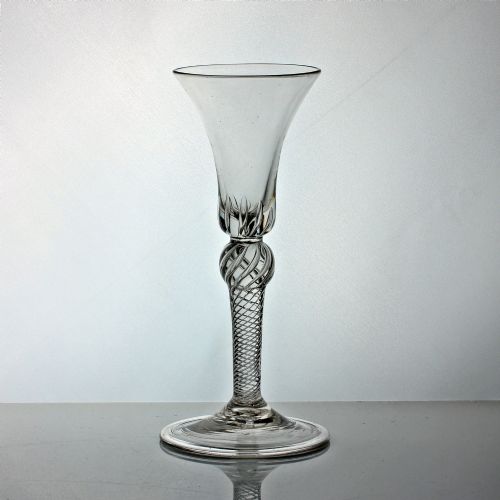
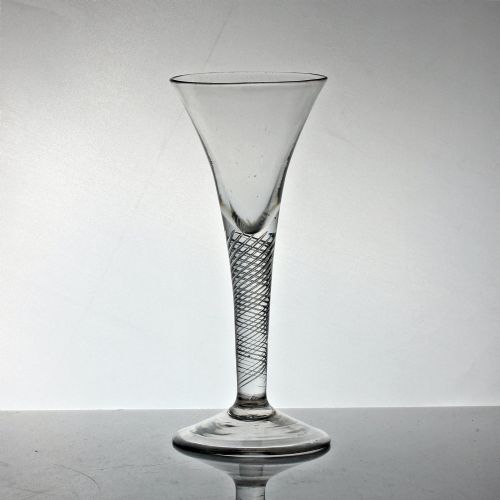
When you search for crystal air twist glasses, you are looking at drinking vessels defined by delicate internal channels of air running through the stem. These pieces date predominantly to the eighteenth century, during the Georgian period, alongside later twentieth-century revivals.
The most common form you will meet on this page is the wine glass, though ale glasses, cordials, champagne flutes, and goblets also appear. Bowls vary from ogee and bell shapes to pan top and trumpet profiles, often supported by shoulders, knops, or domed feet.
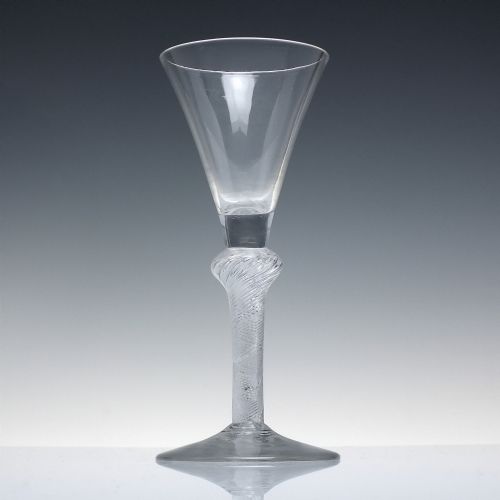
Originating primarily from English glasshouses, these items reflect a high point of domestic manufacturing. Examples range from simple multi-spiral air twists to complex composite stems incorporating opaque white enamel threads or mercury twists alongside the air.
Materials and construction
Makers utilised lead glass and flint glass, which provided the exceptional clarity and weight necessary to refract light through the stem. Hand-blown glass techniques allowed artisans to manipulate molten metal while trapping tiny air bubbles within.
To create the twist, workers stretched and spun heated glass rods containing air pockets, pulling them into helical strands before sealing them inside the solid stem. Additional elements like enamel twist threads and vermicular collars were applied by hand during shaping.
Some eighteenth-century drinkers hid treasonous political toasts inside delicate vine engravings.
Judging quality and character
Quality rests in the precision and consistency of the internal air spirals, where tighter, cleaner threads demand greater skill from the glassblower. Exceptional clarity of the metal and the balance between bowl and stem also separate standard items from finer examples.
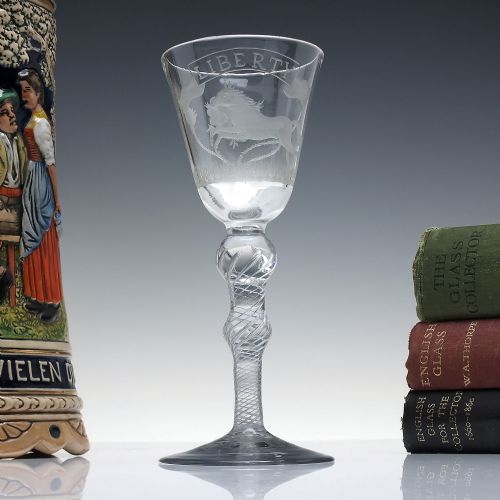
Engraving alters the character of a piece significantly, with delicate floral motifs, grape and vine carvings, or political symbols such as Jacobite emblems elevating the work. Structural details like folded feet and multiple knops contribute further distinction to individual pieces.
The Crystal Air Twist Glasses Glossary
- Air twist
- A stem containing elongated spirals of trapped air formed during the blowing process. This technique became popular in English glassmaking during the mid-eighteenth century.
- Opaque twist
- A stem incorporating threads of white enamel glass twisted within the clear metal. These threads are sometimes combined with air twists in composite stems.
- Knop
- A decorative swelling or bulge on the stem of a glass. Multiple knops provide additional grip and visual weight.
- Ogee bowl
- A cup shape featuring a double curve that swells outwards at the rim and curves inwards below. It offers a distinctive profile found on many Georgian wine glasses.
- Folded foot
- A base whose outer edge is turned underneath to create a thickened rim. This technique added stability and strength to eighteenth-century stemware.
Crystal Air Twist Glasses: Frequently Asked Questions
Were crystal air twist glasses used daily?
In the eighteenth century, such glasses served dining tables for wine, ale, and cordials during formal meals and social gatherings. Their heavy lead content made them durable enough for regular use by affluent households.
Today, collectors often use them on special occasions or display them to appreciate the optical effects within the stems.
What is a Jacobite engraved glass?
Jacobite glasses feature covert symbols, such as roses and oak leaves, used by supporters of the exiled House of Stuart during the eighteenth century. Engravers added these motifs to toast the restoration of the monarchy in secret.
Such pieces are particularly sought after by collectors for their historical association and detailed diamond-point or wheel engraving.
How can I tell an 18th-century glass from a later copy?
Eighteenth-century pieces typically exhibit tiny surface wear marks on the underside of the foot, known as pontil scars or wear, alongside slight asymmetries from hand-blowing. The lead crystal often displays a slightly warmer tone and exceptional refractive clarity.
Twentieth-century revivals, such as those from the nineteen-thirties, usually show more uniformity in manufacture and lack the characteristic wear of early table use.