

18th Century Wall Storage
These pieces of 18th century wall storage bring compact, period function to domestic interiors through hanging cupboards, corner cabinets, and candle boxes.
18th Century Wall Storage
When you search for 18th century wall storage, you encounter a selection of hanging furniture designed to utilise domestic vertical space efficiently. The inventory spans regional corner cupboards, wall cabinets, spice cupboards, and candle boxes intended for everyday utility.
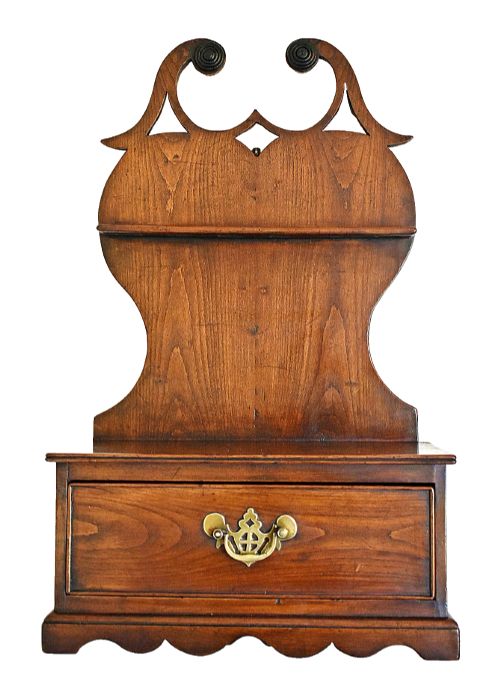
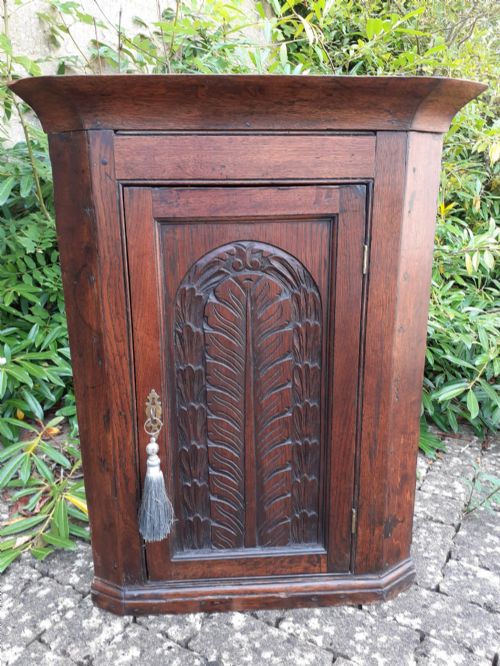
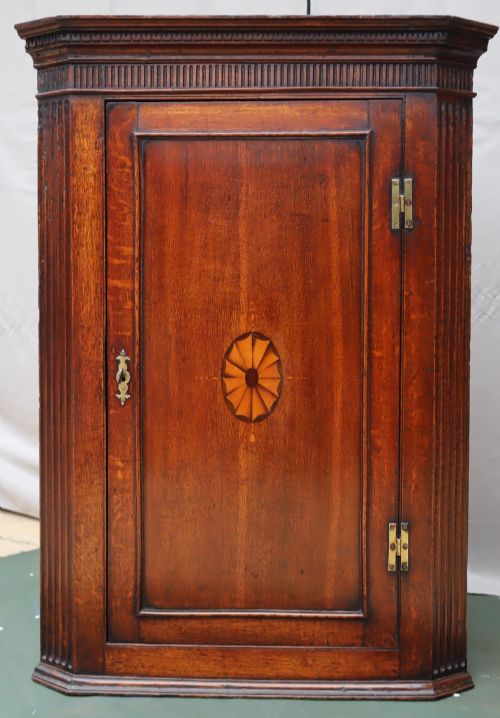
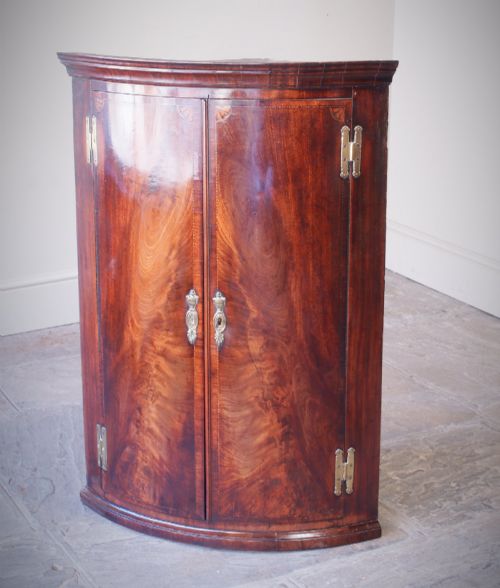
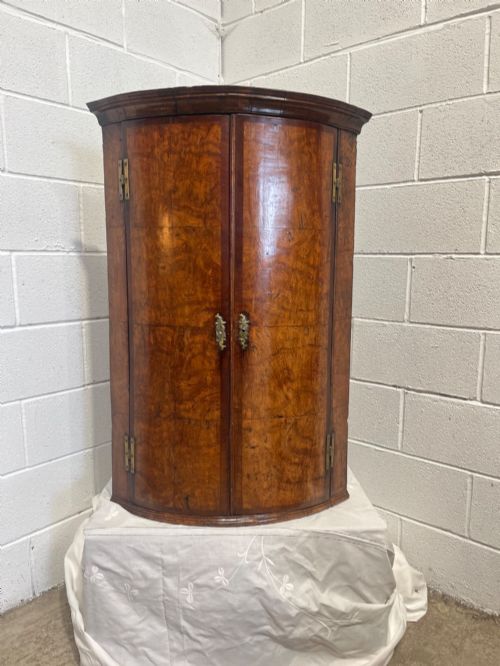
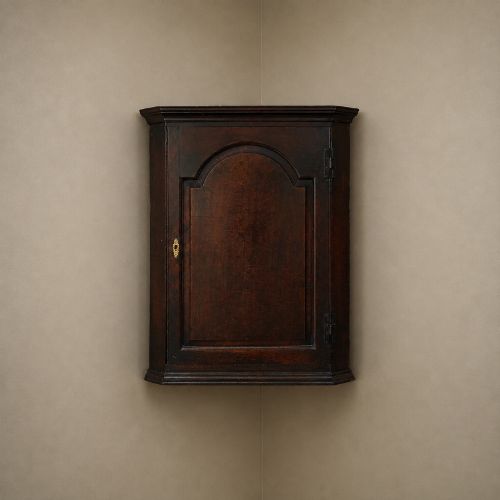
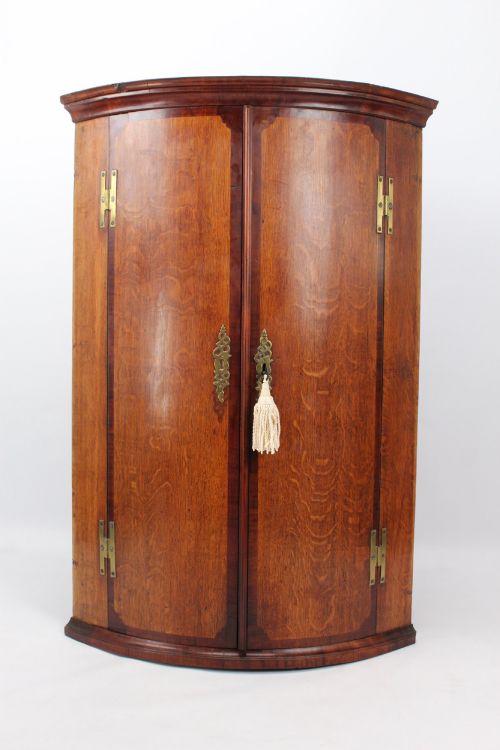
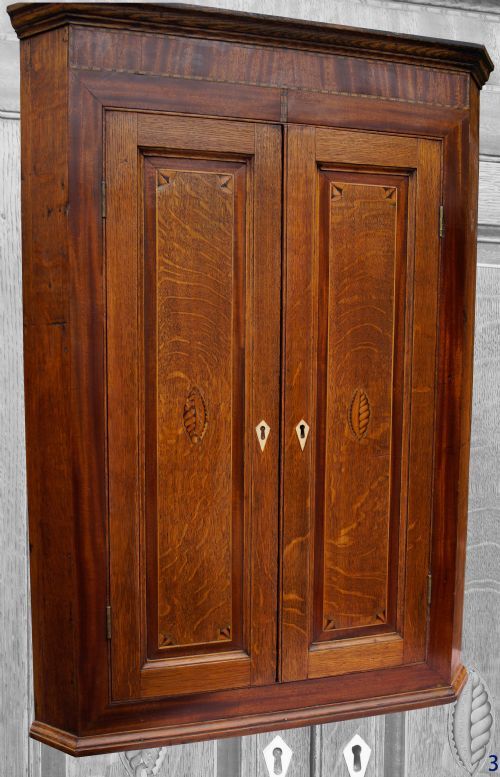
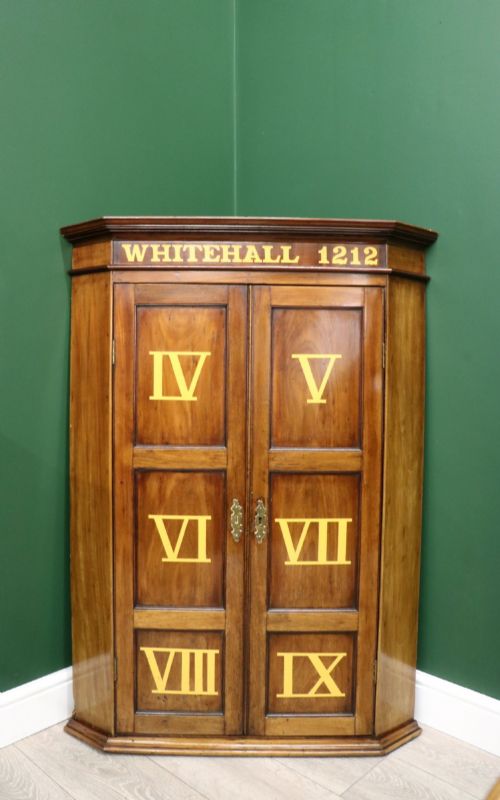
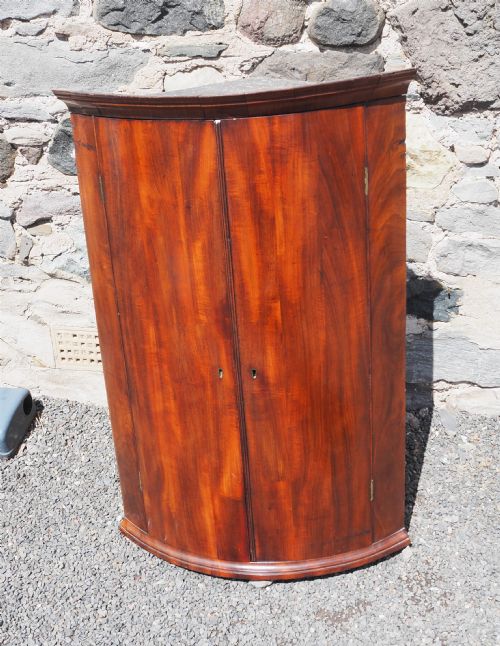
The most common form on this page is the oak corner cupboard, frequently built with a bow front to fit neatly into domestic room junctions. Alongside these are specialised items such as spoon racks, cutlery boxes, and hanging cabinets in mahogany, walnut, and elm.
Materials and construction methods
Makers relied primarily on native timbers such as oak, mahogany, and walnut, often selecting burl or flame veneers for decorative impact on primary surfaces. Brass hardware, including hinges and escutcheons, provides structural reinforcement and visual contrast.
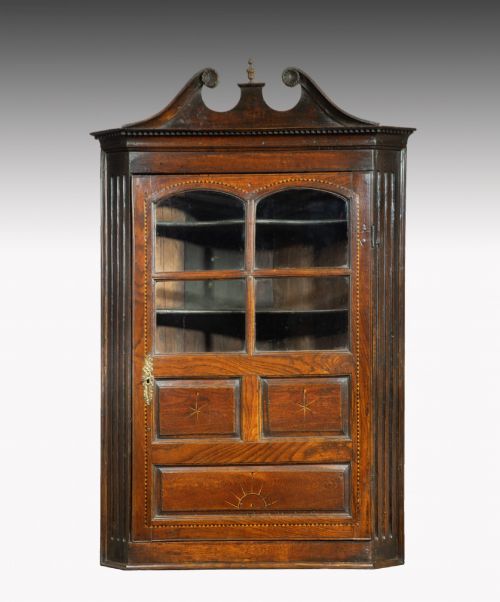
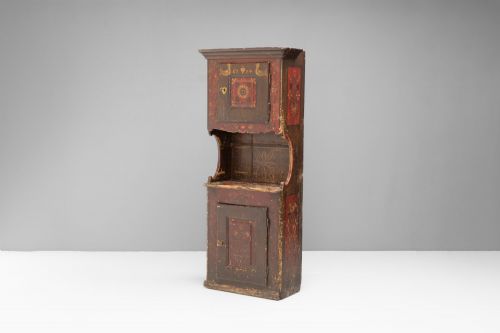
Joinery techniques involve pegged frames, dovetailed drawer construction, and shaped internal shelving designed to fit within enclosed cabinet bodies. Surface finishes range from polished hardwoods to painted schemes and delicate satinwood inlay.
Listings feature oak as the predominant material, alongside mahogany, walnut, elm, and painted surfaces.
What separates examples
Quality varies through the choice of timber figure, such as burr oak or flame mahogany, which elevates plain utilitarian pieces into decorative furnishings. The crispness of inlaid details and the preservation of original brass fittings further distinguish finer items from standard provincial work.
Proportion and structural integrity dictate the standing of individual cabinets, with well-balanced bow fronts and intact original hinges commanding attention. The complexity of internal arrangements, such as shaped shelving and lower drawer configurations, reflects the original maker's skill.
The 18th Century Wall Storage Glossary
- Bow front
- A convex curved cabinet front that projects outward from the wall corners. This shape softens rigid room angles and adds visual depth.
- Corner cupboard
- A triangular or wedge-shaped cabinet built to mount directly into the junction of two walls. It maximises unused vertical space in smaller rooms.
- Spice cupboard
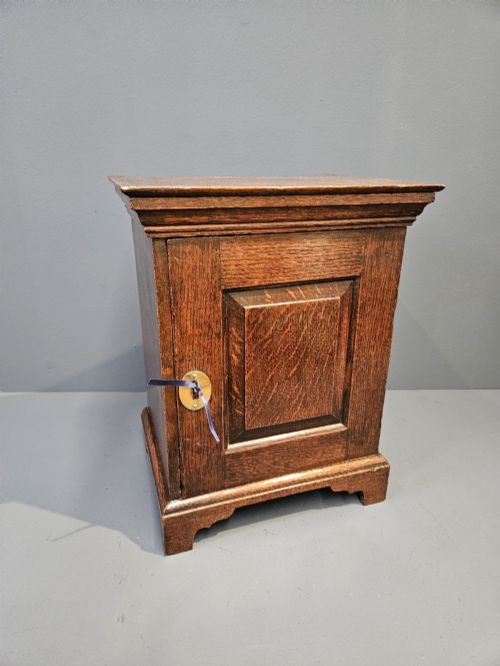
- A small wall-mounted cabinet fitted with internal drawers or miniature shelves. Historically, these held expensive culinary ingredients and medicinal supplies.
- Satinwood inlay
- Contrasting pale wood inserted into dark primary veneers to create geometric or floral patterns. This technique highlights elite cabinet work.
18th Century Wall Storage: Frequently Asked Questions
Where should I hang a corner cupboard?
These cabinets mount securely into room corners where two walls meet at right angles.
Ensure the wall studs or solid masonry can support the combined weight of the timber structure and its contents.
How do I distinguish walnut from mahogany?
Walnut displays a rich brown tone with intricate dark grain patterns and occasional burl figures.
Mahogany typically presents a reddish-brown hue with a straighter, tighter grain that deepens in warmth over centuries.
Were candle boxes meant for walls?
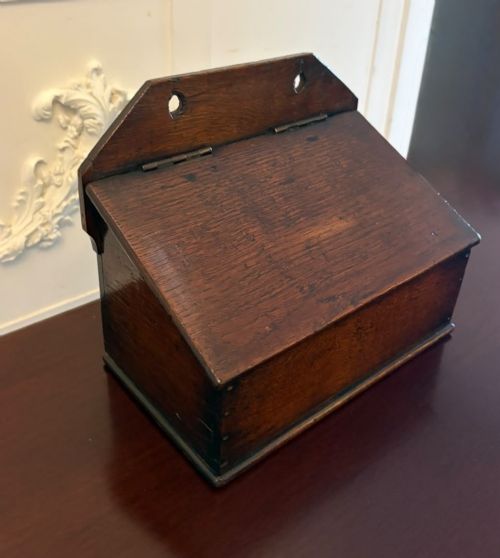
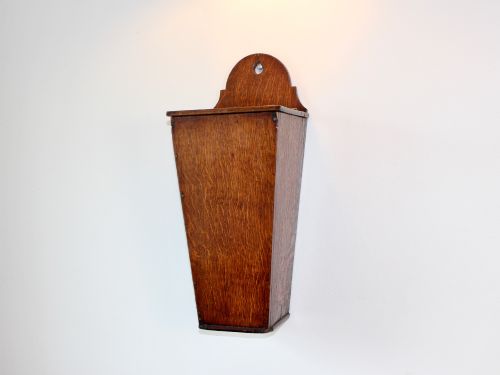
Many candle boxes feature integrated hanging slots or pierced backboards designed specifically for vertical wall mounting.
This kept tallow or wax candles safely stored away from household pests and within easy reach of the hearth.