



Georgian Carved Corner Cabinet
A georgian carved corner cabinet turns dead wall space into a focal point, offering deep shelving and period character.
Georgian Carved Corner Cabinet
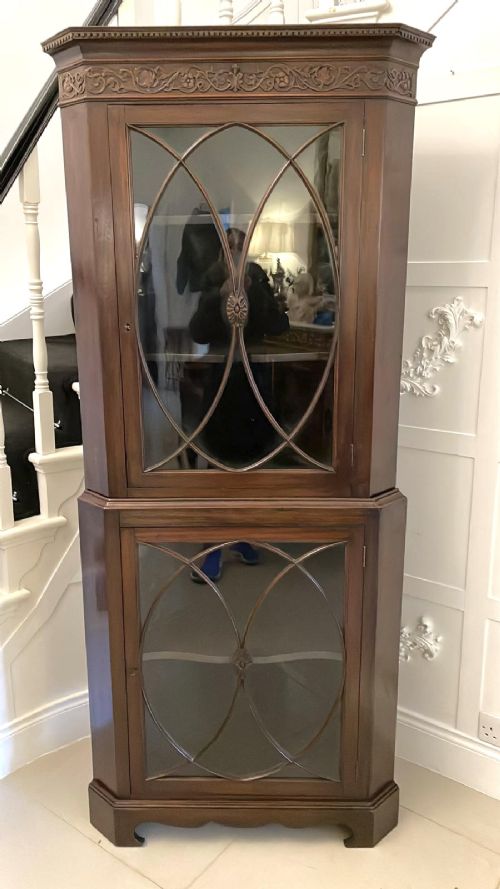
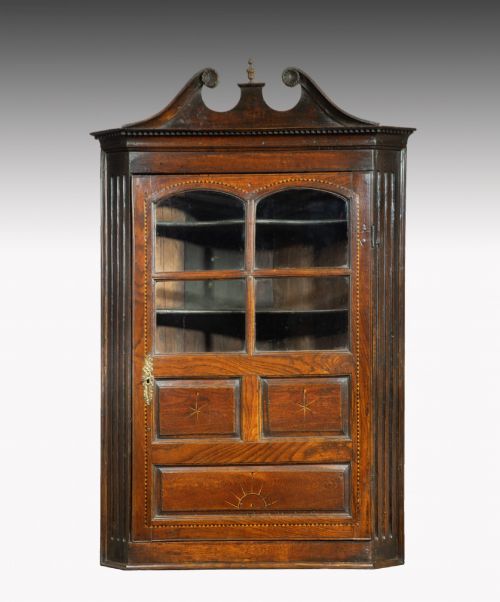
A georgian carved corner cabinet provides clever storage designed specifically to fit the intersection of two walls, making economical use of neglected angles in period rooms. These pieces appear most frequently in oak or mahogany, spanning hanging wall formats, floor-standing units, and tall cupboards raised on stands.
Most examples originate from the eighteenth century, though later revivals from the nineteenth and early twentieth centuries also appear. Buyers encounter both vernacular country pieces with simpler detailing and more formal urban designs featuring architectural cornices or glazed doors.
The interior layout typically incorporates shaped wooden shelving designed to display porcelain, glassware, or silver. Whether chosen as a hanging wall cupboard or a substantial floor-standing cabinet, each version brings distinct period presence to a domestic interior.
How they were made
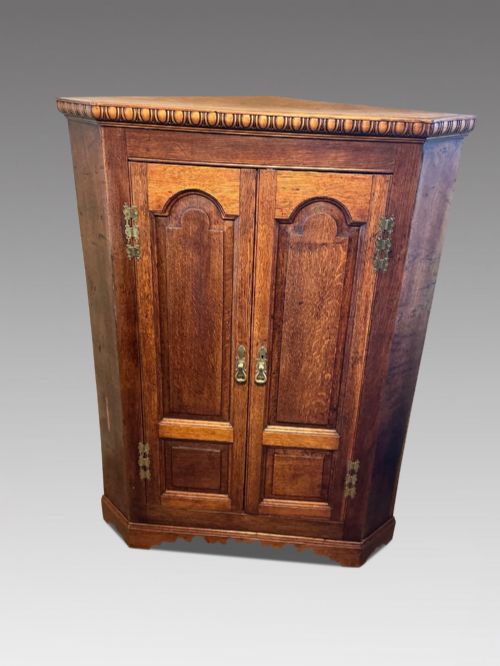
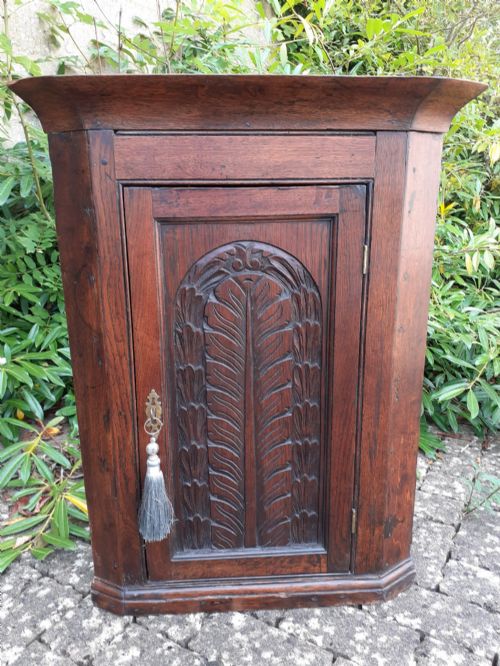
Cabinet makers constructed these pieces primarily using solid oak or mahogany, frequently incorporating fruitwood inlay, pine for secondary elements, and brass hinges or escutcheons. Doors often utilise raised panels, astragal glazing bars, or carved relief motifs to break up the flat planes of timber.
Joinery techniques relied on pegged mortise and tenon joints for structural stability, whilst doors swung on robust iron or brass butterfly hinges. Carving was executed by hand directly into the dense grain of the timber, creating geometric patterns, scrollwork, or floral details.
Several early pieces feature unusually decorated inner compartments, suggesting makers enjoyed surprising whoever finally opened the cupboard doors.
What varies in quality
Quality rests heavily on the depth and crispness of the hand carving, the choice of timber figures, and the proportion of the cornice to the body. Pieces with well-figured mahogany or richly patinated oak display superior visual weight and ageing.
Finer examples distinguish themselves through specialised interior fittings, such as shaped drawers, domed upper sections, or intact original brass hardware. The integration of harmonious proportions separates standard utility cupboards from exceptional examples of period craftsmanship.
The Georgian Carved Corner Cabinet Glossary
- Astragal glazed
- A glass door divided into smaller panes by slender wooden mouldings called astragals. This technique allowed makers to showcase valuable porcelain while protecting it from dust.
- Hanging corner cupboard
- A wall-mounted storage unit fitted with fixing brackets to secure it safely across a room angle. These smaller pieces freed up floor space in compact Georgian rooms.
- Raised panel
- A central wooden panel with bevelled edges designed to fit into a grooved frame. This traditional construction method allowed the timber to expand and contract naturally with seasonal humidity changes.
- Floor standing corner cabinet
- A tall cabinet reaching from the floor up to the cornice, often built in two distinct stacked sections. They provide substantial enclosed storage alongside display space.
- George III period
- The era spanning the reign of King George III from seventeen sixty to eighteen twenty, noted for refined cabinet making styles. Pieces from this time often incorporate sophisticated carving and classical proportions.
Georgian Carved Corner Cabinet: Frequently Asked Questions
How do I hang a heavy wooden corner cupboard?
Hanging cupboards require secure fixing directly into solid masonry or substantial wall studs using heavy-duty brackets. The considerable weight of solid oak or mahogany demands professional installation to ensure stability.
Many antique cupboards feature original internal fixing holes or sturdy mounting battens positioned at the rear. Consulting a professional carpenter ensures the wall structure can safely support the cabinet and its contents.
What is the difference between a standing and hanging cabinet?
Standing cabinets rest directly on the floor, frequently incorporating a lower cupboard section or standing on a dedicated base frame. They offer larger storage capacity and greater height within a room.
Hanging cupboards mount directly to the wall at eye level or above other furniture. They suit smaller spaces where floor area remains at a premium while still utilising awkward room angles.
How should I care for antique mahogany and oak?
Maintain timber surfaces by applying a traditional beeswax polish sparingly and buffing with a soft cloth to nourish the grain. Avoid modern silicone sprays or abrasive cleaning products that damage historic patination.
Keep these cabinets away from direct heat sources and dramatic humidity fluctuations to prevent wood splitting or warping. Stable environmental conditions preserve both the timber and original joinery.
Can I use these cabinets for modern storage?
These cabinets adapt easily to contemporary living, functioning well as drinks cabinets, bookcase units, or general display spaces. The deep interior shelving accommodates modern dishware, glassware, and books.
Measuring the internal shelf depth before purchase ensures your specific items fit comfortably behind the doors. The distinctive proportions add character and practical storage to modern dining rooms or hallways.