



18th Century Glass Picture
An 18th century glass picture brings rich depth and luminous detail to a wall, capturing historic portraits and allegories behind a protective glazed surface.
18th Century Glass Picture
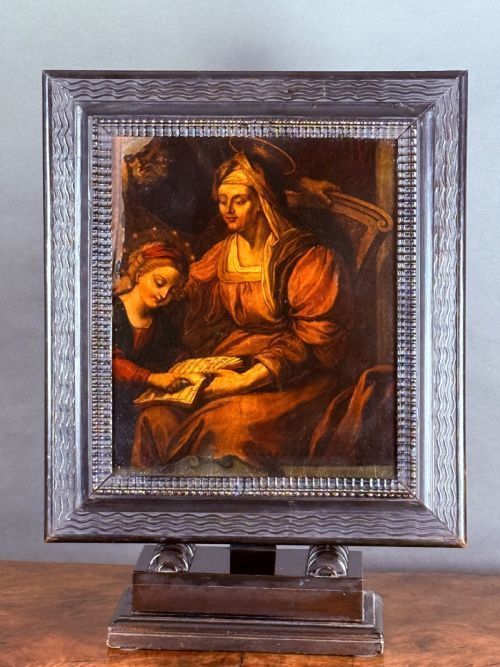
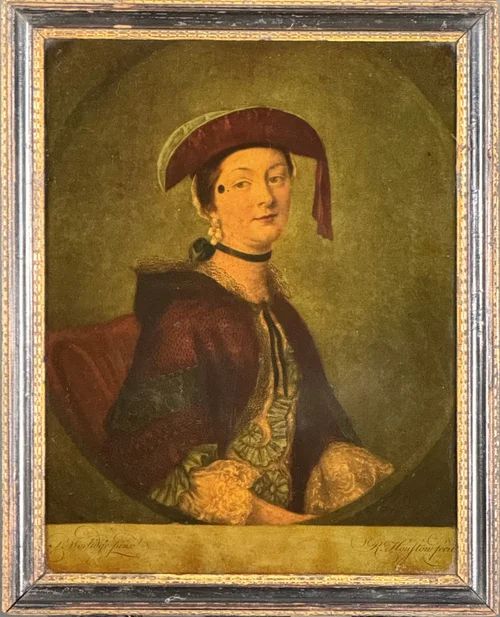
An 18th century glass picture is a specialised form of wall art created by applying pigment, oil paint, or a transferred print directly to the reverse side of a glass sheet. When viewed from the front, the transparent glass creates a natural gloss and protects the delicate media underneath from dust and handling.
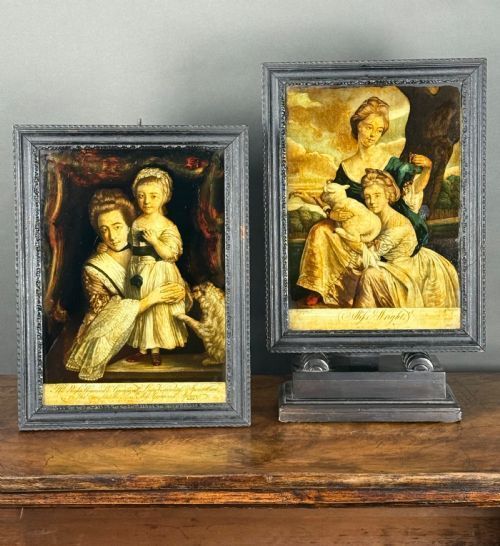
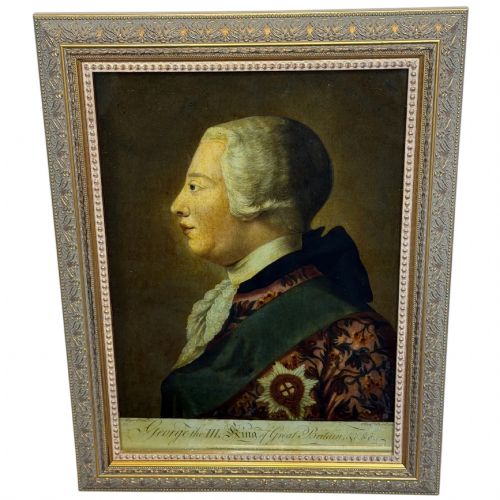
The pieces on this page span the 17th, 18th, and 19th centuries, alongside objects from the Georgian era and around the year 1800. Alongside portraits of figures like King George III, Queen Anne, and Mrs Brooks, you will find seasonal allegories and religious scenes.
Most examples function as framed prints or reverse glass paintings, often housed in wood frames. While many items are individual portraits or scenes, pairs such as Autumn and Winter or depictions of the Bradshaw sisters also appear in the selection.
Materials and Technique
The construction relies on glass as the primary support, combined with paper, oil paint, pigment, and gold leaf. Makers carefully applied media in reverse order, painting the fine details and highlights first before laying down the broader background colours.
Mezzotint prints were frequently transferred onto the glass plate and subsequently hand-coloured with oil pigment to create vibrant domestic portraits and narrative compositions. Carved wood frames often complete the construction, securing the fragile glass panel.
18th Century Glass Picture Retail Price Guide 2026
Typical asking prices for 18th century glass picture among the pieces listed under this phrase on Sellingantiques today, from the lower quarter to the upper quarter. They describe what is for sale here now, not the wider market.
Assessing Quality
The preservation of the fragile glass and the integrity of the underlying paper layer dictate the visual impact of the piece. Intact original wood frames and minimal flaking of the pigments distinguish superior examples from heavily restored or degraded ones.
Fletcher·Sebastiaan Vrancx·Charles Spooner·Richard Purcell·Robert Sayer·W. Bishop·Richard Phillips·John Miers
The 18th Century Glass Picture Glossary
- Reverse Glass Painting
- An artwork painted directly onto the back of a glass sheet to be viewed from the front. This technique imparts a smooth, lustrous sheen to the finished image.
- Mezzotint
- A printmaking method of the intaglio family where tones are developed from dark to light using a rocker. These prints formed the basis for many glass-transferred portraits.
- Reverse Glass Print
- An engraving or mezzotint transferred onto glass and subsequently coloured by hand. It merges printmaking precision with the luminous qualities of painted glass.
- Gold Leaf
- Beaten gold used sparingly to highlight details and borders within the composition. It catches the ambient light behind the glass.
18th Century Glass Picture: Frequently Asked Questions
How do I hang an 18th century glass picture safely?
These fragile works require secure wall hooks and sturdy wire attached firmly to the original wood frame to distribute the weight evenly.
Keep them away from direct sunlight and damp walls to protect the delicate pigments and paper layers trapped behind the glass.
Were these pictures meant to be framed originally?
Most examples were produced specifically to be housed in wood frames, which protected the vulnerable edges of the glass sheet from chipping.
Original frames often complement the period of the artwork, though many have undergone repairs or replacement over the centuries.
How do I tell a painting from a printed transfer?
Close inspection under magnification reveals whether the fine lines originate from inked mezzotint dots or direct brushstrokes.
Printed examples show the characteristic grid or texture of the engraved plate beneath the hand-applied oil paint and pigments.
What subjects are most common?
Portraits of royalty, nobility, and literary figures dominate the selection, alongside allegorical representations of the seasons and domestic scenes.
Religious subjects and silhouettes also appear among the offerings, reflecting the varied tastes of Georgian and 18th-century buyers.