


Verre Eglomise Portrait
A verre eglomise portrait offers a fascinating glimpse into historical likenesses, capturing delicate silhouettes and painted details beneath glass.
Verre Eglomise Portrait
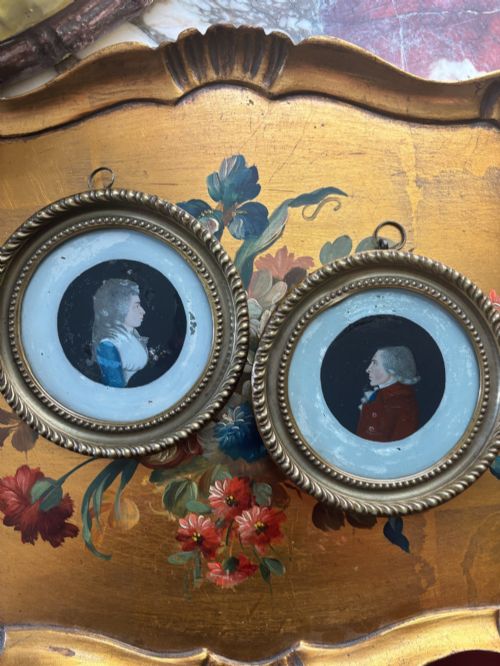
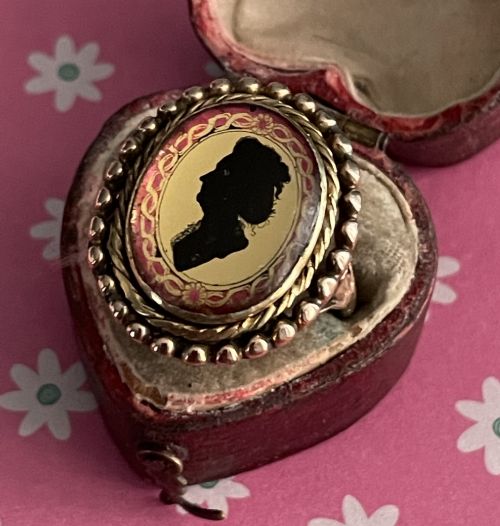
When you search for a verre eglomise portrait, you encounter miniature likenesses and reverse glass paintings spanning the Georgian, Regency and early nineteenth century periods. These works capture profiles and figures using glass as the primary support, often framed for display on walls or set into jewellery.
The versions most commonly met on this page include silhouette portraits painted on glass, reverse glass prints and miniature depictions of gentlemen and ladies. Creators from the eighteenth and nineteenth centuries applied pigment and gold leaf behind the glass panel to achieve a distinct luminous depth.
Examples range from framed pictures of figures and equestrian subjects to intimate rings featuring tiny silhouettes. The variety reflects a period when delicate portraiture served both as personal keepsake and decorative art.
Materials and construction
Makers produced these works by applying paint, pigment and gold leaf to the reverse side of a glass panel. This technique required precise brushwork, as the artist painted details in reverse so the final image appeared correctly when viewed through the front of the glass.
Frames made from ebonised wood or giltwood housed many of these pieces, while smaller wearable items integrated brass and precious metals. Silkwork embroidery occasionally augmented the visual composition alongside painted elements.
One historical maker even included a secret motto alongside a silhouette, adding a personal whisper from the past.
Assessing quality
Quality rests upon the precision of the brushwork and the preservation of the delicate materials behind the glass. Finer examples display crisp silhouettes and careful application of gold leaf that catch the light without flaking or fading.
John Miers·Abraham Cooper
The Verre Eglomise Portrait Glossary
- Verre eglomise
- A process of applying gold leaf and paint to the reverse of glass. This historic method creates a mirror-like finish and protects the artwork from surface wear.
- Silhouette
- A portrait represented as a solid shape of a single colour, usually black. These profiles were frequently painted on glass or cut from paper.
- Reverse glass print
- An image transferred and painted onto the underside of a glass sheet. The finished piece is viewed from the opposite side to give depth.
- Giltwood
- Wood carved and covered with thin gold leaf or a gold-coloured finish. This material is common in the frames housing eighteenth and nineteenth century portraits.
Verre Eglomise Portrait: Frequently Asked Questions
What is a verre eglomise portrait?
A verre eglomise portrait is an artwork where the likeness is painted or gilded onto the reverse side of a glass panel. This technique creates a distinctive luminous quality.
Such pieces often take the form of miniature silhouettes or framed pictures from the Georgian and Regency eras.
How do I care for reverse glass art?
These pieces require gentle handling because the pigment and gold leaf rest behind the glass. Keep them away from direct sunlight and excessive moisture.
Cleaning should involve only a soft, dry cloth on the exterior glass surface.
Are these portraits original Georgian pieces?
Many examples date from the Georgian and Regency periods, spanning the late eighteenth and early nineteenth centuries. Certain listings also include later reproductions.
Examining the materials and framing helps determine the exact age of each item.
How were silhouette portraits mounted?
Portraits on glass were frequently housed in small ebonised wood or giltwood frames for wall hanging. Some exceptional examples were also set directly into rings.
This mounting protected the fragile glass surface while allowing intimate viewing.