
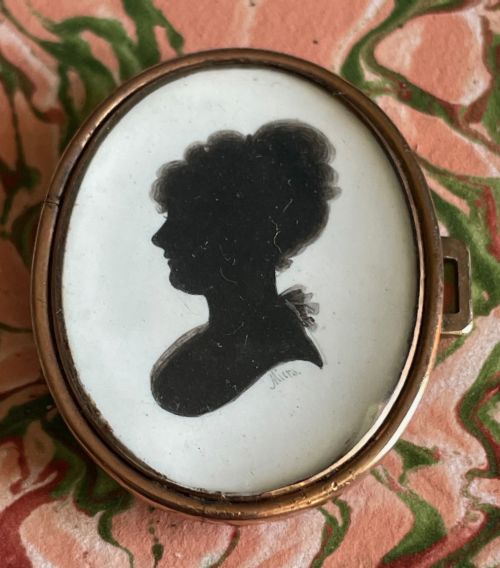


John Miers Silhouette
A John Miers silhouette captures Georgian portraiture at its most precise, offering collectors an intimate glimpse of 18th-century likenesses.
What these pieces are
When you search for a john miers silhouette, you encounter miniature portraits executed in profile during the Georgian and 18th-century periods. These works capture subjects ranging from individual gentlemen and ladies to family groups and named sitters.
You are most likely to meet single portrait miniatures or small wearable pieces housed in brass and ebonised wood frames. Their compact scale reflects the intimate nature of portraiture from the era.
How they were made
These works are constructed using plaster as a base, upon which ink and pigment form the profile image. The resulting silhouette is frequently sealed behind protective glass.
Mountings involve materials such as brass, ebonised wood, and gold to frame the delicate painted surfaces. Some wearable examples are incorporated into rings and brooches with leather components.
Retail Price Guide 2026
Typical UK retail prices for john miers silhouette, calculated from the Sellingantiques database of over a million retail prices indexed since 2003. This retail price guide relies exclusively on Sellingantiques data; no external sources or auction records are used, so the figures do not describe the wider market.
Joseph Lathbury managed to sit for his profile at the remarkable age of eighty-two.
What varies in quality
Differentiation across the range depends on the intricacy of the subject matter and the survival of original components. Group portraits, named sitters, and detailed headdress depictions represent the upper tier of the maker's output.
The quality of the housing also distinguishes pieces, with signed works, dated inscriptions, and original leather or brass framing carrying particular distinction. Simpler single profiles form the baseline of the surviving material.
John Miers
The John Miers Silhouette Glossary
- Silhouette
- A portrait profile filled in with a solid dark colour, typically black, showing the outline of a subject. This form gained immense popularity during the 18th century.
- Plaster
- A solid material used as a substrate for painting profiles. Miers often employed plaster to achieve a crisp relief effect.
- Ebonised wood
- Timber treated to imitate ebony, commonly utilised for framing miniature profiles. It provides a dark contrast that highlights the pale background of the portrait.
- Pendant
- A piece of jewellery designed to hang from a neck chain. These housings often protect miniature portraits behind glass.
- Leeds label
- A paper identifier associated with the maker's studio location. Such labels help substantiate the provenance of early works.
Frequently Asked Questions
What is a John Miers silhouette?
A John Miers silhouette is an 18th-century portrait miniature executed in profile, often painted on plaster and housed in a frame or jewellery mounting.
These works record the likenesses of Georgian sitters through precise ink and pigment application, frequently bearing the signature or label of the maker.
How were these silhouettes worn?
Certain silhouettes were mounted as rings, brooches, or pendant jewellery designed to be worn close to the body.
Such wearable formats allowed individuals to keep portraits of family members or spouses near them throughout the Georgian period.
How can I date a piece?
Dating relies on contemporary inscriptions, specific dates recorded on the artwork, and stylistic markers associated with the 18th century.
References to named sitters and period framing materials also assist in establishing a reliable chronology for each object.
What materials are used in the frames?
Frames and mountings typically incorporate brass, ebonised wood, gold, and leather to protect the delicate interior.
Glass fronts are standard across both wall-hung portraits and wearable jewellery pieces to shield the pigment and plaster.