

Georgian Silhouette Portrait
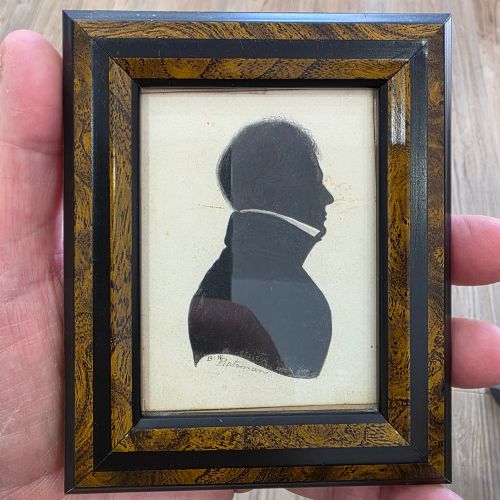
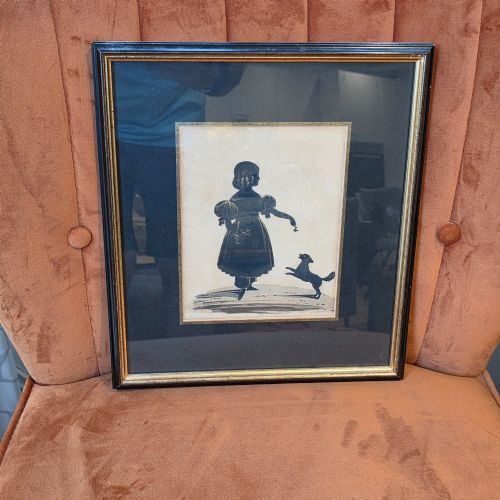
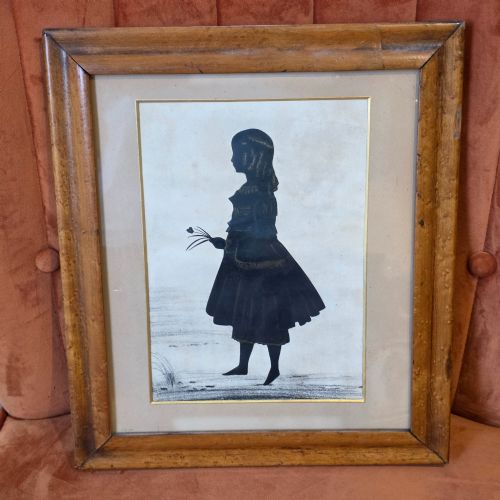
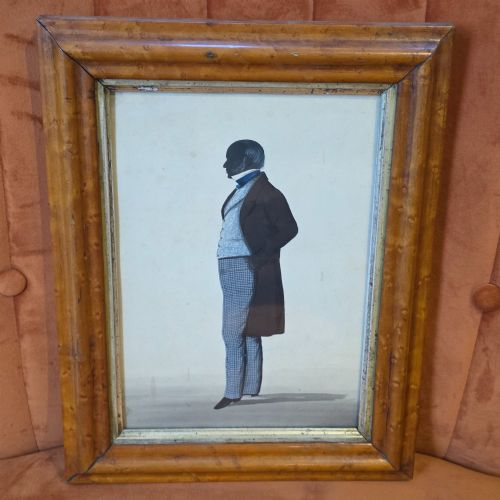
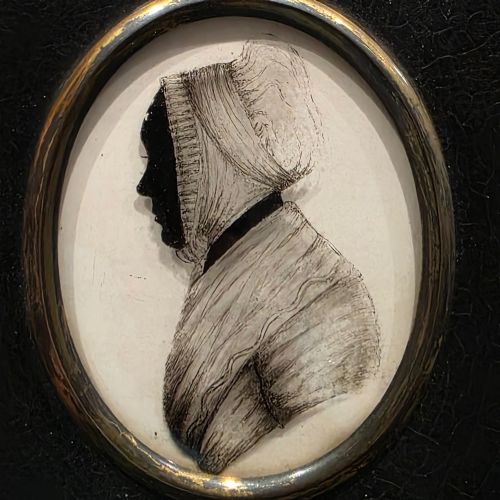
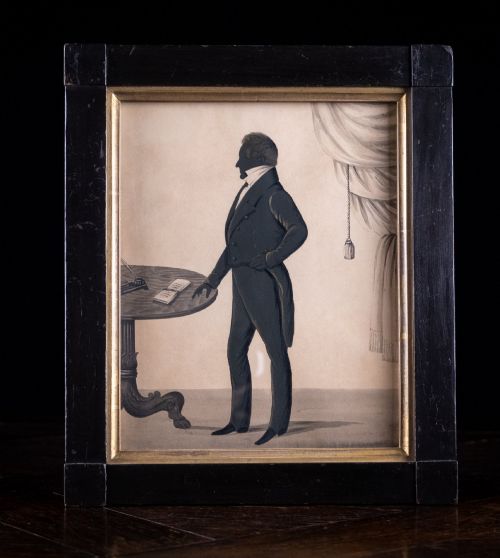
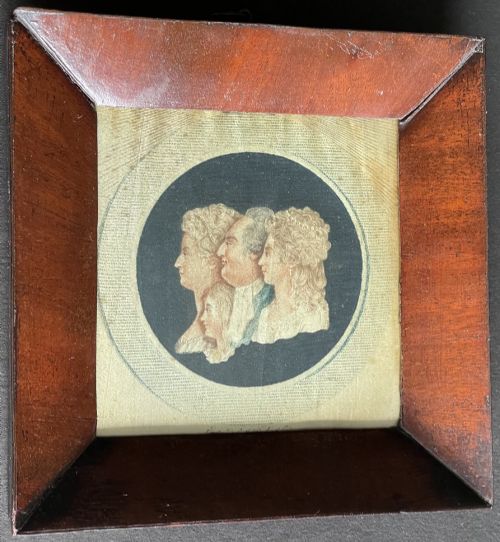
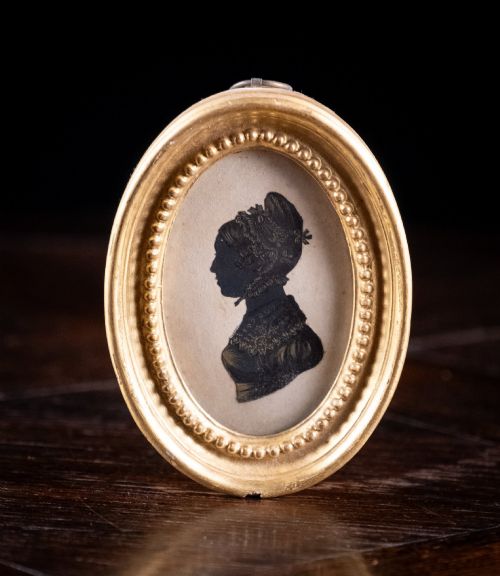
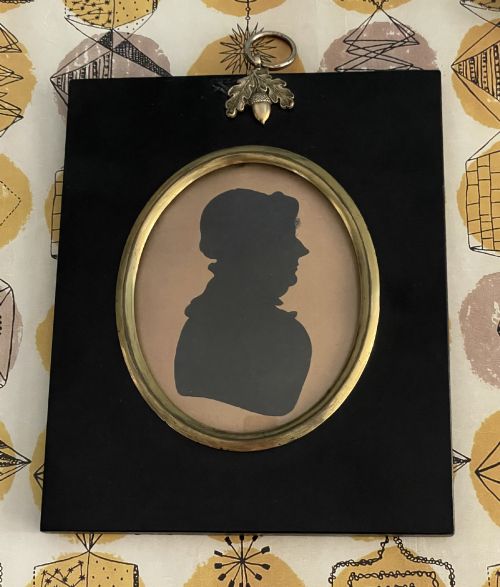
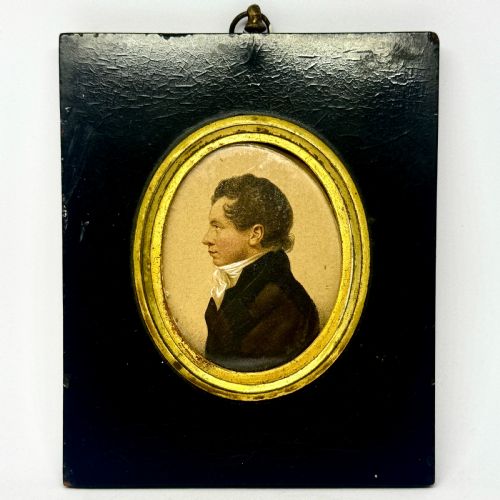
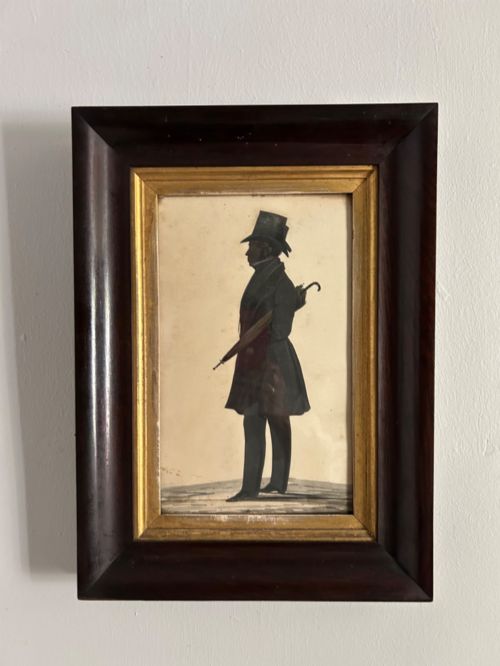
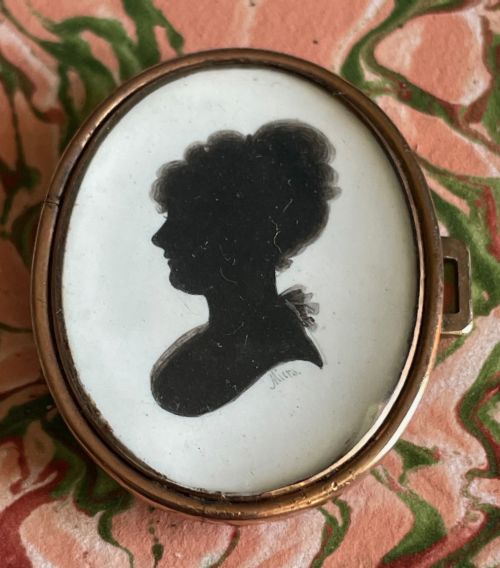
These pieces are a georgian silhouette portrait, capturing the direct likeness of sitters in profile through ink, cut paper and painted glass.
Georgian Silhouette Portrait
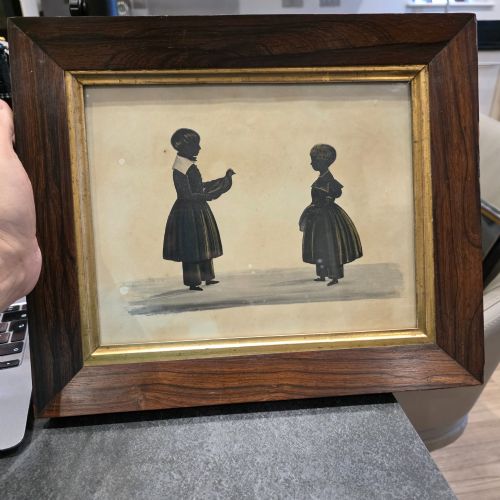
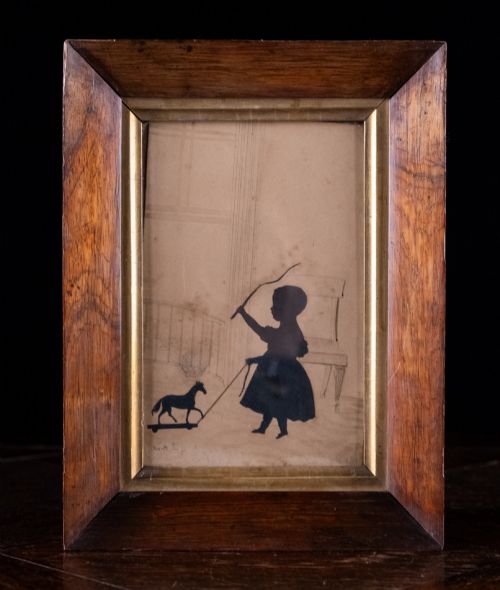
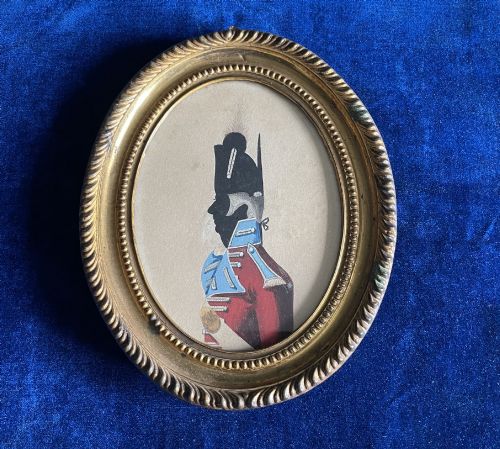
The version most commonly met on this page is a framed wall art piece or miniature, often rendered on glass, paper or plaster. Subjects range from individual gentlemen and ladies to children with pets, sometimes presented in ebonised wood or rosewood frames.
Examples span profile studies mounted in jewellery rings and pendants as well as larger conversation pieces. Makers and studios of the era produced both freehand cuttings and painted details heightened with gold leaf.
Materials and technique
Makers utilised paper, card and plaster as grounds, applying black ink, watercolour or reverse painting techniques on glass. Verre églomisé methods involved gilding on glass to frame the dark profile with brilliant metallic highlights.
Cut-paper profiles relied on precise scissors work, occasionally enhanced with pencil lines or watercolour washes for clothing and lace. Miniatures painted on glass required reverse execution, where the fine details of the face and hair were laid down first before filling the background.
Georgian Silhouette Portrait Retail Price Guide 2026
Typical asking prices for georgian silhouette portrait among the pieces listed under this phrase on Sellingantiques today, from the lower quarter to the upper quarter. They describe what is for sale here now, not the wider market.
Materials recorded across the selection include brass, gold leaf, ebonised wood, glass, paper and ink.
The markers of quality
Quality rests in the precision of the cutting or the sureness of the brushwork, which captures an accurate likeness and psychological depth within a stark profile. The finest examples display crisp edges on cut paper or immaculate reverse painting on glass without flaking pigment.
Mounting and framing also distinguish superior pieces, particularly where original convex glass, brass bezels or figured wood frames remain intact. Signed works by notable profile artists or those retaining period documentation command greater regard.
William James Hubard·Augustin Edouart·John Miers·John Smith of Edinburgh·J. Deacon
The Georgian Silhouette Portrait Glossary
- Verre églomisé
- A cold decoration technique involving the application of gold leaf and painting on the reverse side of glass. It creates a reflective, lustrous border around the dark profile.
- Silhouette
- A solid profile portrait, usually filled in with black colour. The name derives from Étienne de Silhouette, a French finance minister.
- Reverse painting
- An artistic method where the image is painted on the back of a glass panel so it is viewed through the front. This protects the pigment and yields a glossy finish.
- Portrait miniature
- A small-scale painting or likeness designed for intimate viewing or personal wear. These often double as jewellery items like rings and brooches.
- Ebonised wood
- Timber treated to resemble ebony, a dense black wood. It provides a dark, contrasting border that accentuates the pale background and black profile.
Georgian Silhouette Portrait: Frequently Asked Questions
How were these portraits originally displayed?
Many works were framed in rosewood or ebonised wood for hanging in domestic interiors as wall art. Smaller formats were set into jewellery pieces such as rings and pendants for personal wear.
Studio output also included larger conversation pieces depicting multiple figures or family groups. These framed arrangements recorded social standing and domestic life in the Regency era.
Are these works painted or cut?
Makers employed both methods, producing cut-paper silhouettes with scissors alongside ink and watercolour paintings. Some artists used reverse painting on glass to achieve a deep, glossy finish.
Combination pieces feature paper silhouettes enhanced with delicate pencilling or gold leaf highlights. Plaster grounds were also utilised by specialist profile-takers.
How do I care for a glass silhouette?
Keep pieces out of direct sunlight to prevent the fading of paper grounds and watercolour pigments. Avoid moisture, which can damage reverse-painted glass and degrade early adhesives.
Leave original frames and sealed backs intact to protect the delicate interior from dust and atmospheric changes. Display them on stable interior walls away from heat sources.
How do I identify the period?
Costume details such as Regency turban caps, high-waisted dresses and neckwear offer clear dating evidence. Framing styles, materials and handwritten notes on the reverse also point to specific decades.
Signatures or studio stamps from known profileists help narrow down the date of execution. Early Georgian examples often feature simpler oval frames compared to later Victorian iterations.