
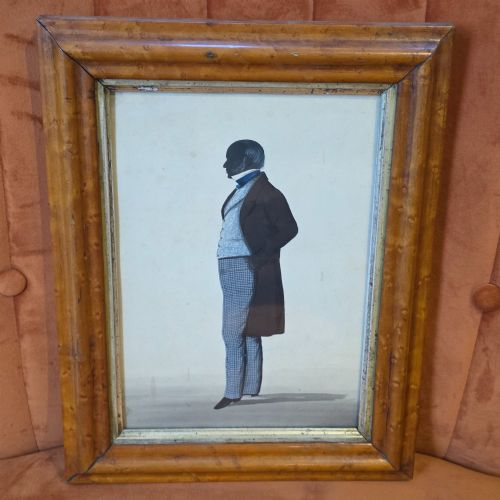
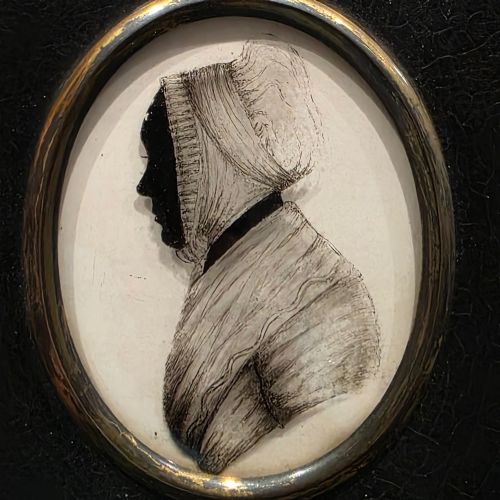

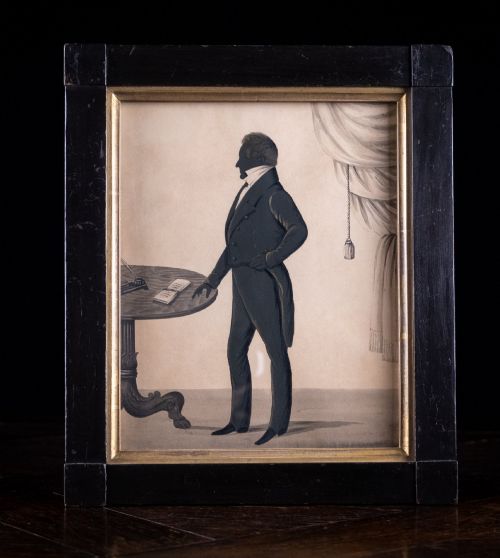
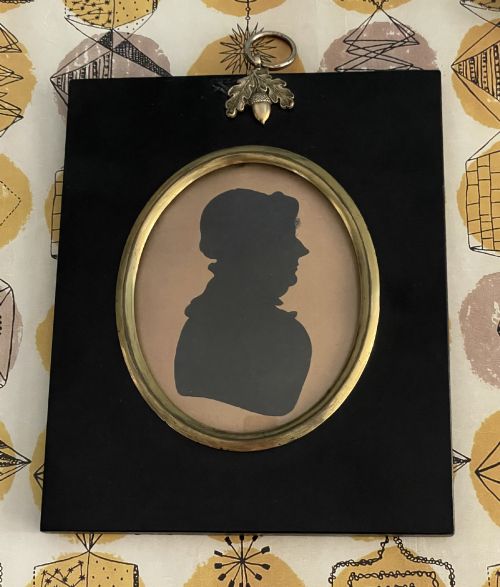


Black Framed Silhouette
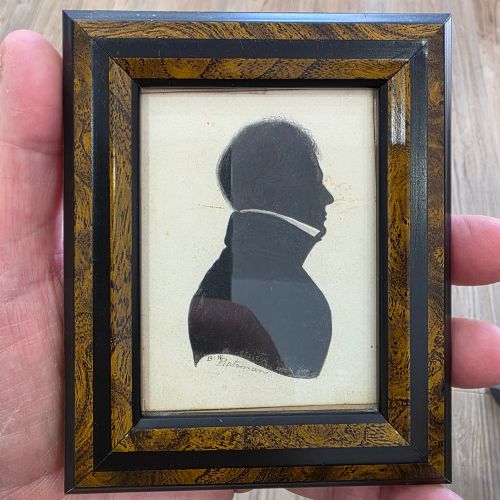
A black framed silhouette captures profile likenesses in miniature, offering a direct window into Georgian and Victorian likenesses.
Black Framed Silhouette
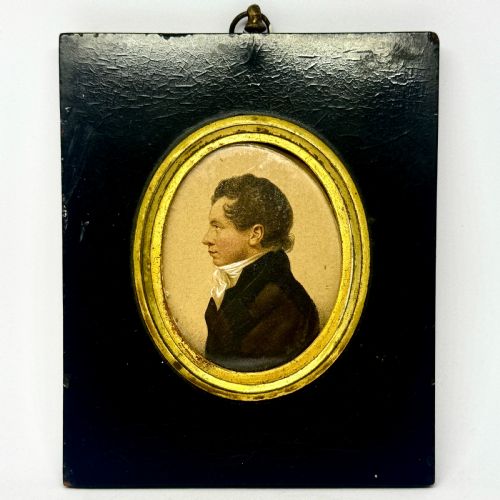
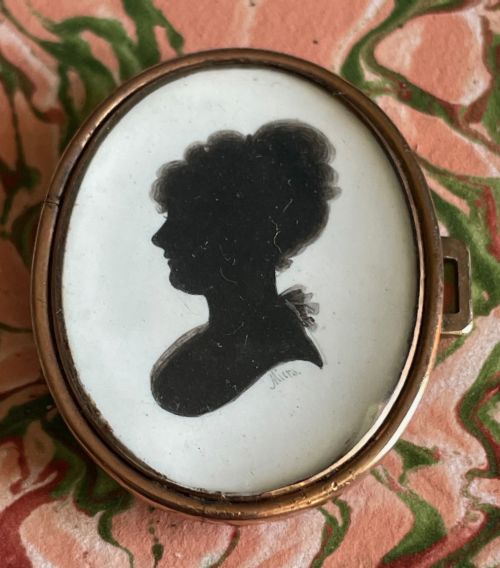
A black framed silhouette presents profile portraits created through cut paper, painted glass, or ink on plaster, mostly originating from the Georgian, Regency, and Victorian periods.
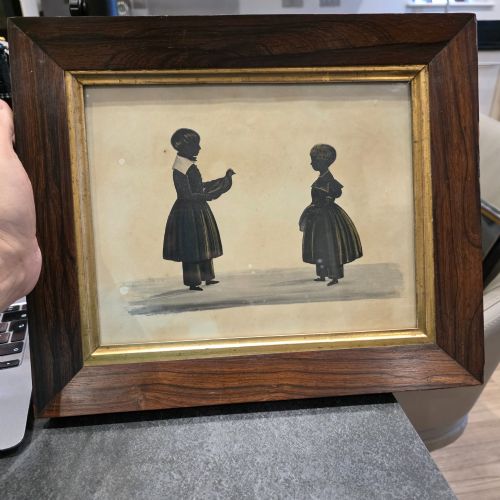
The versions most commonly met on this page span the 18th, 19th, and early 20th centuries, housed in ebonised wood, rosewood, or papier-mache surrounds.
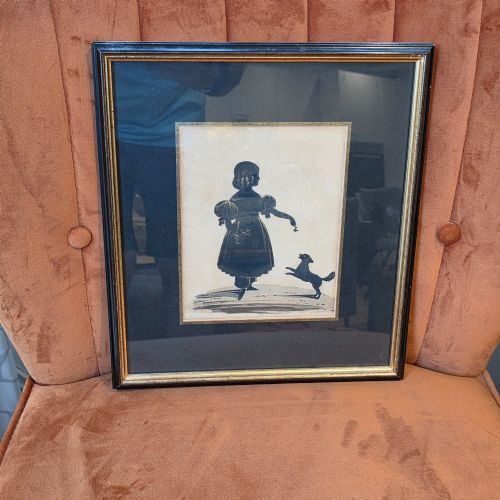
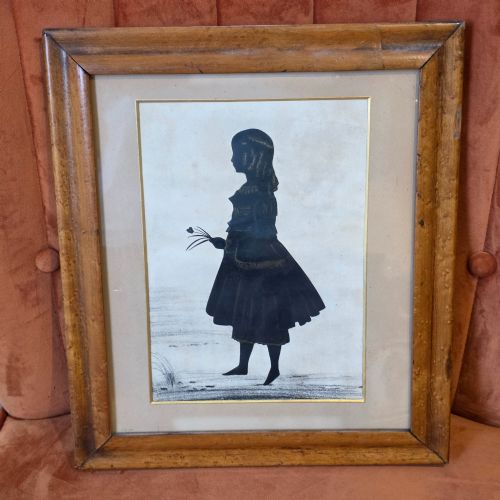
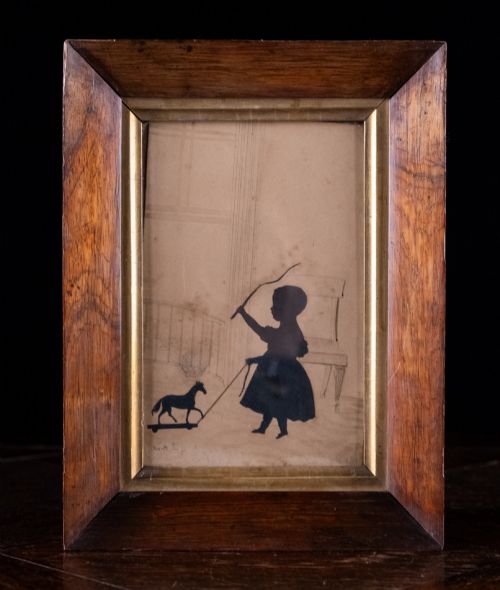
These wall art pieces and portrait miniatures range from single busts of gentlemen and ladies to conversation pieces depicting children, animals, and family groups.
Materials and Technique
Artists shaped silhouettes using paper cut with scissors, pigment applied to glass, and ink or watercolour painted upon plaster.
Several profiles capture family pets alongside their owners, preserving the precise stance of a beloved dog for posterity.
Judging Quality
Distinction in these portraits lies in the precision of the cutting or brushwork, where deft lines capture individual posture and costume nuances.
Materials contribute to overall merit, with reverse painted glass, plaster grounds, and original brass or rosewood surrounds elevating the piece.
William James Hubard·John Miers·Augustin Edouart·George Atkinson·Frederick Frith
The Black Framed Silhouette Glossary
- Silhouette
- A portrait profile filled in with a solid dark colour, typically black, against a lighter background. This portrait style gained popularity before the invention of photography.
- Ebonised wood
- Timber treated to resemble ebony, frequently utilised for dark picture frames. This finish provides a stark contrast for gilded profile details.
- Reverse painted glass
- Artwork applied to the back side of a glass panel so the image is viewed through the front. This technique protects the pigment and creates a glossy surface finish.
- Papier-mache
- A composite material made from paper pulp or layers of paper bound with glue, moulded while moist. It forms durable, lightweight surrounds for miniature portraits.
Black Framed Silhouette: Frequently Asked Questions
What periods do these silhouettes come from?
The pieces span the 18th century, the Georgian era, the Regency period, and the Victorian age. Most examples date from the 19th century.
Craftsmen of these eras produced cut paper and painted profiles housed in traditional wood and papier-mache frames.
How were silhouettes displayed originally?
These portraits hung upon walls as framed art or featured as small miniature pieces kept close to hand. Some examples formed conversation pieces showing multiple figures in domestic settings.
Collectors often arranged several framed profiles together on a wall to create a gallery display.
What materials make up the frames?
Frames typically consist of ebonised wood, rosewood, or papier-mache, sometimes incorporating brass fittings. Glass protects the delicate paper or painted surfaces within.
Gold leaf accents frequently appear on both the frame components and the portrait details themselves.
How do you identify a painted silhouette?
Painted versions often appear directly on glass, plaster, or paper using black ink and watercolours. Artists sometimes added gilded highlights to indicate buttons, lace, and hair.
Reverse painted glass examples display a smooth, reflective surface that distinguishes them from flat paper cutouts.