

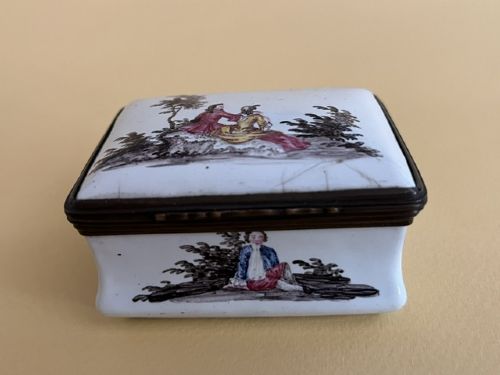


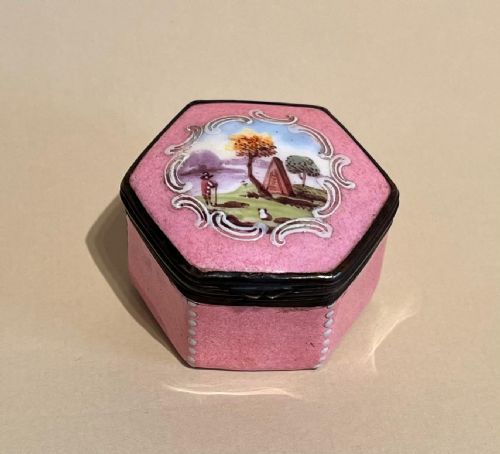


18th Century Enamel Box
An 18th century enamel box is a small, hinged receptacle for snuff, patches or trinkets, prized for its painted lids and vibrant colour.
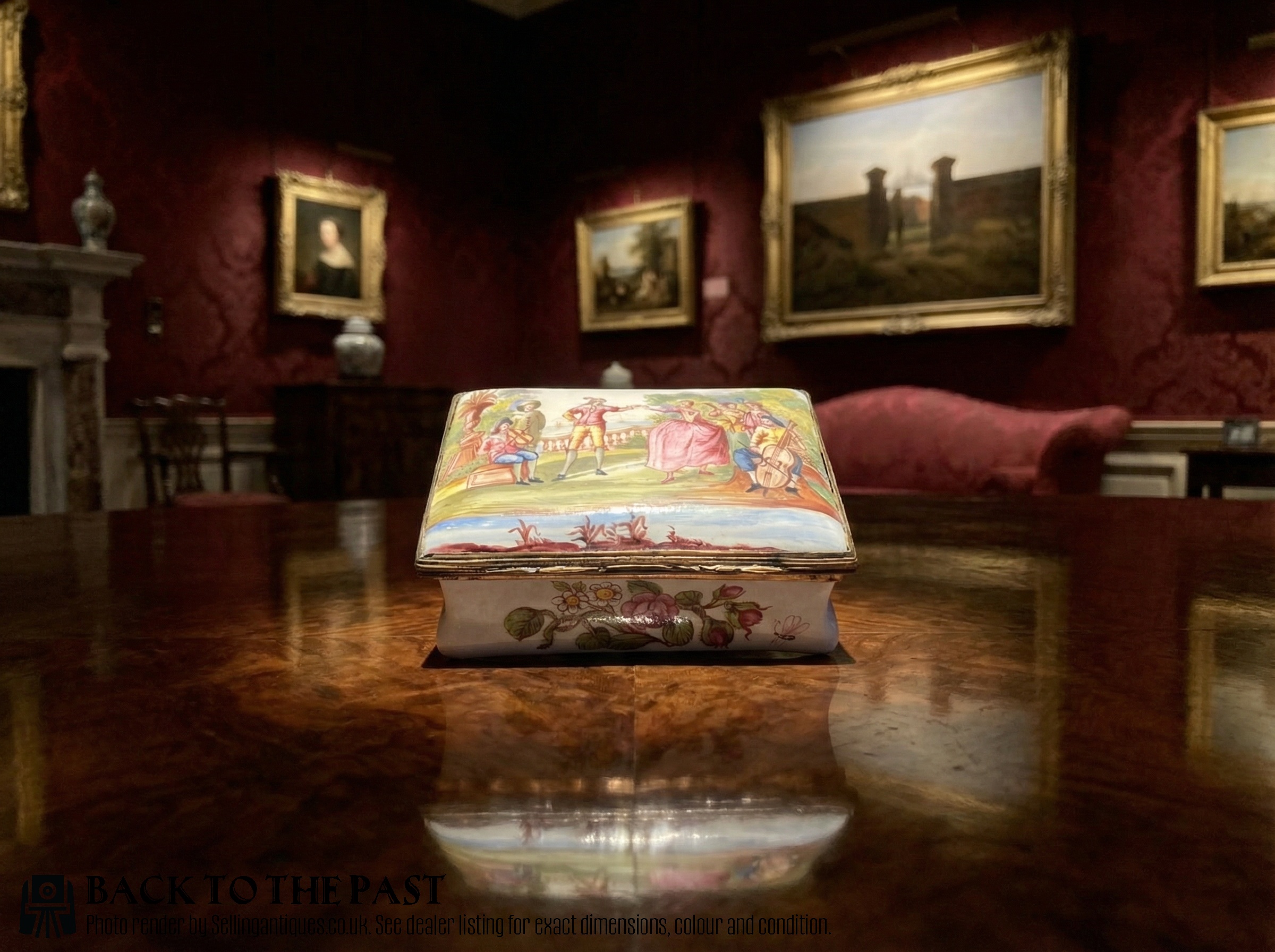
18th Century Enamel Box
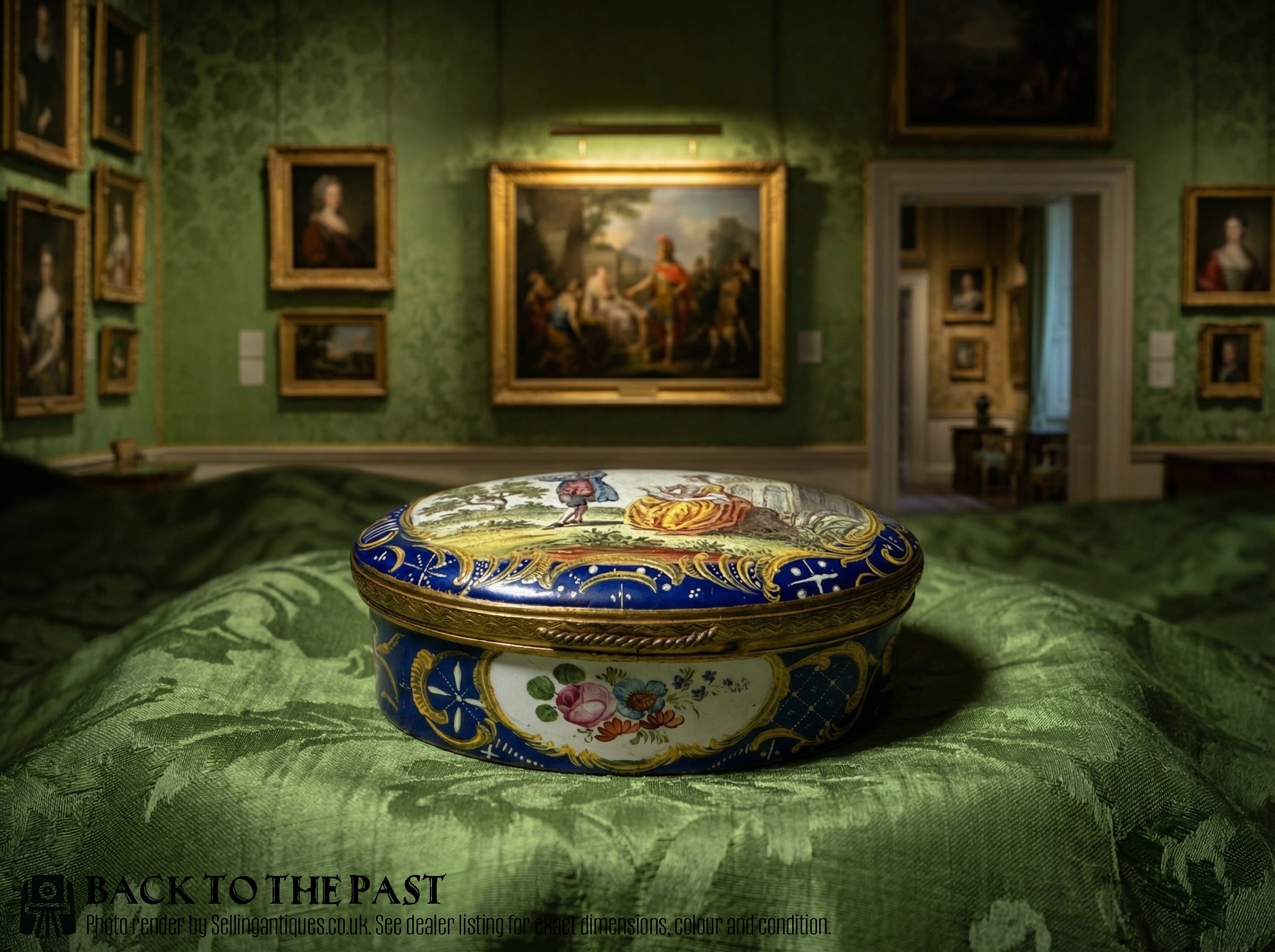
When you search for an 18th century enamel box, you encounter small personal containers fashioned in Georgian England, predominantly from Staffordshire and Bilston workshops. These pieces include snuff boxes, patch boxes, pill boxes and vinaigrettes, designed to be carried in a pocket or displayed on a dressing table.
The version you are most likely to meet on this page is an oval or rectangular Bilston patch box with a hinged lid, often featuring a painted scene or inscription such as a token of esteem or a spa view. Alongside English pieces, the selection includes continental examples such as Swiss gold and enamel items and Chinese Beijing enamel boxes.
How they were made
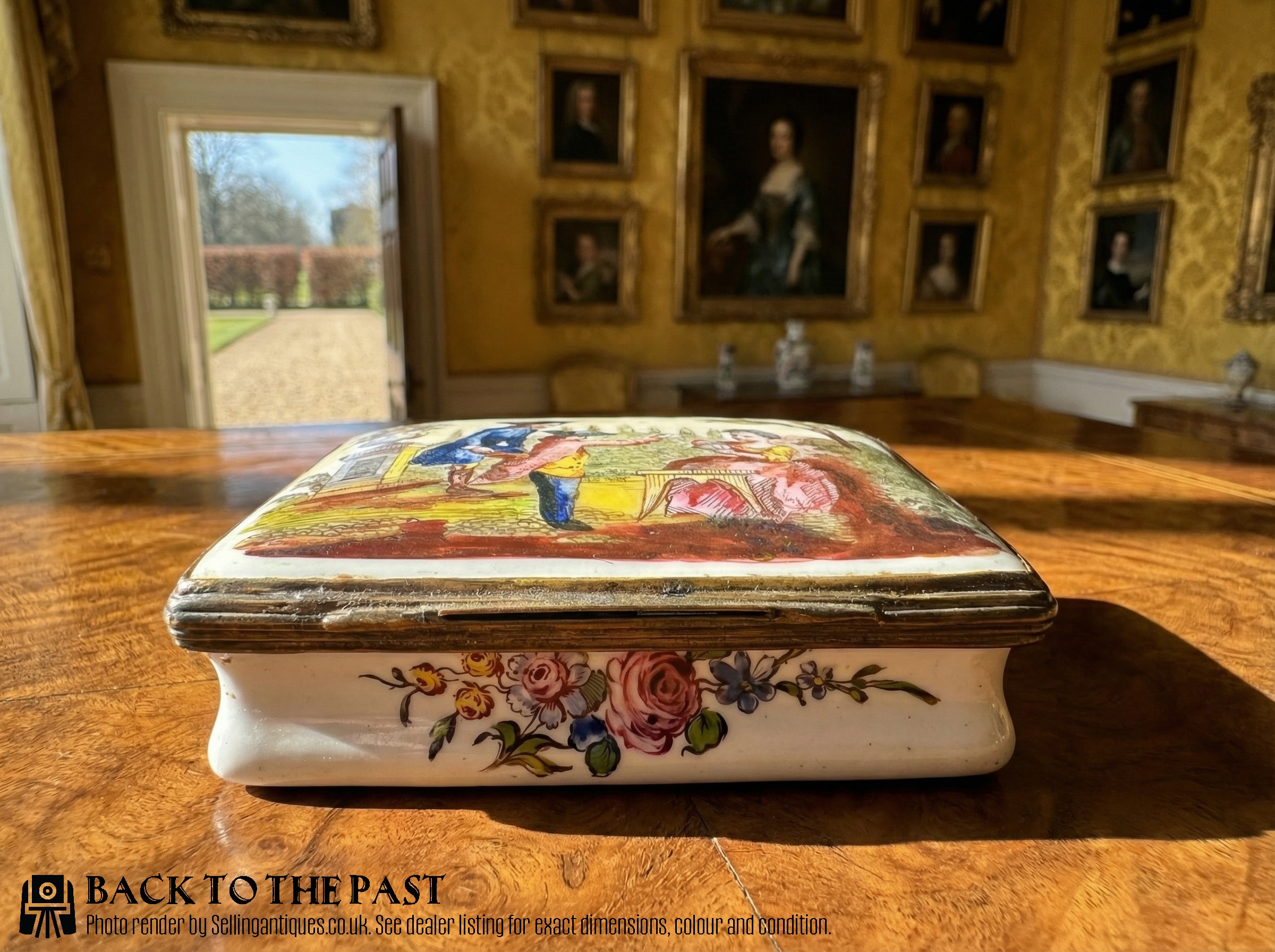
These items were constructed by fusing vitreous enamel onto a copper, brass or gilt metal base, a technique that required multiple firings in a kiln to achieve a smooth finish. Artisans applied hand-painted details, floral motifs and landscape scenes directly onto the surface before the final glaze.
Mounts, bezels and hinges were typically formed from copper, brass or gilded metal, securing the lid to the body. More elaborate examples incorporated gold or silver gilt mounts, adding structural definition to the small forms.
18th Century Enamel Box Retail Price Guide 2026
Typical asking prices for 18th century enamel box among the pieces listed under this phrase on Sellingantiques today, from the lower quarter to the upper quarter. They describe what is for sale here now, not the wider market.
Some boxes took the form of birds and novelty shapes, ensuring that holding one feels like cradling a miniature painted creature in your palm.
What varies in quality
Quality rests in the crispness of the hand-painted decoration on the lid and the precision of the copper or gilt metal mounts. Pieces with detailed pictorial scenes, such as parkland figures or mythological subjects, demonstrate superior miniature painting skill compared to simpler floral designs.
The condition of the vitreous enamel surface and the original integrity of the hinge also define the standard. Smooth, unblemished enamel and a tightly closing lid distinguish finer examples from those bearing extensive surface hairline cracks or historical repairs.
The 18th Century Enamel Box Glossary
- Patch box
- A small container used during the Georgian period to hold cosmetic fabric patches applied to the face. These boxes frequently featured a mirror fitted inside the lid.
- Snuff box
- A small lidded receptacle designed to hold dry powdered tobacco for inhalation. They were made in various shapes including oval, rectangular and navette forms.
- Vinaigrette
- A small hinged box containing a perforated internal grille that held a sponge soaked in aromatic vinegar. They were carried to mask unpleasant odours in public spaces.
- Bonnoniere
- A small decorative container used for holding sweets or sugarplums. These boxes often took whimsical or novelty shapes.
- Vitreous enamel
- A material made by fusing powdered glass to a metallic substrate through high-temperature firing. This process produced a hard, glossy coloured coating.
- Navette
- A boat-shaped decorative form characterised by pointed ends and a tapering outline. This silhouette appears on late Georgian patch boxes.
18th Century Enamel Box: Frequently Asked Questions
What were patch boxes used for?
Georgian ladies and gentlemen used patch boxes to store small silk or velvet patches. These adhesive shapes were worn on the face to conceal blemishes or display social signals.
The boxes were small enough to fit inside a pocket or reticule. Many included an interior mirror to assist with placing the patches correctly while away from home.
How do I clean an enamel box?
Enamel boxes require gentle care to protect the delicate glass surface and the underlying metal mounts. Wipe the exterior softly with a dry or barely damp cloth without using chemical cleaners.
Avoid submerging the box in water, as moisture can seep beneath the hinged mounts and discolour the copper or brass base over time.
How can I tell Bilston from Staffordshire?
Bilston was a primary manufacturing centre located within the Staffordshire region during the Georgian period. Consequently, many pieces attributed generally to Staffordshire originated in Bilston workshops.
Specific attribution often relies on recorded design motifs, copper gauge and enamel colour palettes rather than distinct structural differences between the towns.
Were these boxes used for tobacco?
Many of these containers served as snuff boxes for powdered tobacco. Users opened the hinged lid to pinch a small amount for inhalation.
These pieces were kept in waistcoats or pockets for daily use, which accounts for the survival of handling wear on some copper bases.