



Copper Enamel Patch Box
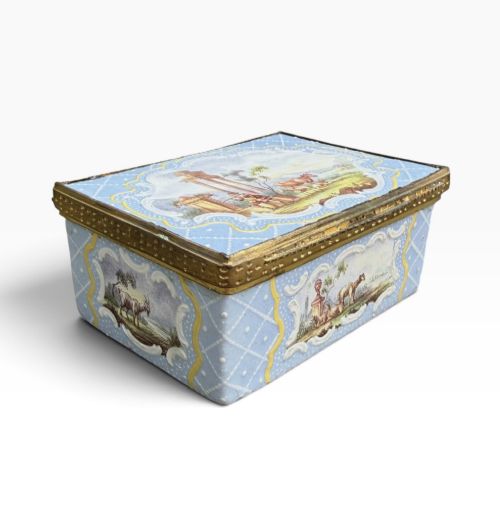
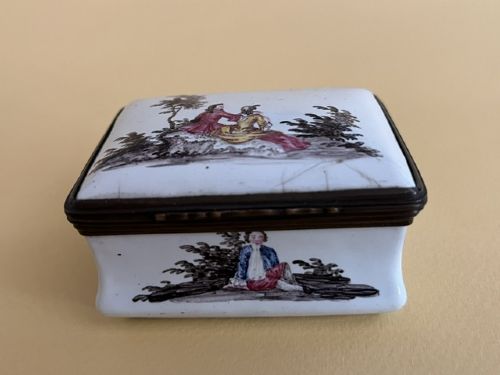
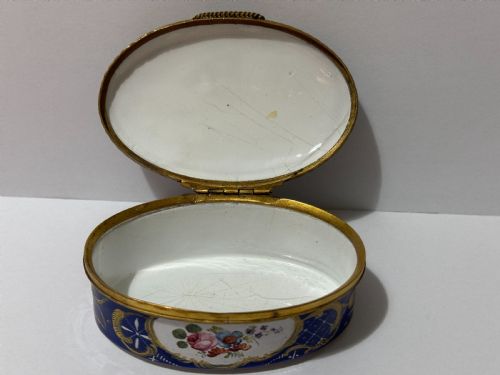
These copper enamel patch box pieces are miniature Georgian containers holding decorative fabric patches, prized for their vibrant painted lids and portable charm.
Copper Enamel Patch Box
When you search for a copper enamel patch box, you are looking at small trinket containers originating primarily from the eighteenth century, including Georgian and late eighteenth-century examples. The pieces on this page span the eighteenth century, eighteen hundred, nineteenth century, and Georgian periods, taking forms such as patch boxes, snuff boxes, trinket boxes, and bonbonniere.
Most examples you will meet here originate from English centres like Bilston and South Staffordshire, though Chinese Beijing enamel snuff boxes also appear among the selections. They take oval and rectangular shapes, frequently decorated with scenes such as musicians in parkland, town views like Cheltenham Wells, or animal figures including King Charles Cavalier spaniels.
These items served practical uses for fashionable society, holding small cosmetic patches used to cover blemishes or accent the face. Their survival demonstrates the enduring appeal of miniature Georgian and nineteenth-century craftsmanship.
How they were made
Makers formed the core vessel using copper, which provided a malleable yet sturdy base for the container. Gilt metal, brass, and gilded copper mounts often secured the hinges and rims, adding structural definition to the small boxes.
Vitreous enamel was applied to the metal substrate and fired to create a smooth, glossy surface ready for detailed painting. Artisans then hand-painted miniature scenes, landscapes, and inscriptions directly onto the enamel before subsequent firings fixed the colours.
Copper Enamel Patch Box Retail Price Guide 2026
Typical asking prices for copper enamel patch box among the pieces listed under this phrase on Sellingantiques today, from the lower quarter to the upper quarter. They describe what is for sale here now, not the wider market.
Some eighteenth-century boxes feature painted spaniels gazing out from the lid, proving that lapdog devotion predates modern portraiture.
What varies in quality
The precision and detail of the hand-painted enamel top set finer pieces apart from simpler versions. Crisp execution in landscapes, figures, or portraits indicates skilled workshop production.
The condition of the vitreous enamel surface and the integrity of the copper base and metal mounts influence the overall standard of a box. Well-preserved painted scenes without heavy wear or restoration represent the higher end of the range.
The Copper Enamel Patch Box Glossary
- Patch box
- A small container used in the Georgian period to hold cosmetic face patches. These boxes often feature a mirror fitted inside the lid.
- Vitreous enamel
- Glass fused to a metal base through high-temperature firing. This technique creates the smooth, durable coloured surfaces characteristic of these boxes.
- Bilston
- A town in Staffordshire associated with the production of enamelled copper boxes during the eighteenth century. Pieces attributed to this centre are well documented.
- Bonbonniere
- A small ornamental box designed to hold sweets or confectionery. In this context, it shares similar manufacturing techniques with patch and snuff boxes.
- Snuff box
- A small container for holding ground tobacco. They share forms and decorative enamel work with patch boxes from the same eras.
Copper Enamel Patch Box: Frequently Asked Questions
What did people put in a patch box?
Georgian society used these small containers to store small silk, velvet, or taffeta patches. People wore these shapes on their faces to hide blemishes or signal social sentiments.
Over time, owners also used the boxes for trinkets, pins, or small personal items. Their portability made them convenient accessories for pocket or reticule carriage.
How old are these enamel boxes?
Most examples date from the eighteenth century, particularly the decades surrounding seventeen eighty. You will also find pieces from around eighteen hundred and the nineteenth century.
Stylistic markers and regional attributions help place them within the Georgian era. Specific centres like Bilston produced the majority of these documented items.
How can I tell Bilston boxes apart?
Bilston pieces typically feature copper bases coated in white or coloured enamel, finished with detailed hand-painting. They often incorporate gilt metal mounts around the rims and hinges.
Regional characteristics align closely with South Staffordshire manufacturing traditions. Many bear topographical inscriptions or pictorial themes typical of eighteenth-century English enamelwork.
Were these boxes used for snuff?
Some boxes served a dual purpose or were specifically made as snuff boxes for powdered tobacco. Their tight-fitting lids kept the contents dry and secure.
Snuff taking was a widespread habit among Georgian gentlemen and ladies. The boxes provided a socially acceptable way to carry the tobacco in public.
How should I display my box?
Keep enamel boxes out of direct sunlight to protect the painted colours on the lid. Placing them on a stable shelf or inside a cabinet prevents accidental drops.
Handle them gently by the body rather than the hinges. Minimal cleaning with a soft, dry cloth is sufficient to maintain the surface.