


Blue Enamel Patch Box
A blue enamel patch box is a small, hinged container made for Georgian cosmetics, prized for brilliant colour and hand-painted lids.
Blue Enamel Patch Box
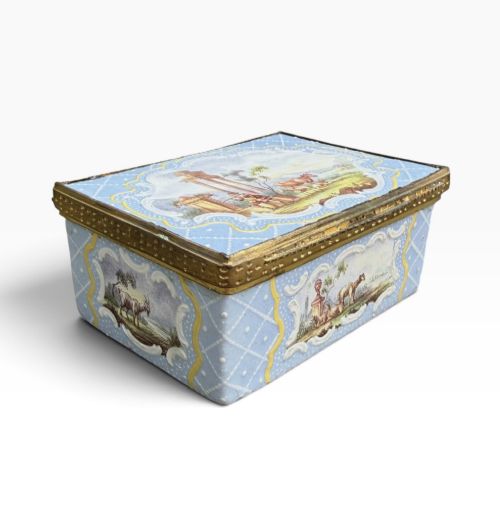
A blue enamel patch box is a small receptacle designed in the eighteenth century to hold cosmetic fabric spots used by fashionable society. The pieces available here span the Georgian period, including examples from Bilston and South Staffordshire.
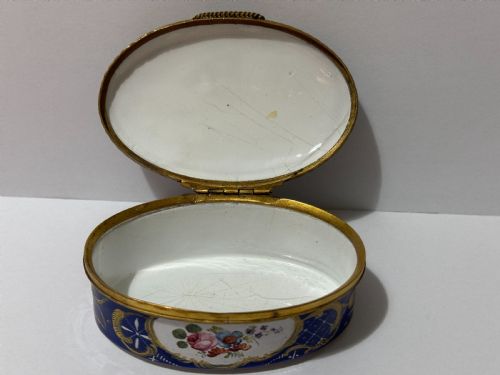
Most items take rectangular or oval forms with hinged lids, often featuring painted topographical scenes or inscriptions on the top surface. The primary body colour in this selection is blue, paired with contrasting interior mirrors or plain metal bases.
How they were made
These items rely on fusing powdered glass to copper or metal bases through high-temperature kiln firing. Artisans applied bright blue enamel coatings to the copper foundations before adding hand-painted details and inscriptions.
Gilt metal and gold mounts edge the openings, secured with small pins or hinges to hold the lid firmly in place. Copper gilt and brass frequently form the structural framework beneath the smooth vitreous enamel surface.
Blue Enamel Patch Box Retail Price Guide 2026
Typical asking prices for blue enamel patch box among the pieces listed under this phrase on Sellingantiques today, from the lower quarter to the upper quarter. They describe what is for sale here now, not the wider market.
Georgian gentlemen carried snuff boxes alongside patch containers, ensuring their pockets remained fully stocked for every social emergency.
What varies in quality
The clarity of the blue enamel ground and the crispness of the hand-painted lid decoration determine the standing of each piece. Finer examples display minimal surface pitting and retain vibrant pigments without extensive crazing or later restoration.
The precision of the metal mounts and the original mirror condition inside the lid also distinguish superior specimens. Well-preserved hinge alignment indicates careful past handling and better initial workshop output.
The Blue Enamel Patch Box Glossary
- Patch box
- A small container used to store cosmetic fabric patches that masked blemishes. These receptacles frequently included internal mirrors for application.
- Bilston enamel
- Vitreous enamel items produced in the Staffordshire town of Bilston during the eighteenth century. Workshops there specialised in small luxury trinket boxes.
- Vinaigrette
- A small ornamental box containing a perforated grille over a sponge soaked in aromatic vinegar. They served to revive the wearer in crowded rooms.
- Gilt metal
- Base metal treated with a thin layer of gold to resemble solid precious metal. This technique provided affordable luxury for Georgian accessories.
- Neoclassical
- A late eighteenth century design style drawing inspiration from classical antiquity. Motifs often included symmetrical borders and classical architectural elements.
Blue Enamel Patch Box: Frequently Asked Questions
What did people keep in patch boxes?
Owners stored small silk or velvet shapes cut into stars, dots, or crescents inside these containers. People wore these cosmetic spots on the face during the Georgian era to hide small scars or blemishes.
Over time, the boxes also served to hold pins or small trinkets as personal fashions changed. Their small size made them convenient pocket accessories for daily use.
How do I date an enamel box?
Dating relies on examining the copper base, the style of the metal mounts, and the pigments used in the enamel. Eighteenth-century pieces typically feature hand-beaten copper foundations and distinct Georgian stylistic traits.
Makers often employed specific blue hues and painting techniques tied to Staffordshire workshops between 1770 and 1800. Comparing the hinge construction with documented examples helps confirm the production period.
Are all these boxes from Staffordshire?
Many examples originate from Bilston and South Staffordshire, which formed the primary centre for English enamel production. The selection also includes Swiss pieces, such as gold and enamelled vinaigrettes from the late eighteenth century.
Examining the specific shade of blue enamel and the mounting style helps distinguish English provincial work from continental alternatives. Regional variations appear in both the copper thickness and the interior mirror fittings.
How should I clean my enamel box?
Enamel surfaces require gentle cleaning with a soft, dry cloth to remove dust without scratching the glass coating. Moisture can seep beneath cracked enamel or damage the copper base, so liquid cleaners must be avoided.
Keeping the box away from direct sunlight and high humidity preserves the bright blue colour and prevents further stress to the metal mounts.