

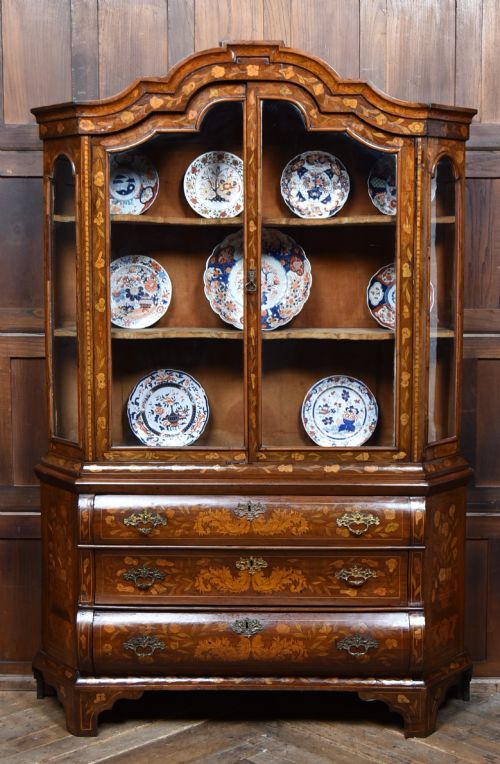
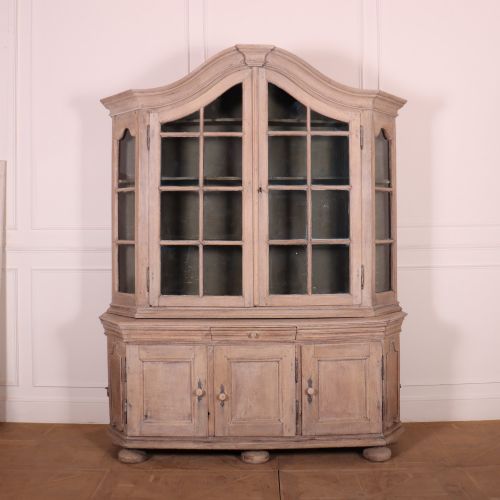
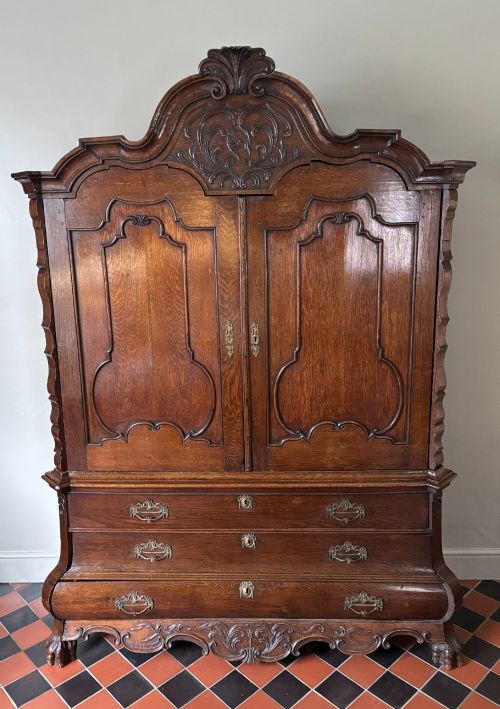
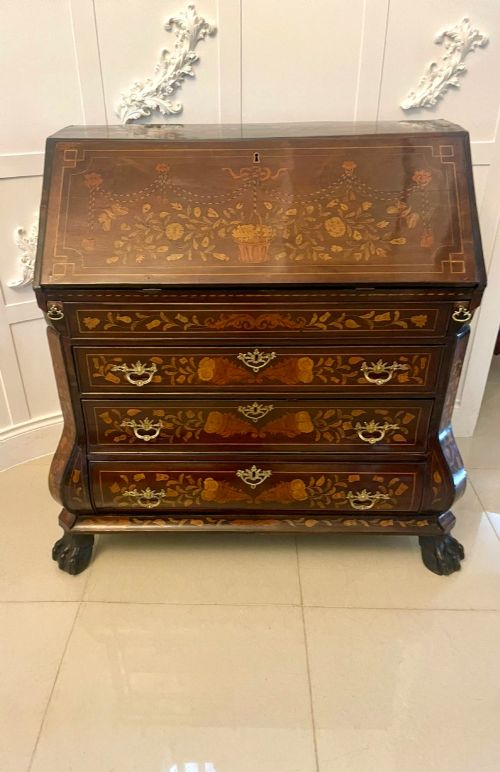


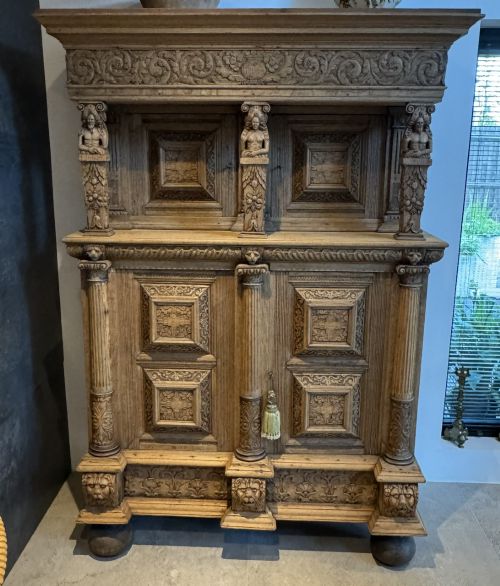
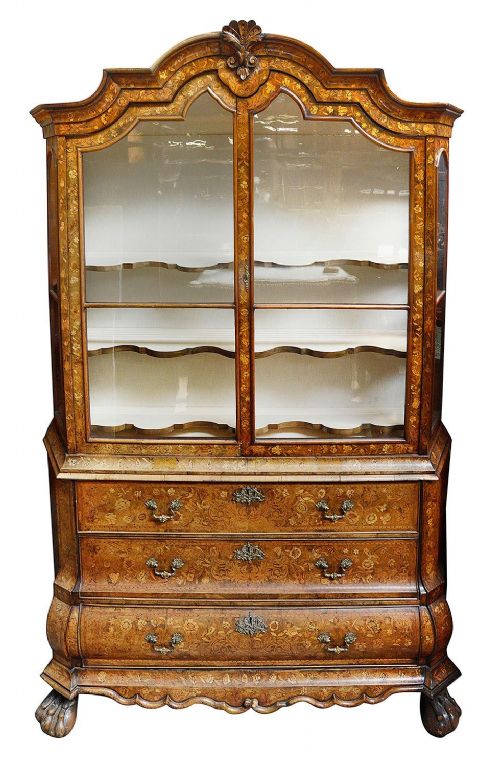
18th Century Dutch Cabinet
These pieces of 18th century dutch cabinet furniture combine grand floral marquetry with practical storage, offering serious presence for any serious interior.
18th Century Dutch Cabinet
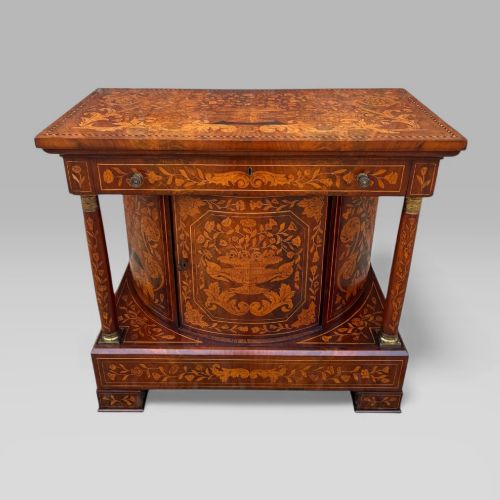
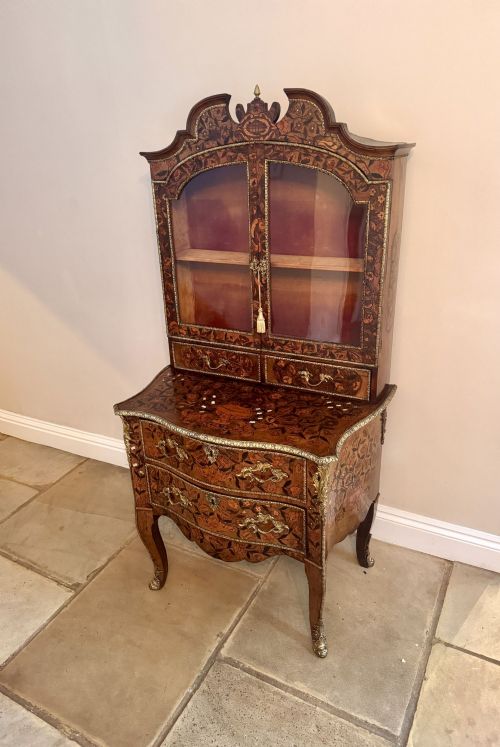
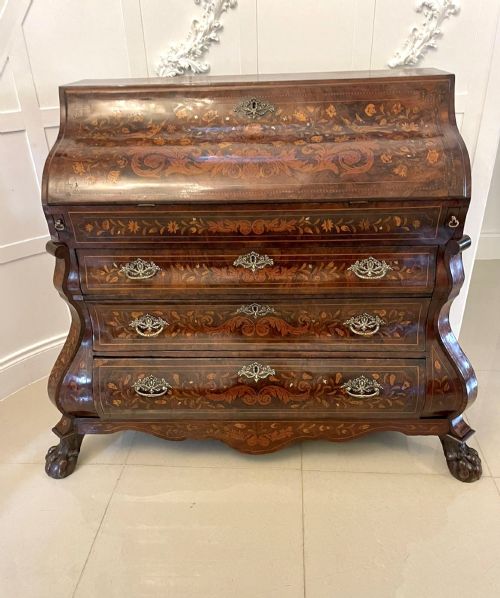
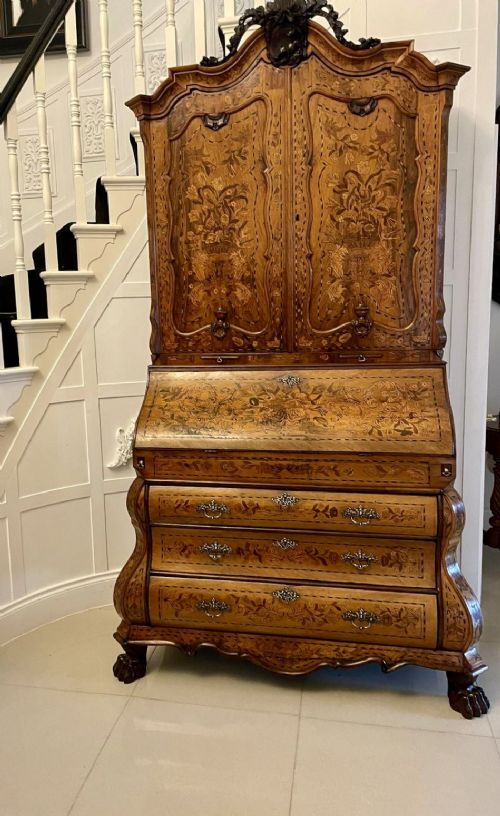
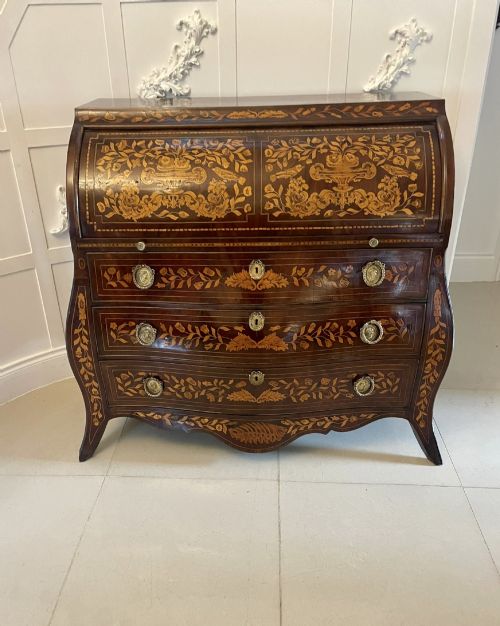
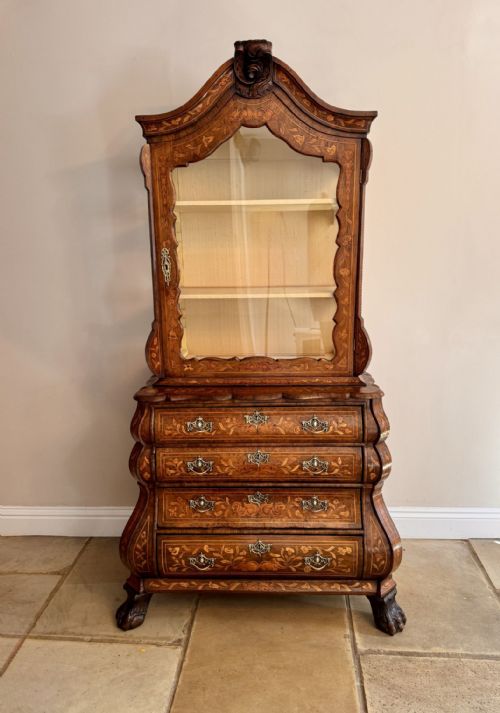
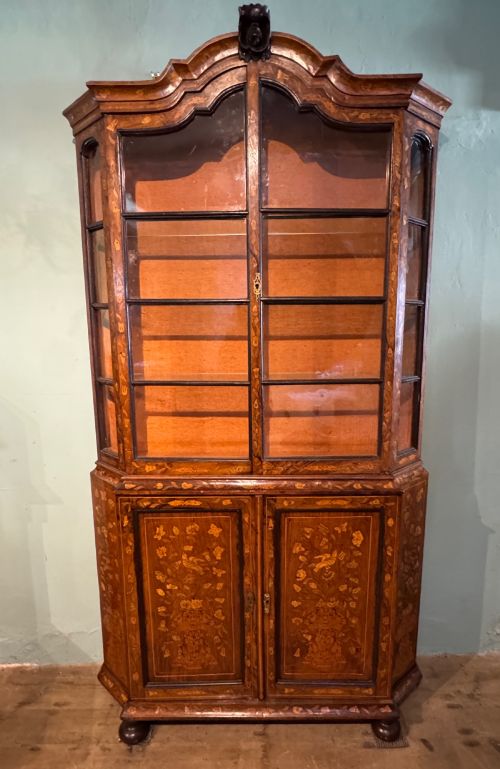
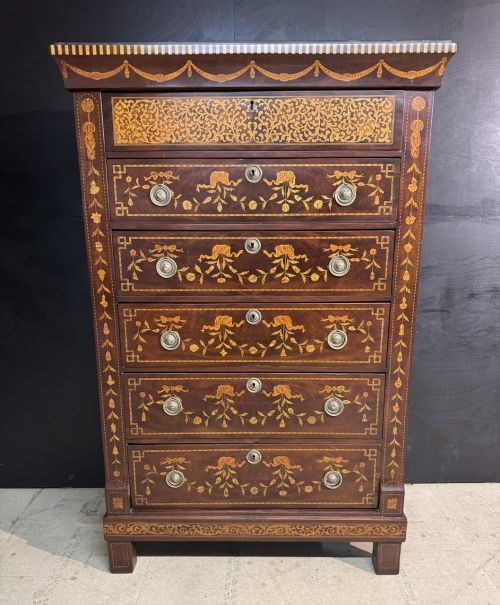
An 18th century dutch cabinet search reveals a rich mix of regional forms designed for display and concealment. The most prevalent versions on this page are burr walnut and mahogany bureau bookcases, tall chests of drawers, and glazed display cabinets.
Makers shaped these utilitarian and decorative storage items using regional styles like Dutch Baroque, Rococo, and Neoclassical design. Buyers frequently encounter pieces displaying distinctive bombé fronts alongside simpler oak and fruitwood linen presses.
The selection ranges from large floor-standing armoires and vitrines down to smaller wall-hanging corner cupboards and miniature apprentice pieces. Walnut and marquetry dominate the surviving corpus, reflecting the high aspirations of period domestic interiors.
Materials and construction
Carpenters built the carcasses primarily in oak or pine, applying expensive face veneers of burr walnut, mahogany, and fruitwood. These timbers formed the essential foundation for elaborate floral marquetry inlay work executed in contrasting woods.
Makers utilised brass for handles, escutcheons, and hinges, providing metallic contrast against dark woods and painted surfaces. Glass panels were fitted into glazed cabinet doors to showcase prized porcelain and silverware.
18th Century Dutch Cabinet Retail Price Guide 2026
Typical asking prices for 18th century dutch cabinet among the pieces listed under this phrase on Sellingantiques today, from the lower quarter to the upper quarter. They describe what is for sale here now, not the wider market.
The listings span several decades from the 1750s through the 1930s, featuring oak, walnut, glass, and brass.
Assessing quality and finish
Quality rests heavily on the ambition and execution of the floral marquetry and the choice of Burr veneer. Superior examples display intricate, well-matched wood grains across undulating bombé profiles.
Structural harmony also dictates value, particularly in how drawers fit their apertures and how doors align within glazed display sections. Finer pieces maintain crisp carving details on feet and cornices without excessive later intervention.
The 18th Century Dutch Cabinet Glossary
- Marquetry
- Decorative veneer work forming pictures or patterns using various tinted woods. This technique defines the visual identity of numerous regional pieces.
- Bombé
- A swelling, outward-curving contour found on fronts and sides of case furniture. This demanding shape requires considerable woodworking skill to execute properly.
- Vitrine
- A glass-fronted cabinet designed for displaying collectibles or china. These pieces often feature interior shelving and glazed doors.
- Bureau bookcase
- A dual-purpose form combining a sloping desk flap with upper shelving enclosed by doors. This tall furniture type provided extensive storage for documents and books.
- Linen press
- A tall cupboard traditionally used for storing textiles and garments. Interiors typically contain sliding trays or shelves behind panelled doors.
18th Century Dutch Cabinet: Frequently Asked Questions
How were bureau bookcases used?
These versatile pieces served as both writing desks and storage libraries. The fold-down flap provided a stable writing surface while concealing small drawers and pigeonholes.
The upper section housed books or display items behind glazed or solid timber doors.
Where did marquetry originate?
Marquetry developed as an advanced form of veneering where pieces of coloured wood, bone, or ivory formed complex pictorial designs. Dutch and Flemish workshops excelled in floral arrangements.
Cabinetmakers applied these detailed panels to walnut and mahogany carcasses to signal status and wealth.
Are painted cabinets period originals?
Many painted vitrines and cupboards date from the eighteenth century, though surface paint often reflects later domestic updates. Original pigment schemes survive on specific regional pine and softwood items.
Buyers should examine the underlying timber and wear patterns to understand the age of the decorative finish.
How do I care for burr walnut?
Burr walnut veneer requires stable room humidity and protection from direct sunlight to prevent splitting or fading. Regular dusting with a soft dry cloth maintains the polished surface.
Avoid commercial silicone polishes and use traditional beeswax sparingly to nourish the antique timber.