

18th Century Delftware Pottery
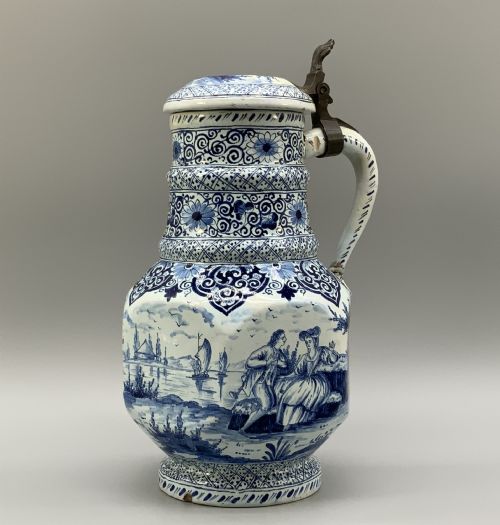
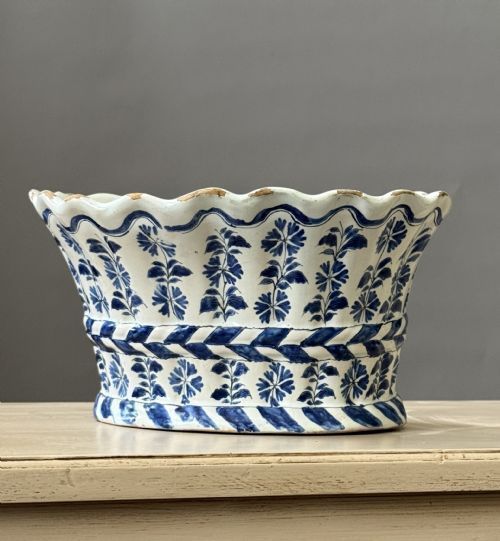
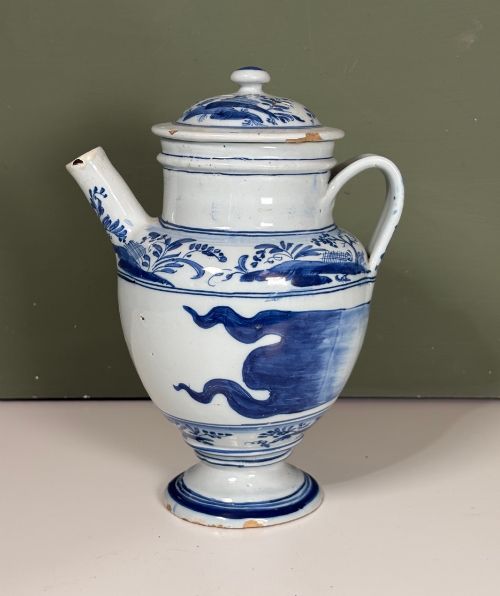
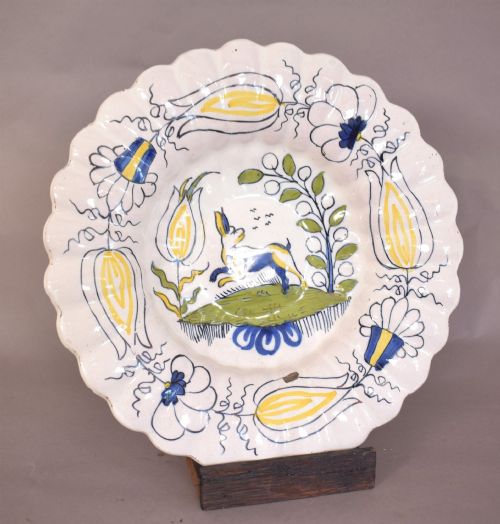
These 18th century delftware pottery pieces bring tin-glazed earthenware and cobalt pigment into interiors through chargers, vases, and jars.

18th Century Delftware Pottery
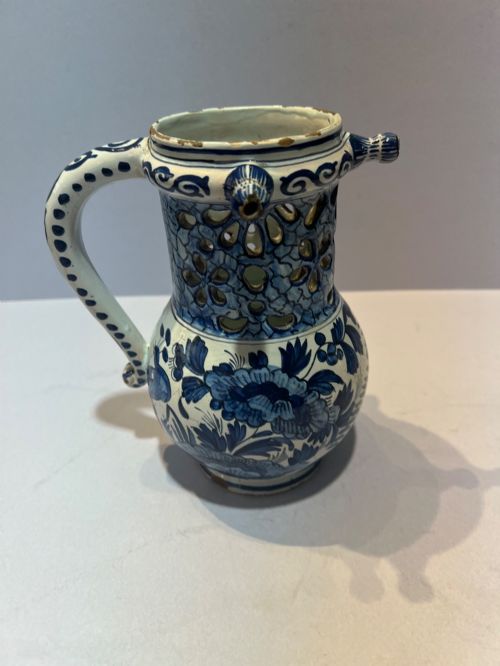
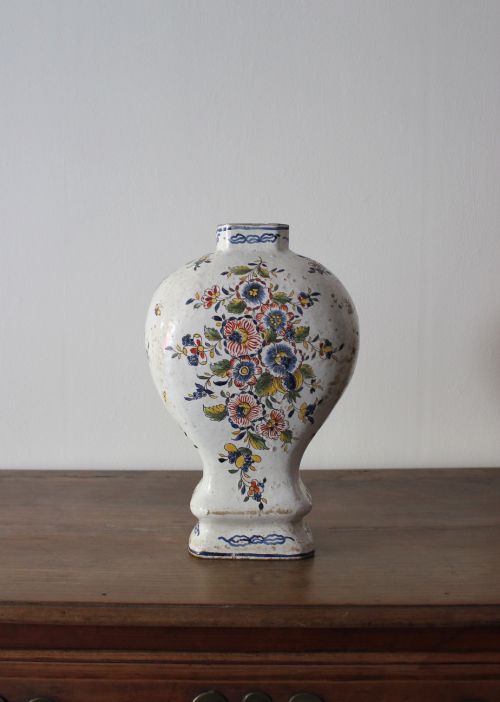
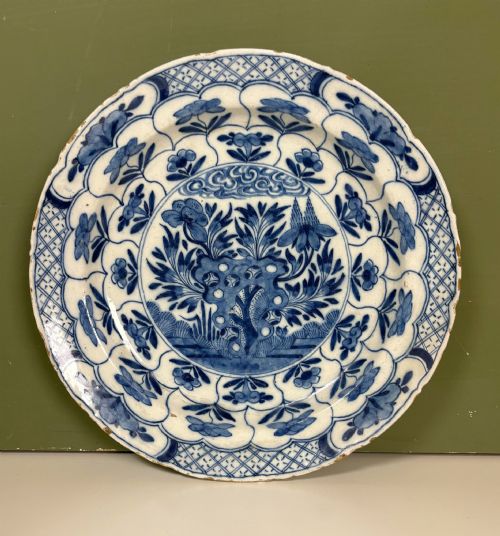
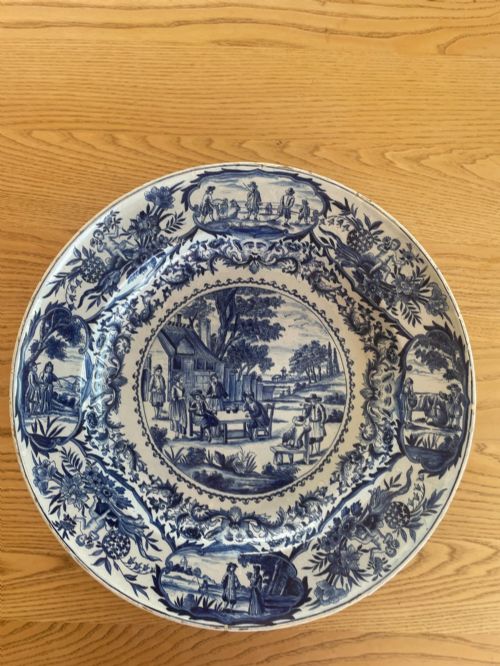
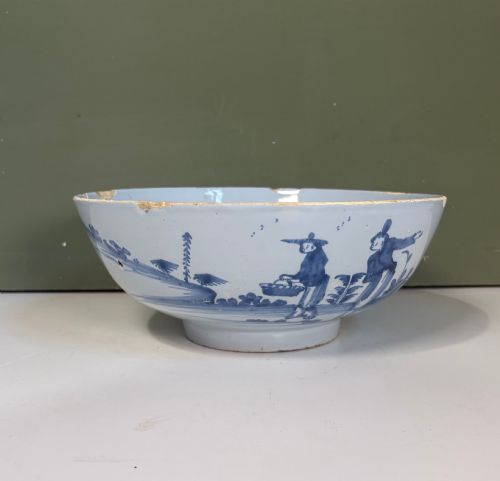
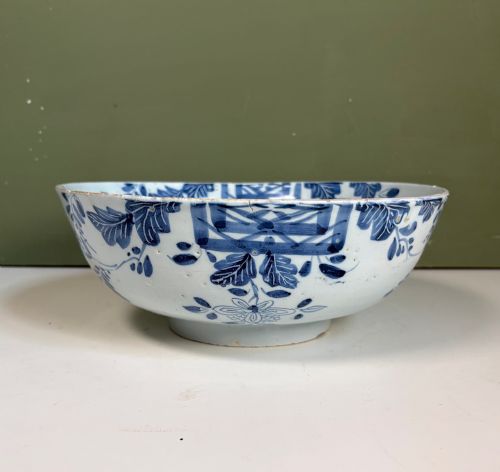
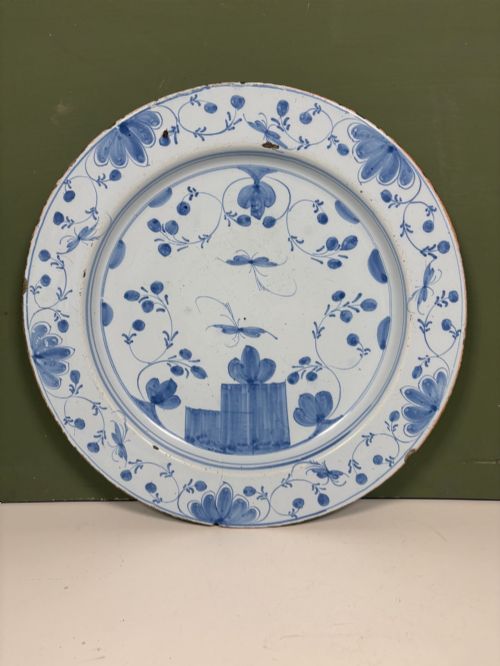
18th century delftware pottery encompasses chargers, decorative plates, bowls, jugs, and apothecary jars made primarily in Dutch and English workshops.
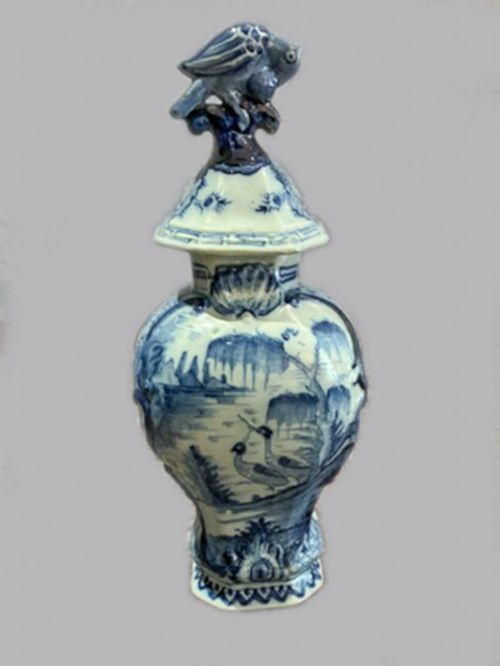
Buyers encounter blue and white or polychrome plates alongside lidded vases, bough pots, posset pots, and puzzle jugs spanning the 17th to 19th centuries.
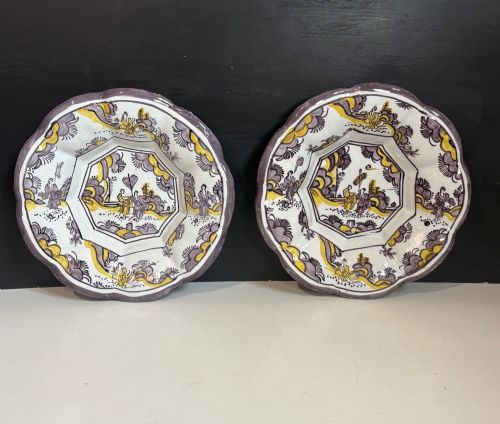
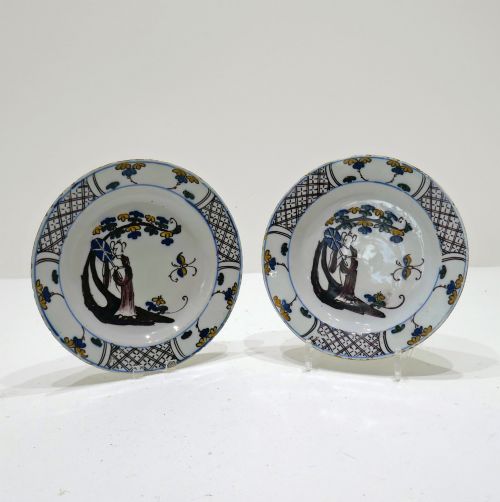
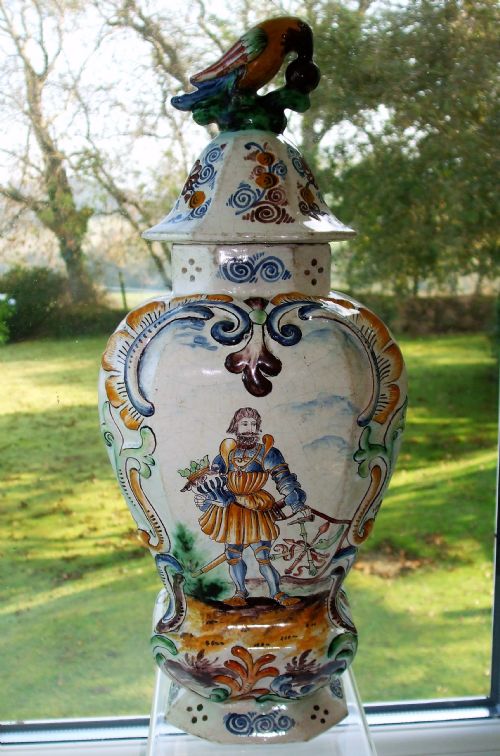
The objects serve decorative and domestic functions, displaying floral decoration, chinoiserie, and figurative subjects like the kneeling bishop candlestick.
Materials and Techniques
Potters shape earthenware bodies and coat them in an opaque tin glaze that provides a smooth white background for painting.
Artisans apply cobalt pigment and polychrome metal oxides directly onto the porous unfired glaze, absorbing the colours permanently during the kiln firing.
A porcelain bishop kneels in quiet contemplation while holding a candle socket, frozen in tin-glazed earthenware.
Quality and Execution
The crispness of the hand-painted brushwork and the complexity of the botanical or figurative motifs distinguish finer vessels from simpler utilitarian wares.
The stability of the tin glaze, the evenness of the earthenware body, and the clarity of the blue and white or polychrome pigments dictate overall visual success.
The 18th Century Delftware Pottery Glossary
- Tin-Glazed Earthenware
- Ceramic pottery covered with a lead glaze made opaque by the addition of tin oxide. This provides the characteristic white surface required for delft painting.
- Charger
- A large decorative plate intended for display on a wall or dresser rather than for dining use. These often measure significantly larger than standard table plates.
- Polychrome
- Decoration employing multiple colours rather than a single pigment. In these ceramics, artists use a palette of metallic oxides alongside cobalt.
- Apothecary Jar
- A vessel utilised by chemists and pharmacists to store dry drugs, wet medicines, or syrups. They frequently bear painted identifying labels on the front.
- Bough Pot
- A specialised vessel designed to hold cut branches or flower stems for interior decoration. Many feature perforated lids to keep stems upright.
18th Century Delftware Pottery: Frequently Asked Questions
What is delftware pottery?
Delftware is a type of tin-glazed earthenware produced by potters working in England and the Netherlands during the 17th and 18th centuries. The technique involves applying a white tin glaze over a buff or reddish clay body before painting designs in cobalt blue or polychrome pigments.
These pieces take many forms, including chargers, apothecary jars, bough pots, and jugs. The aesthetic reflects contemporary European taste, often drawing inspiration from imported Asian porcelain.
How were apothecary jars used?
Apothecary jars held medicinal substances, dry drugs, and liquid syrups in chemist shops and domestic households. The painted inscriptions identified the contents for quick access by the apothecary.
These jars often feature decorative cartouches surrounding the drug name, flanked by cherubs, fruit, or shells. Their survival offers insight into historical medical and pharmaceutical practices.
How do I care for tin glaze?
Tin-glazed earthenware requires gentle handling because the ceramic body beneath the soft glaze can chip or flake upon impact. Dust pieces with a dry, soft cloth and avoid submerging damaged items in water where moisture can penetrate the porous clay.
Display vessels away from areas prone to heavy vibrations or extreme temperature fluctuations. Proper placement ensures the fragile glaze remains stable over time.
Are these pieces English or Dutch?
The listings include both English and Dutch production centres from the 17th, 18th, and 19th centuries. Dutch delft often originates from workshops in cities like Delft, while English examples commonly emerge from potteries in London, Bristol, and Lambeth.
Distinguishing between the two often relies on the clay body colour, glaze composition, and stylistic nuances in the brushwork. Both regional traditions utilised tin glazes and cobalt painting techniques.