




18th Century Clock Face
An 18th century clock face brings historic craftsmanship into a room, offering functional timekeeping encased in period metal and wood.
18th Century Clock Face
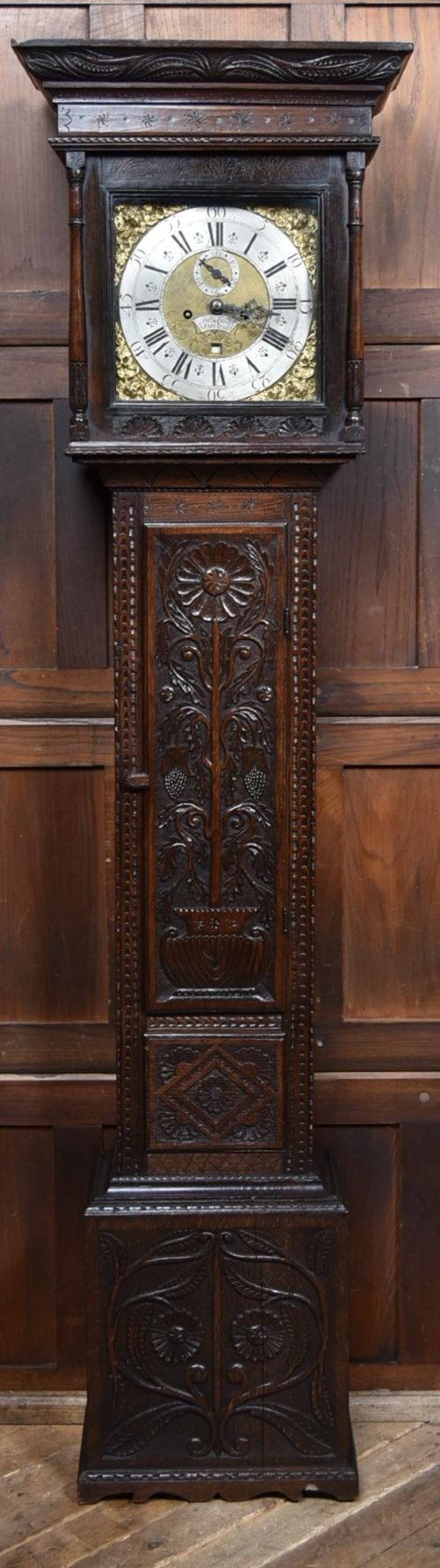
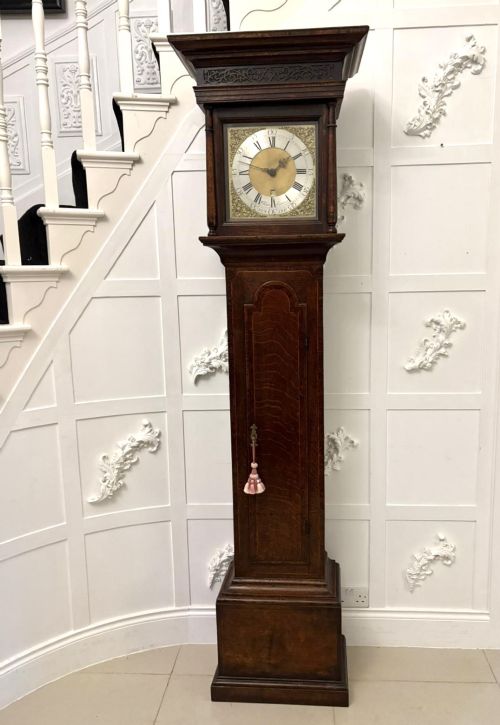
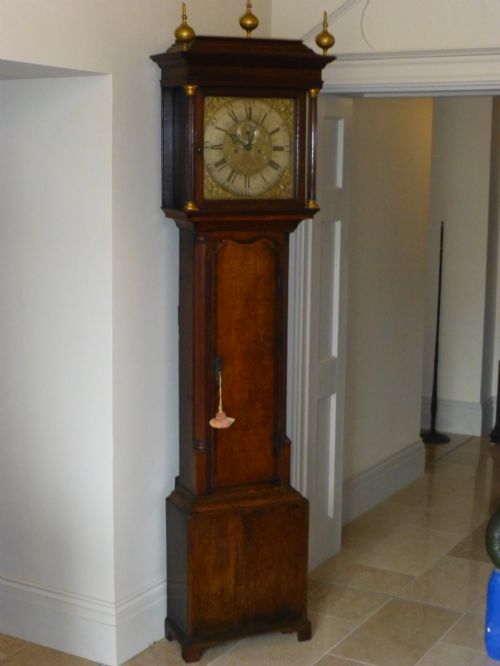
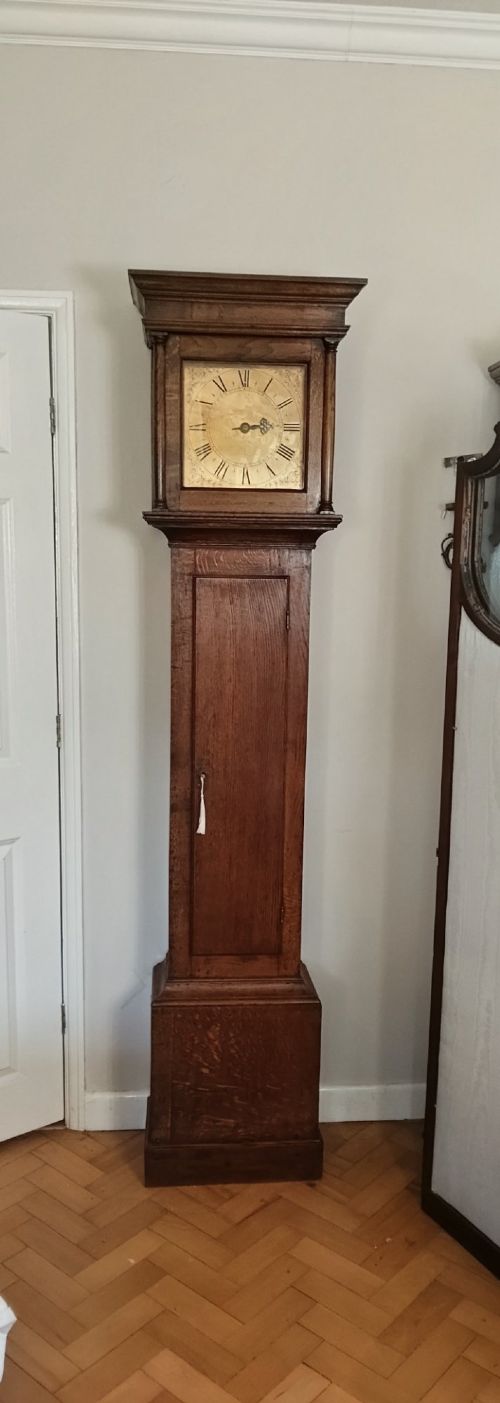
When searching for an 18th century clock face, buyers encounter components housed within longcase clocks, wall clocks, and bracket clocks. The most common iteration met on this page is the brass dial belonging to an oak or mahogany grandfather clock.
These items originate predominantly from the 18th Century and Georgian periods, showcasing regional British makers alongside occasional Swedish and French provincial examples. Pieces appear either as complete clocks with movements and wooden cases or as standalone dials.
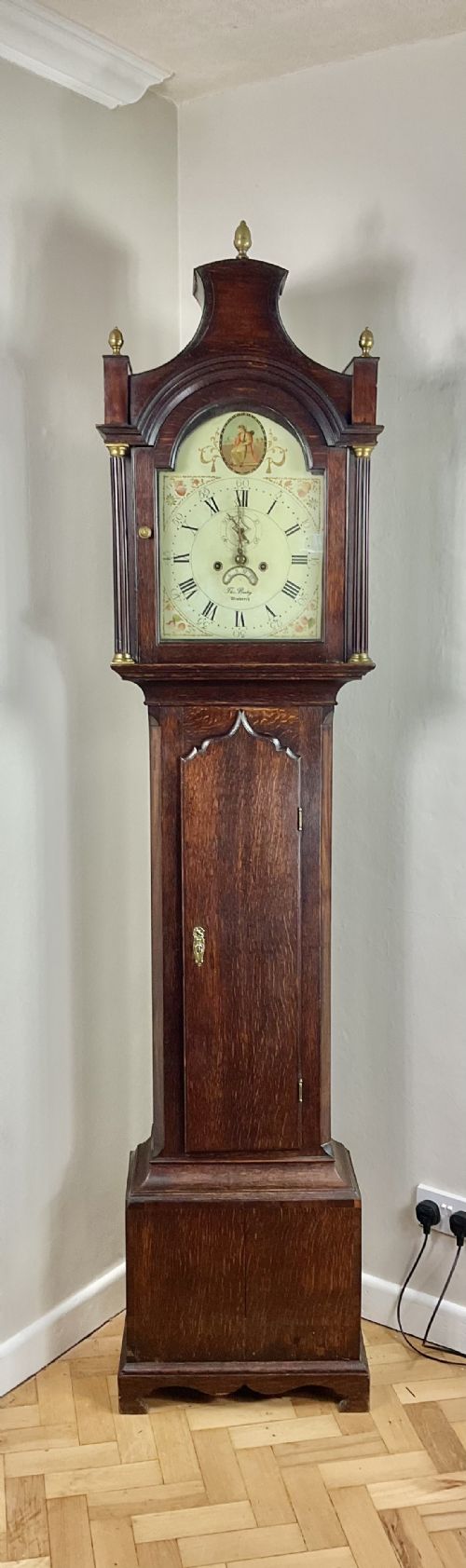
Forms range from small early examples to arched face variants featuring lunar moon phases and high water indicators. Oak and walnut dominate the earlier items, while mahogany becomes more prevalent in later George III iterations.
Materials and Construction
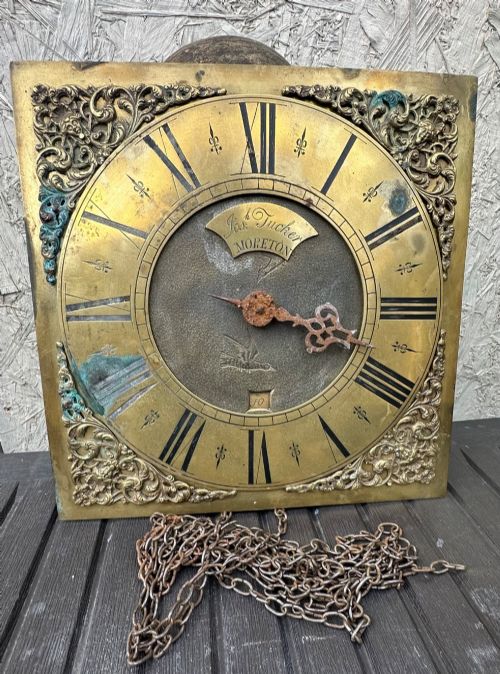
Makers constructed clock faces primarily from brass, often paired with steel and iron components for the internal movements. Dials feature engraved or cast ornamentation, sometimes accompanied by painted details.
Cases utilise solid timbers such as oak, mahogany, walnut, and burr oak, joined and polished to house the heavy brass dials and weights. Glass protects the dial aperture on wall and bracket clocks.
Craftsmen executed longcase clock bodies with fitted doors and hood glass, combining structural joinery with decorative wood grains.
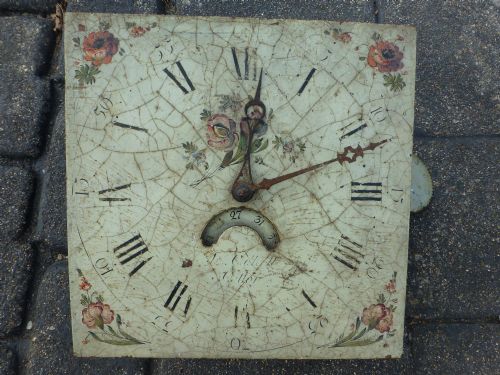
One barn find wall clock arrives complete with the accumulated dust of centuries, waiting for a sympathetic hand.
Factors That Distinguish Quality
The sophistication of the brass engraving and the crispness of the cast dial elements set superior examples apart from standard work. Finer dials feature intricate subsidiary seconds rings, calendar apertures, and detailed maker signatures.
Cabinetry quality shifts according to the selection of timber, such as figured mahogany or burr oak, and the restraint or ambition of the mouldings and arches. Dials paired with complete, functioning eight day movements command greater regard than stripped or later-adapted faces.
Jn Smith Macclesfd·Smith of Chester·Joseph Gibson Ecclefechan·William Betagh Dublin·John Pollard of Crediton·Richard Northen·James Draycot Wells·John Taylor London·Standring of Bolton·William Webster London·George Clapham of Whitton·Jonathan Blake Fulham·Richard Peckover London·William Lister·Thomas Baker of Malling·Samuel Whalley·Richard Watkin·Benjamin Reeves Lamberhurst·Newman of Norwich
The 18th Century Clock Face Glossary
- Longcase clock
- A tall pendulum clock enclosed in a wooden case, commonly known as a grandfather clock. These standing timepieces house the movement and dial within a protected trunk and hood.
- Brass face
- The metallic dial plate on which the hours and minutes are displayed. These plates often feature decorative spandrels in the corners and an engraved centre.
- Moonphase
- A dial mechanism tracking the phases of the lunar cycle. This feature typically appears within the arch of a clock face.
- Bracket clock
- A portable table or shelf clock, often driven by a spring movement. These pieces commonly feature ebonised or mahogany cases with carrying handles.
- Spandrel
- The ornamental corner piece affixed to a clock dial outside the chapter ring. These cast brass motifs help date the period of manufacture based on their stylistic design.
18th Century Clock Face: Frequently Asked Questions
How do I identify an 18th century clock face?
Examine the materials and the style of the brass engraving, as 18th century dials typically feature cast brass corner spandrels and hand-engraved maker signatures. The typography of the numbers and the presence of single hands on earlier models also indicate the era.
Check for square dial proportions on pieces dating from the early part of the century, while arched tops become more common toward the Georgian period. Maker signatures often include the town of origin, helping to cross-reference regional British clockmaking styles.
Can I buy just a clock face?
Yes, listings occasionally offer standalone dial plates and movements separated from their original wooden cases. These items appeal to collectors interested in the metalwork and engraving without the requirement for floor space.
When acquiring a loose dial, verify whether the associated movement is included and check the condition of the brass surface. Some examples retain their original mounting brackets and motion work behind the dial plate.
What is the difference between oak and mahogany longcase clocks?
Oak longcase clocks generally date from the earlier 18th century and exhibit a robust, rustic grain with warm brown tones. Mahogany examples tend to appear later in the Georgian period, offering a smoother reddish-brown surface suited to more formal interiors.
Timber choice often reflects the region of manufacture and prevailing local fashions. Oak pieces frequently originate from provincial workshops, whereas mahogany became the preferred medium for London and high-status regional makers.
How should I care for a brass dial clock?
Maintain a stable room temperature away from direct sunlight and dampness to protect both the wooden case and the internal metalwork. Avoid using abrasive commercial metal cleaners on the brass face, as this can remove historic patination and engraving details.
Dust the glass and wooden surfaces gently with a dry cloth. Professional horological maintenance is recommended for cleaning and oiling the mechanical movement behind the dial.