






18th Century Baluster Stemware
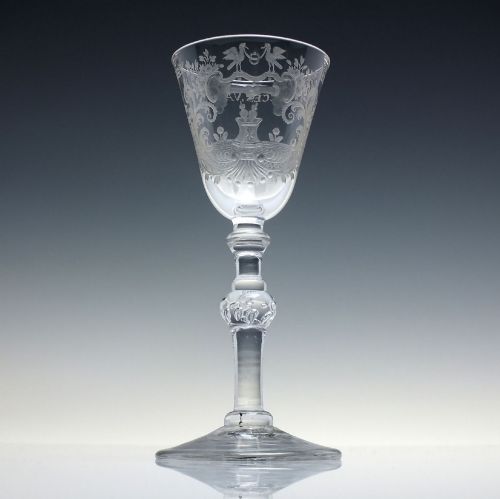
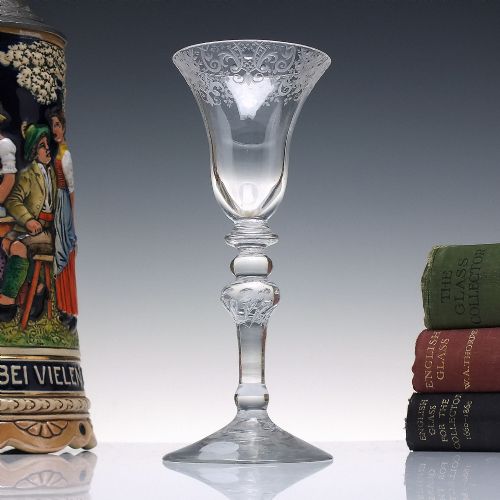
These 18th century baluster stemware vessels are heavy lead glass drinking pieces from the Georgian era, prized for their tactile presence and substantial knopped stems.
18th Century Baluster Stemware
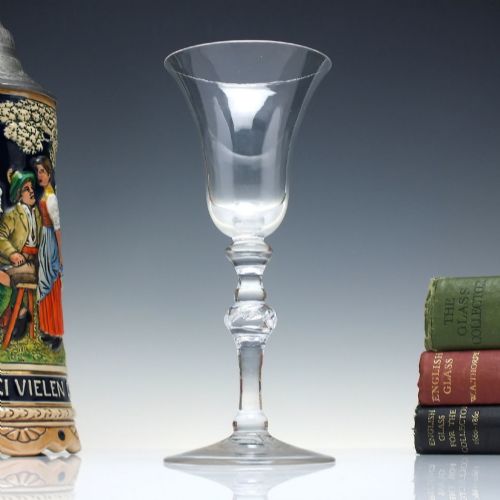
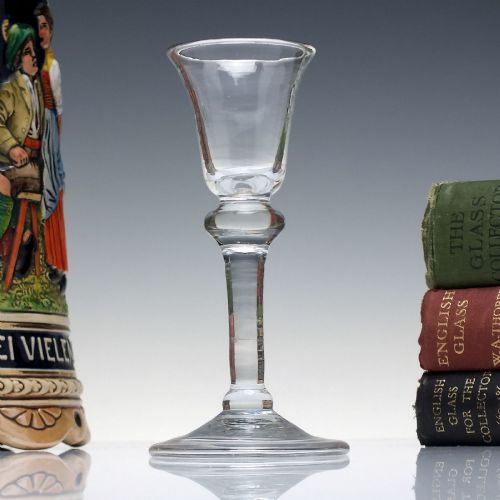
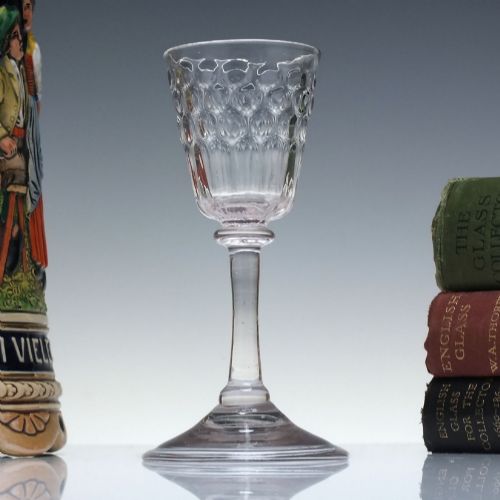
When you search for 18th century baluster stemware, you encounter drinking vessels defined by their prominent, knopped stems supporting various bowl forms. These pieces span wine glasses, goblets, dram glasses, ale glasses, sweetmeat glasses, gin glasses, and ratafia glasses from the Georgian period.
The selections on this page concentrate on English and European lead glass from the early to mid-1700s, featuring forms like bell bowls, deceptive bowls, and folded feet. Many examples date from around 1710 to 1750, displaying the evolution from heavy baluster profiles to lighter balustroid variations.
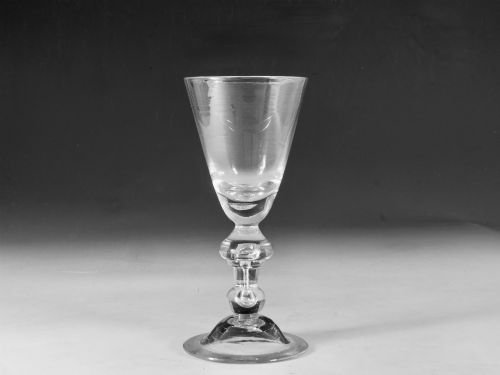
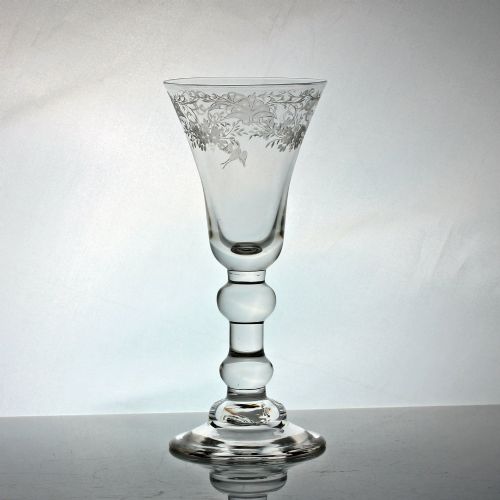
You will notice distinct stylistic influences, including Rococo engraving depicting hop and barley motifs or marriage themes. The forms range from large heavy baluster goblets to slender kit kat glasses and dram glasses designed for small measures.
Materials and Construction
These drinking vessels utilise lead glass, clear glass, lead crystal, and flint glass, giving the material a distinct refractive quality and considerable weight. The high lead content allowed makers to form thick, substantial walls and robust stems that feel notably heavy in the hand.
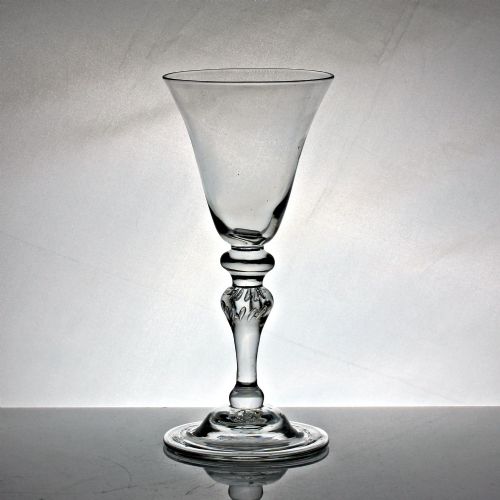
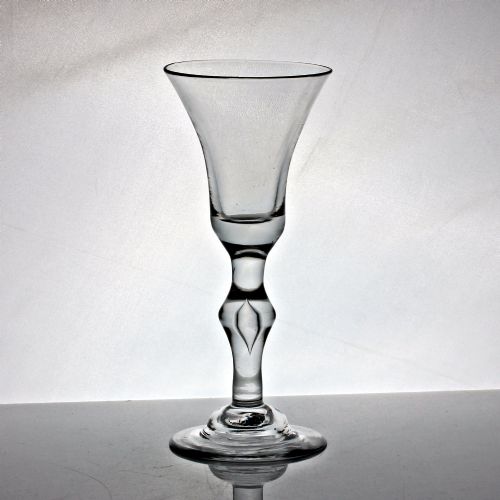
The stems were formed with characteristic baluster or balustroid knops, often incorporating air bubbles or tears within the glass structure. Feet were frequently folded over at the rim for strength or fashioned into domed shapes to support heavier bowls.
18th Century Baluster Stemware Retail Price Guide 2026
Typical asking prices for 18th century baluster stemware among the pieces listed under this phrase on Sellingantiques today, from the lower quarter to the upper quarter. They describe what is for sale here now, not the wider market.
Listings span the early 18th century to around 1750, utilising lead glass, flint glass, and clear crystal across diverse drinking vessel forms.
Evaluating Quality and Character
Quality in these drinking vessels rests upon the proportion and balance between the heavy bowl, the knopped stem, and the foot. The clarity of the lead glass and the dexterity involved in forming complex baluster knops distinguish finer examples.
Engraving adds another dimension, where crisp execution of hop and barley details or Rococo scrollwork elevates the piece. The presence of original manufacturing characteristics, such as domed feet or folded rims, contributes to the historical integrity of each glass.
The 18th Century Baluster Stemware Glossary
- Baluster
- A thick, knopped stem shape derived from architectural pillars. It forms the defining structural feature of early Georgian drinking vessels.
- Balustroid
- A lighter, more slender variation of the traditional baluster stem. These profiles often appear on mid-century glasses.
- Deceptive bowl
- A solid glass base within the bowl that makes the vessel appear to hold more liquid than it actually does. These were commonly used in dram glasses.
- Folded foot
- A foot created by doubling the glass edge back underneath for added strength. This technique appears frequently on early stemware.
- Domed foot
- A raised, convex foot that adds visual and physical stability to heavy goblets. It is often found on early 18th century pieces.
- Sweetmeat glass
- A small, shallow vessel designed for serving confectionery or dried fruits rather than drinks. They often feature elaborate baluster stems.
18th Century Baluster Stemware: Frequently Asked Questions
What is baluster stemware?
Baluster stemware refers to drinking glasses featuring thick, knopped stems inspired by architectural balusters. These heavy lead glass vessels date predominantly from the early to mid-18th century.
The style evolved from robust, heavy forms toward lighter balustroid profiles as glassmaking techniques advanced. They served various functions, from wine consumption to holding drams and sweetmeats.
How do I date an 18th century wine glass?
Dating relies on observing the combination of bowl shape, stem construction, and foot formation. Early pieces from around 1710 often feature heavy baluster stems and domed feet.
As the century progressed toward 1750, stems became more slender and balustroid, sometimes incorporating detailed engraving or lighter flint glass compositions.
What are balustroid glasses?
Balustroid glasses are a refined subgroup of baluster stemware featuring thinner, more elongated stem profiles. They retain the characteristic knops of the earlier heavy baluster style but with a lighter overall grace.
These pieces typically date from the second quarter of the 18th century, bridging the gap between heavy early Georgian forms and later styles.
How were these glasses used originally?
These vessels fulfilled specific dining and social roles depending on their form and capacity. Wine glasses and goblets accommodated larger quantities, while dram glasses held potent spirits.
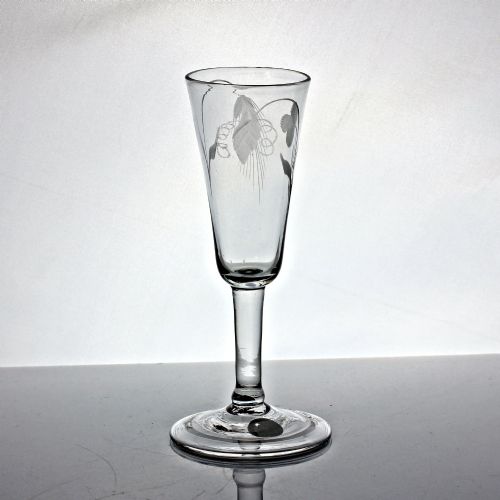
Specialised forms like ale glasses featured hop and barley engravings, and sweetmeat glasses held confectionery during formal gatherings.