



17th Century Oak Bureau
A 17th century oak bureau provides durable timber construction and fitted writing compartments that suit practical historical interiors.
17th Century Oak Bureau
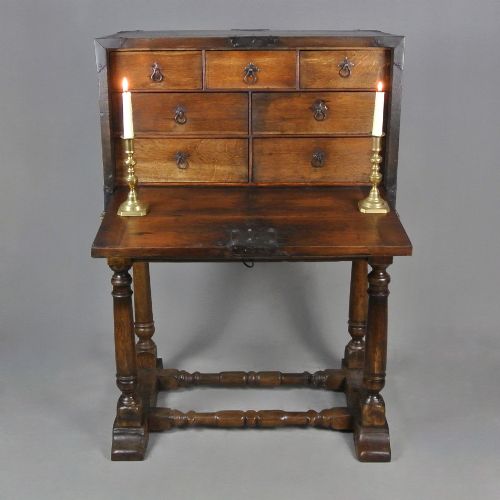
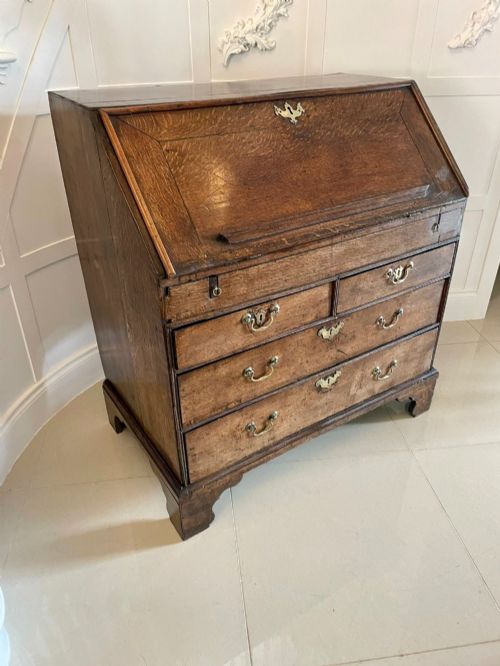
A 17th century oak bureau combines robust timber construction with practical writing compartments designed for domestic administration and correspondence. These pieces emerge across several periods, including the 17th century, Charles II, and William and Mary eras, alongside provincial and English regional variants.
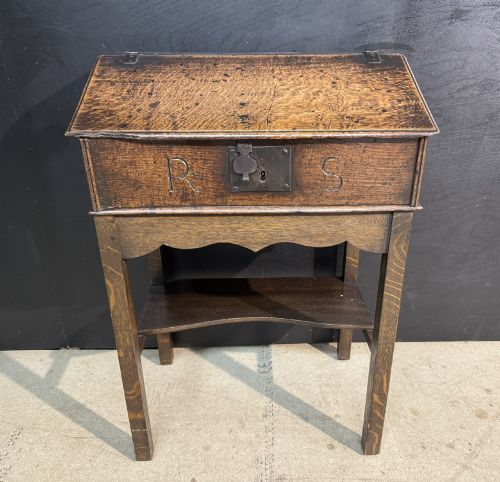
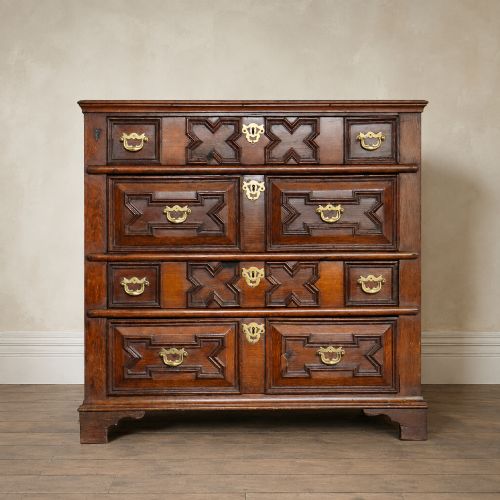
Buyers frequently encounter related forms such as writing slope boxes, chests of drawers, and table top bureaux alongside standard bureau desks. The selection includes both small proportions and larger formats, occasionally featuring stands or fitted interiors with numerous small drawers.
The material palette remains consistent with the period, relying primarily on solid oak supplemented by brass and iron hardware, with occasional leather or fabric linings. Regional English workshops and provincial makers produced these items using traditional joining methods appropriate for heavy domestic use.
Materials and construction methods
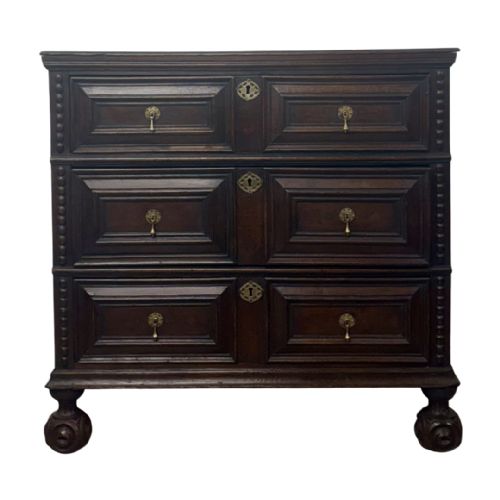
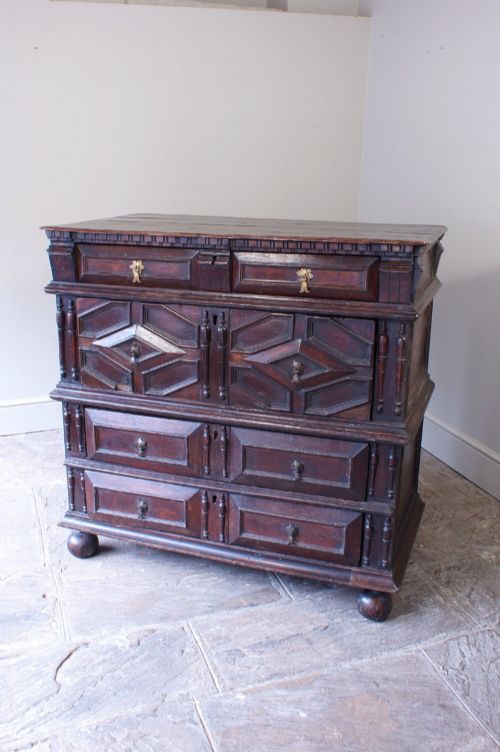
Craftsmen built these bureaux using solid oak, chosen for its strength and local availability across English workshops. Timber surfaces often display geometric mouldings, carved decoration, or parquetry patterns reflecting Jacobean and William and Mary design influences.
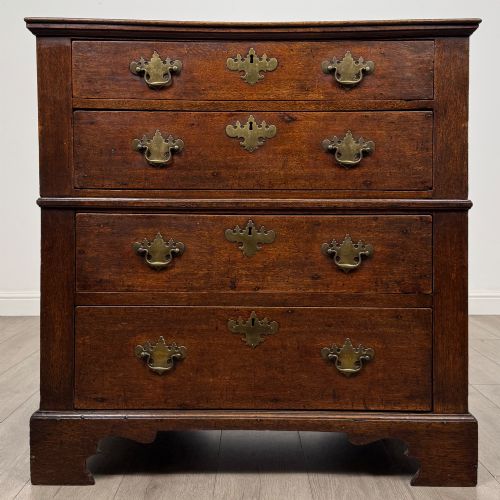
Metalwork played a functional and structural role, utilising brass and iron for drop handles, escutcheons, and hinges. Internal components relied on fine joinery to create small drawers and pigeonholes within the writing compartment.
17th Century Oak Bureau Retail Price Guide 2026
Typical asking prices for 17th century oak bureau among the pieces listed under this phrase on Sellingantiques today, from the lower quarter to the upper quarter. They describe what is for sale here now, not the wider market.
Current listings feature pieces spanning the 17th century, William and Mary, and Charles II periods, constructed primarily in solid oak with brass and iron hardware.
Assessing quality in early bureaux
Quality depends on the preservation of original timber, hardware, and structural elements such as drawer linings and backboards. Pieces retaining their original stands or unblemished internal writing compartments demonstrate superior craftsmanship.
The crispness of carved details, precision of geometric mouldings, and integrity of the joint work distinguish standard provincial production from finer workshop outputs. Altered elements or replaced fittings influence the overall consistency of the piece.
The 17th Century Oak Bureau Glossary
- Bureau
- A writing desk featuring a sloping lid that opens to reveal internal compartments and drawers. These forms developed significantly during the late seventeenth century.
- Parquetry
- Geometric wood mosaic work used for decorative surface patterns on furniture. This technique appears on select William and Mary pieces.
- Geometric moulding
- Raised wooden mouldings applied in symmetrical patterns to drawer fronts and door panels. These details are typical of Charles II joinery.
- Writing slope
- A portable or stationary box with an angled lid designed for writing letters. Early examples often predate the standard drop-front bureau.
- Strong box
- A heavy iron-bound chest used for securing valuables and documents. These utilitarian objects share period characteristics with early storage furniture.
17th Century Oak Bureau: Frequently Asked Questions
What is an oak bureau?
An oak bureau is a wooden desk with a hinged sloping flap that covers a fitted interior of small drawers and pigeonholes. They served as secure writing and storage furniture in homes.
Most surviving examples date from the seventeenth and early eighteenth centuries, reflecting changing domestic needs for correspondence and document storage.
How do I date a 17th century bureau?
Dating relies on construction methods, timber characteristics, and decorative styles such as geometric mouldings or carved panels. Charles II and William and Mary pieces display distinct hardware and joinery.
Secondary woods, nail types, and the complexity of the interior fitments also provide clear indicators of the period of manufacture.
What are table top bureaux?
Table top bureaux are smaller writing cabinets designed to sit on a desk, table, or chest rather than standing on their own legs or base. They contain the characteristic sloping lid and internal drawers.
These compact versions offered portable or space-saving writing facilities during the late seventeenth century.
Where were these desks made?
These pieces were produced across English workshops, ranging from urban cabinet makers to provincial joiners. Regional styles often reflect local timber supplies and traditional construction techniques.
English oak served as the primary material for the vast majority of domestic furniture from this era.
How should I care for antique oak?
Antique oak benefits from stable indoor humidity and protection from direct sunlight and heat sources. Regular dusting with a dry cloth maintains the surface finish.
Application of traditional wax polish helps nourish the timber and preserves the natural patina developed over centuries of use.