
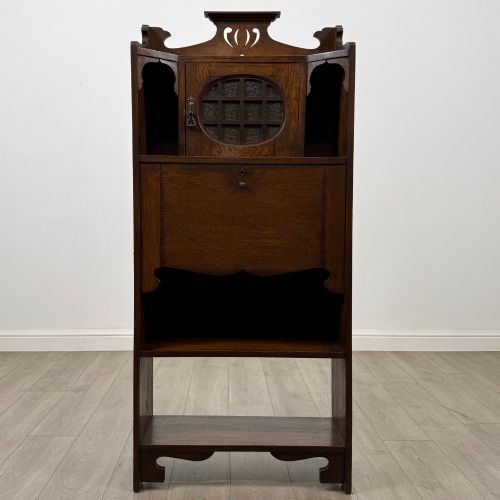
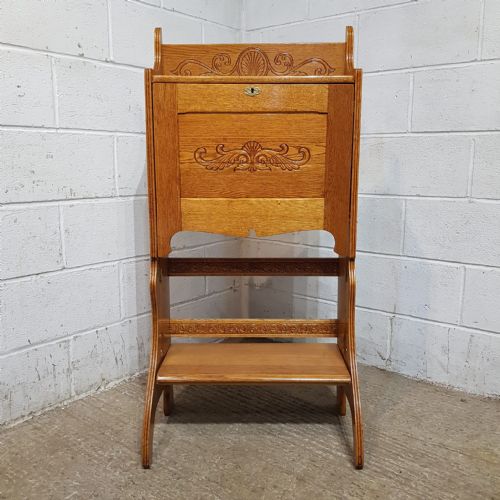
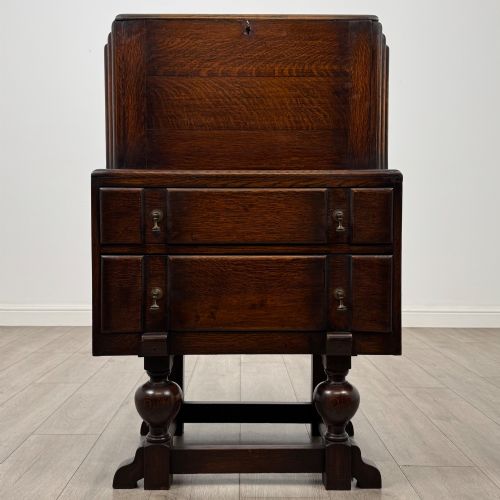

Antique Oak Fall Front
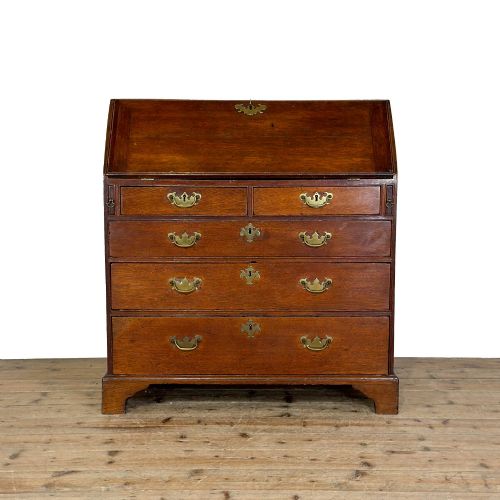
These antique oak fall front pieces provide a practical writing surface that conceals fitted compartments behind a sloping panel.
Antique Oak Fall Front
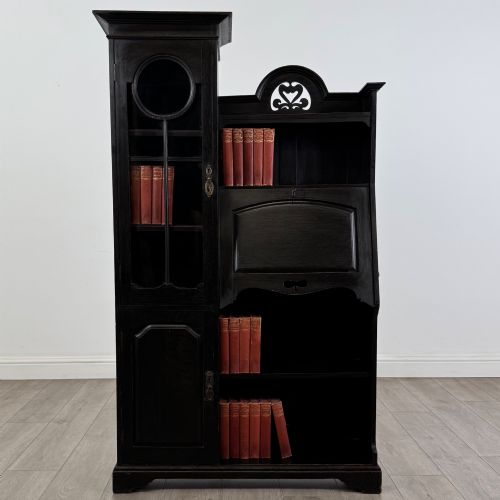
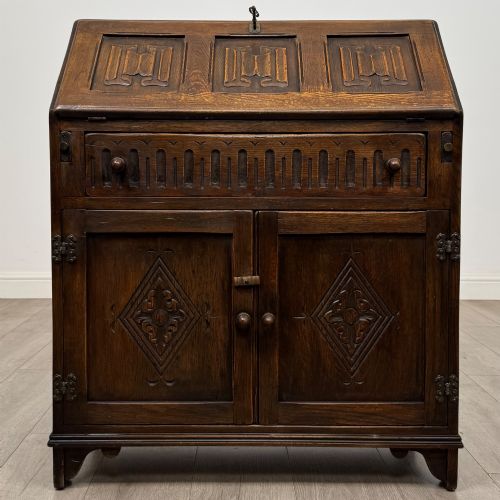
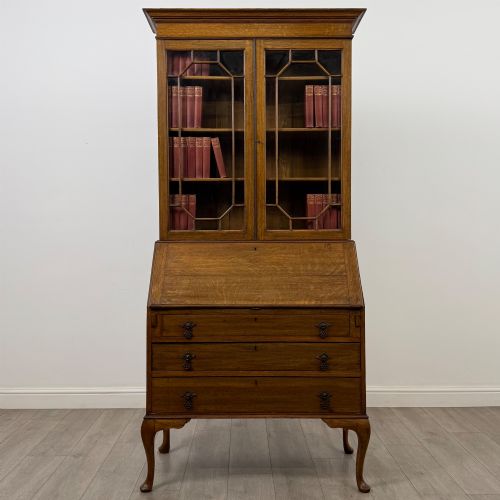
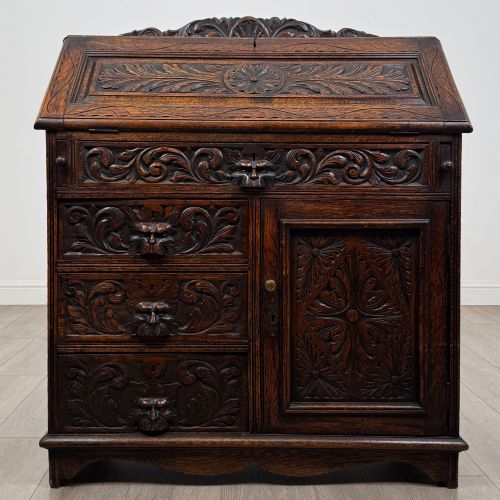
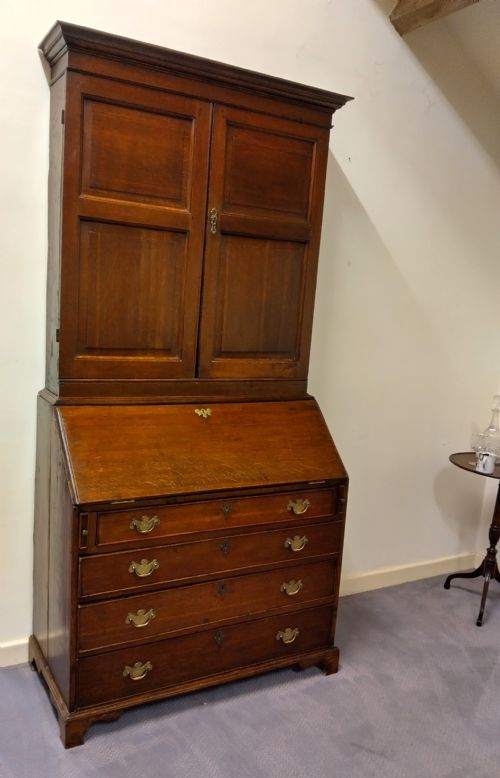
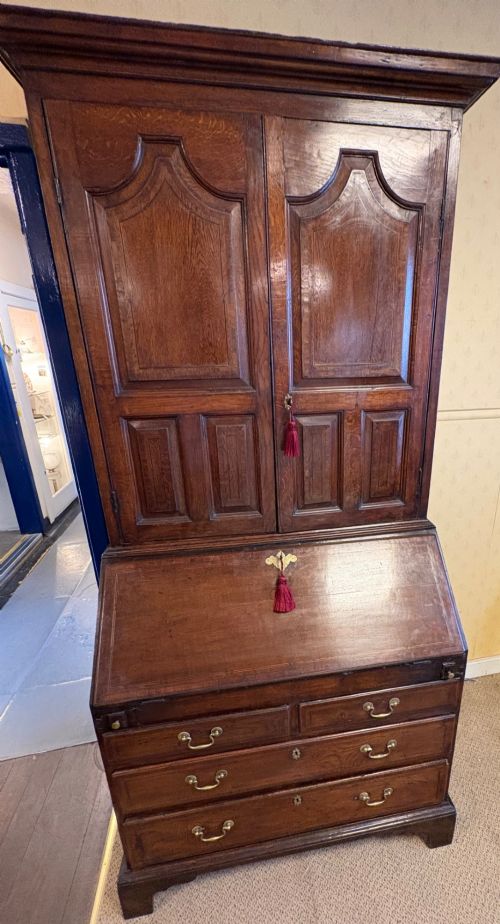
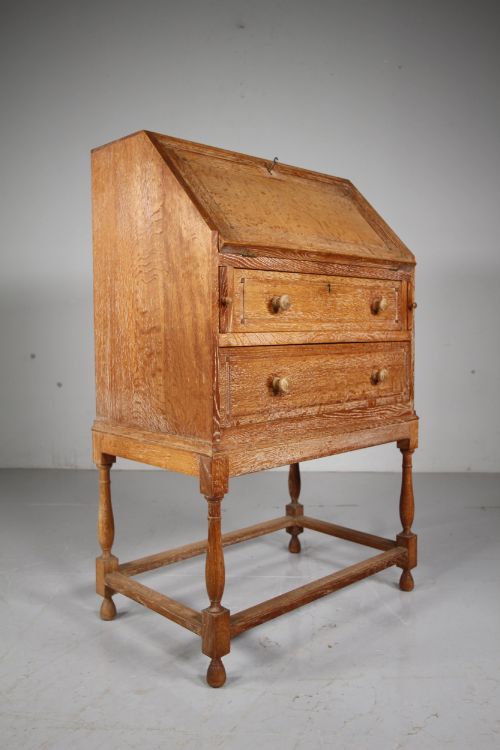
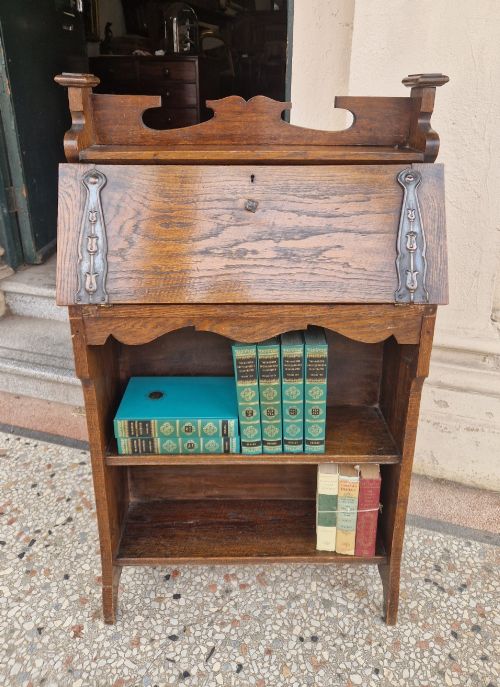
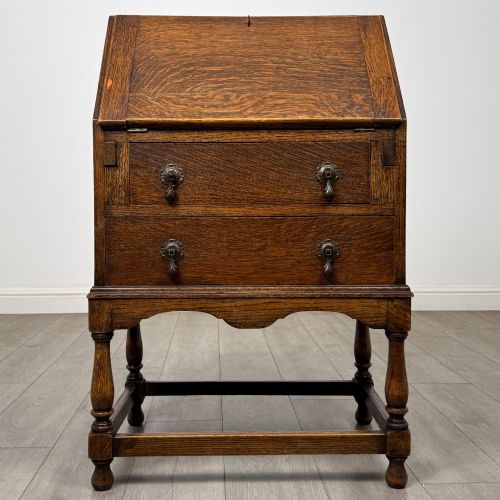
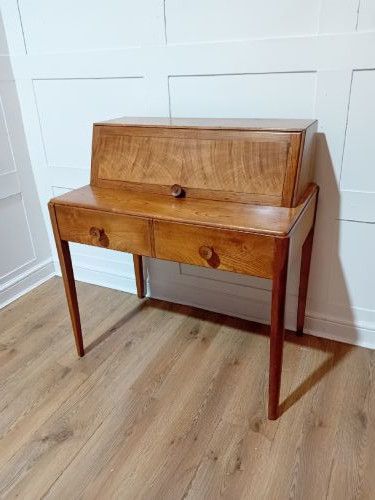
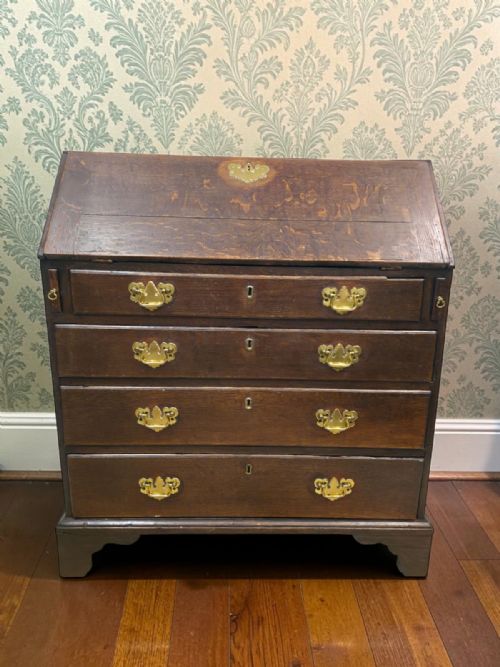
An antique oak fall front typically appears as a bureau, a bureau bookcase, or a writing cabinet designed for domestic correspondence and document storage. The selection spans periods from the seventeenth century through the Georgian era and into the Edwardian and Arts and Crafts movements.
The form relies on a hinged writing flap that pulls down to reveal pigeonholes, small drawers, and secret compartments. Buyers encounter compact student desks alongside larger bureau bookcases fitted with glazed shelving above.
How they were made
Carpenters constructed these items primarily from solid oak, sometimes incorporating wood inlay, mahogany, and parquetry to ornament the surfaces. Cabinet makers utilised brass for handles and key escutcheons, alongside iron and copper fittings on specific Arts and Crafts examples.
Interior components often feature stepped drawers and pigeonholes constructed with traditional jointing methods. Leather inserts sometimes provide a smooth writing surface on the inner side of the fall front panel.
Listings feature oak fall front furniture across multiple centuries, spanning seventeenth-century examples to twentieth-century Arts and Crafts pieces.
What varies in quality
The grade of an antique oak fall front rests upon the selection of timber, the complexity of the interior joinery, and the integrity of the original hardware. Pieces featuring well-figured grain, intricate stepped interiors, and labelled maker provenance stand apart from utilitarian workshop output.
Proportions also dictate distinction, with narrow and small formats commanding particular interest among collectors. The survival of original glass panes in bookcase sections and untouched surface patination further distinguish superior examples.
Heals of London·Arthur Basil Reynolds·Larkin·Robert Mouseman Thompson·Harris Lebus·Liberty of London
The Antique Oak Fall Front Glossary
- Fall front
- A hinged writing flap that lowers to form a horizontal desk surface and lifts to conceal the interior pigeonholes.
- Bureau bookcase
- A dual-purpose furniture form combining a fall front writing desk below with a glazed or panelled bookcase above.
- Stepped interior
- An arrangement of small interior drawers and pigeonholes arranged in tiers resembling steps.
- Parquetry
- Geometric patterns formed by fitting small pieces of wood veneer together on the exterior surface.
- Linenfold
- A carved wood panel motif resembling folded fabric, frequently seen on Edwardian and revival panels.
Antique Oak Fall Front: Frequently Asked Questions
How do I use an antique fall front?
Lower the hinged front panel to create a sturdy writing desk for daily correspondence or laptop use. The internal compartments and small drawers provide dedicated storage for stationery and documents.
When writing is finished, simply lift the panel back into the vertical position and secure it with the lock. This conceals your papers and maintains a tidy appearance in the room.
How do I date an oak bureau?
Examine the construction methods of the internal drawers, the style of the brass handles, and the overall proportions of the cabinet. Seventeenth and early eighteenth-century pieces often display hand-cut dovetails and panelled construction.
Later Edwardian and Arts and Crafts examples show machine-assisted joinery alongside stylistic influences from specific design movements. Maker labels can also provide a precise production decade.
How do I care for oak furniture?
Maintain the timber by keeping the piece away from direct heat sources and sudden temperature fluctuations that can dry out the wood. Apply a traditional beeswax polish occasionally to nourish the grain and preserve the surface shine.
Avoid using modern silicone sprays or abrasive cleaners which can damage the historic finish and patination. Dust the surfaces regularly with a soft, dry cloth.