
Sloping Oak Writing Desk
A sloping oak writing desk provides a solid surface for correspondence, connecting centuries of craftsmanship with practical utility.
Sloping Oak Writing Desk
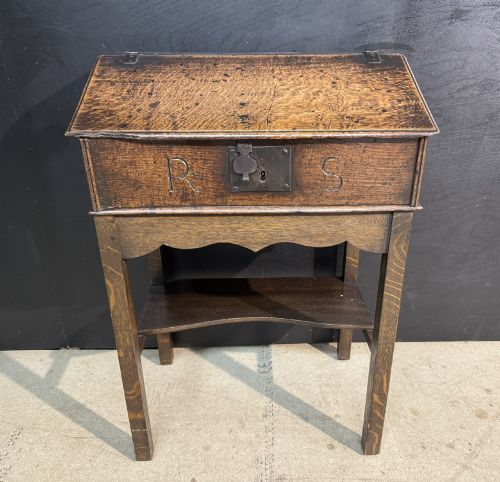
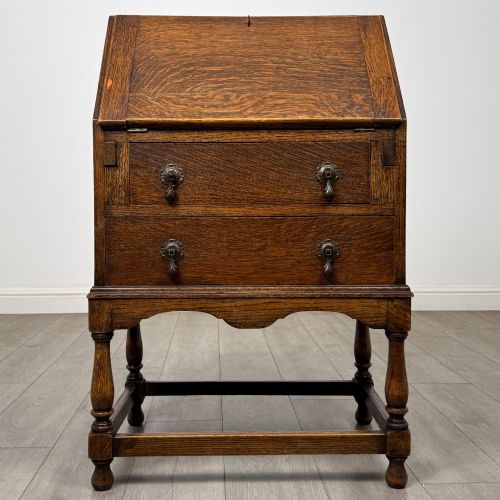
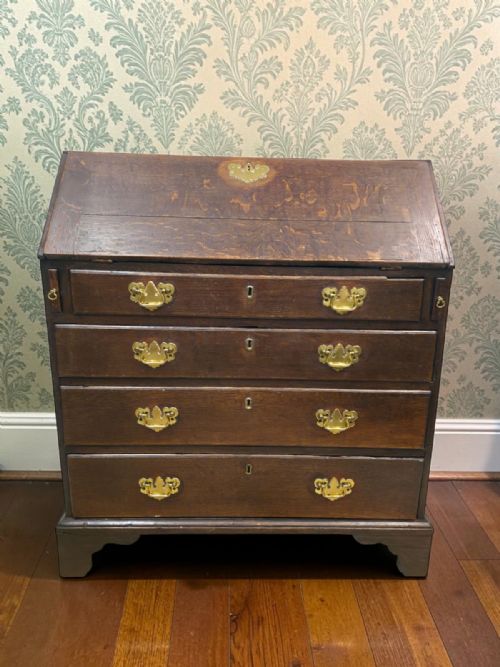
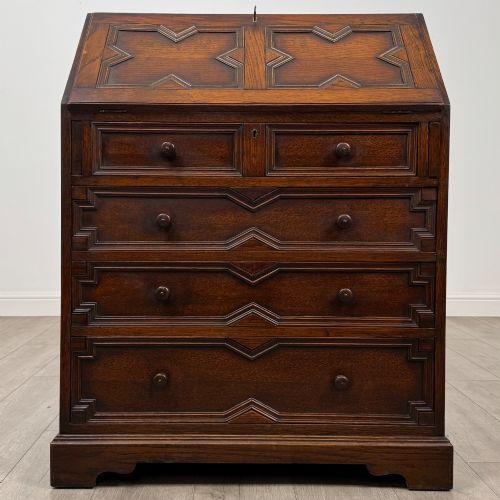
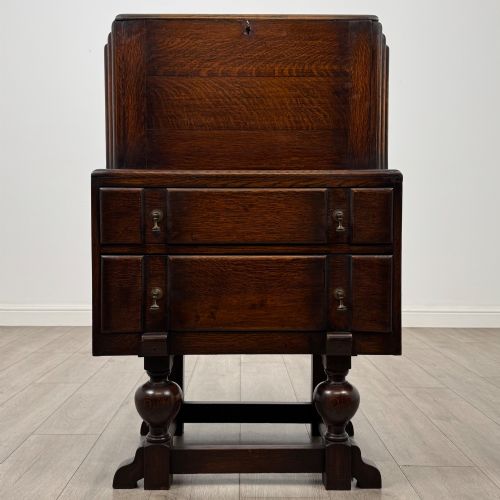
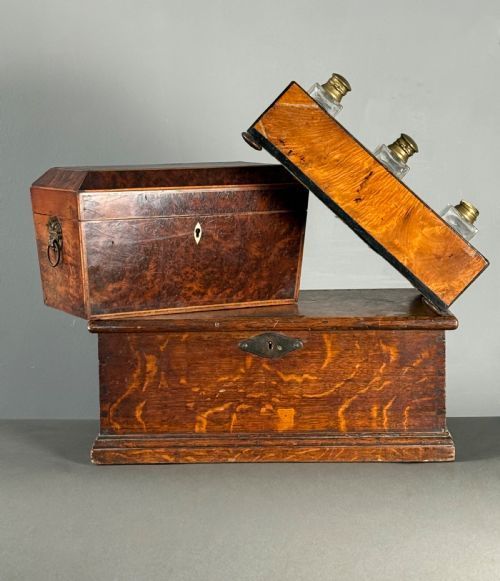
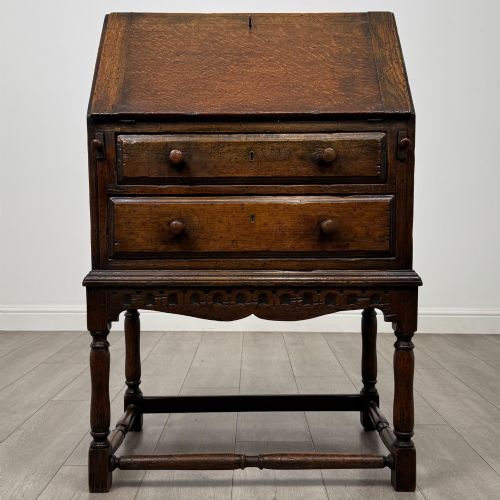
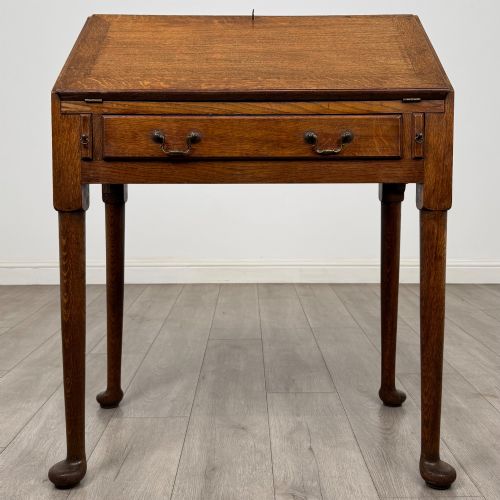
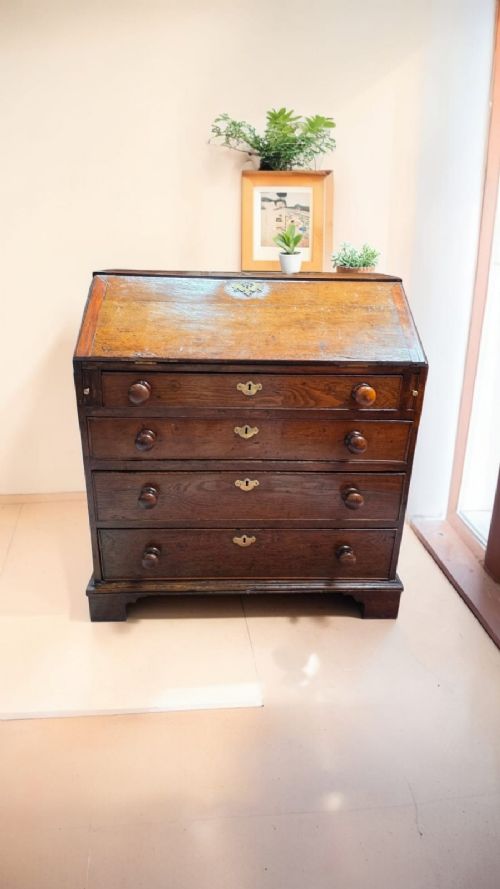
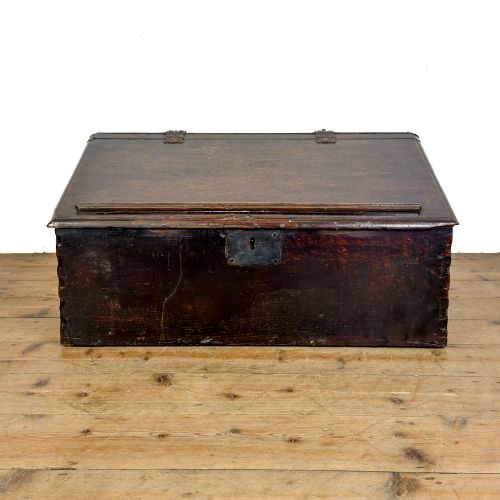
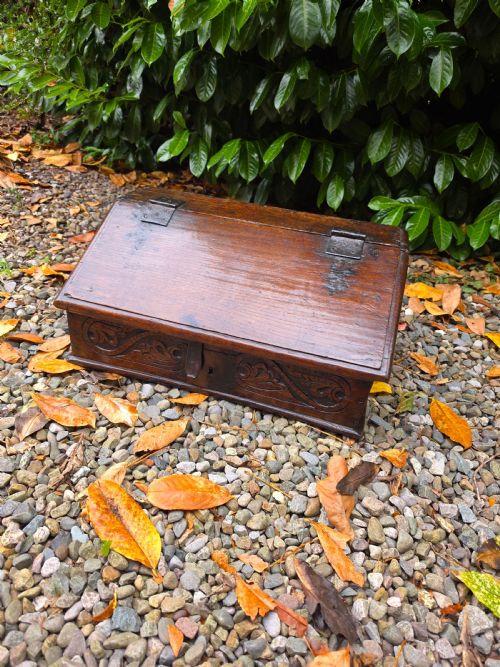
When you examine a sloping oak writing desk, you encounter forms spanning from the seventeenth century through to the Edwardian era. The selection ranges from compact early desk boxes and Bible boxes to full-sized Georgian bureaux and Victorian clerk desks.
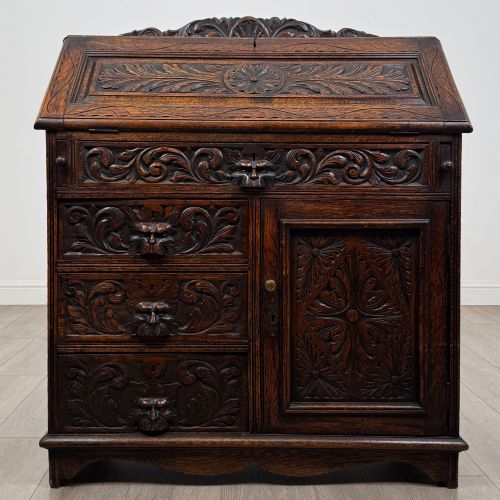
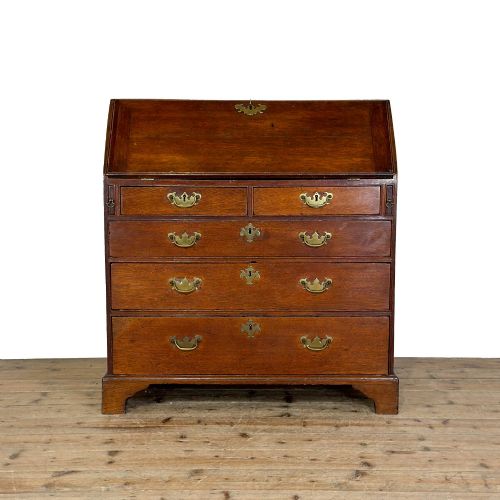
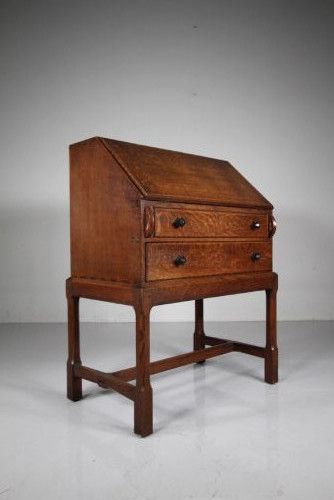
You are most likely to meet Edwardian and Georgian examples finished in golden or dark oak. These pieces frequently feature fall-front lids or hinged writing slopes designed for domestic or professional correspondence.
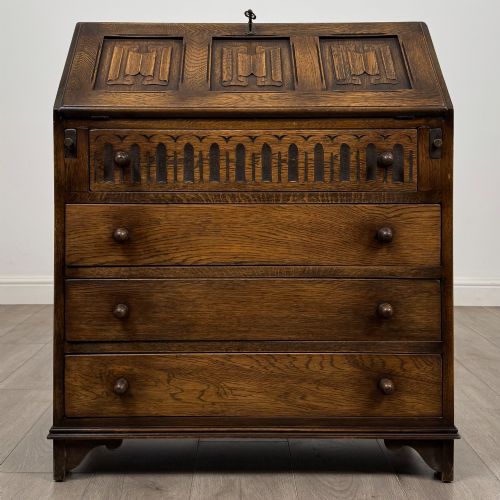
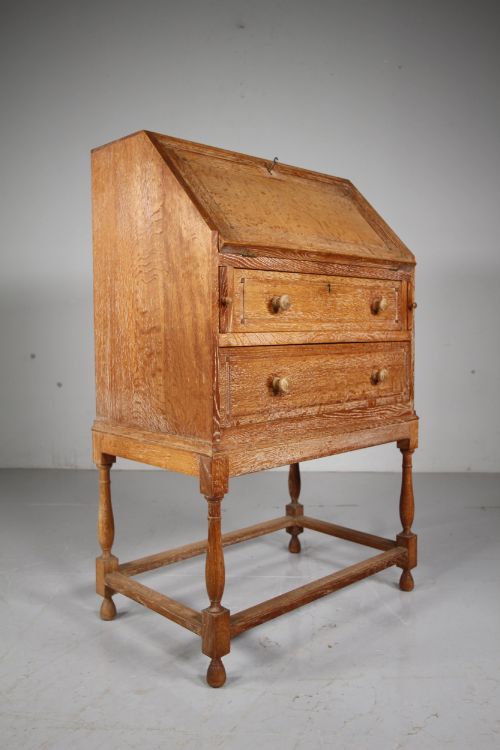
The materials recorded across these forms include solid timber supplemented by brass, iron, leather, and occasional pollard oak details. Styles stretch from plain vernacular pieces to heavily carved Jacobean revival and linenfold motifs.
Distinctions in craftsmanship and condition
Quality rests upon the crispness of hand-carved details, such as Green Man motifs or linenfold panels, versus machine-cut uniformity. The complexity and preservation of internal drawers and pigeonholes also distinguish finer examples from plain utility pieces.
The integrity of the timber movement and the retention of original brass or iron hardware influence the standing of each piece. Superior items display careful timber selection, such as figured pollard oak, paired with tight, enduring joints.
Listings feature oak items spanning the seventeenth, eighteenth, nineteenth, and twentieth centuries, including Georgian and Edwardian eras.
Heals of London·Stanley Webb Davies·Pairs MFG Co
The Sloping Oak Writing Desk Glossary
- Bureau
- A desk featuring a sloping hinged lid that opens to reveal a fitted interior of small drawers and pigeonholes. This form sits upon a chest of drawers or a stand.
- Writing Slope
- A portable or stationary box with an angled lid designed to hold paper and writing implements. When opened, the sloping surface supports the writer.
- Bible Box
- A small seventeenth or eighteenth-century wooden box with a slanted lid, originally built to store religious texts. These act as precursors to later desk boxes.
- Linenfold
- A style of wood carving that mimics the appearance of folded linen cloth. It appears frequently on panels of Edwardian and revival pieces.
- Pollard Oak
- Timber taken from trees that have been pollarded, producing a highly figured and knotted grain pattern. Cabinet makers utilised this for decorative veneers and special surfaces.
Sloping Oak Writing Desk: Frequently Asked Questions
What is a sloping oak writing desk used for?
These pieces served historically for writing letters, keeping accounts, and storing important documents safely. The angled lid provided an ergonomic surface for handwriting before the widespread use of flat tables.
In modern interiors, they function as compact workspaces or decorative storage cabinets for stationery and laptops. The internal compartments remain useful for organising small household items.
How do I date an oak writing desk?
Dating relies on examining the construction methods, handle styles, and decorative motifs present on the timber. Seventeenth and eighteenth-century items often show vernacular hand-tool marks and simpler joinery.
Later Victorian and Edwardian pieces frequently incorporate machine-cut elements, revival styles like Jacobean, or maker labels. Comparing the specific type of oak and hardware to known period examples clarifies the age.
How do I care for antique oak furniture?
Maintain oak surfaces by keeping them away from direct sunlight and sudden temperature changes that cause the timber to split. Regular dusting with a dry cloth prevents dirt build-up in carved crevices.
Apply traditional beeswax occasionally to nourish the grain and protect the finish without sealing the wood permanently. Avoid using modern silicone-based polishes that can damage historic surfaces.
What is the difference between a bureau and a slope?
A bureau typically stands on its own base as a piece of furniture, often incorporating drawers beneath the writing flap. It provides a permanent station for study and correspondence.
A writing slope is generally a portable box placed upon a table or lap, housing writing materials internally. While both share an angled writing surface, their scale and intended mobility differ.