61,886  PAGES BROWSED TODAY PAGES TODAY • 237 ANTIQUES UPLOADED TODAYNEW ARRIVALS
GIFTS
237 ITEMS ADDED TODAY
Sort Order
Items Per Page
Browse Categories
Sort order
Relevant Links
Items per page
ID #SA1138170
SOLD
Email Phone
Save
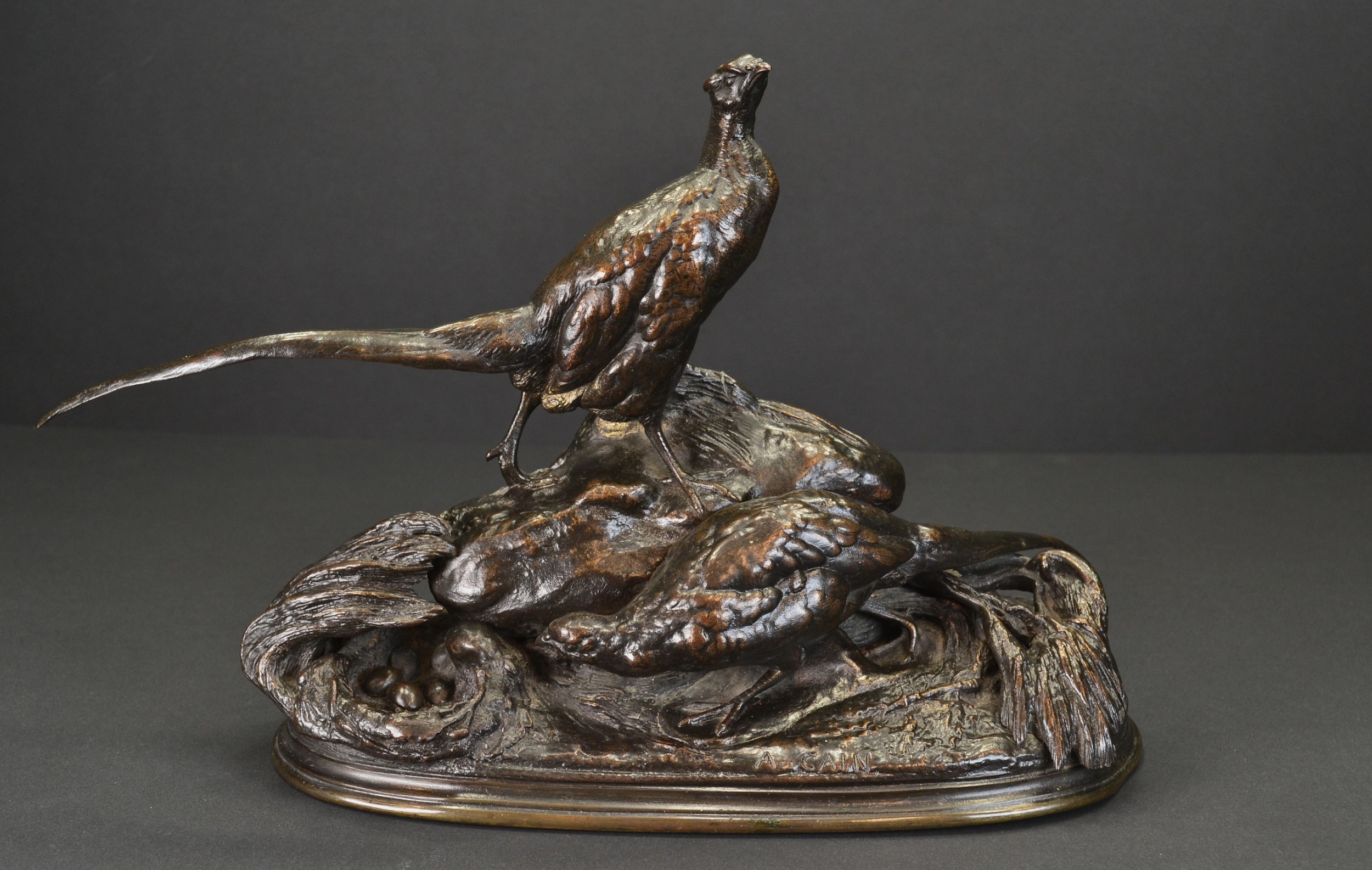
Bronze Pheasant Group with Nest and Eggs by Auguste Nicholas Cain ( 1822-1894 )
Sold by The Country House Gallery
sold SA1138170
Sorry, but this item has been sold.

The Country House Gallery

Sellingantiques Verified Since Nov 2020
Browse dealers 40 items
Id #SA1138170
PDF SHARE
SAVE

Bronze Pheasant Group with Nest and Eggs by Auguste Nicholas Cain ( 1822-1894 )

19th century
Sold 4 December 2025 · The Country House Gallery
This “Bronze Pheasant Group with Nest and Eggs by Auguste Nicholas Cain ( 1822-1894 )” found a buyer.

It was listed by The Country House Gallery. Sold pieces stay on Sellingantiques as a record of what has passed through, and the next one is rarely far away.

Description

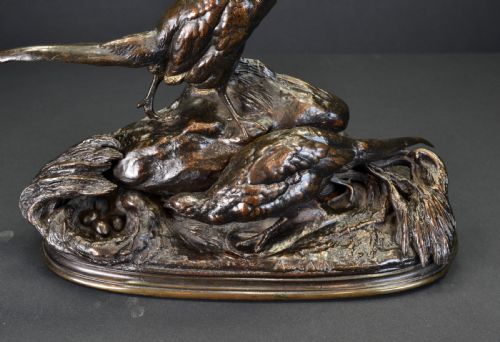
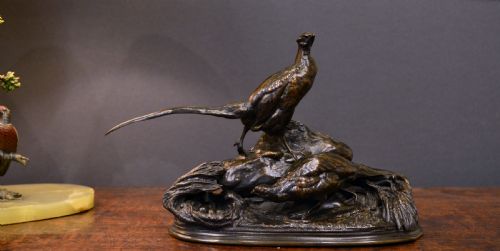
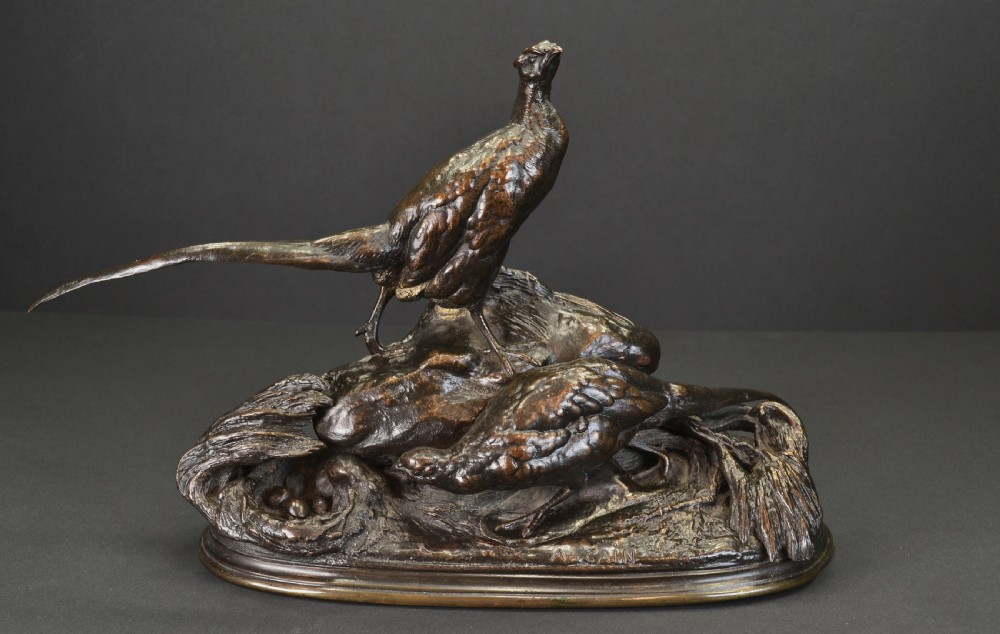
A great subject by one of the 19th century master animaliers Augusre Nicholas Cain.Complex subject of Cock and hen pheasant with nest and eggs on a naturalistic base. Lovely condition with dark brown patination. circa 1880

The son-in-law of Pierre-Jules Mene, Auguste Cain was rooted firmly in the tradition of highly detailed ‘models’ for which Les Animaliers are best known. He shared his father-in-law’s foundry, but unlike Mene, he accepted many government commissions for works destined for important buildings and public places. He made his debut at the Salon of 1846, and in the period between 1847 and 1888 thirty-eight works are listed as commissioned or exhibited at the Salon.
Auguste Nicholas Cain was born in Paris on 10th November 1821 and started his career as a joiner but later joined the atelier of P.J. Mene, whose daughter he later married. Cain also studied sculpture under Rude and Guionnet and first exhibited his work at the Salon of 1846. His first exhibit was a wax model of a “Linnet defending her nest against a Rat”, which was subsequently edited in bronze and shown at the Salon of 1855. From 1847 through to 1888, thirty-eight of Cain’s works are listed as commissioned or exhibited at the Salon.
Until 1868 Cain concentrated on producing small animal bronzes which clearly show Mene’s influence. Whilst he concentrated on animals in their natural habitat, especially in his larger works depicting the conflict between animals, Cain also produced a wide range of domestic and farmyard animal bronzes. He imbued these smaller works with humour and character whilst retaining their realism.

After this period, Cain focused his attention on monumental statuary and battle scenes. His most notable piece from this period being the colossal equestrian statue of Duke Karl von Braunschweig, sculpted in 1879 for the city of Geneva. In addition to this masterpiece, Cain executed a “Lion and Ostrich” for the Luxembourg Gardens, a “Bull” for the Trocadero and the magnificent “Tiger and Crocodile” in the Tuileries Gardens. Following his death in August 1894, his “Lion and Lioness fighting over the corpse of a Bear” was erected in his honour in the Place Montholon in Paris.

During his lifetime Cain edited his own bronzes in Mene’s foundry, which he continued to operate after the latter’s death, yet his larger works were often cast by the F. Barbedienne Foundry. The Susse Freres foundry, finding Cain to have commercial appeal, bought some of his models and issued a catalogue of his work shortly after his death.

Whilst Cain’s small animal sculptures remain highly collectable today some of his larger works can still be found throughout France today, most notably at the Chateau Fontainbleu, the Museum of Decorative Arts, Paris; the Orsay, Paris; Riom, Strasbourg and Versailles.

Physical Dimensions
Height
19.5cm (7.68")
Width
25cm (9.84")
Depth
12cm (4.72")
Declaration

The Country House Gallery has dated this Bronze Pheasant Sculpture to the 19th Century.

Reference Numbers
Sellingantiques Reference
SA1138170
Dealers Internal Reference
p 81
Description
A great subject by one of the 19th century master animaliers Augusre Nicholas Cain.Complex subject of Cock and hen pheasant with nest and eggs on a naturalistic base. Lovely condition with dark brown patination. circa 1880
“
The son-in-law of Pierre-Jules Mene, Auguste Cain was rooted firmly in the tradition of highly detailed ‘models’ for which Les Animaliers are best known.
The Country House Gallery

He shared his father-in-law’s foundry, but unlike Mene, he accepted many government commissions for works destined for important buildings and public places. He made his debut at the Salon of 1846, and in the period between 1847 and 1888 thirty-eight works are listed as commissioned or exhibited at the Salon.

fig 1. A dark brown bronze sculpture depicting a group of pheasants with a nest and eggs on an oval base.
fig 1. Bronze Pheasant Group with Nest and Eggs by Auguste Nicholas Cain ( 1822-1894 )

Auguste Nicholas Cain was born in Paris on 10th November 1821 and started his career as a joiner but later joined the atelier of P.J. Mene, whose daughter he later married. Cain also studied sculpture under Rude and Guionnet and first exhibited his work at the Salon of 1846. His first exhibit was a wax model of a “Linnet defending her nest against a Rat”, which was subsequently edited in bronze and shown at the Salon of 1855. From 1847 through to 1888, thirty-eight of Cain’s works are listed as commissioned or exhibited at the Salon.

fig 2. A dark brown bronze sculpture depicting a group of pheasants with a nest and eggs on an oval base.
fig 2. Bronze Pheasant Group with Nest and Eggs by Auguste Nicholas Cain ( 1822-1894 )

Until 1868 Cain concentrated on producing small animal bronzes which clearly show Mene’s influence. Whilst he concentrated on animals in their natural habitat, especially in his larger works depicting the conflict between animals, Cain also produced a wide range of domestic and farmyard animal bronzes. He imbued these smaller works with humour and character whilst retaining their realism.

After this period, Cain focused his attention on monumental statuary and battle scenes. His most notable piece from this period being the colossal equestrian statue of Duke Karl von Braunschweig, sculpted in 1879 for the city of Geneva. In addition to this masterpiece, Cain executed a “Lion and Ostrich” for the Luxembourg Gardens, a “Bull” for the Trocadero and the magnificent “Tiger and Crocodile” in the Tuileries Gardens. Following his death in August 1894, his “Lion and Lioness fighting over the corpse of a Bear” was erected in his honour in the Place Montholon in Paris.

During his lifetime Cain edited his own bronzes in Mene’s foundry, which he continued to operate after the latter’s death, yet his larger works were often cast by the F. Barbedienne Foundry. The Susse Freres foundry, finding Cain to have commercial appeal, bought some of his models and issued a catalogue of his work shortly after his death.

Whilst Cain’s small animal sculptures remain highly collectable today some of his larger works can still be found throughout France today, most notably at the Chateau Fontainbleu, the Museum of Decorative Arts, Paris; the Orsay, Paris; Riom, Strasbourg and Versailles.

Height
19.5cm (7.68")
Width
25cm (9.84")
Depth
12cm (4.72")
Date of Manufacture

The Country House Gallery has dated this Bronze Pheasant Sculpture to the 19th Century.

Reference Numbers
Sellingantiques Ref
SA1138170
Dealers Internal Ref
p 81
The Country House Gallery
Sellingantiques verified Since Nov 2020
Dealer Profile

You can view the stock and full dealer information on the The Country House Gallery Profile Page
PDF SHARE
SAVE
A dark brown bronze sculpture depicting a group of pheasants with a nest and eggs on an oval base. SOLD6+ MONTHS AGO
1 / 3
Archive I A dark brown bronze sculpture depicting a group of pheasants with a nest and eggs on an oval base. SOLD6+ MONTHS AGO

Bronze Pheasant Group with Nest and Eggs by Auguste Nicholas Cain ( 1822-1894 )
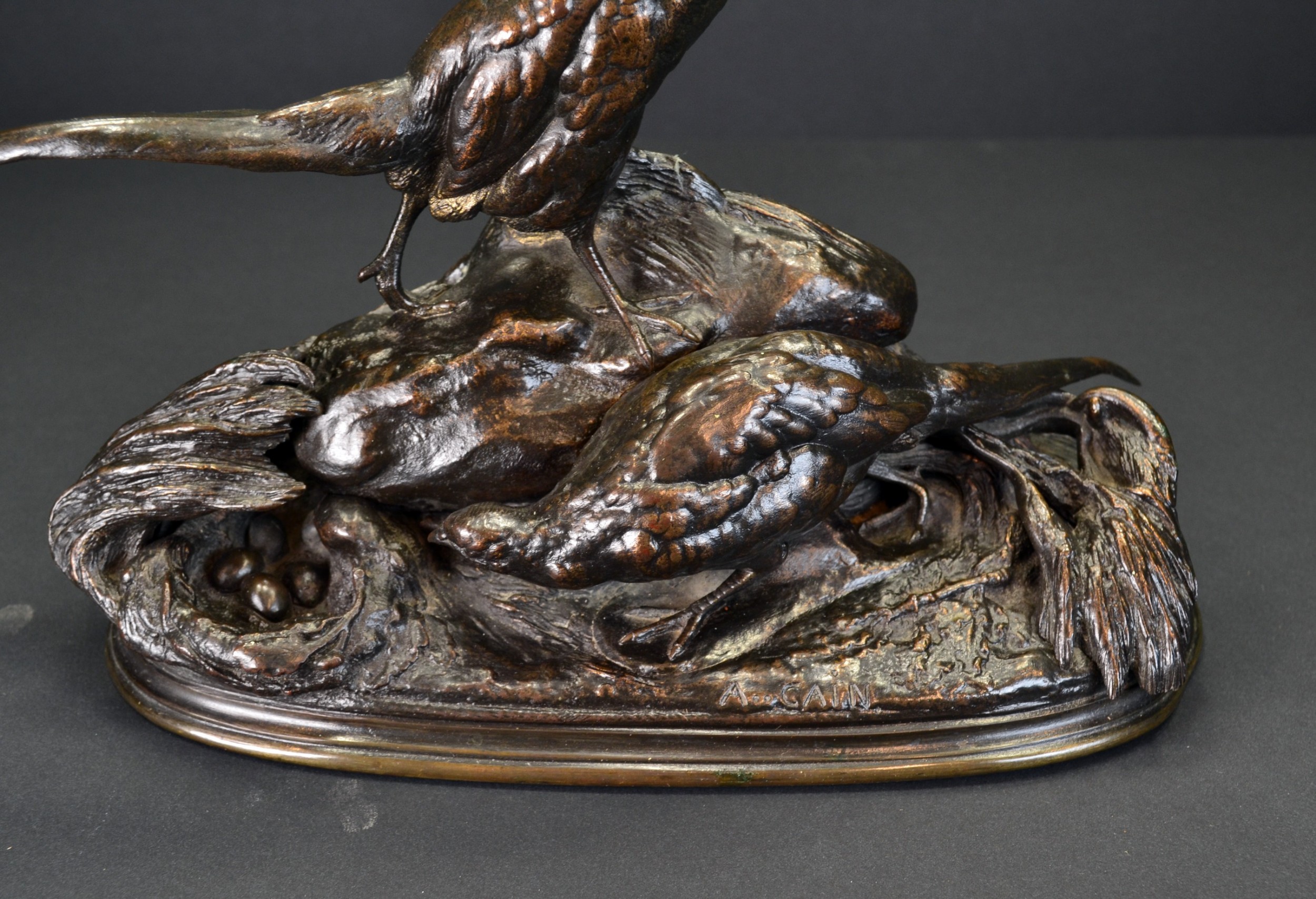
Archive II A dark brown bronze sculpture depicting a group of pheasants with a nest and eggs on an oval base. View II
Archive III A dark brown bronze sculpture depicting a group of pheasants with a nest and eggs on an oval base. View III
FURTHER BROWSING

Visitors also looked at these ⇣

Enlarged Archival View
Telephone 07867 787003
Location
Burnley
Lancashire
United Kingdom
Verified Since Nov 2020
Items For Sale 40
Items Sold 31
The Country House Gallery
Verified Since Nov 2020
View Dealer Info
Location: Burnley, Lancashire, United Kingdom
Verified
Nov 2020
For Sale
40
Sold
31
A dark brown bronze sculpture depicting a group of pheasants with a nest and eggs on an oval base.
Bronze Pheasant group with nest and eggs by Auguste Nicholas Cain ( 1822-1894 )
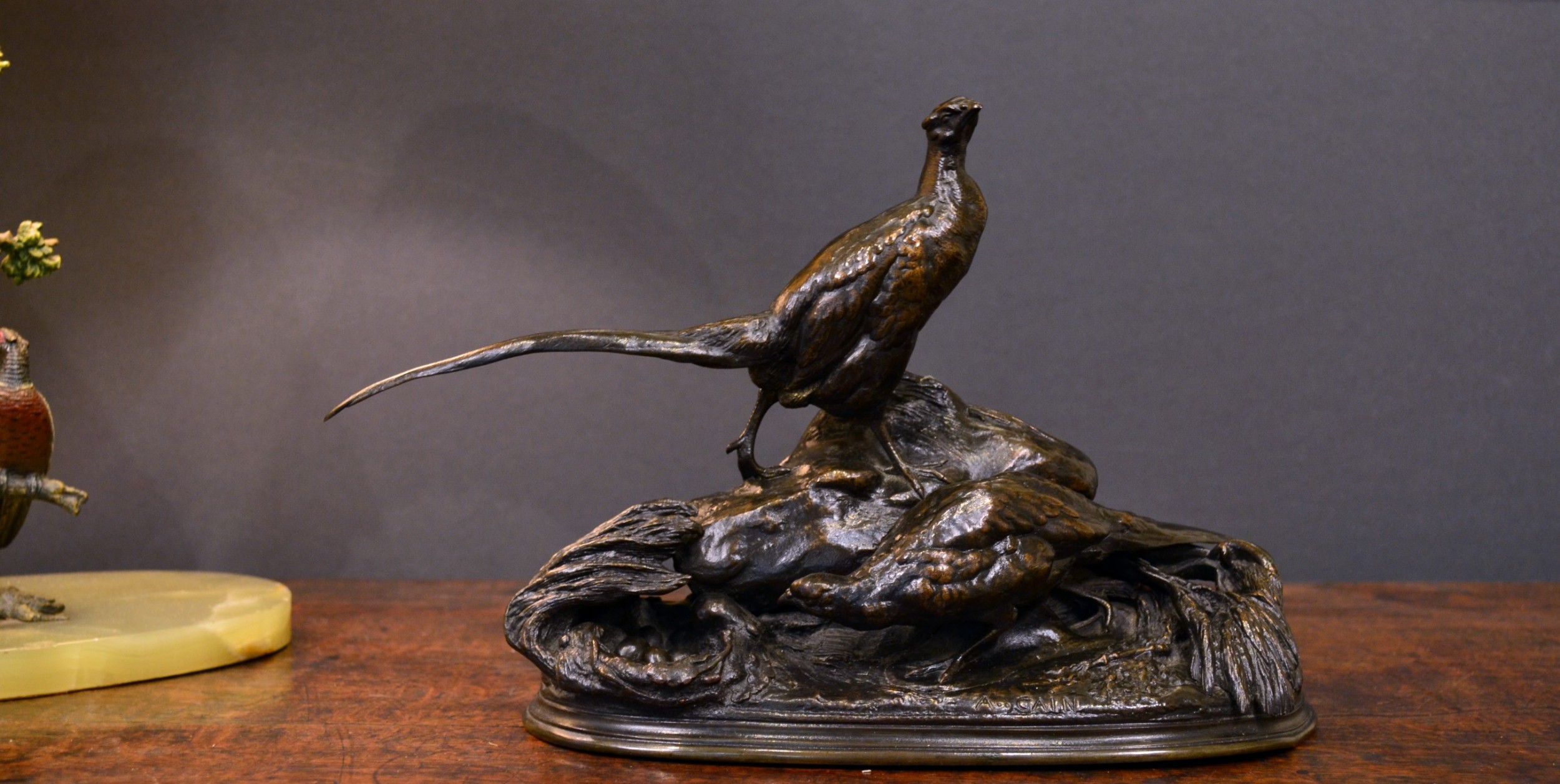
Ref: SA1138170
A dark brown bronze sculpture depicting a group of pheasants with a nest and eggs on an oval base.
Detail View 1
Detail View 2
Archival Detail
Every single antique dealer on our platform is individually approved by our internal team. We verify their professional trade history, ethical standards, and photographic quality to ensure a secure, high-standard buying environment. Upon joining, every dealer agrees to a strict 9-point code of conduct. While issues can occasionally arise, our dealers typically resolve them swiftly and directly with the buyer. In fact, since our founding in 2002, Sellingantiques has only had to step in to help resolve an issue on roughly five occasions—a true testament to the quality of our dealers and their dedication to your happiness.
Our dealers are highly experienced in packing and shipping fragile, high-value antiques. Because you are in direct contact with the dealer, you will be able to easily go through all available shipping and insurance options together to ensure your item arrives safely.
Antiques are the ultimate green purchase. By choosing historical pieces over newly manufactured goods, you completely eliminate the carbon footprint of modern mass production while preserving exceptional, timeless craftsmanship.
Written by Sellingantiques from the dealer’s photographs and listing
  • ObjectSculptures
  • Period19th century
  • StyleAnimalier
  • MaterialBronze
  • ColourDark Brown
  • MotifsPheasant figures, Naturalistic nest with eggs, Textured plumage, Oval naturalistic base
  • SizeH 19.5 cm (8 in) x W 25 cm (10 in) x D 12 cm (5 in)

The animalier movement originated in 19th-century France, focusing on the realistic and dynamic depiction of animals in sculpture, championed by artists such as Auguste Cain.

Traditional pieces are typically cast using the lost-wax method (cire perdue), allowing for intricate detail and texture before receiving a chemical patination.

Authentication relies on examining the foundry marks, the artist signature, the quality of the chasing work, and the natural patination developed over decades.

Such pieces function well as focal points on a mantelpiece, bookshelf, or executive desk, pairing effectively with natural wood and neutral surroundings.

Conservation involves gentle dusting with a soft brush and occasional microcrystalline wax application, avoiding commercial polishes that can strip the original patina.
items
Add keywords to the filter
Price
£100
£250000
Era
Period
Style
Material
Origin
Stock Location
Recently Added
Online Payments
Categories