





Pheasant Statue
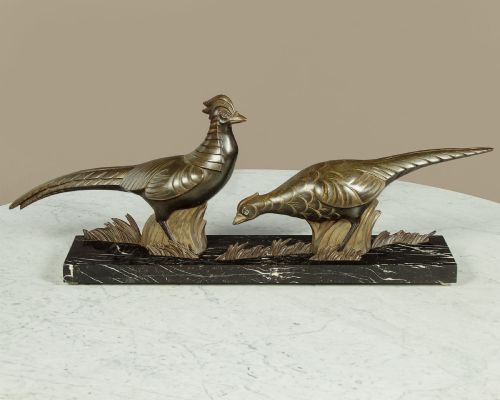
These pheasant statue pieces bring the detail of the natural world indoors, offering a sculptural presence shaped in bronze, porcelain, and ceramic.
Pheasant Statue
A pheasant statue captures the distinctive form of the bird, appearing across periods from the nineteenth century into the 1930s. The selection ranges from tabletop sculptures and figurines to decorative figures and larger statuettes.
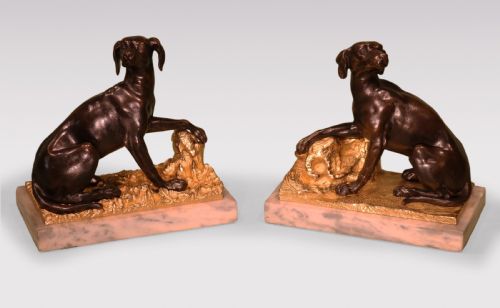
Most examples lean towards the animalier tradition, capturing birds either alone or as part of a larger sporting scene involving hounds. You will encounter styles spanning French animalier, Austrian bronze, Art Deco, and Chinese export porcelain.
Materials shift according to the date and origin, moving from traditional cast bronze and earthenware to cold-painted metal and glazed porcelain. These objects functioned historically as decorative table ornaments and mantel displays.
How they were made
Foundry-cast bronze and patinated metal pieces rely on the lost-wax method to capture fine feather detail and muscular tension. Cold-painted surfaces apply vibrant pigments directly onto the metal, a technique particularly associated with Austrian workshops.
Ceramic and porcelain versions utilise moulded earthenware finished with hand-painted glazes, such as famille rose enamels or gold leaf glaze. Ormolu accents and marble bases frequently complement the cast metal sculptures to provide stability and visual contrast.
Pheasant Statue Retail Price Guide 2026
Typical asking prices for pheasant statue among the pieces listed under this phrase on Sellingantiques today, from the lower quarter to the upper quarter. They describe what is for sale here now, not the wider market.
Some birds come caught mid-stride while others stand entirely upright, as if quietly deciding whether to run or take flight.
What varies in quality
The precision of the casting determines the clarity of plumage, texture, and naturalistic posture in metal works. Superior examples display crisp chasing and hand-finishing that separates a generic casting from a piece with individual character.
Surface finish dictates the visual success of painted bronzes and glazed ceramics alike. Original cold-painting retaining its delicate colour palette holds greater distinction than later retouching, while porcelain benefits from controlled firing and clean enamel work.
Delabrierre·Le Manceau·P J Mêne·Jules Moigniez·Royal Dux
The Pheasant Statue Glossary
- Animalier
- A nineteenth-century artistic movement dedicated to the realistic representation of animals. Sculptors in this tradition focused closely on anatomical accuracy and natural behaviour.
- Cold-painted bronze
- A method where paint is applied to a cold bronze casting rather than fired in a kiln. This technique allowed for intricate multicoloured detailing on small cabinet bronzes.
- Famille rose
- A palette of Chinese porcelain enamels dominated by opaque pink. The style emerged in the Qing Dynasty and was widely exported to Europe.
- Ormolu
- Gilt bronze mounted onto furniture, clocks, or sculptures as an ornamental highlight. The process involves applying a gold amalgam to a bronze base.
- Patinated metal
- Metal treated with chemical solutions to produce a specific surface colour and sheen. This finish protects the underlying material while adding depth to sculptural contours.
Pheasant Statue: Frequently Asked Questions
What materials were used for these sculptures?
Makers utilised bronze, patinated metal, gilt metal, marble, porcelain, earthenware, and gold leaf glaze across different periods and styles.
Metal sculptures often incorporated cold-painted details or marble plinths, whilst ceramic pieces relied on traditional glazing and enamel painting.
How do I identify Art Deco examples?
Art Deco pieces typically date around the 1930s and feature stylised forms that emphasise clean geometric lines rather than strict naturalism.
These works often pair golden pheasants with ceramic or streamlined metal bases characteristic of the interwar period.
Where were cold-painted bronzes made?
Many of the cold-painted figures originating from the late nineteenth and early twentieth centuries were produced by Austrian foundries.
These pieces are recognised for their detailed surface painting applied over cast bronze.
What is an animalier sculpture?
Animalier refers to nineteenth-century artwork focusing specifically on the accurate and lifelike portrayal of animals in various postures.
Sculptors in this tradition often depicted birds in natural stances, sometimes paired with hunting dogs.
How should I display a heavy bronze figure?
Bronze and marble sculptures require a sturdy, level surface capable of supporting their substantial weight without shifting.
Keeping them away from direct heat sources helps preserve the stability of any integrated marble bases or painted metal surfaces.