



Antique Burr Wardrobes
A free-standing bedroom wardrobe faced in burr veneer, built to hang and fold clothes, and in this category almost always burr walnut.
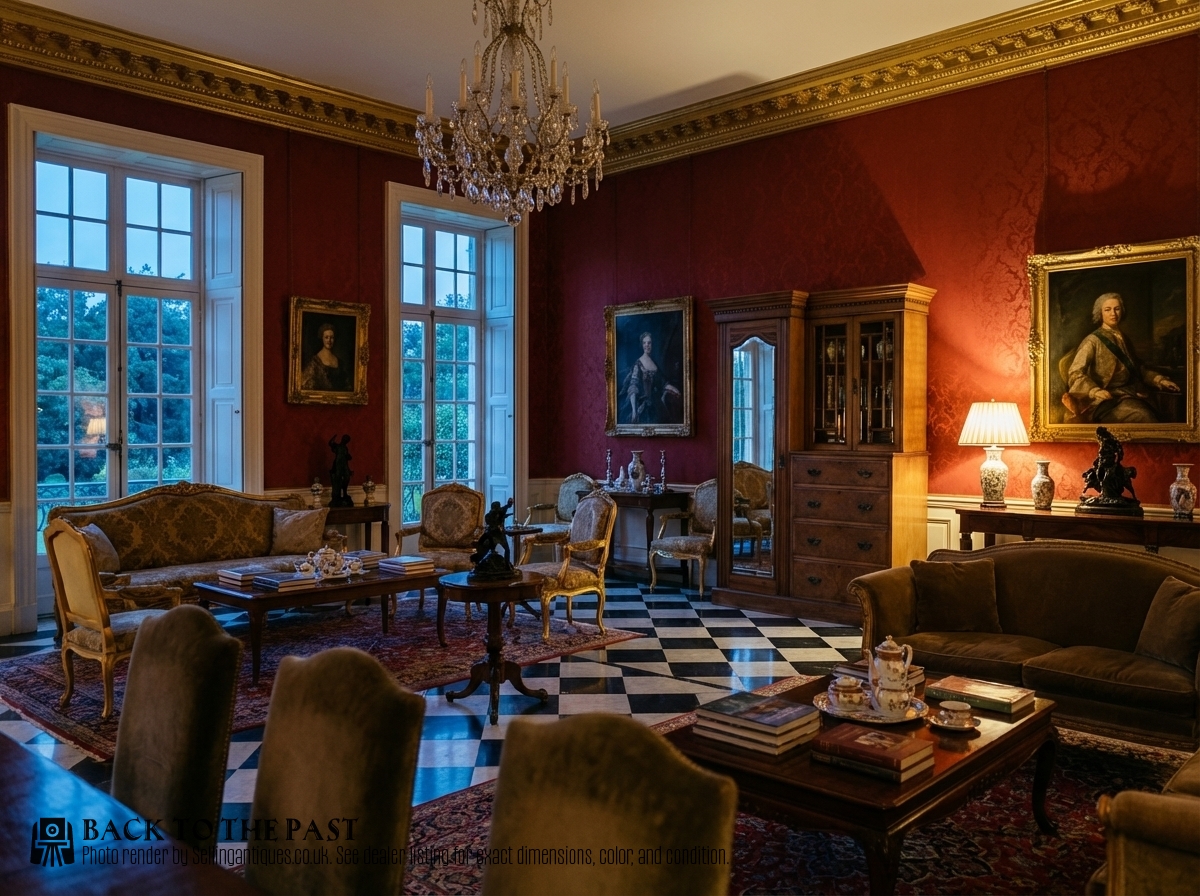
Antique Burr Wardrobes
Burr is veneer cut from a knotty growth on a tree trunk, laid over a carcass of plainer timber. Burr walnut dominates the heading, in 329 of 343 titles. Burr maple, burr oak, burr elm and burr satinwood turn up once or twice each and no more.
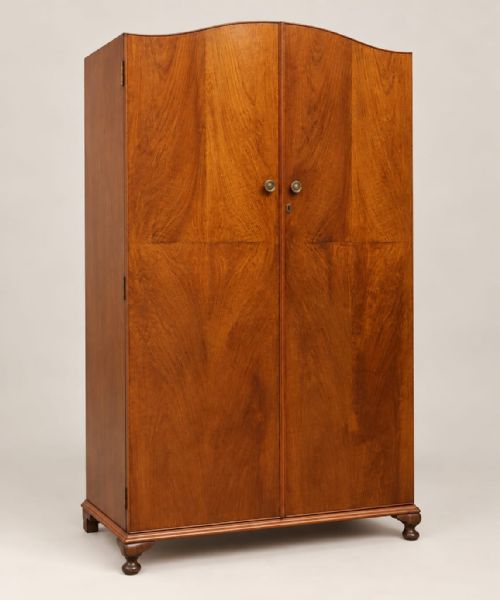
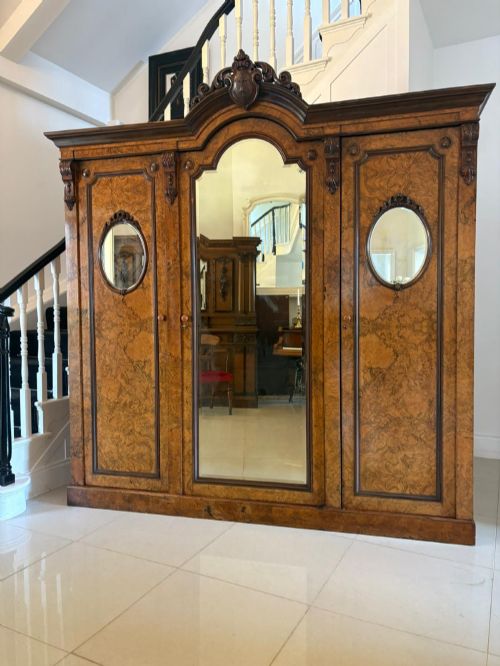
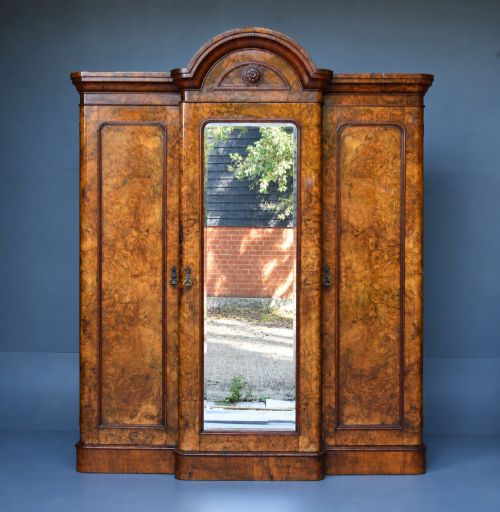
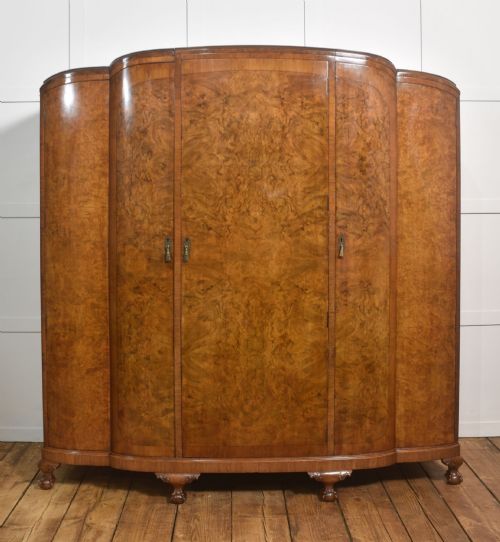
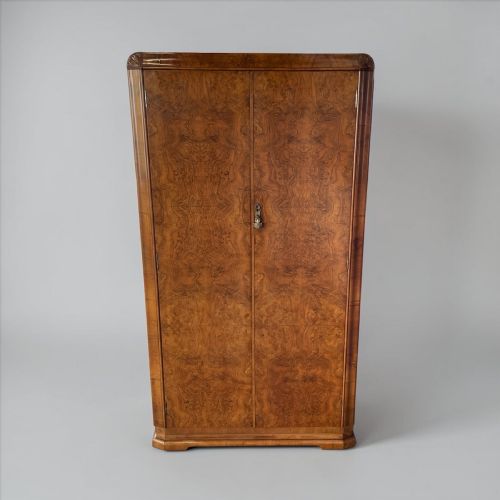
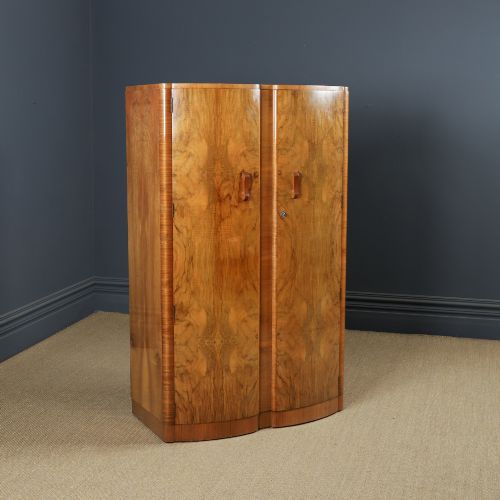
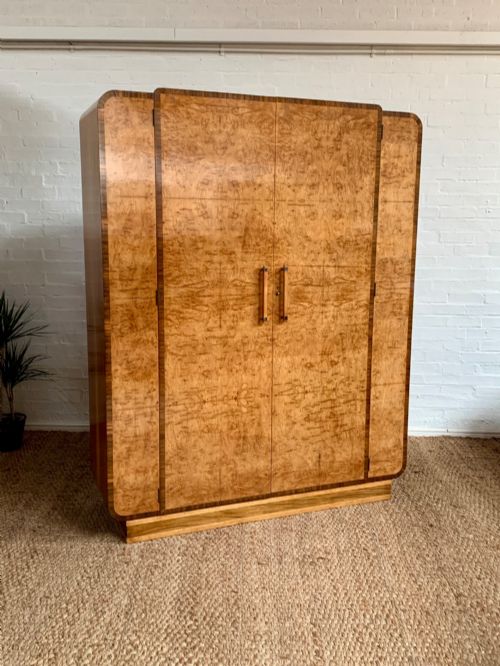
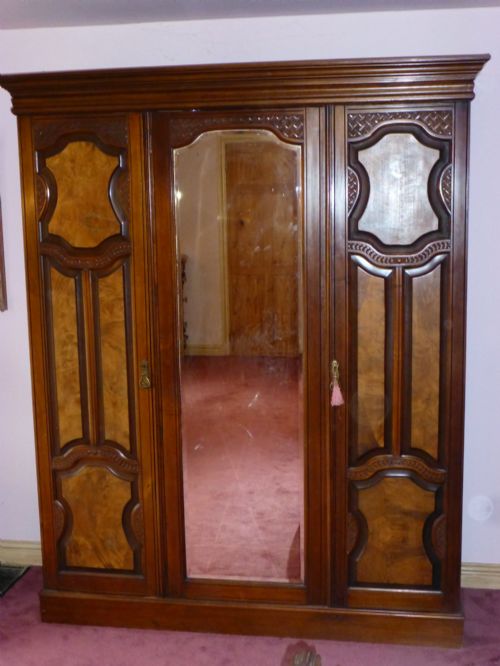
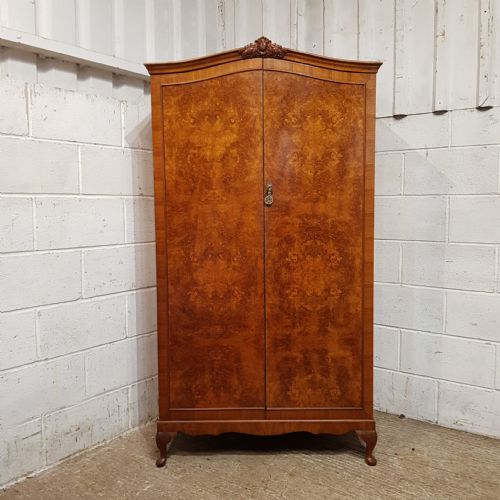
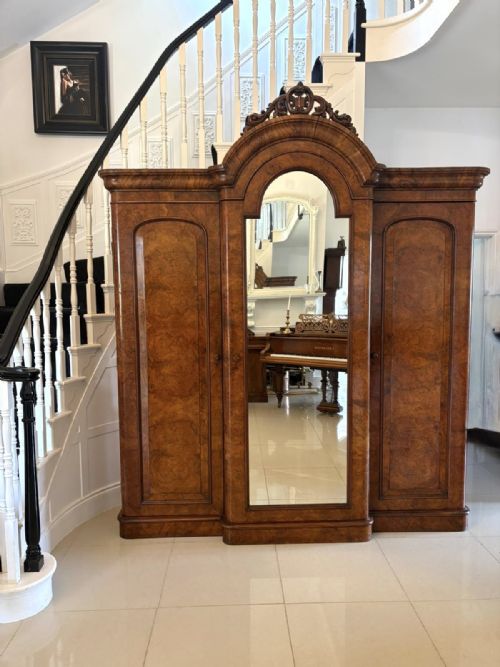
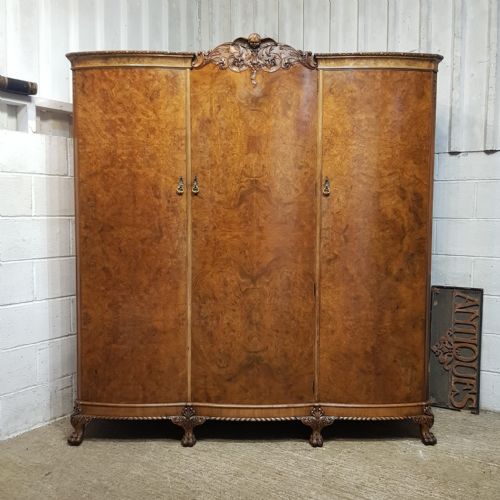
Two physical types account for nearly everything. The Victorian breakfront or compactum wardrobe is large, commonly triple-doored, with the centre section standing forward of the wings. The interwar wardrobe is a double or triple in burr walnut, often with a bow, serpentine or dome-topped front.
The interwar side is the one you'll meet most. Of the 253 listings carrying a clean year, the dated field runs 1850 to 1930, and 147 fall in the 1920s with 54 more in the 1930s. Titles of the form 'burr walnut double wardrobe c1920' repeat again and again. Art Deco appears in 55 titles, Queen Anne style in 23, all of those 1920s or 1930s rather than Victorian.
Around the edges sit the linen and clothes presses, shelved for folded linen rather than hanging, and a handful of armoires, several French. Together they make up a small fringe. One 18th-century French bonnetiere in burr elm sits well outside the span the rest of the category occupies.

Where The Range Splits
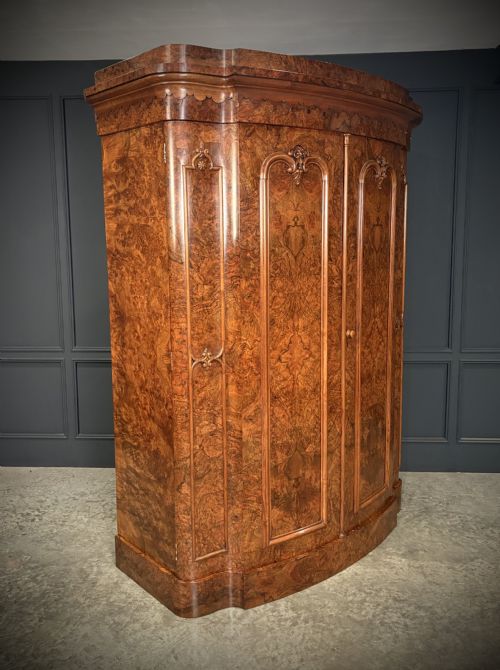
Period decides most of it. The whole upper end of the range is held by large carved Victorian breakfront wardrobes of the 1850s and 1860s, in three and four doors, while the plain interwar doubles cluster at the bottom. The spread between the two ends is wide.
Within any one date, shape and scale lift a piece. Breakfront, bow front and serpentine titles sit above the flat-fronted equivalents of the same period. 'Large' appears in 22 titles against 'small' in 16, and the large Victorian multi-door cases take the highest positions while small fitted 1920s wardrobes take the lowest.
Carving is the other reliable marker: it shows in only 10 titles, and each of those sits well up the range, including burr walnut worked with olive wood and with oak. A named workshop or retailer in a title also sits above the anonymous equivalent, though no name recurs often enough across the 59 dealers who have listed one to define the category.
Antique Burr Wardrobes Retail Price Guide 2026
Typical UK retail prices for burr wardrobes, calculated from the Sellingantiques database of over a million retail prices indexed since 2003. This retail price guide relies exclusively on Sellingantiques data; no external sources or auction records are used, so the figures do not describe the wider market.
Every Queen Anne style burr wardrobe on Sellingantiques, with its domed or double-domed top, is dated to the 1920s or 1930s. None are Victorian.
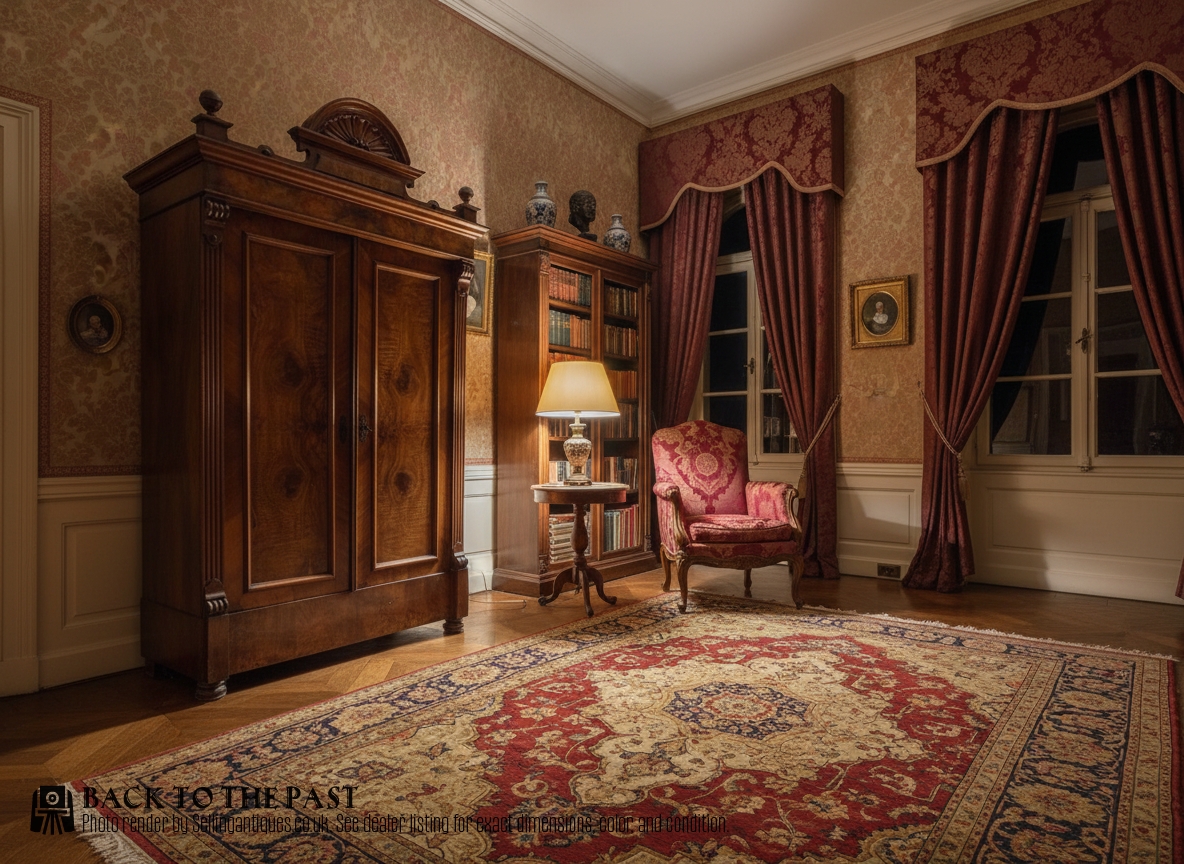
The Antique Burr Wardrobes Glossary
- Burr
- Veneer cut from a knotty growth on the trunk, giving the dense swirled figure that names the category. A few titles spell it 'bur'.
- Compactum
- A wardrobe fitting hanging space and drawers, trays or shelves into one case. It appears in 32 titles and has become commoner in current stock than in the archive.
- Triple
- Three doors, usually a mirrored centre between two wings. At 77 titles it outnumbers the double, which stands at 58 and is also written '2 door' or 'two door'.
- Breakfront
- Centre section projecting forward of the wings. Twenty titles use it, almost all Victorian.
- Bow front
- Convex curved front, in 13 titles and mostly 1920s and 1930s. Serpentine describes a wave rather than a simple curve, and turns up on several 1920s triples.
- Dome top
- Arched cornice, single or paired as a double dome, seen chiefly on Queen Anne style and other 1920s fronts.
Antique Burr Wardrobes: Frequently Asked Questions
What timber are most of these made from?
Burr walnut, and by a long way. It accounts for 329 of the 343 titles in the category.
The other burr timbers are thin on the ground. Burr maple, burr oak, pollard oak, burr elm and burr satinwood each appear only once or twice.
Are burr wardrobes Victorian or later?
More than half are interwar. Of the listings with a clean year, 147 are 1920s and 54 are 1930s.
The Victorian side is smaller: 56 listings simply labelled Victorian, 12 as 19th century, and a scatter given by decade in the 1850s, 1860s and 1880s. Edwardian, 1900s and 1910s dates are few.
The dated field starts at 1850, so Georgian burr wardrobes aren't part of this heading.
What does compactum mean on a wardrobe?
It's a case that combines hanging space with drawers, trays or shelves rather than leaving the interior open. The word appears in 32 titles.
It has grown commoner in current stock than in the archive, so the fitted interior now reads as a leading selling point. 'Fitted' does similar work, in 28 titles.
Why are there so many triple wardrobes?
Triples outnumber doubles 77 to 58 in the titles, which is unusual for a bedroom form.
It reflects how many Victorian breakfront wardrobes survive, built in three sections with a mirrored centre door between two wings. The 1920s triple is common too, with 47 titles pairing 'walnut' and 'triple'.
Do Queen Anne style burr wardrobes date from that period?
No. All 23 Queen Anne style titles in this category are dated 1920s or 1930s, none Victorian or earlier.
They're a 20th-century revival, recognisable by dome and double-dome tops and cabriole-style framing.
How often do burr wardrobes come up for sale?
Around 34 come to market in a year on Sellingantiques.
Fifty-nine different dealers have listed one, so no single dealer sets the tone of the category. Matching ladies' and gentlemen's wardrobes turn up now and then, sold as a pair, and only among the 1920s listings.