


A 2026 Guide by Sellingantiques
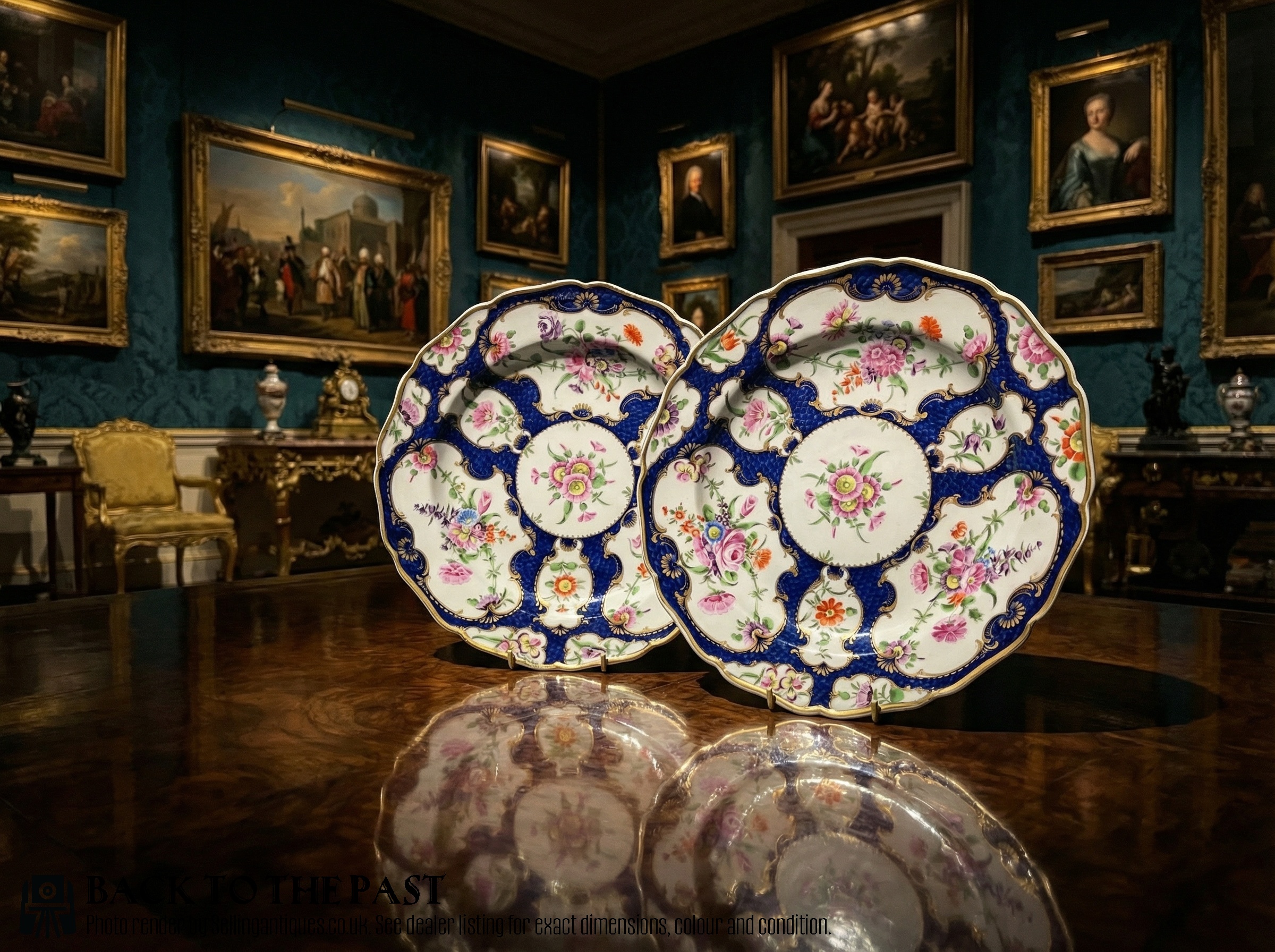
Pair of First Period Worcester Blue Scale Plates, Georgian
Priced at £250 from Hand of Glory
Production of antique Worcester plates began in 1751 after Dr John Wall and William Davis established their factory on the banks of the River Severn.
Early dessert services from the First Period often feature complex painted botanical studies or classical ruins.
Look for shifts in management affecting output, particularly when Thomas Flight purchased the operation in 1783.
Many eighteenth-century households ordered replacement pieces to match existing imported Chinese export services.
James Giles ran an independent London decorating workshop between 1756 and 1777, painting many plain Worcester blanks with sliced fruit and exotic birds.
Robert Hancock engraved some of the earliest copper plates for the factory transfer prints during the 1760s.
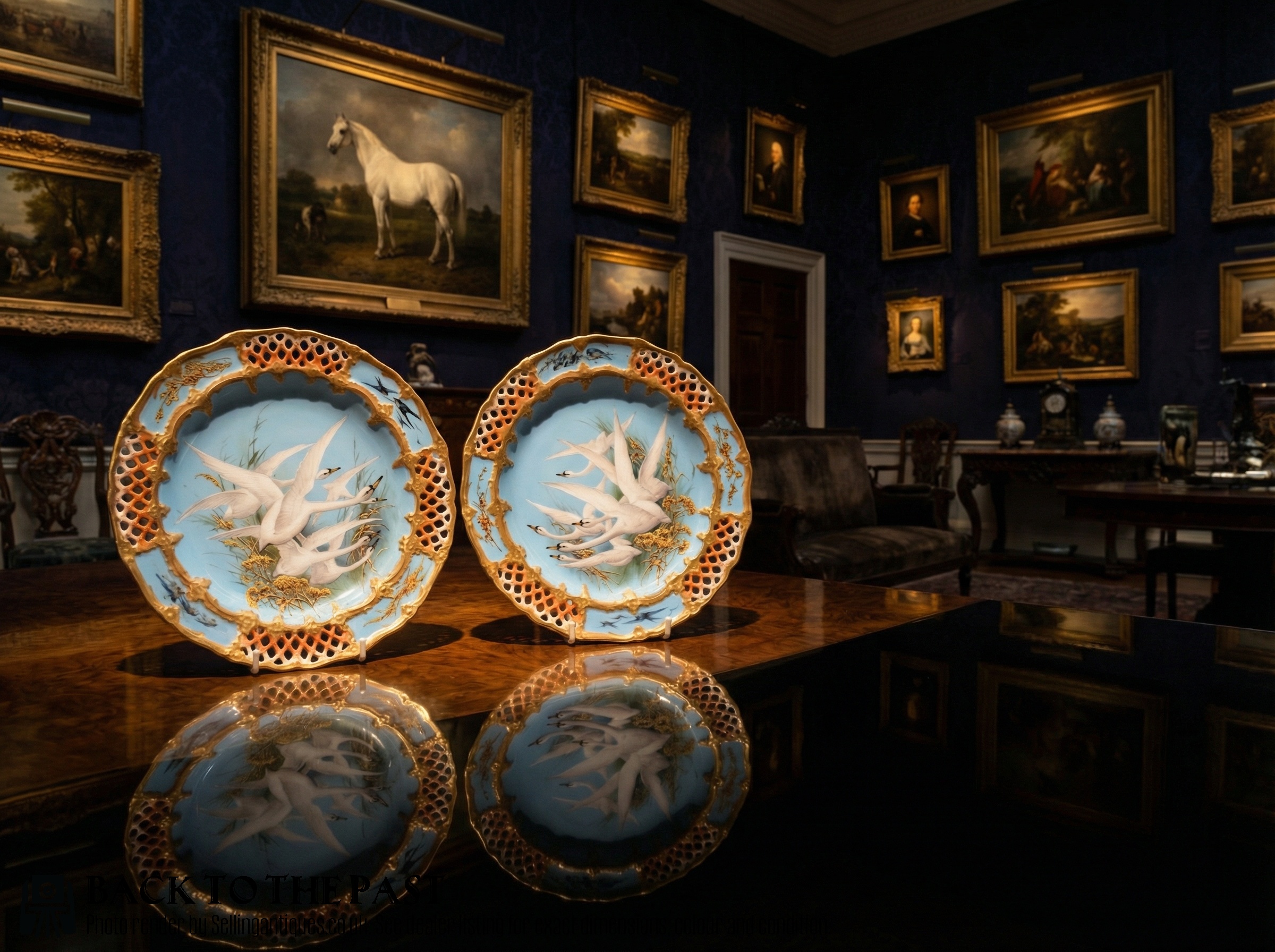
Royal Worcester Pair of Cabinet Plates by C Baldwyn, 1900
Priced at £10,500 from Valerie Main Ltd
The 2026 retail price guide for Antique Worcester Plates is drawn from a proprietary archive of over 1.1 million retail prices indexed by Sellingantiques since 2003. This guide relies exclusively on their own internal data; no external sources or auction records are used.
Analysing nearly 25 years of UK antique market history alongside current retail values, the data indicates that typical UK retail prices for Antique Worcester Plates range between £300 and £1,100. Entry-level prices generally fall under £300 and premium examples upwards of £1,100.
Scalloped or fluted rims are common on eighteenth-century dessert wares.
Transfer printing allowed complex engravings to be applied directly to the curved ceramic surface using tissue paper.
Turn the dish over to find factory marks, which might be a painted blue crescent or a pseudo-Chinese square mark.
Set of 12 Royal Worcester Hand Painted Game Bird Cabinet Plates, 1920
Priced at £1,000 from Country Homes Antiques Stirling
Workers pressed slabs of clay over plaster moulds to create the fluted borders before turning the foot on a lathe.
Applying a transfer print required pressing an inked copper plate against tissue paper, which was then rubbed onto the porous biscuit body.
Gilders added fine gold details over the final glaze using a small brush, requiring a separate low-temperature firing to fix the metal.
"Early factory recipes included actual crushed glass to help the ingredients fuse during the initial firing."
"Some plain white examples sat in storage for years before being brought out and decorated to fulfil a specific customer order."
"The soapstone addition meant these wares survived long journeys over rough coaching roads better than many rival porcelains."
Based on almost 25 years of Sellingantiques UK antique market data, Antique Worcester Plates appeared 686 times (out of 1,100,000 antiques) which gives it a rarity score of 87/100.
This score measures scarcity within the Sellingantiques archive only and is not a survey of the entire antiques market, so these statistics may not be indicative of the general availability of Antique Worcester Plates elsewhere.
The crescent is the most common factory mark used at Worcester during the First Period. It appears on the underside of the base, usually painted in underglaze blue.
Open crescents are standard on hand-painted wares. Shaded or hatched crescents generally indicate the piece features a transfer-printed design.
Blue and white dessert services were brought out at the end of a formal dinner. The table would be cleared of the savoury courses and a fresh cloth laid.
These dishes held sweetmeats and preserved fruit. The bold blue patterns looked good by candlelight, which is when most major entertaining took place in the Georgian period.
Modern dishwashers are too harsh for soft-paste porcelain. The heat and detergents will strip away surface gilding.
Wash them by hand in warm water with mild soap instead.
Riveting was the standard method for repairing valuable ceramics before the invention of modern epoxy resins. A specialist would drill small holes along the fracture and insert brass staples.
This technique kept the dish functional for dry use. Many collectors appreciate these old repairs as part of the social history of the piece, showing how owners valued their tableware.
Please note: This Antique Worcester Plates guide and its associated pricing data are provided for general informational purposes only. It does not constitute formal financial, investment, or appraisal advice and should not be relied upon as the sole basis for any commercial activity, purchasing, or sales decisions. Sellingantiques.co.uk accepts no liability for any actions taken in reliance on this information. Always consult with a qualified professional or independent appraiser.
