


A 2026 Guide by Sellingantiques
Thomas Minton founded his pottery in Stoke-on-Trent at the end of the eighteenth century.
Early production focused heavily on blue transfer-printed earthenwares matching popular Chinese export styles.
By the middle of the nineteenth century, the firm dominated the English porcelain market. Antique Minton plates from this period often formed part of massive aristocratic dinner services.
Look for the globe and Minton banner mark. The factory added the country name to backstamps after 1891 to comply with American import laws.
Marc-Louis Solon arrived from Sèvres in 1870. He perfected the pâte-sur-pâte technique for the Staffordshire firm.
Christopher Dresser supplied the factory with angular designs drawn from Japanese metalwork and textiles.
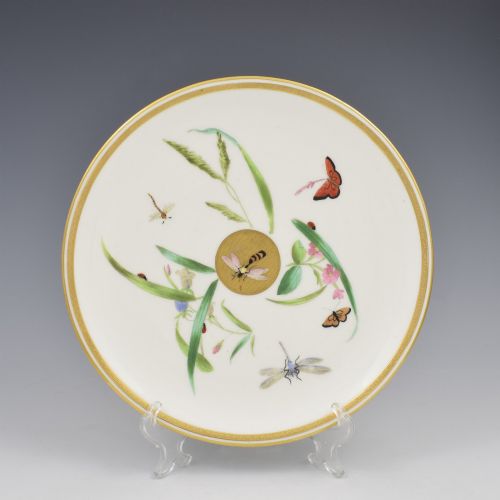
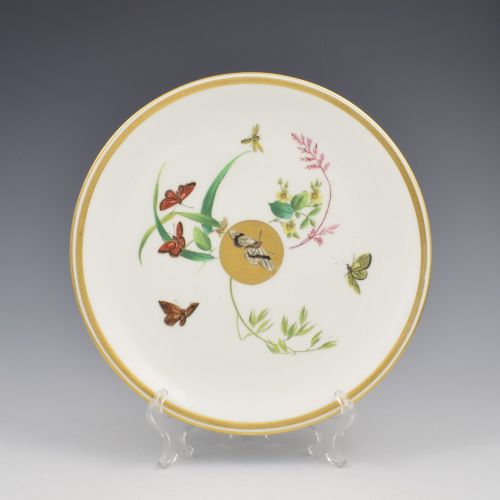
Botanical subjects were often painted by artists like William Mussill. His heavy impasto style required multiple firings to fix the enamel colours.
The 2026 retail price guide for Antique Minton Plates is drawn from a proprietary archive of over 1.1 million retail prices indexed by Sellingantiques since 2003. This guide relies exclusively on their own internal data; no external sources or auction records are used.
Analysing nearly 25 years of UK antique market history alongside current retail values, the data indicates that typical UK retail prices for Antique Minton Plates range between £200 and £2,000. Entry-level prices generally fall under £200 and premium examples upwards of £2,000.
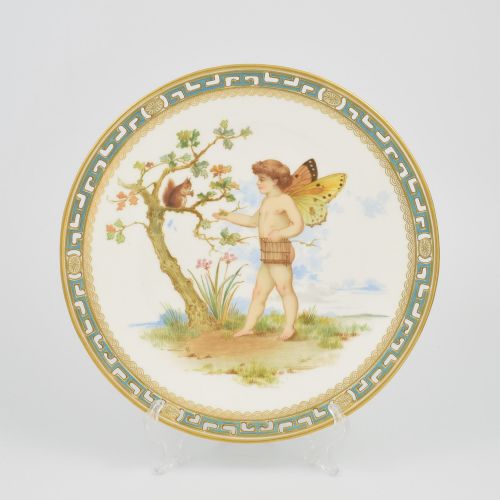
Raised paste gilding adds physical texture to the rim. Decorators painted a thick clay mixture before applying the gold leaf.
Hand-painted central reserves usually feature botanicals or topographical landscapes surrounded by a contrasting ground colour.
Check the foot rim. Many Antique Minton plates bear small date ciphers pressed into the clay before firing.
Early earthenwares relied on copperplate engravings transferred onto thin tissue paper and pressed against the biscuit pottery.
Majolica glazes introduced vibrant lead-based colours pooled over moulded relief patterns. The factory showed these heavily at the 1851 Great Exhibition.
Firing polychrome enamels meant returning the piece to the kiln multiple times. Each pigment required a different temperature to fuse properly.
"The factory maintained an enormous archive of shapes and patterns. Clients could reorder matching replacements for their dinner services decades after the original purchase."
"Queen Victoria bought Minton pieces for her own use. The royal patronage boosted the factory profile across the domestic market."
"Some late nineteenth-century designs incorporate hidden symbols or initials within the border gilding to denote specific aristocratic commissions."
Based on almost 25 years of Sellingantiques UK antique market data, Antique Minton Plates appeared 126 times (out of 1,100,000 antiques) which gives it a rarity score of 98/100.
This score measures scarcity within the Sellingantiques archive only and is not a survey of the entire antiques market, so these statistics may not be indicative of the general availability of Antique Minton Plates elsewhere.
Mild soap and warm water are all you need. Harsh chemical cleaners will strip the gold leaf right off the porcelain body.
Dry the surface immediately with a soft cotton cloth. Leaving water to sit can cause moisture to seep under any micro-cracks in the glaze.
Hand-mixed enamel paints vary between batches. Decorators ground their own pigments using metal oxides, so achieving a uniform shade across a service of fifty pieces was difficult.
Firing position inside the kiln also alters the final hue. Pieces placed near the heat source often developed a deeper colour than those stacked near the door.
Minton used a system of tiny geometric marks stamped into the damp clay before the first firing. These symbols act as a date code indicating the exact year of manufacture.
The system runs from 1842 onwards. You match the shape to the factory registry to find the date.
Some plates also carry impressed letters. These identify the specific clay body recipe used for that batch.
Most glazed porcelain resists food stains well. The hard, glassy surface blocks oils and acids from reaching the porous clay underneath.
Highly acidic foods might dull the overglaze enamels. If the clear glaze has visible crazing lines, coloured liquids can seep into the web and leave permanent brown marks.
Please note: This Antique Minton Plates guide and its associated pricing data are provided for general informational purposes only. It does not constitute formal financial, investment, or appraisal advice and should not be relied upon as the sole basis for any commercial activity, purchasing, or sales decisions. Sellingantiques.co.uk accepts no liability for any actions taken in reliance on this information. Always consult with a qualified professional or independent appraiser.
