
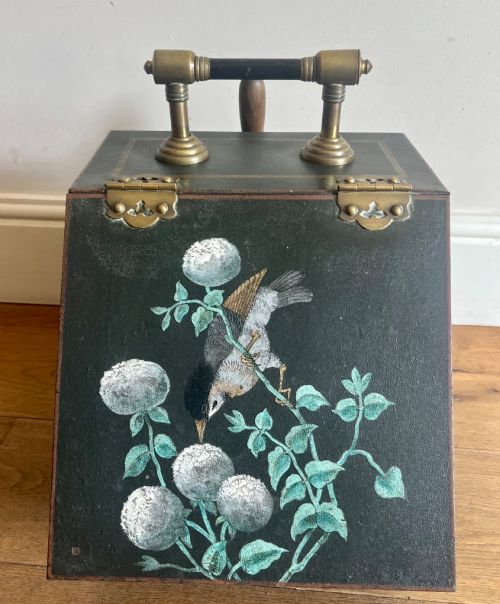


A 2026 Guide by Sellingantiques
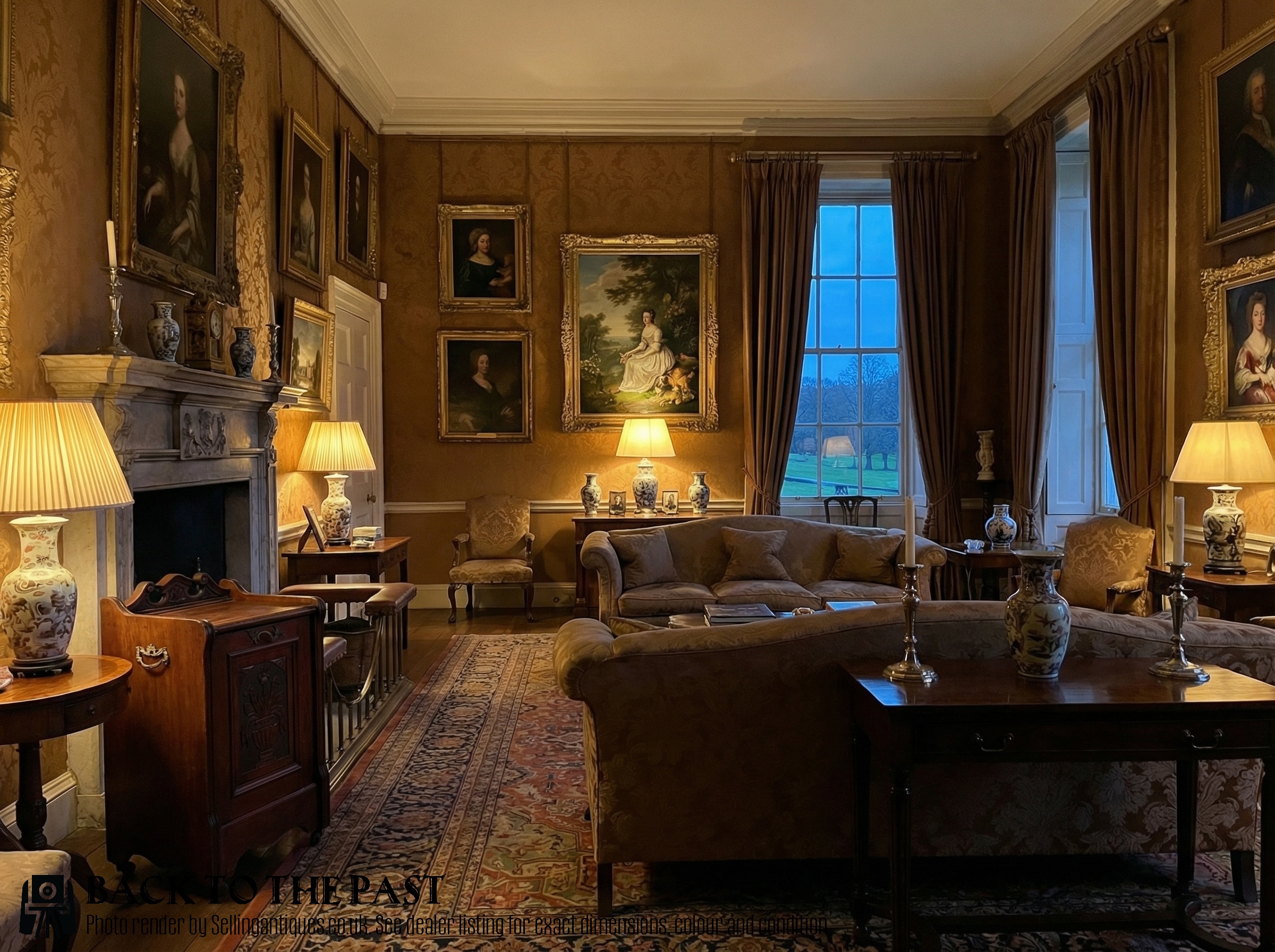
Antique Carved Mahogany Coal Box, Edwardian
Priced at £495 from Rebecca Sarah Antiques
They get their name from a man called Purdon who registered the design in the mid-nineteenth century.
Look at the rise of the enclosed parlour. Coal had to be kept nearby without ruining the room.
Most surviving antique purdoniums date from the late Victorian and Edwardian periods.
Gas and electric heating eventually made them obsolete in the early twentieth century.
Few early boxes carry a maker's name. The patent was widely copied across the English furniture trade.
Large Birmingham metalworkers like Benham & Froud produced the brass and copper versions later in the century.
Look out for small retailers' plaques pinned inside the door. These tell you who sold the piece in their shop rather than who built it in the workshop.

Quality Antique Edwardian Oak and Brass Coal Purdonium, 1900
Priced at £425 from Unique Antiques by Emma Jade
The 2026 retail price guide for Antique Purdoniums is drawn from a proprietary archive of over 1.1 million retail prices indexed by Sellingantiques since 2003. This guide relies exclusively on their own internal data; no external sources or auction records are used.
Analysing nearly 25 years of UK antique market history alongside current retail values, the data indicates that typical UK retail prices for Antique Purdoniums range between £200 and £700. Entry-level prices generally fall under £200 and premium examples upwards of £700.
A drop-down slanted door is the main giveaway. It falls forward to let the shovel in.
Lift the wooden lid to find a heavy metal liner with its own small lifting handles.
Many have a dedicated slot or a brass bracket fixed to the back panel, designed specifically to hold a small coal shovel.
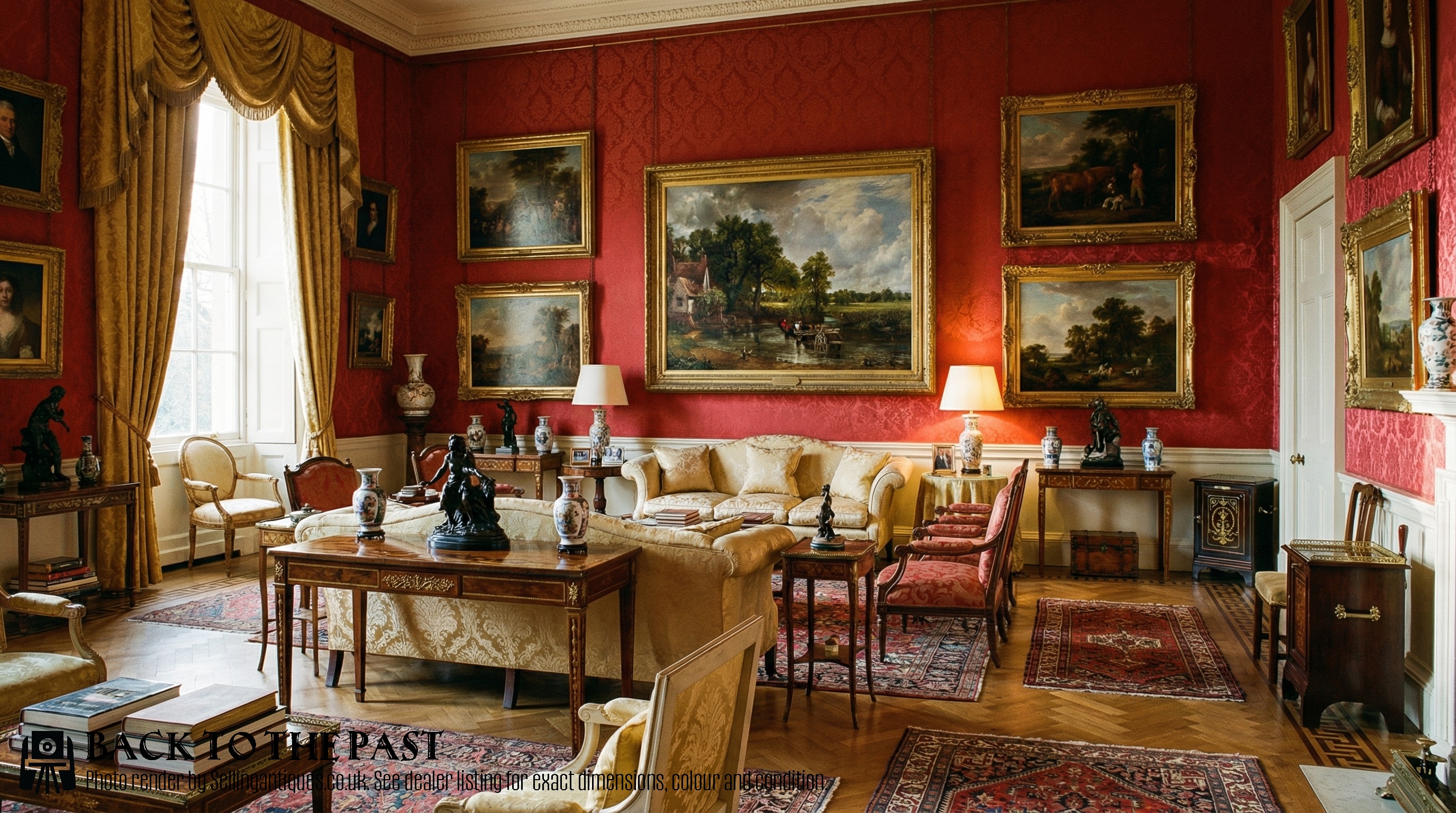
Antique Edwardian Mahogany Inlaid Fireside Coal Purdonium Cabinet Scuttle Box, Edwardian
Priced at £625 from Lincoln Restorations
Early wooden cases rely on traditional cabinet-making joints, notably hand-cut dovetails at the main corners.
Turn it over to see the baseboards. These rougher planks are usually nailed straight into the bottom edges of the carcase sides.
Repoussé work decorates the metal doors on later Arts and Crafts versions, beaten out by hand from behind to create raised patterns.
"They double as small side tables today. The flat top surface was actually designed to hold a lamp or vase."
"Some hide mirrors inside the gallery at the back, placed there to reflect the firelight around the dark room."
"The removable liner meant servants could fill them outside. This kept the messy coal dust out of the living spaces when they restocked the fire."
Based on almost 25 years of Sellingantiques UK antique market data, Antique Purdoniums appeared 308 times (out of 1,100,000 antiques) which gives it a rarity score of 94/100.
This score measures scarcity within the Sellingantiques archive only and is not a survey of the entire antiques market, so these statistics may not be indicative of the general availability of Antique Purdoniums elsewhere.
You can, but you need to check the size. Most antique purdoniums were built for coal chunks, which are much smaller than cut logs.
Small kindling works well. Just keep the metal liner in place to protect the wooden carcase from damp or rough bark.
Start with a soft cloth to take off the surface dust. If the brass is tarnished, a standard metal polish applied sparingly will lift the grime.
Take care not to rub the polish into the surrounding wood. It can leave a white residue in the grain that is hard to shift.
Sometimes the brass is lacquered. If the lacquer is peeling, polish won't work evenly until the old coating is removed.
Some late nineteenth-century examples were indeed designed as fireside seats. They have a padded and upholstered lid over the coal compartment.
They're lower to the ground than a standard chair. The idea was to save space in smaller terraced houses by combining fuel storage with an extra stool.
Check the hinges if you plan to sit on it. The joints bear a lot of weight and often need tightening after decades of use.
Liners go missing all the time. They rust out from wet coal or get separated during house moves.
A local sheet metal worker can fold a new liner from galvanised steel. It's a simple box shape with a slanted front, so the fabrication is straightforward.
Without a liner, you can still use the antique purdonium for storing dry items like magazines. The lack of an inner bucket doesn't stop it functioning as a useful cabinet.
Please note: This Antique Purdoniums guide and its associated pricing data are provided for general informational purposes only. It does not constitute formal financial, investment, or appraisal advice and should not be relied upon as the sole basis for any commercial activity, purchasing, or sales decisions. Sellingantiques.co.uk accepts no liability for any actions taken in reliance on this information. Always consult with a qualified professional or independent appraiser.
