


A 2026 Guide by Sellingantiques
Look at the shift in bedroom habits during the 1920s. People wanted dedicated grooming spaces.
A move away from heavy Victorian suites. Art Deco dressing tables introduced lighter, sharper outlines for modern flats.
Hollywood cinema influenced bedroom design heavily across Europe. Film sets showcased sleek vanity units.
Production peaked in the 1930s before the war stopped domestic furniture manufacturing.
Ray Hille ran her family firm in London during the 1930s. The company produced modernist bedroom suites.
Harry and Lou Epstein manufactured extensively in London from the 1920s. Their workshops turned out distinctively curved dressing tables.
Regional British factories like Bath Cabinet Makers. They supplied large department stores with veneered pieces throughout the interwar period.
The 2026 retail price guide for Art Deco Dressing Tables is drawn from a proprietary archive of over 1.1 million retail prices indexed by Sellingantiques since 2003. This guide relies exclusively on their own internal data; no external sources or auction records are used.
Analysing nearly 25 years of UK antique market history alongside current retail values, the data indicates that typical UK retail prices for Art Deco Dressing Tables range between £300 and £2,000. Entry-level prices generally fall under £300 and premium examples upwards of £2,000.
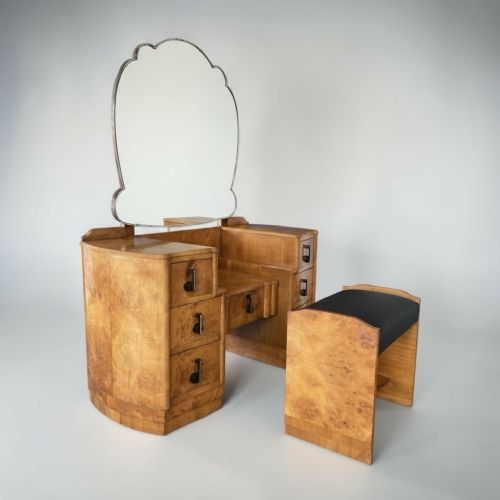
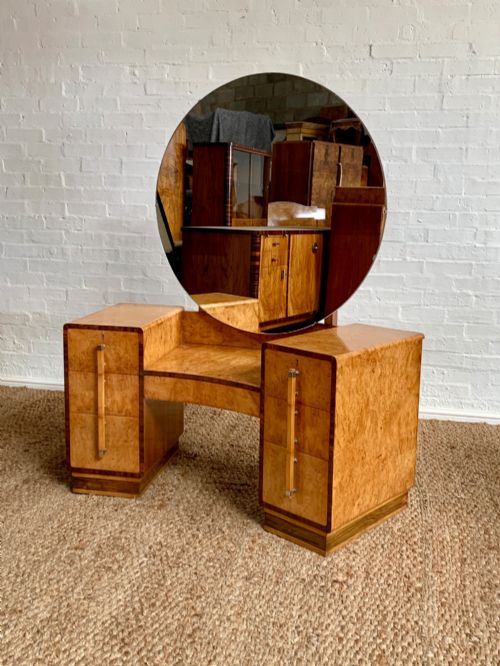
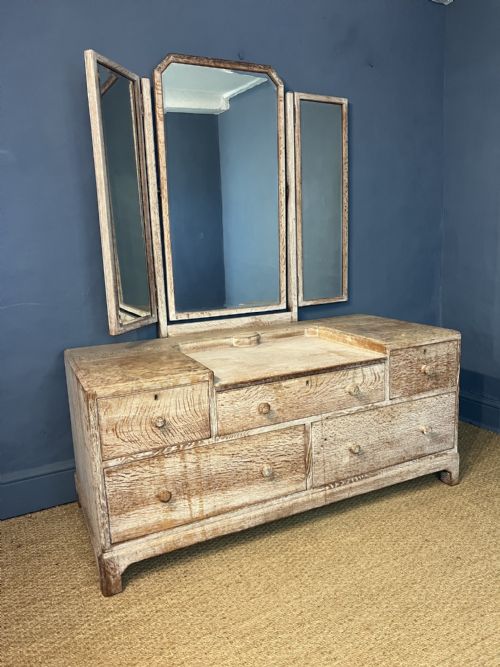
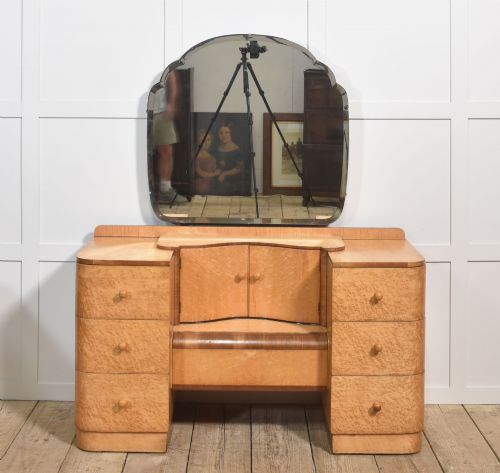
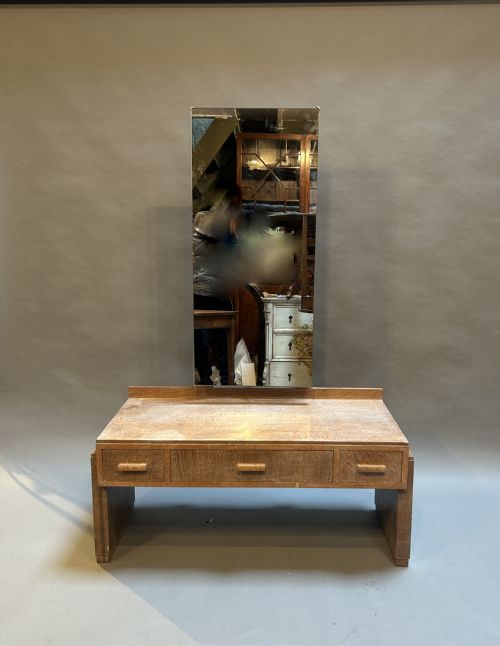
Large frameless mirrors dominate the top section. Some have a curved top edge or stepped sides.
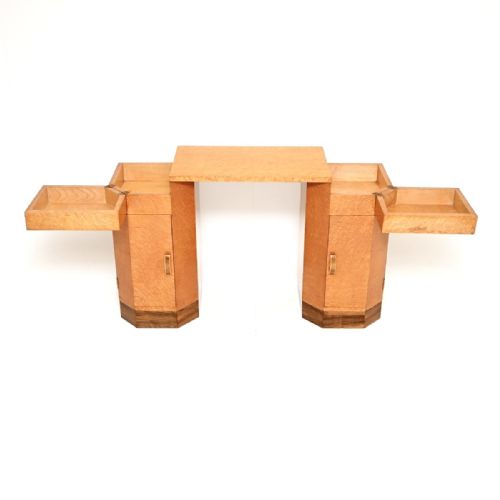
Asymmetrical pedestal bases. One side might hold a stack of drawers while the other drops down to a shelf.
Notice the handles. Bakelite and chrome geometric pulls feature heavily on drawers from this period.
Cabinet makers moved from solid wood construction to extensive veneering on blockboard. This allowed for curved surfaces without warping.
Observe the drawer joints. Machine-cut dovetails became common for commercial factories producing Art Deco dressing tables.
Steam bending applied to plywood carcases. The technique created the sweeping rounded corners seen on many vanity units.
"Hidden felt-lined jewellery trays often sit disguised as standard shallow top drawers."
"Pull out the central glass shelves. Makers designed these to detach easily for cleaning spilled powder."
"Matching upholstered stools. Many original sets included a low seat designed to slide exactly into the kneehole space."
Based on almost 25 years of Sellingantiques UK antique market data, Art Deco Dressing Tables appeared 846 times (out of 1,100,000 antiques) which gives it a rarity score of 84/100.
This score measures scarcity within the Sellingantiques archive only and is not a survey of the entire antiques market, so these statistics may not be indicative of the general availability of Art Deco Dressing Tables elsewhere.
Replacing the glass is common practice if the original is cracked. A glazier can cut a new piece to match the exact shape. They can also add a bevelled edge if needed.
Retaining the original mirror is preferable for the surface history. Some buyers accept silvering loss as part of the piece.
Loose handles often just need their internal fixings tightened from the inside of the drawer. If the threads are stripped, a restorer can re-tap them.
Sourcing exact replacements for missing Bakelite pulls takes patience. Dealers often salvage hardware from damaged furniture. You'll need to check architectural salvage yards for matching parts.
Dust the surface with a dry cloth regularly. For stuck grime, a barely damp cloth works well.
Waxing twice a year keeps the finish fed. Don't use aerosol sprays because they build up a dull residue over time.
Those marks usually come from wet perfume bottles left on the surface. Moisture breaches the French polish and reacts with the timber beneath.
It isn't unusual to find these rings on old vanity units. Shallow marks sometimes fade with a professional wax treatment. Deep moisture damage requires stripping the top section.
Please note: This Art Deco Dressing Tables guide and its associated pricing data are provided for general informational purposes only. It does not constitute formal financial, investment, or appraisal advice and should not be relied upon as the sole basis for any commercial activity, purchasing, or sales decisions. Sellingantiques.co.uk accepts no liability for any actions taken in reliance on this information. Always consult with a qualified professional or independent appraiser.
