





Antique Tambour Desks
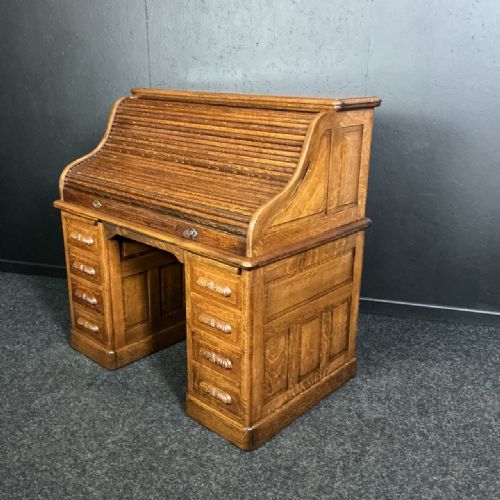
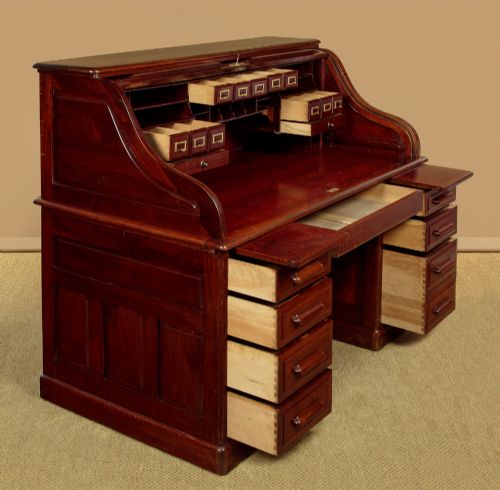
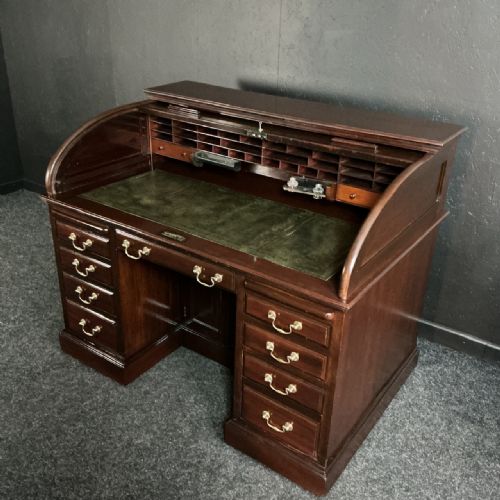
A writing desk closed by a flexible shutter of narrow wooden slats laid on canvas, sliding in grooves and rolling out of sight over the writing surface.
Antique Tambour Desks
Cabinetmakers took up the tambour in the later 18th century as a way of shutting a desk without a hinged fall needing room to swing. It went first on small cylinder and roll-front writing furniture, and from the later 19th century onto large office desks with a full-width curved roll top.
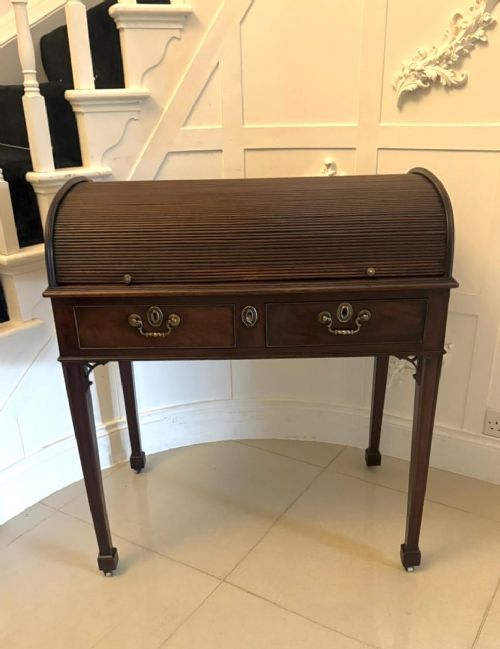
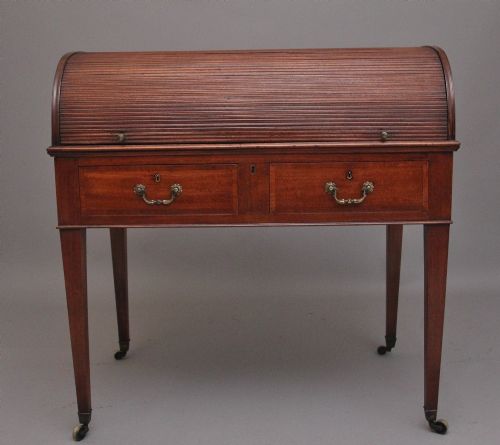
The heading covers two physically different things. At one end are late Georgian mahogany desks and writing tables with a small tambour or cylinder falling front. At the other are the much larger late Victorian to Edwardian oak and mahogany pedestal and kneehole desks. Titles use tambour, roll top and cylinder almost interchangeably, and a good number of listings describe the same piece as both tambour and roll top.
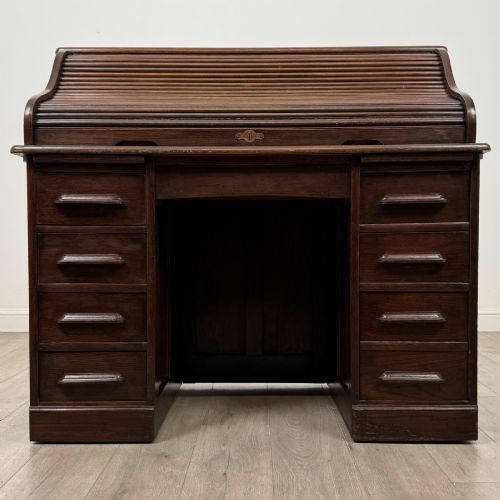
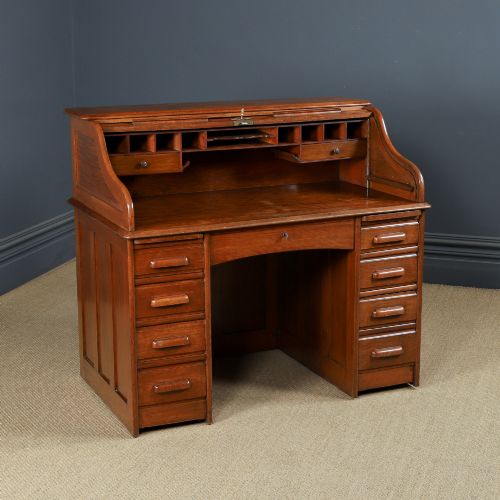
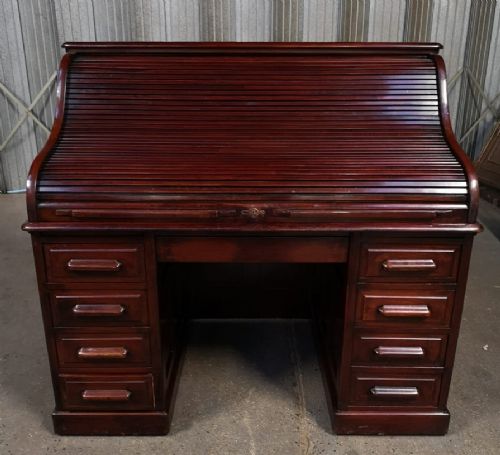
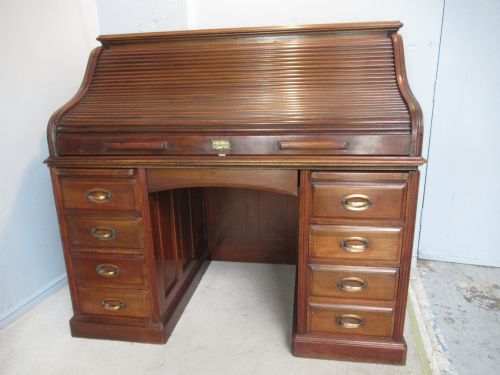
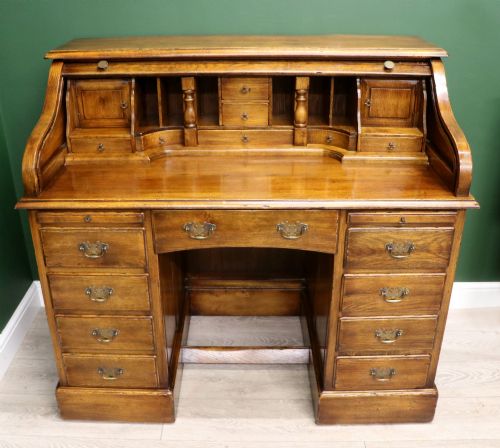
The commonest thing you'll meet is the later desk: a pedestal or kneehole roll top in oak or mahogany, dated Edwardian or around 1900. Of 65 listings on Sellingantiques, 34 titles say roll top and 43 say top; mahogany leads oak by 27 titles to 20, though oak dominates the later end. Edwardian, 1900s, 1910s and 1920s together outnumber every earlier grouping.
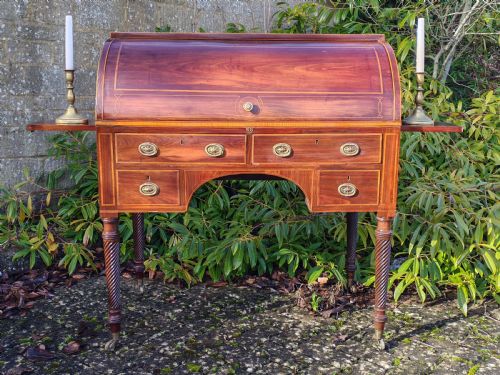
The George III mahogany tambour and cylinder desks make up about a quarter, with Victorian mahogany roll tops and cylinders a smaller steady group between. Beyond those, small tambour writing pieces rather than desks turn up, and the odd walnut, satinwood or partridgewood example. Dates run 1750 to 1930, though many entries give only a period or a decade, and a year in the field is often a dealer's estimate.
Where The Range Splits
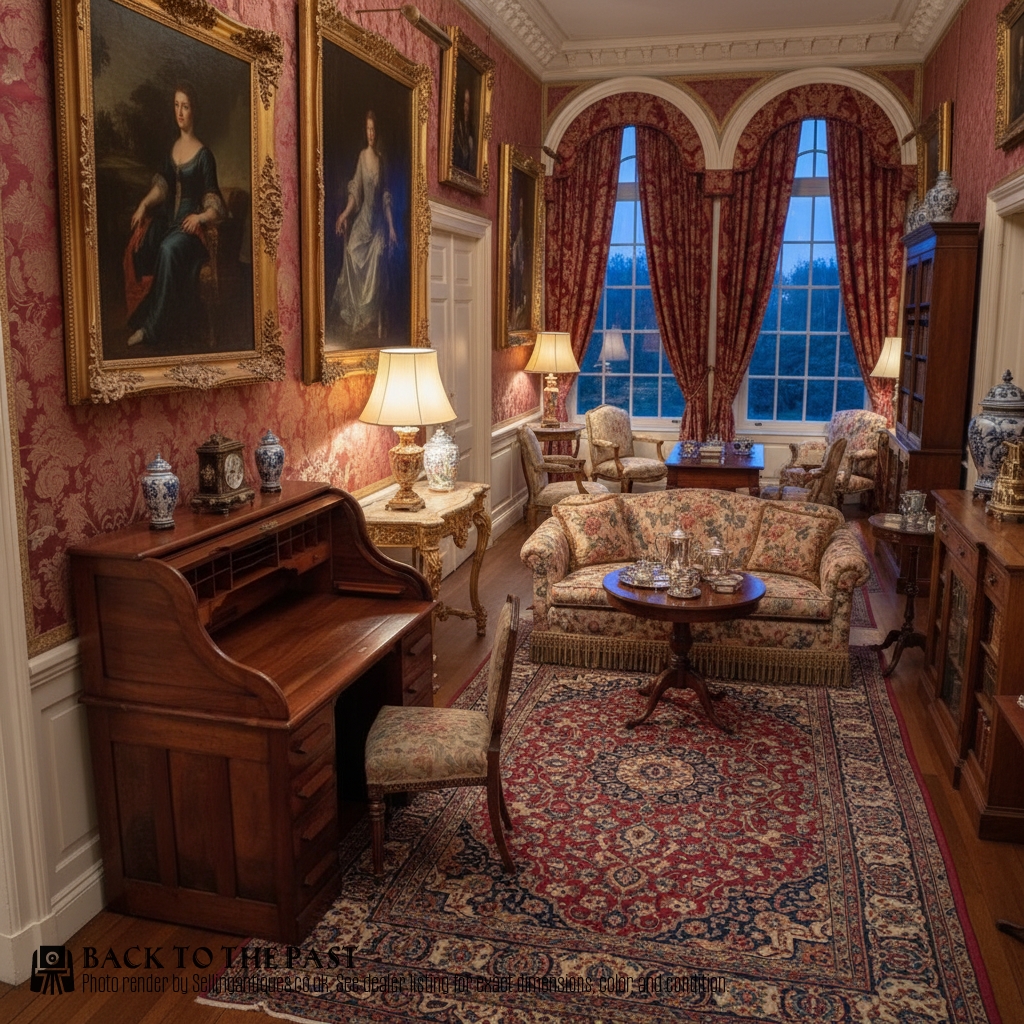
Timber and decoration do most of the work. The upper reaches of the archive are inlaid mahogany, mahogany with satinwood, brass inlaid writing desks and a single partridgewood desk of around 1800. The lower end is small plain and panelled oak pedestal desks, honest trade furniture of the golden oak years.
Age tracks the same line. Eighteenth-century and George III pieces sit at the top, while the least expensive sampled desks are dated 1900 to 1930. Size pulls upward too: titles using Large and Huge sit well above the Small and Neat oak desks, and the spread across the sampled listings is well over a hundredfold.
Two smaller things lift a desk. One is a named retailer or a designer period in the title, which puts a listing in the middle or upper part of the range. The other is fitting: pull-out writing slides, a lock, a fitting for a typewriter. Where those get singled out, the desk sits above the plain small ones.
Antique Tambour Desks Retail Price Guide 2026
Typical UK retail prices for tambour desks, calculated from the Sellingantiques database of over a million retail prices indexed since 2003. This retail price guide relies exclusively on Sellingantiques data; no external sources or auction records are used, so the figures do not describe the wider market.
Dates on Sellingantiques tambour desks run from 1750 to 1930, a spread of 180 years, though only some listings carry a clean year.
The Antique Tambour Desks Glossary
- Tambour
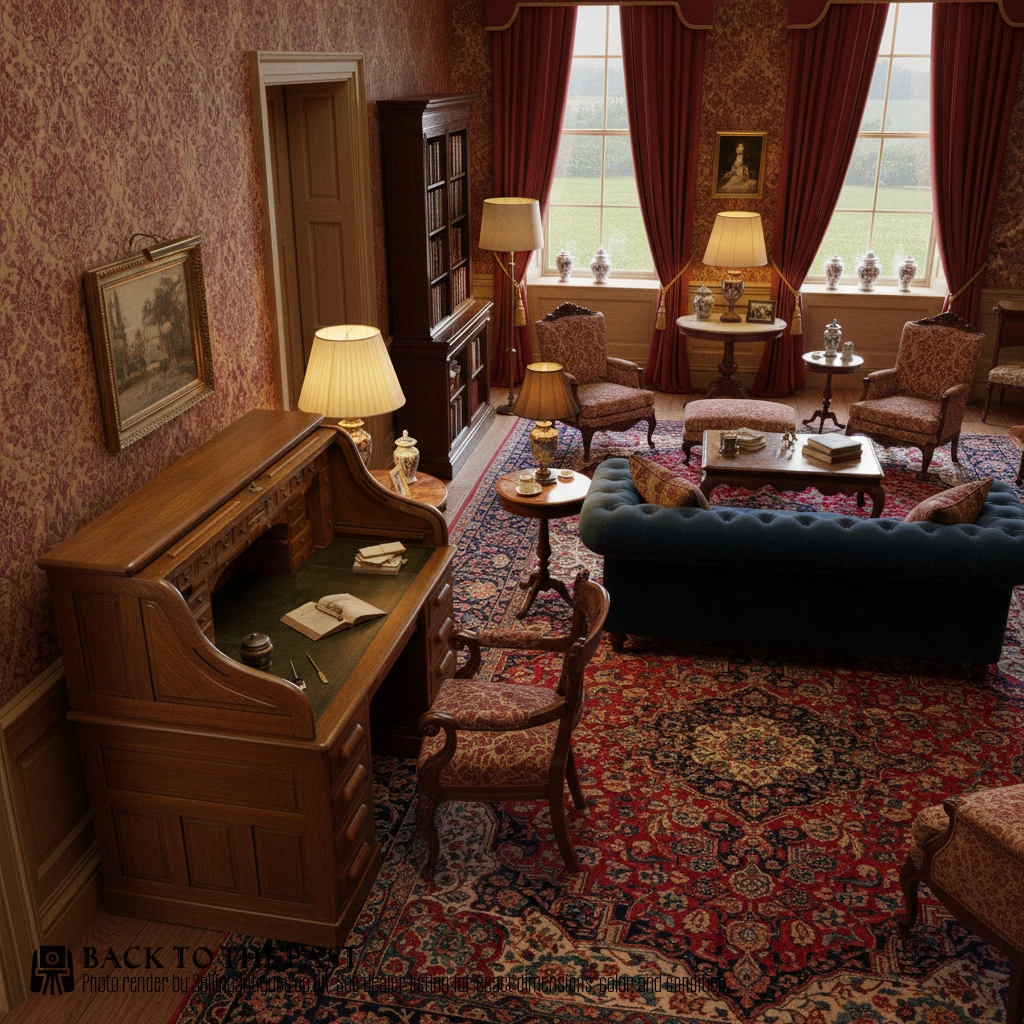
- A shutter of narrow wooden slats glued to a fabric backing, sliding in grooves to close the desk.
- Roll top
- The full-width curved tambour shutter of a later office desk, named in 34 of 65 titles.
- Cylinder
- A quarter-round falling front on an earlier desk, solid or tamboured, used in several titles alongside tambour.
- Pedestal desk
- A desk carried on two banks of drawers with a recess between them. Kneehole is the recess itself, left open for the sitter's legs.
- Golden oak
- The warm honey-toned oak finish of the Edwardian trade, used in two sampled titles.
- S-shaped roll
- A roll top curved in a shallow double sweep, seen once in the samples.
Antique Tambour Desks: Frequently Asked Questions
How many come up for sale each year?
Around seven tambour desks come to market on Sellingantiques in a year, from an archive of 65 listings.
Thirty-nine different dealers have listed one, so almost every dealer who handles them has handled just one or two.
What's the difference between tambour and roll top?
A tambour is the slatted shutter itself. Roll top usually means the full-width curved version fitted to later office desks.
In practice the two words overlap. Titles here apply both to the same piece, and cylinder joins them on the earlier Georgian desks.
Which woods do these desks come in?
Mahogany and oak carry the category, mahogany in 27 titles and oak in 20. Oak concentrates at the later end, with oak roll alone accounting for nine titles.
Walnut appears in a few listings. Satinwood turns up on smaller writing pieces, and a single partridgewood desk of around 1800 is the one-off among the timbers.
Are Georgian tambour desks smaller than roll tops?
Generally yes in the archive. The George III entries are cylinder desks, tambour top desks and writing tables, several described as small.
The pedestal and kneehole roll tops belong to the later end, and it's there that titles reach for Large and Huge.
Do any tambour desks carry a maker's name?
No established maker runs through this category. A few titles name a retailing firm or a designer period, and those appear only once or twice each.
Where a name does show up, the listing tends to sit in the middle or upper part of the range.
What unusual forms turn up in this category?
Single sightings account for most of the oddities: an S-shaped roll top, a desk fitted for a typewriter, a tambour writing box made to sit on a desk top, and a cylinder desk with pull-out writing slides.
Origins vary too. One desk is attributed to an American firm in Massachusetts, one American oak roll top is dated 1888 to 1900, and two Scottish examples appear in oak and mahogany.