


A 2026 Guide by Sellingantiques
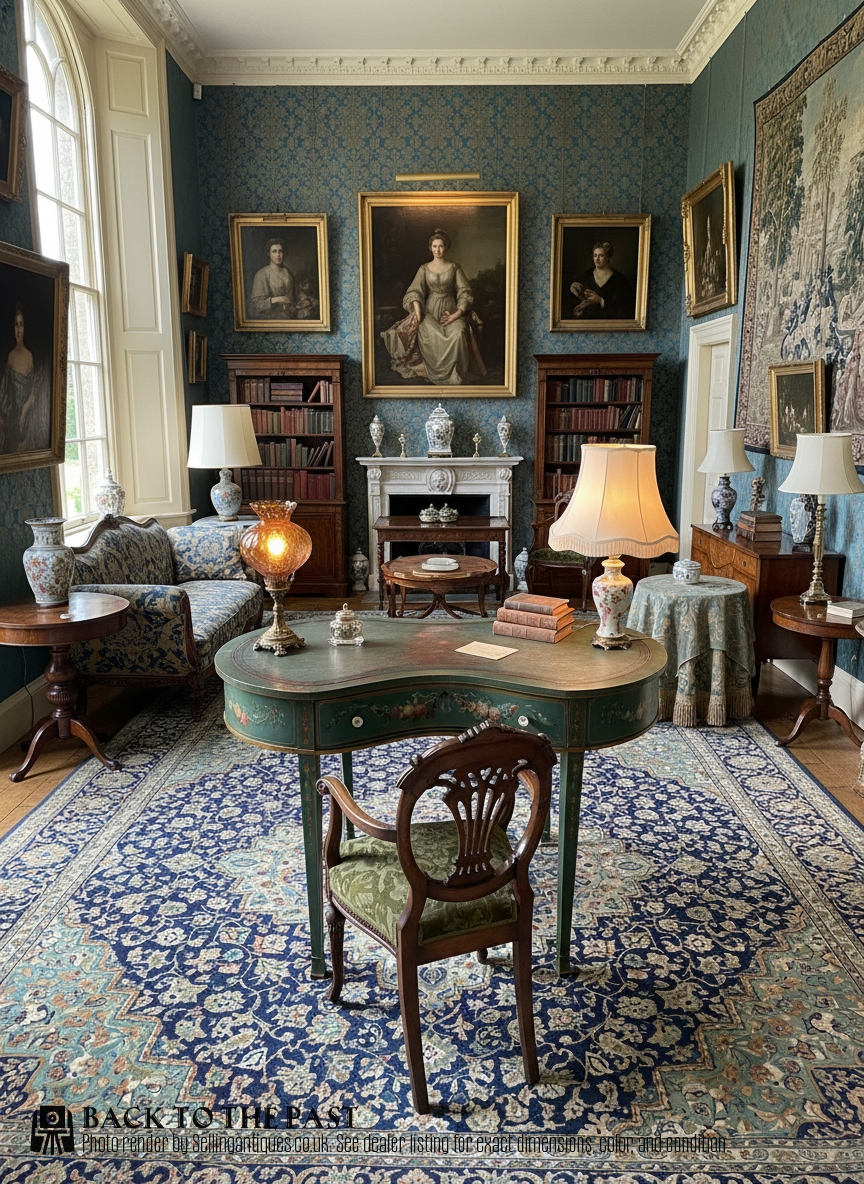
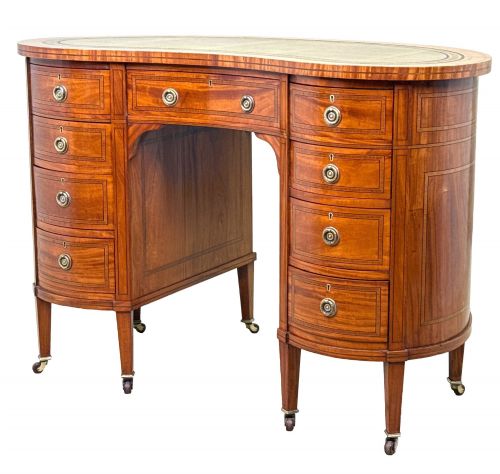
Pretty Late Victorian Painted Kidney Shaped Desk, 1900
Priced at £780 from Ropeworks Antiques
First appearing in eighteenth-century France as small work tables.
Look at English examples from the Regency period. They often evolved into larger library pieces.
Thomas Sheraton included designs for antique kidney desks in his late drawing books.
The bowed shape allowed writers to reach the entire leather surface without leaning across the top.
Gillows of Lancaster and London produced several documented kidney-shaped writing tables during the early nineteenth century.
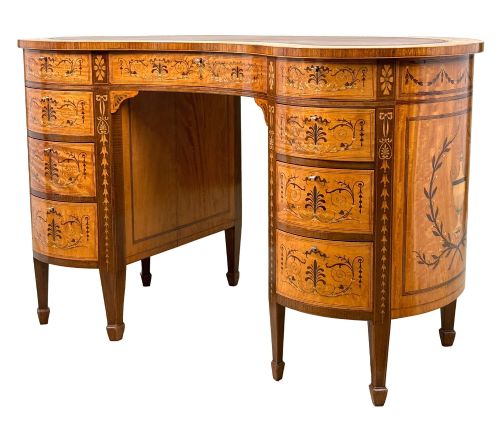
French craftsmen making elaborate marquetry examples during the Louis XVI period.
Do not expect a maker's stamp on most British provincial pieces. The regional trade copied London patterns widely.
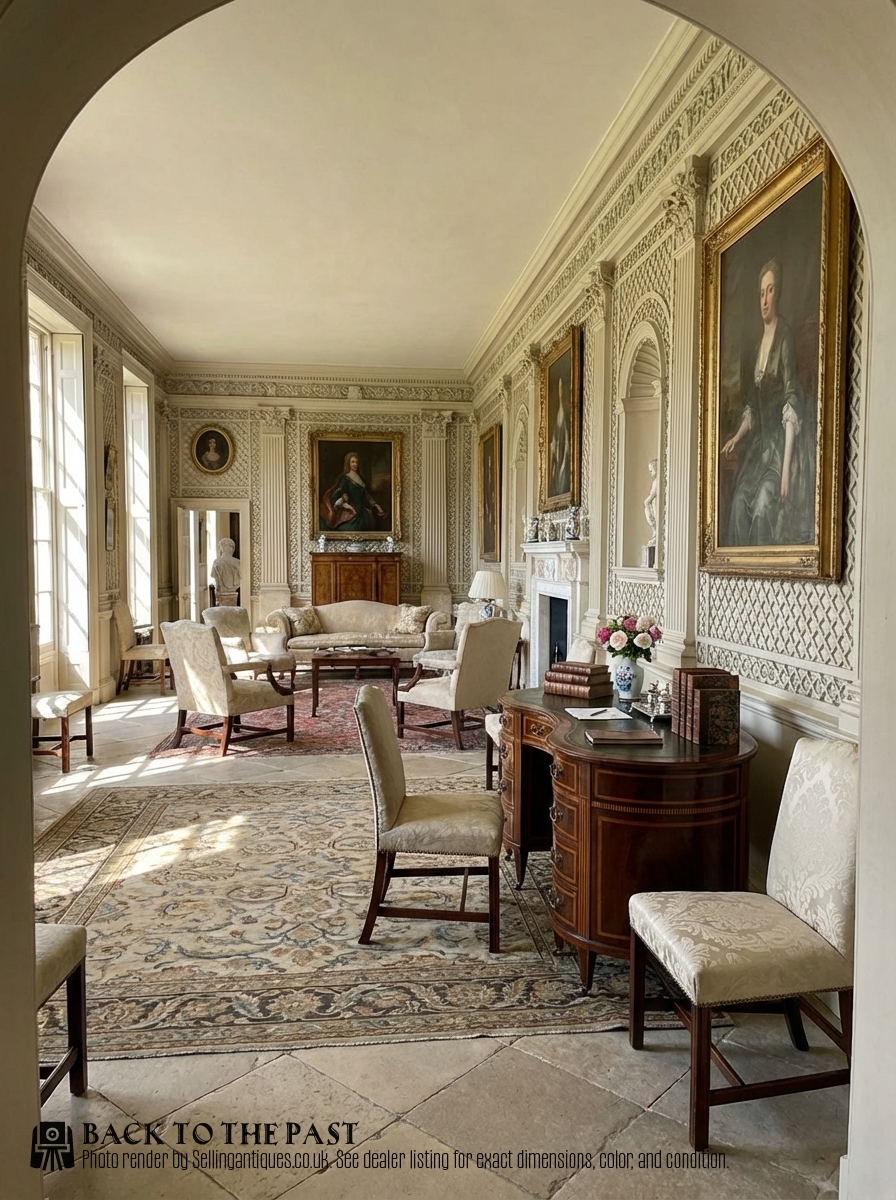
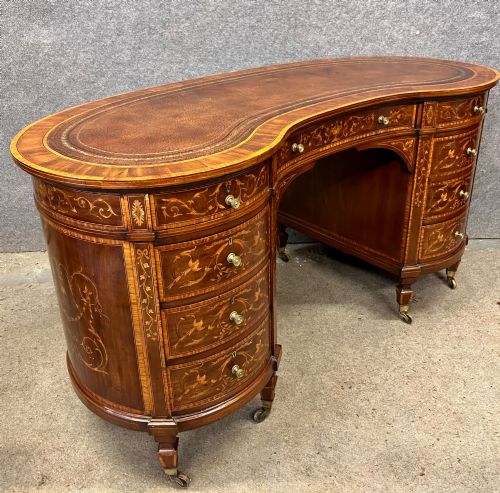
Antique Kidney Shaped Desk, 1900
Priced at £2,495 from Merchant House Antiques
The 2026 retail price guide for Antique Kidney Desks is drawn from a proprietary archive of over 1.1 million retail prices indexed by Sellingantiques since 2003. This guide relies exclusively on their own internal data; no external sources or auction records are used.
Analysing nearly 25 years of UK antique market history alongside current retail values, the data indicates that typical UK retail prices for Antique Kidney Desks range between £1,000 and £5,500. Entry-level prices generally fall under £1,000 and premium examples upwards of £5,500.
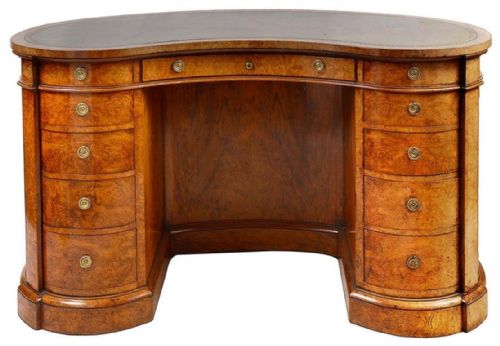
The concave front holds the chair, while the convex back is meant to face the room.
Notice the drawer arrangement. A central frieze drawer typically sits between banks of smaller side drawers flanking the kneehole.
Tapering legs ending in brass castors, giving the heavy carcase a lighter appearance.
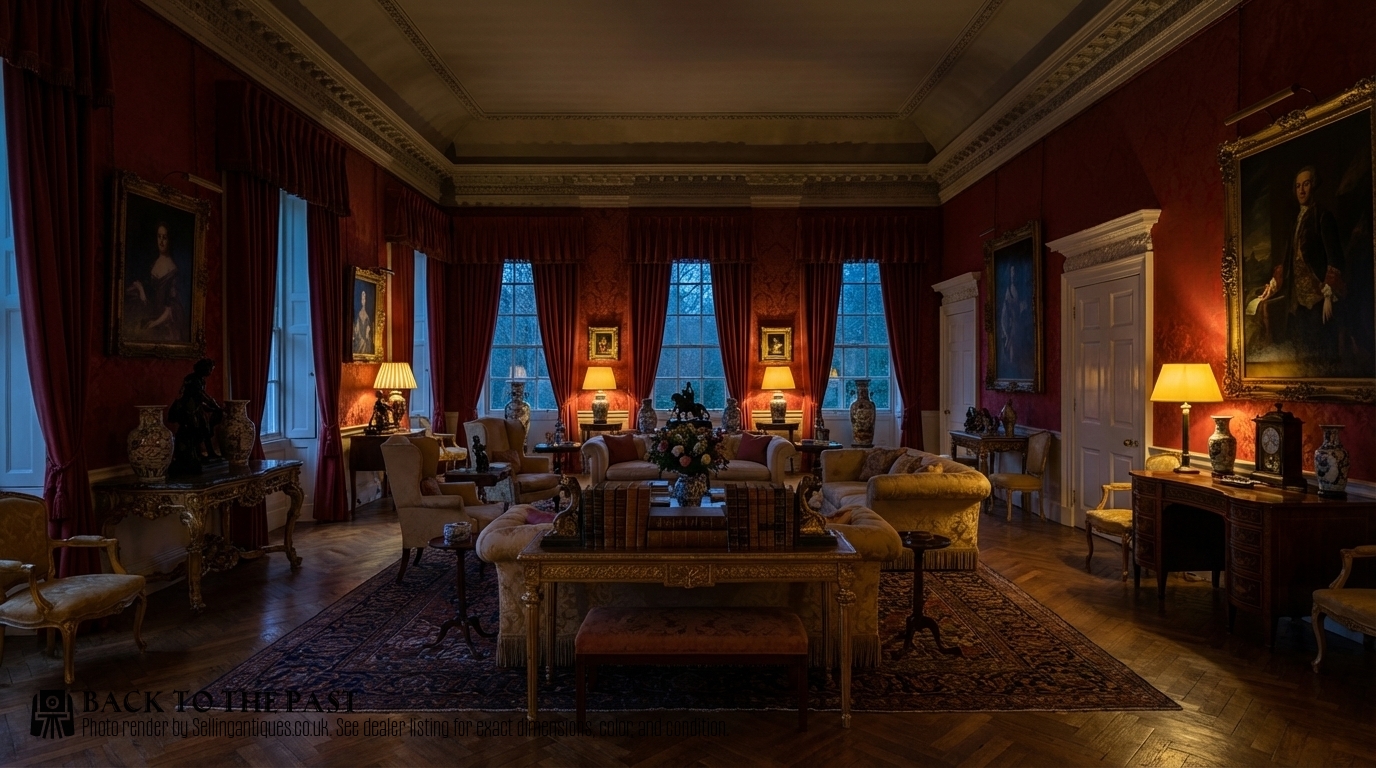
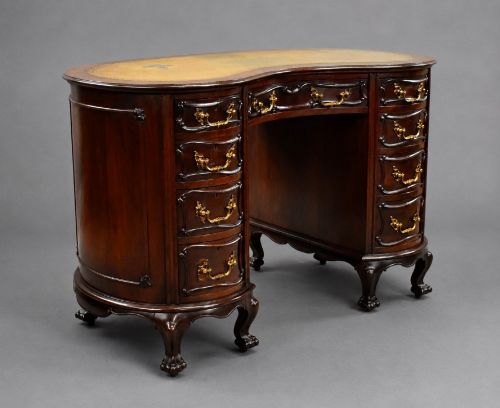
Fine Edwards & Roberts Marquetry Kidney Desk, 1900
Priced at £4,500 from Country Homes Antiques Stirling
Bending wood to form the rounded drawer fronts required skilled steam-bending techniques or thick shaped timber.
Look at the veneer application. Applying flat sheets to a double-curved surface took considerable precision to avoid cracking.
Later Edwardian revivals combining the traditional kidney shape with lighter Sheraton-style satinwood stringing.
"The sweeping back allowed them to be placed snugly in bay windows."
"Excellent for modern multi-monitor setups. The curved shape keeps side screens angled naturally toward the user."
"Notice how the rounded corners prevent bruising. You can navigate around the desk without catching your hips on sharp angles."
Based on almost 25 years of Sellingantiques UK antique market data, Antique Kidney Desks appeared 622 times (out of 1,100,000 antiques) which gives it a rarity score of 88/100.
This score measures scarcity within the Sellingantiques archive only and is not a survey of the entire antiques market, so these statistics may not be indicative of the general availability of Antique Kidney Desks elsewhere.
Strip out the old hide and scrape the wooden recess clean. Order a new piece of sheepskin cut to a paper template of your desk top.
Lay the new leather using a stiff paste. Roll it flat from the centre outwards to remove air pockets.
Most antique kidney desks sit on four or eight individual legs rather than solid plinths. They will rock on a heavily warped floor.
You can slide small wooden wedges or felt pads under the feet. Many late nineteenth-century examples retain their original brass castors, which can sometimes be levelled by adding a hidden washer above the cup.
A good quality microcrystalline wax is all you need. Apply it sparingly with a soft cloth once a year.
Avoid silicone spray polishes.
Repairing curved drawers takes more effort than standard straight ones. The runners have to be shaped to follow the internal carcase lines exactly.
A cabinetmaker builds up the worn tracks with new hardwood strips. They might also need to replace the underlying guide rails if the drawer bottom is rubbing.
Please note: This Antique Kidney Desks guide and its associated pricing data are provided for general informational purposes only. It does not constitute formal financial, investment, or appraisal advice and should not be relied upon as the sole basis for any commercial activity, purchasing, or sales decisions. Sellingantiques.co.uk accepts no liability for any actions taken in reliance on this information. Always consult with a qualified professional or independent appraiser.
