


A 2026 Guide by Sellingantiques
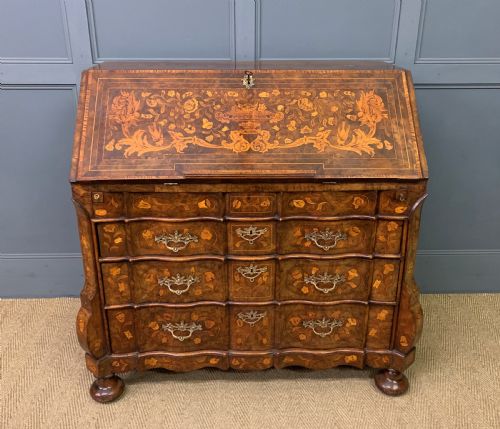
Late C18th / Early C19th Dutch Floral Marquetry Inlaid Walnut Bureau., 18th Century
Priced at £3,850 from M Lees and Sons
Dutch cabinetmakers brought the technique to London during the late seventeenth century.
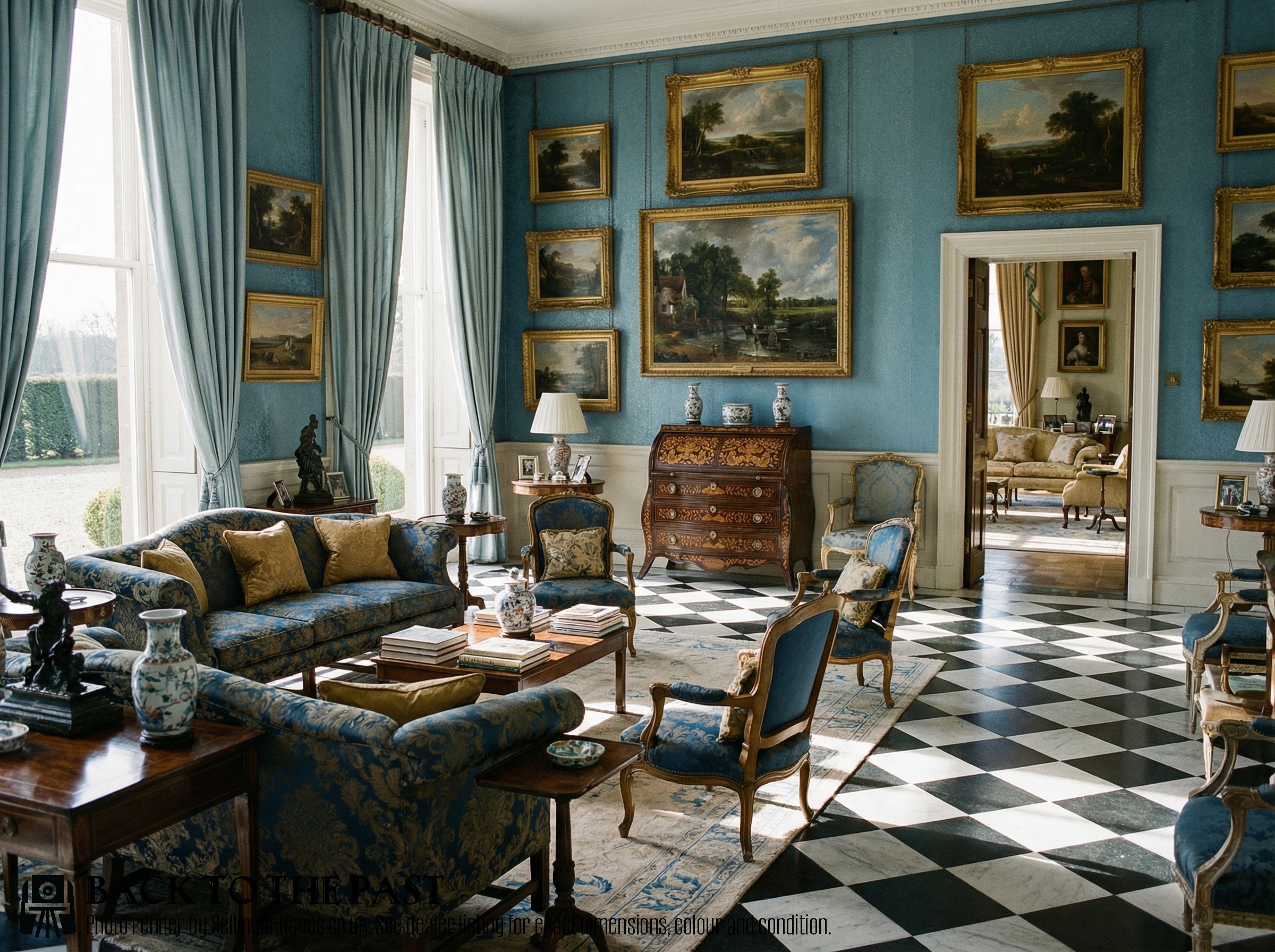
Wealthy households needed lockable spaces for letters and ledgers. The antique marquetry bureau served exactly that purpose while dominating the room visually.
Demand for this specific form peaked during the William and Mary period as consumer tastes shifted.
Look at how the form evolved from a simple box on a stand into a fully integrated chest with drawers.
Floral patterns gradually gave way to tighter arabesques as the eighteenth century progressed.
Gerrit Jensen supplied elaborate marquetry pieces to the royal household during the late seventeenth century.
Very few of these carry a maker's mark. The trade operated through large workshops where individual craftsmen remained anonymous.
Regional variations exist. Some provincial workshops copied London fashions using thicker veneers and simplified floral motifs.
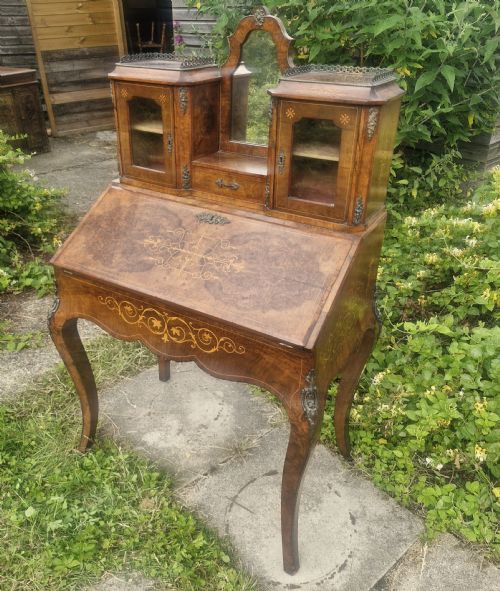
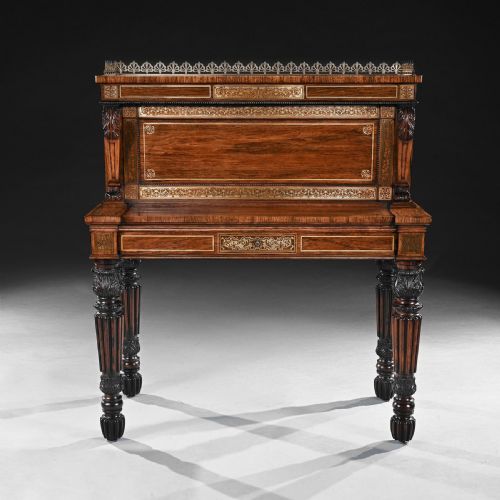
Victorian Marquetry Bureau Du Dame/ Writing Desk, Victorian
Priced at £450 from Sinclairs Antiques and Interiors
The 2026 retail price guide for Antique Marquetry Bureau is drawn from a proprietary archive of over 1.1 million retail prices indexed by Sellingantiques since 2003. This guide relies exclusively on their own internal data; no external sources or auction records are used.
Analysing nearly 25 years of UK antique market history alongside current retail values, the data indicates that typical UK retail prices for Antique Marquetry Bureau range between £1,500 and £12,900. Entry-level prices generally fall under £1,500 and premium examples upwards of £12,900.
The fall front drops down on hinges to create a flat writing surface.
Inside sits an arrangement of pigeonholes and small drawers. These flank a central cupboard door.
Lopers pull out from the carcase to support the writing flap.
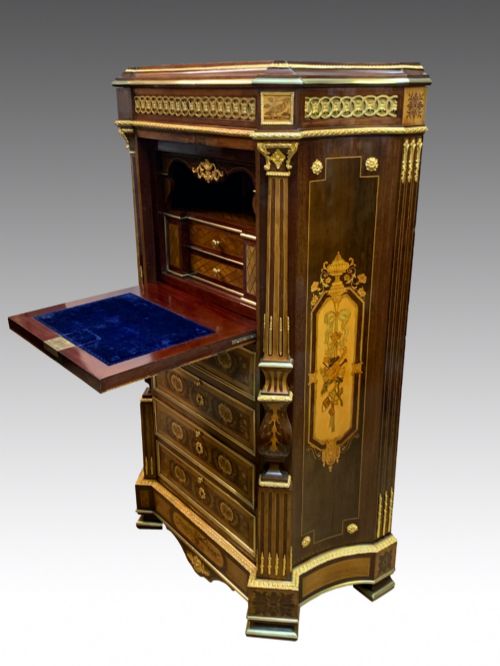
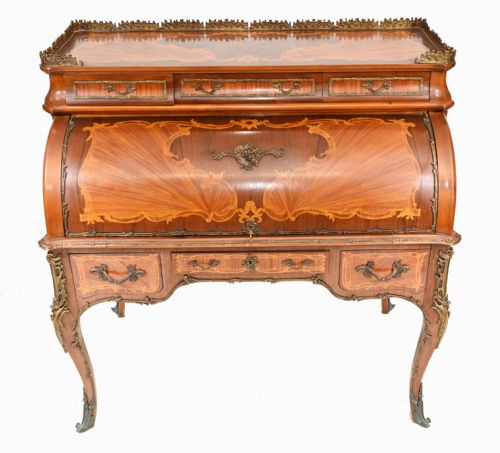
Antique 18th Century Quality Mahogany Floral Marquetry Inlaid Cylinder Bureau, 18th Century
Priced at £8,450 from London City Antiques
Craftsmen used a donkey to cut multiple layers of veneer at once. This tool clamped the woods together for precision sawing.
Shading individual pieces of wood involved dipping them into hot sand. The scorch marks create a three-dimensional effect on petals.
Animal hide glue holds the marquetry to the carcase. This adhesive requires a heated workshop environment to apply correctly.
"Secret compartments frequently sit behind the central interior cupboard. Cabinetmakers built these tall, thin document boxes so they'd slide out easily."
"The vibrant green leaves seen in some floral panels come from wood dyed with copper sulphate."
"Many floral designs were copied directly from popular botanical prints circulating in London at the time."
Based on almost 25 years of Sellingantiques UK antique market data, Antique Marquetry Bureau appeared 762 times (out of 1,100,000 antiques) which gives it a rarity score of 86/100.
This score measures scarcity within the Sellingantiques archive only and is not a survey of the entire antiques market, so these statistics may not be indicative of the general availability of Antique Marquetry Bureau elsewhere.
Use a soft dry cloth to remove loose dust from the pigeonholes. A small natural bristle brush works well for the tight corners of the interior.
Avoid liquid cleaners or polishes. The hide glue holding the small mouldings and veneers in place reacts badly to moisture.
Forcing the lopers with pliers will crush the old timber. They usually jam because the carcase wood has moved over time or dirt has built up in the channels.
Try applying a little candle wax to the visible part of the runner. If they remain stuck, a restorer will need to remove the backboards to push them out from behind.
Many of them do. Early cabinetmakers used heavy brass locks designed for heavy use.
Don't force a stuck mechanism. Replacement keys are difficult to cut for these early locks.
Direct sunlight bleaches historic timbers quite fast. The dyed woods used in the floral panels are particularly sensitive and will fade to a flat brown if left in the sun.
Ultraviolet light also breaks down the old finishes. Placing the desk on an interior wall preserves the contrast in the pattern and protects the carcase from temperature swings near the glass.
If you must keep it near a window, close the blinds during the brightest part of the day.
Please note: This Antique Marquetry Bureau guide and its associated pricing data are provided for general informational purposes only. It does not constitute formal financial, investment, or appraisal advice and should not be relied upon as the sole basis for any commercial activity, purchasing, or sales decisions. Sellingantiques.co.uk accepts no liability for any actions taken in reliance on this information. Always consult with a qualified professional or independent appraiser.
