

A 2026 Guide by Sellingantiques
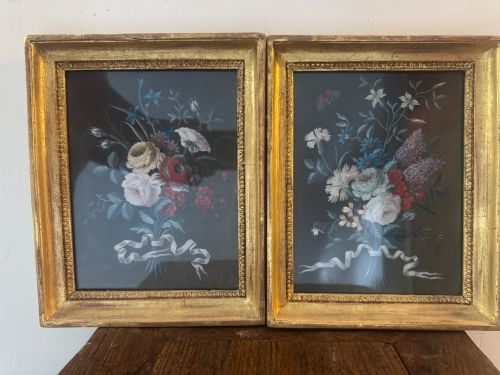
Antique botanical art began as practical reference material for physicians needing to identify medicinal plants.
Monasteries kept detailed manuscript herbals long before commercial printing existed.
Look for the shift during the eighteenth century when global exploration brought unrecorded species back to Europe.
Wealthy patrons commissioned grand folios just to document the rare specimens growing in their private hothouses.
Basilius Besler produced the massive Hortus Eystettensis around 1613, documenting the garden of the Prince-Bishop of Eichstätt.
Pierre-Joseph Redouté working in France during the late eighteenth century, famous for stipple engraving.
Look for Maria Sibylla Merian, who travelled to Suriname in 1699 to illustrate insects alongside their specific host plants.
The 2026 retail price guide for Antique Botanical Art is drawn from a proprietary archive of over 1.1 million retail prices indexed by Sellingantiques since 2003. This guide relies exclusively on their own internal data; no external sources or auction records are used.
Analysing nearly 25 years of UK antique market history alongside current retail values, the data indicates that typical UK retail prices for Antique Botanical Art range between £200 and £2,800. Entry-level prices generally fall under £200 and premium examples upwards of £2,800.
Scientific accuracy takes precedence over composition, often showing roots and seeds on the same page.
Latin binomial names engraved or inscribed at the bottom edge.
Notice the dissected views of reproductive organs floating in the blank space around the main stem.
Sixteenth-century works largely depend on woodcuts, giving thick black lines that limit fine detail.
Copperplate engraving took over next, allowing artists to incise sharper lines for delicate foliage.
Notice how nineteenth-century lithography changed the trade by letting artists draw directly onto a flat limestone block.
"Women found steady employment in the print shops applying watercolour washes to these black and white engravings."
"Many individual prints were originally bound inside thick scientific journals that subscribers received in monthly parts."
"Some artists painted the roots from dried herbarium specimens while sketching the flower from a living greenhouse plant."
Based on almost 25 years of Sellingantiques UK antique market data, Antique Botanical Art appeared 842 times (out of 1,100,000 antiques) which gives it a rarity score of 85/100.
This score measures scarcity within the Sellingantiques archive only and is not a survey of the entire antiques market, so these statistics may not be indicative of the general availability of Antique Botanical Art elsewhere.
Ask the framer to use acid-free mounts and backing boards. Standard cardboard contains lignins that will burn brown marks into the paper.
UV-filtering glass is just as important. It slows down the fading of watercolours and stops the paper from yellowing too quickly when hung in a bright room.
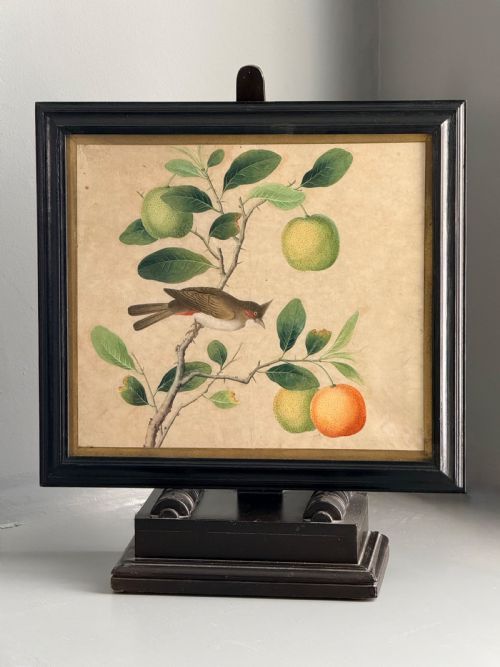
That sheen usually comes from gum arabic. Colourists often added it to their paints to give certain parts of the plant a slight shine, mimicking the waxy surface of real leaves.
It was painted on over the standard watercolour washes. You often spot it on the berries or thick tropical foliage in nineteenth-century pieces.
Instead of cutting solid lines, the engraver tapped tiny dots into the copper plate. Denser dots create dark shadows.
This method produced soft tonal gradations. It proved effective for capturing flower petals.
Those numbers correspond to an index that was printed elsewhere in the book. Botanical art was scientific reference material, so the reader needed a way to link the visual cross-sections back to the text descriptions.
The dissected parts usually show the reproductive organs or seed pods. The numbers helped academics identify the exact stamen or pistil being discussed on the opposite page.
Please note: This Antique Botanical Art guide and its associated pricing data are provided for general informational purposes only. It does not constitute formal financial, investment, or appraisal advice and should not be relied upon as the sole basis for any commercial activity, purchasing, or sales decisions. Sellingantiques.co.uk accepts no liability for any actions taken in reliance on this information. Always consult with a qualified professional or independent appraiser.
