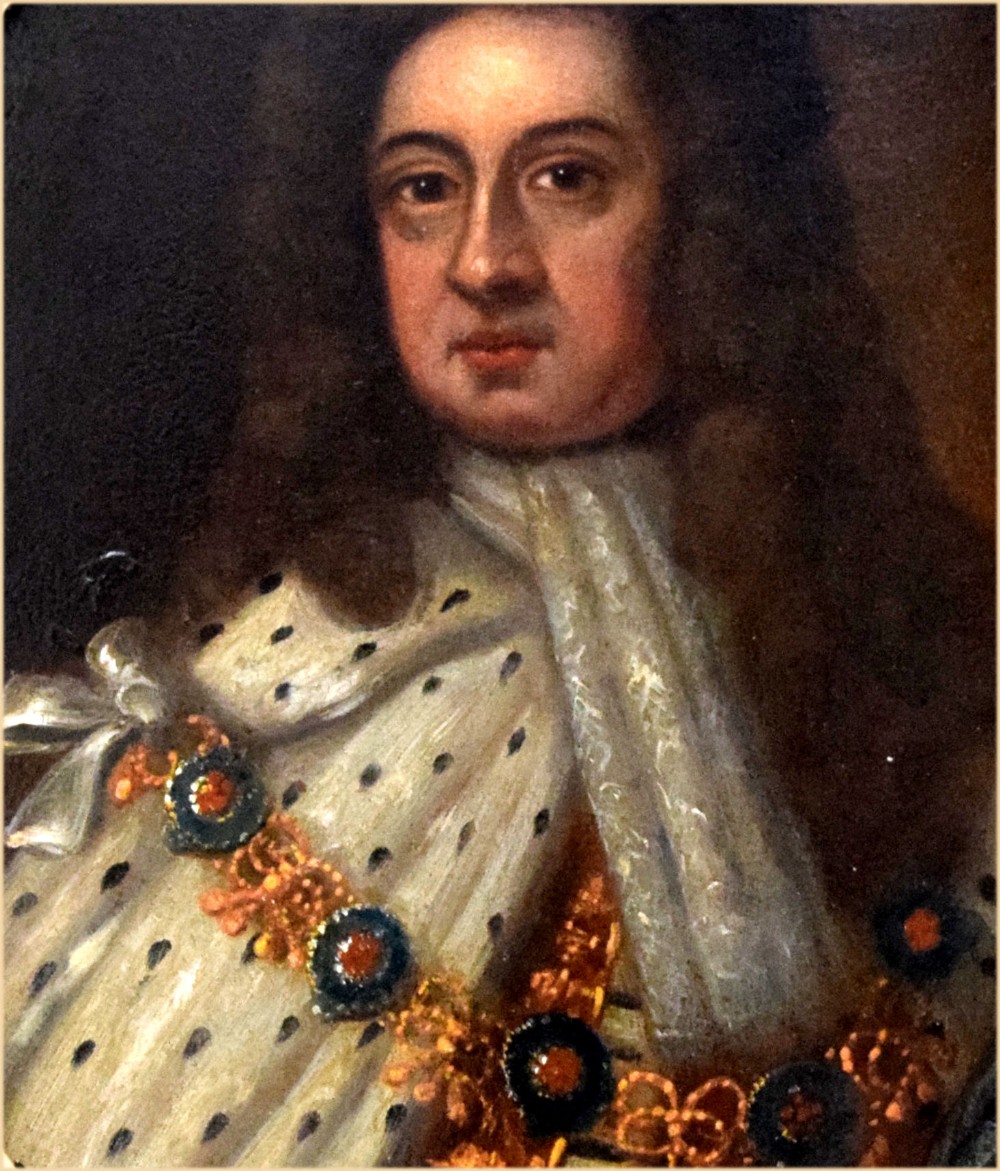
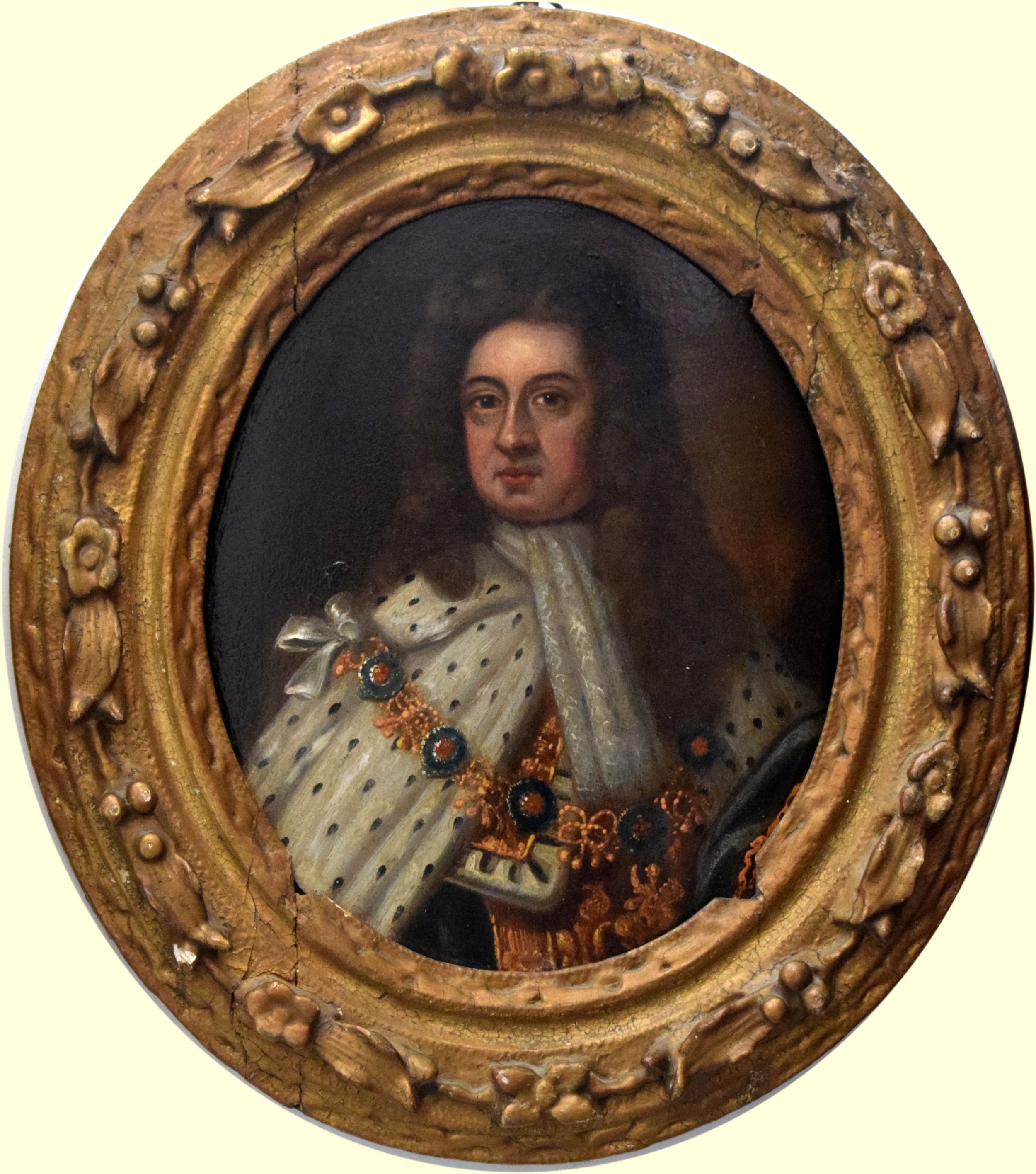
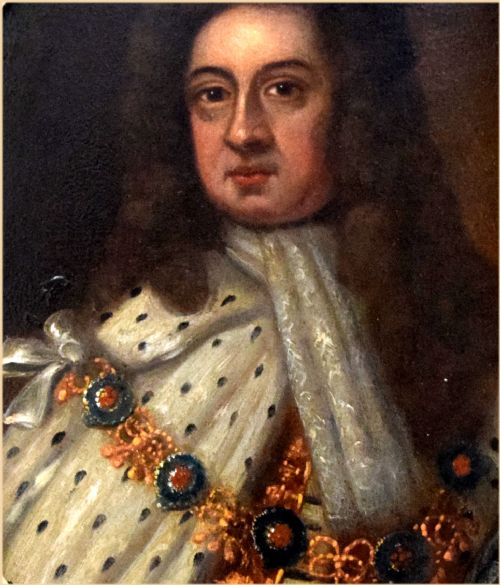
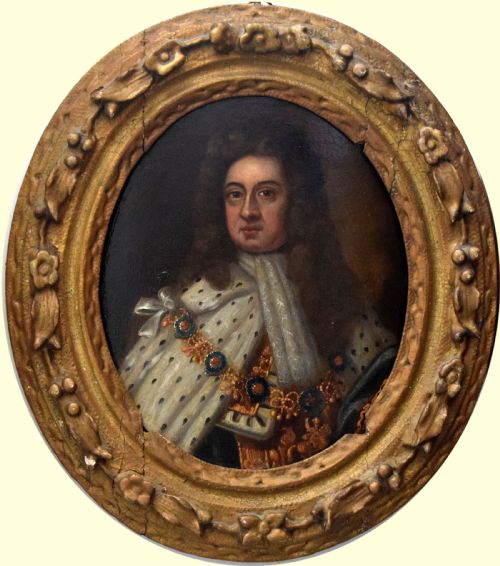
Artware Fineart has dated this Baroque Royal Portrait Painting to the 17th Century.
Portrait of King William III 1650-1702
oil on canvas
29 x 24 cm.
King William III 1650 – 1702, also widely known as William of Orange, was the sovereign Prince of Orange from birth, Stadtholder of Holland, Zeeland, Utrecht, Guelders, and Overijssel in the Dutch Republic from the 1670s, and King of England, Ireland, and Scotland from 1689 until his death in 1702. As King of Scotland, he is known as William II. He is sometimes informally known as "King Billy" in Ireland and Scotland.
He ruled Britain alongside his wife and cousin Queen Mary II, and popular histories usually refer to their reign as that of "William and Mary".
William was the only child of William II, Prince of Orange, and Mary, Princess Royal and Princess of Orange, the daughter of Charles I of England, Scotland, and Ireland. His father died a week before his birth, making William III the Prince of Orange from birth. In 1677, he married Mary, the eldest daughter of his maternal uncle James, Duke of York, the younger brother of Charles II of England, Scotland, and Ireland. The Protestant William participated in several wars against the powerful Catholic French ruler Louis XIV in coalition with both Protestant and Catholic powers in Europe. Many Protestants heralded William as a champion of their faith. In 1685, his Catholic uncle and father-in-law, James, became king of England, Scotland, and Ireland. James's reign was unpopular with the Protestant majority in Britain, who feared a revival of Catholicism. Supported by a group of influential British political and religious leaders, William invaded England in what became known as the Glorious Revolution. In 1688, he landed at the south-western English port of Brixham. Shortly afterwards, James was deposed.
William's reputation as a staunch Protestant enabled him and his wife to take power. During the early years of his reign, William was occupied abroad with the Nine Years' War (1688–1697), leaving Mary to govern Britain alone. She died in 1694. In 1696 the Jacobites, a faction loyal to the deposed James, plotted unsuccessfully to assassinate William and restore James to the throne. William's lack of children and the death in 1700 of his nephew Prince William, Duke of Gloucester, the son of his sister-in-law Anne, threatened the Protestant succession. The danger was averted by placing distant relatives, the Protestant Hanoverians, in line to the throne with the Act of Settlement 1701. Upon his death in 1702, the king was succeeded in Britain by Anne and as titular Prince of Orange by his cousin John William Friso, beginning the Second Stadtholderless period.
William III was born in The Hague in the Dutch Republic on 4 November 1650. Baptised William Henry (Dutch: Willem Hendrik), he was the only child of Mary, Princess Royal, and stadtholder William II, Prince of Orange. His mother was the eldest daughter of King Charles I of England, Scotland and Ireland and sister of King Charles II and King James II and VII.
Eight days before William was born, his father died of smallpox; thus William was the sovereign Prince of Orange from the moment of his birth. Immediately, a conflict ensued between his mother and paternal grandmother, Amalia of Solms-Braunfels, over the name to be given to the infant. Mary wanted to name him Charles after her brother, but her mother-in-law insisted on giving him the name William (Willem) to bolster his prospects of becoming stadtholder. William II had appointed his wife as their son's guardian in his will; however, the document remained unsigned at William II's death and was void. On 13 August 1651, the Hoge Raad van Holland en Zeeland (Supreme Court) ruled that guardianship would be shared between his mother,
Artware Fineart has dated this Baroque Royal Portrait Painting to the 17th Century.
You can view the stock and full dealer information on the Artware Fineart Profile Page
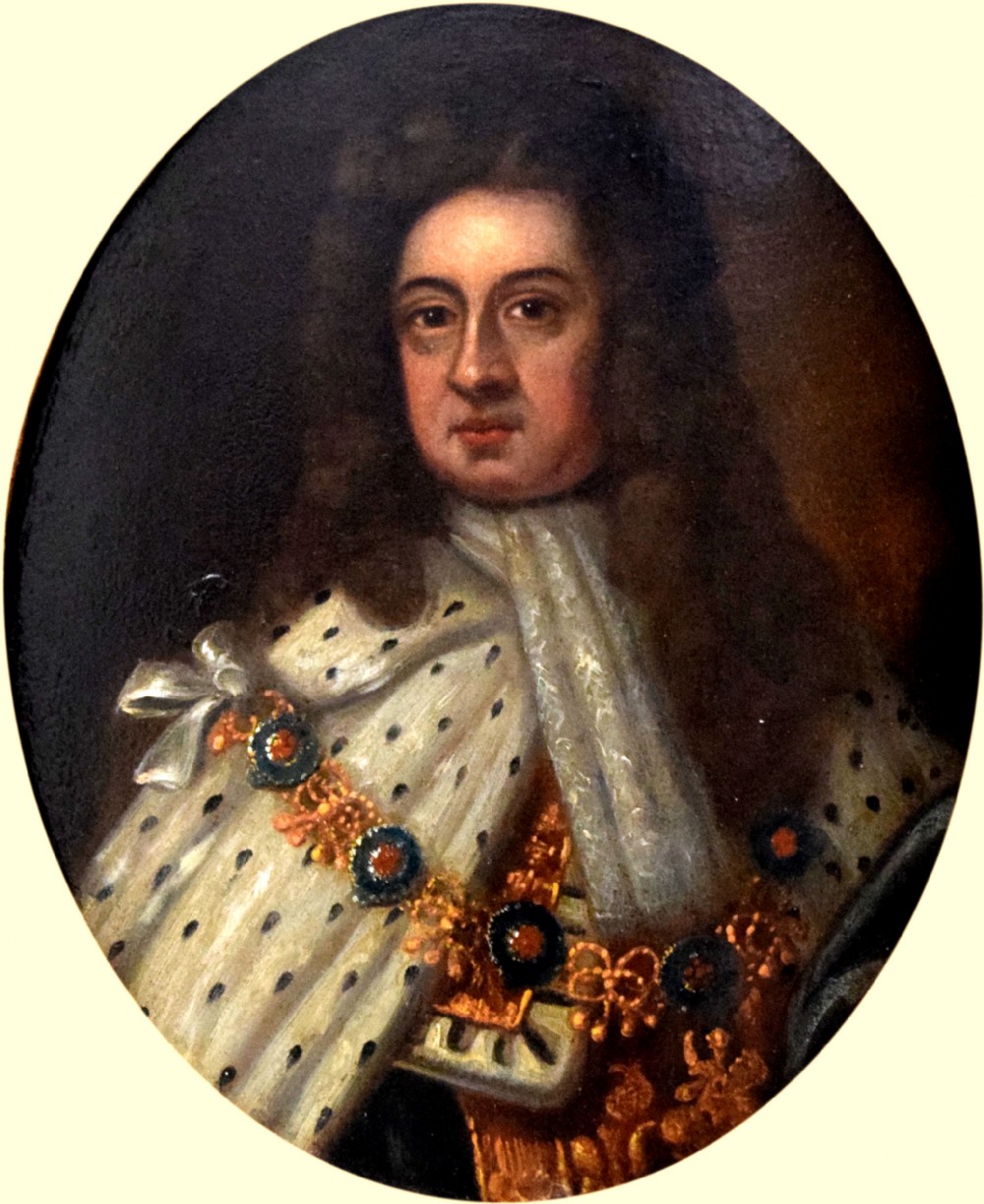
Studio of Sir Godfrey Kneller 1646 -1723 Portrait of King William III 1650-1702