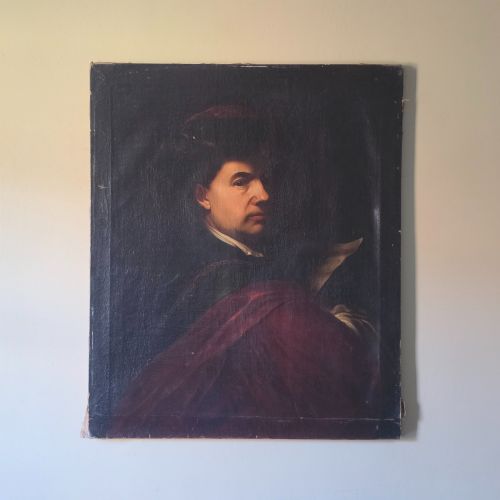
8,653  PAGES BROWSED TODAY PAGES TODAY 36  ANTIQUES UPLOADED TODAY NEW ARRIVALS
ID #SA1117241
FOR SALE
£3,250
Email
Save
Antique Oil Painting Grape and Melon Eaters After Bartolome' Murillo 18th C
Regent Antiques
for sale €3,803     $4,128
£3,250
Regent Antiques

Regent Antiques

Sellingantiques Verified Since Sep 2016
View Dealers Stock Page
  • About Us
    We specialise in english and continental furniture, silver, porcelain and decorative items.
  • Trade Associations
    Regent Antiques is a registered member of LAPADA  CINOA
Id #SA1117241
PDF SHARE
SAVE

Antique Oil Painting Grape and Melon Eaters After Bartolome' Murillo 18th C

18th century
For Sale by Regent Antiques
Description

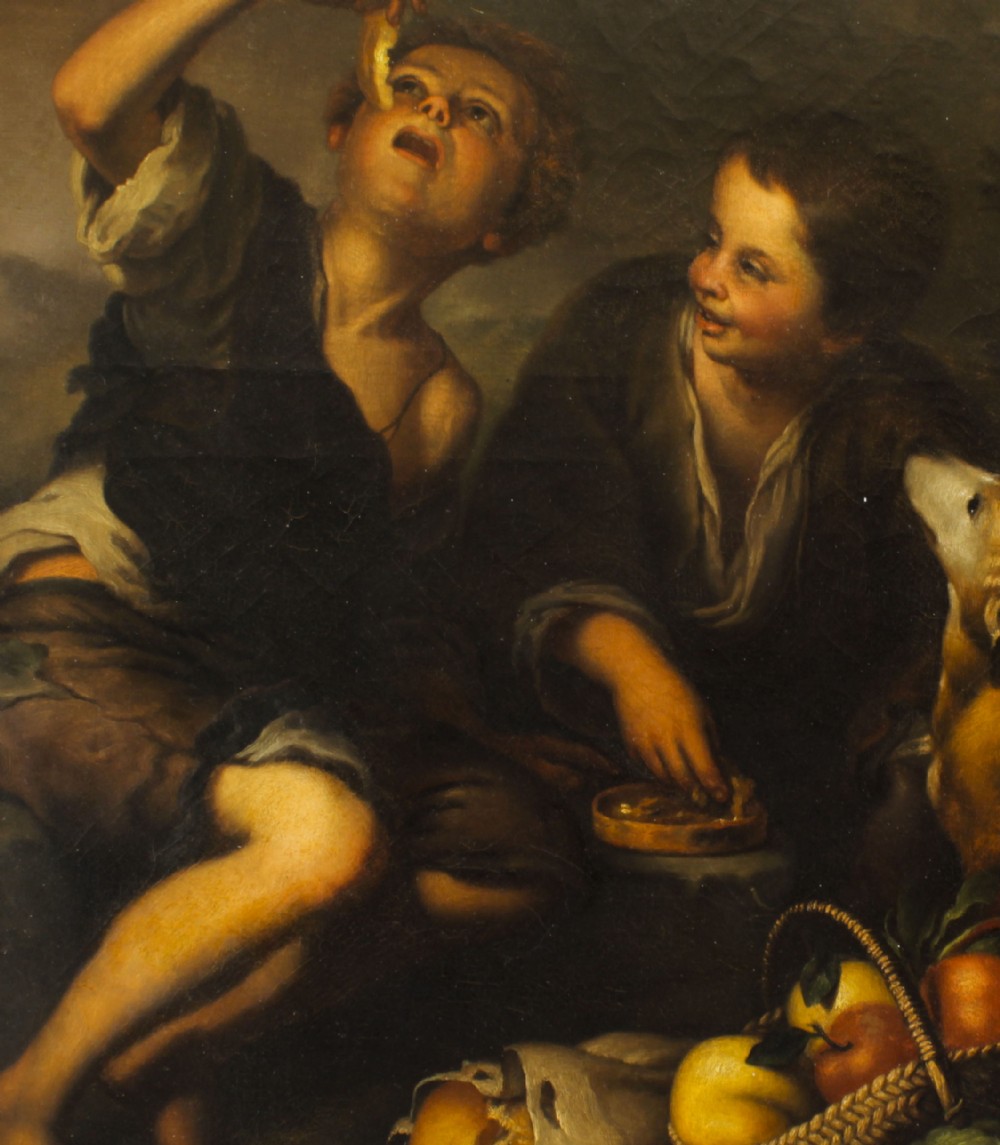
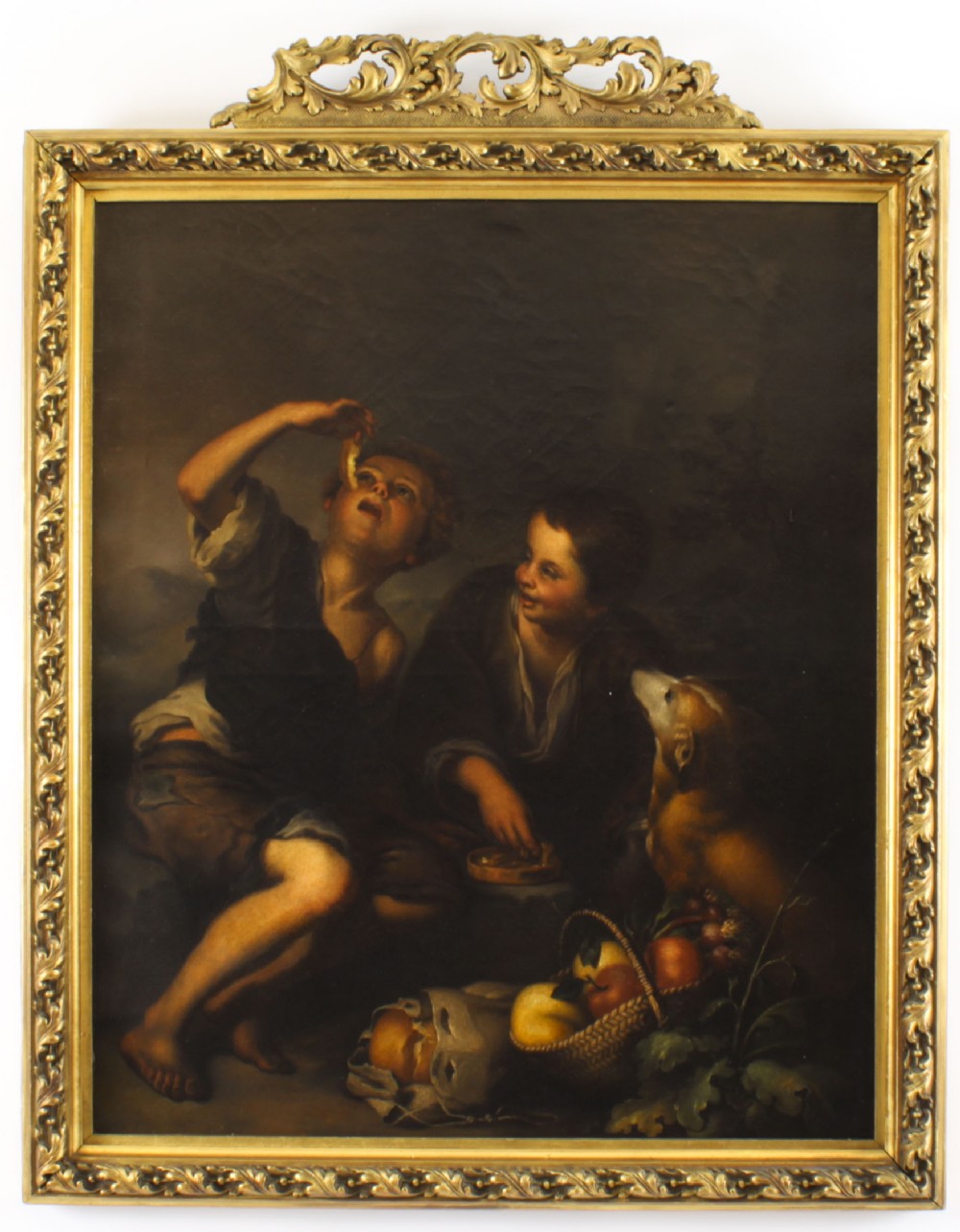
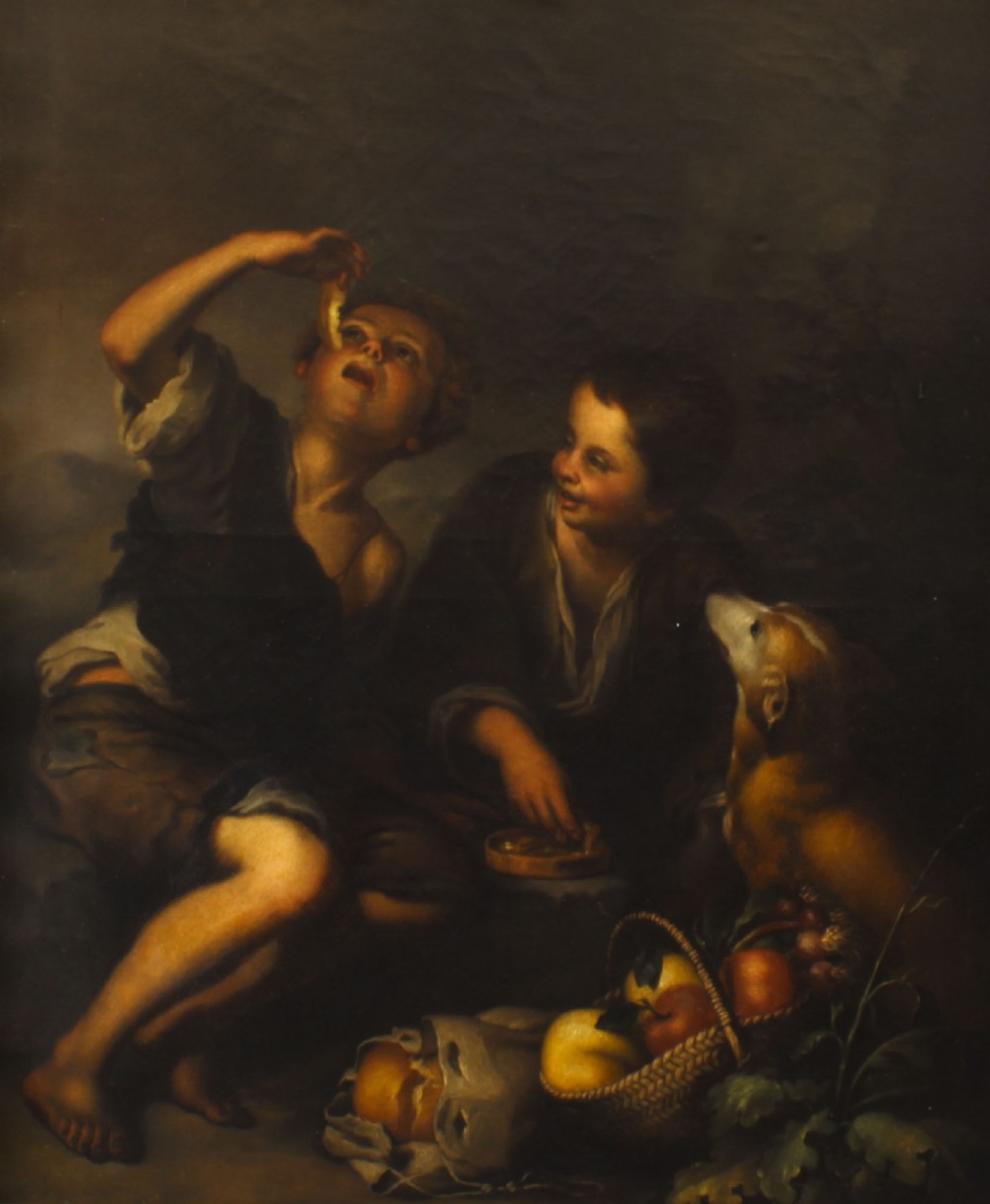
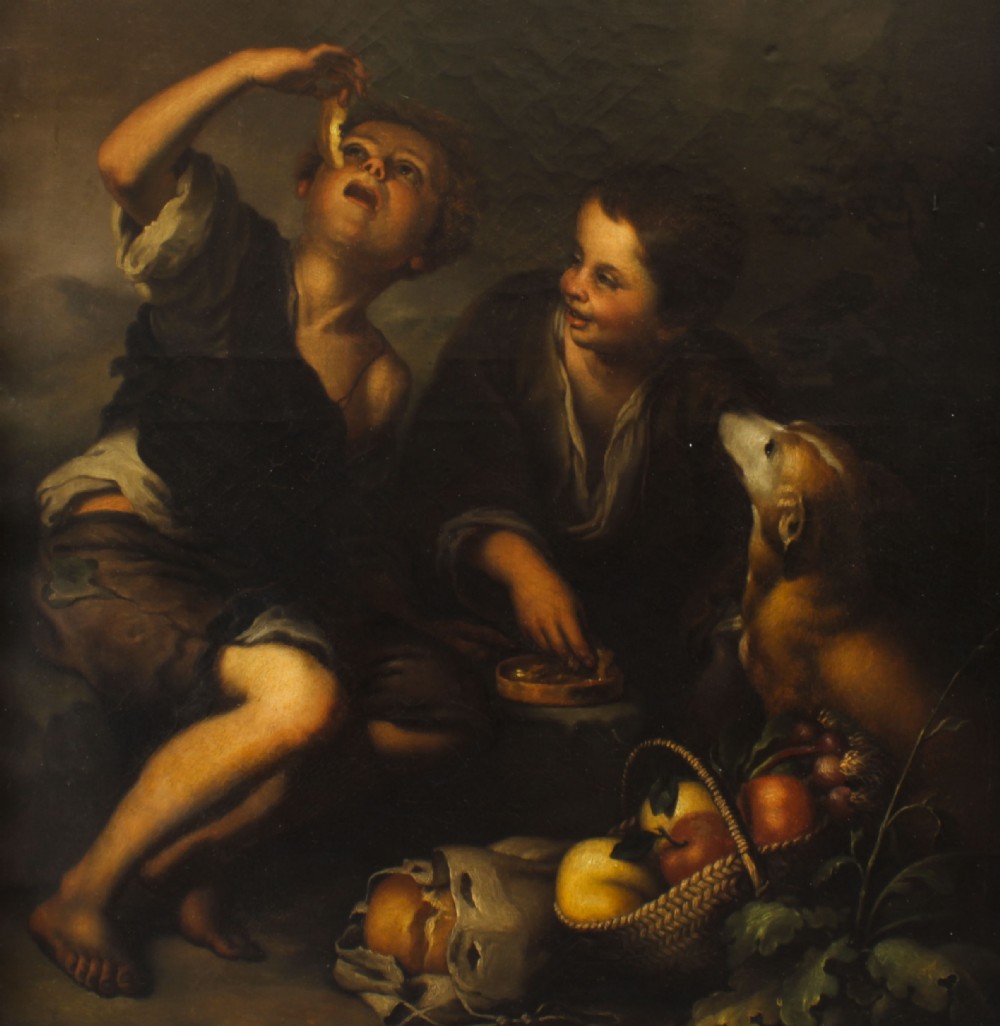
This is a delightful antique Spanish oil on canvas painting after Bartolome' Esteban Murillo, depicting two peasant boys eating grapes and melon, Circa 1780 in date. 

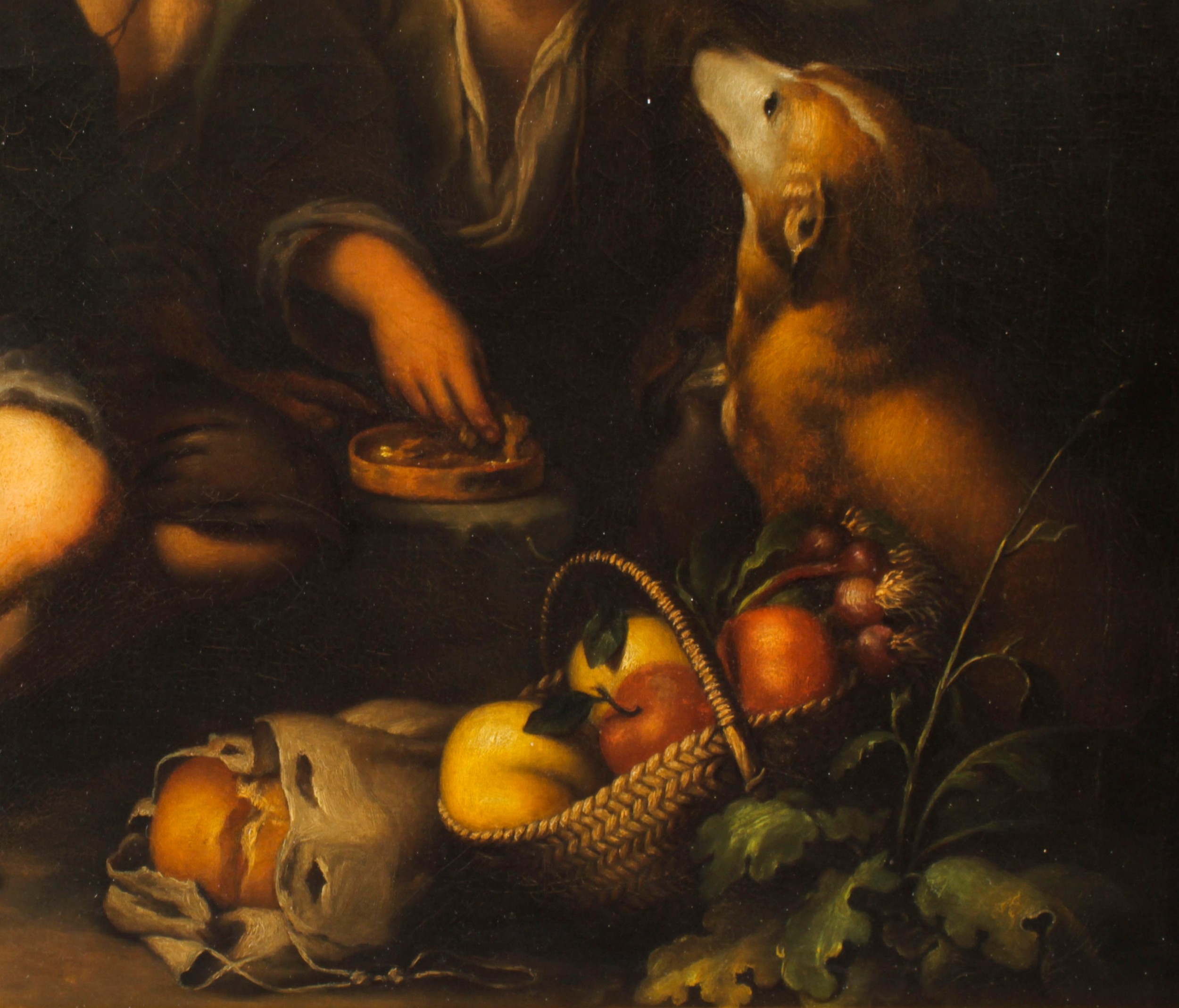
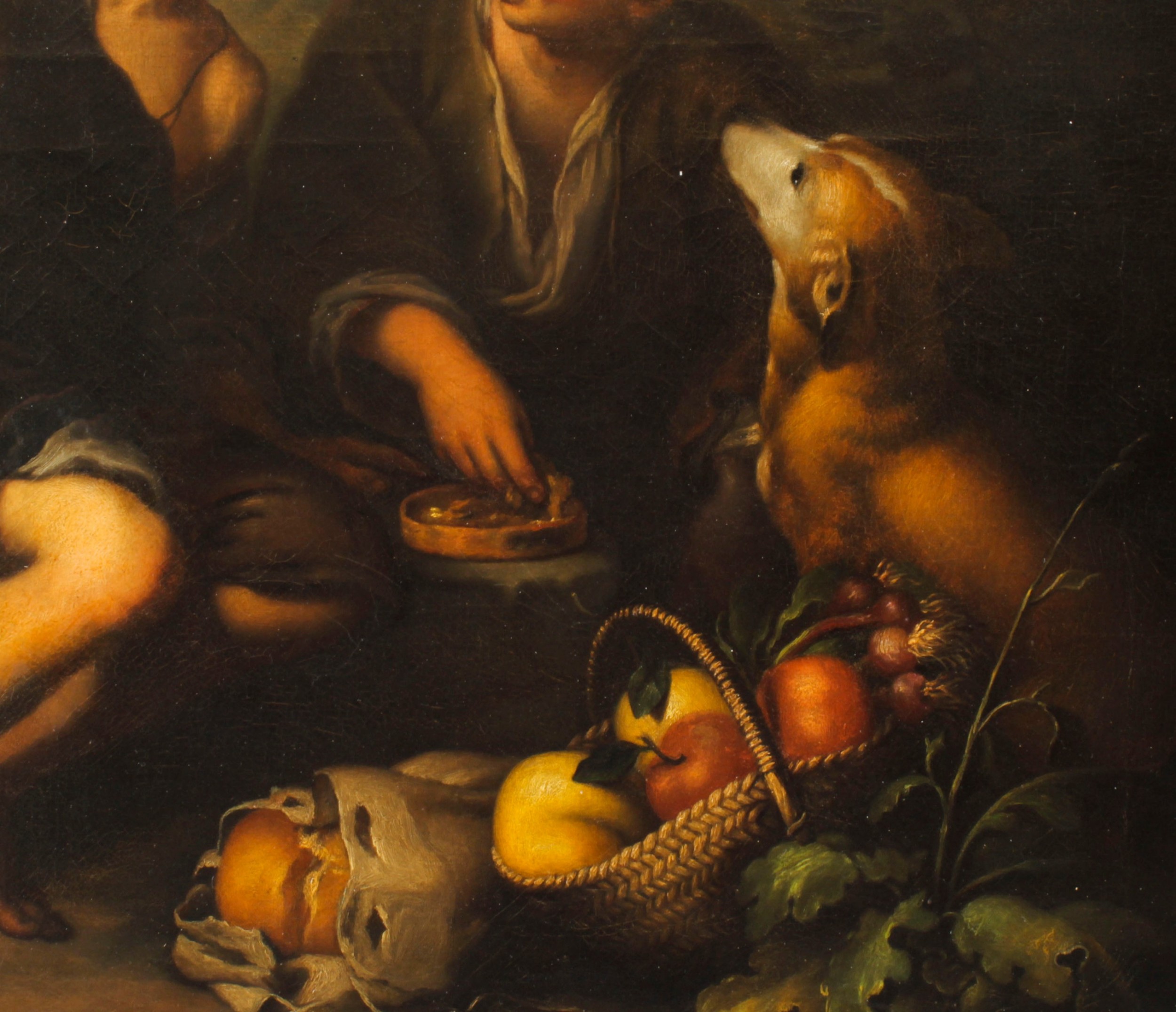
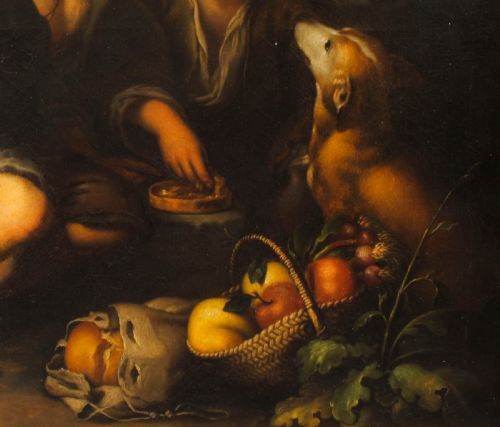
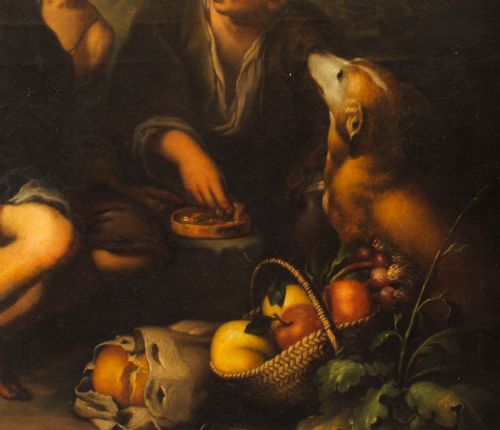
It features a dog staring at two seated boys while they eat fruit with a basket of fruit in the foreground. This lively realist portrait of street urchins constitutes an appealing record of everyday life at that time.
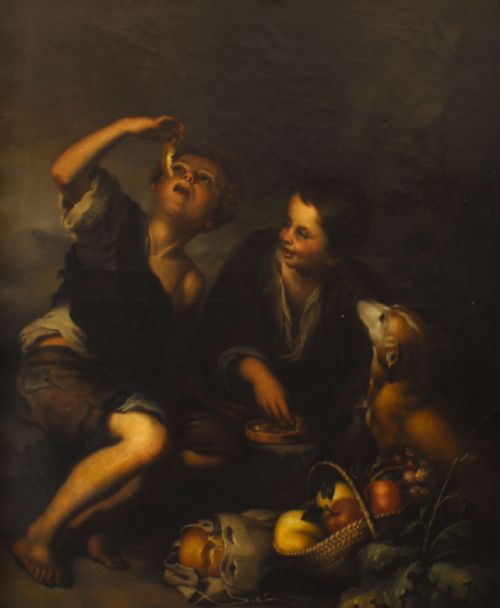
This superbly accomplished painting is executed in the style of Murillo's later works where he continued to evolve to the very end. In the last decade of his life, Murillo took Rubens's lesson even closer to heart, during this period his brushwork became looser and more visible than ever before, sometimes even to the point that the canvases appear unfinished.
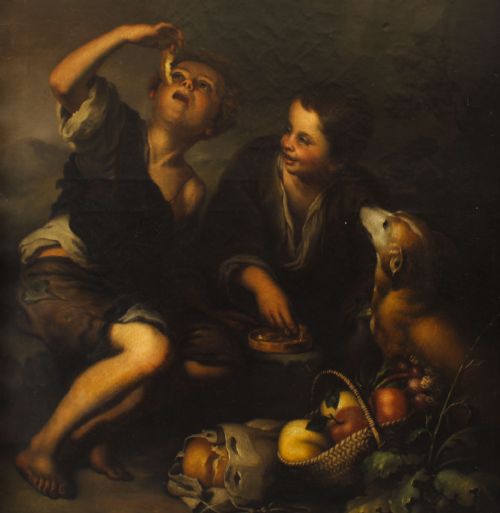
Murillo also reduced his palette to the more sober hues of mauve, grey, brown, and carmine, making his late style more refined than in any previous period.  

His style of painting the street children of his native Seville was unprecedented. He employed great naturalism, employing a sombre palette and strong chiaroscuro, contrasting lights and darks, and very little background detail. They are caught, like a photographic snapshot, playing or eating, but are very rarely aware of an onlooker.
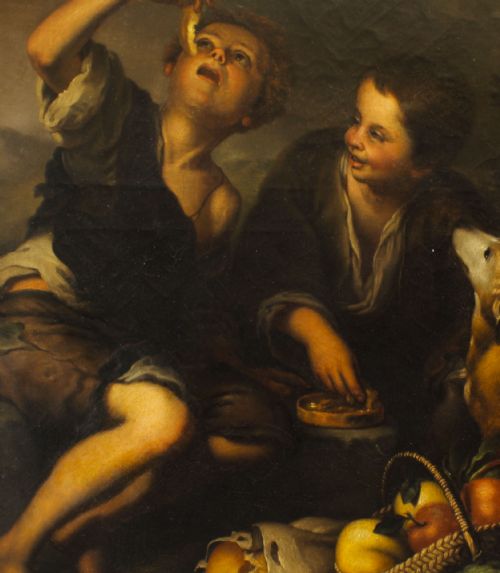
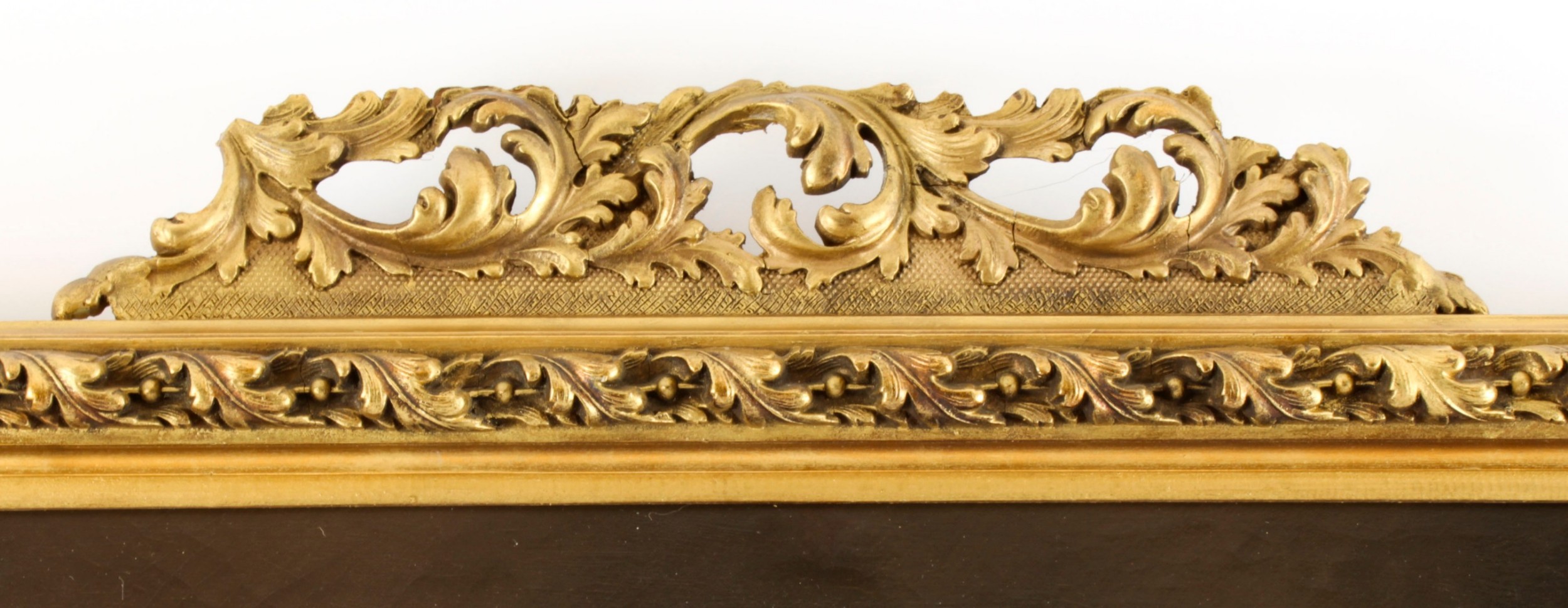
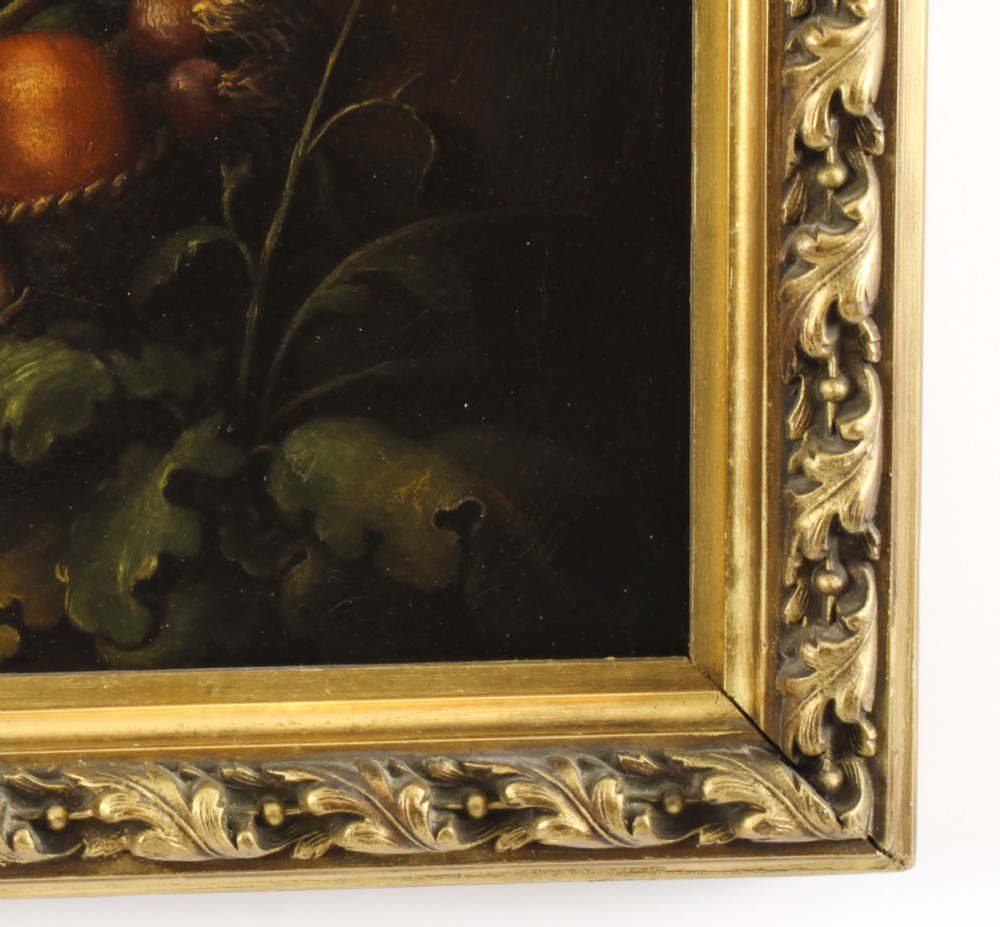
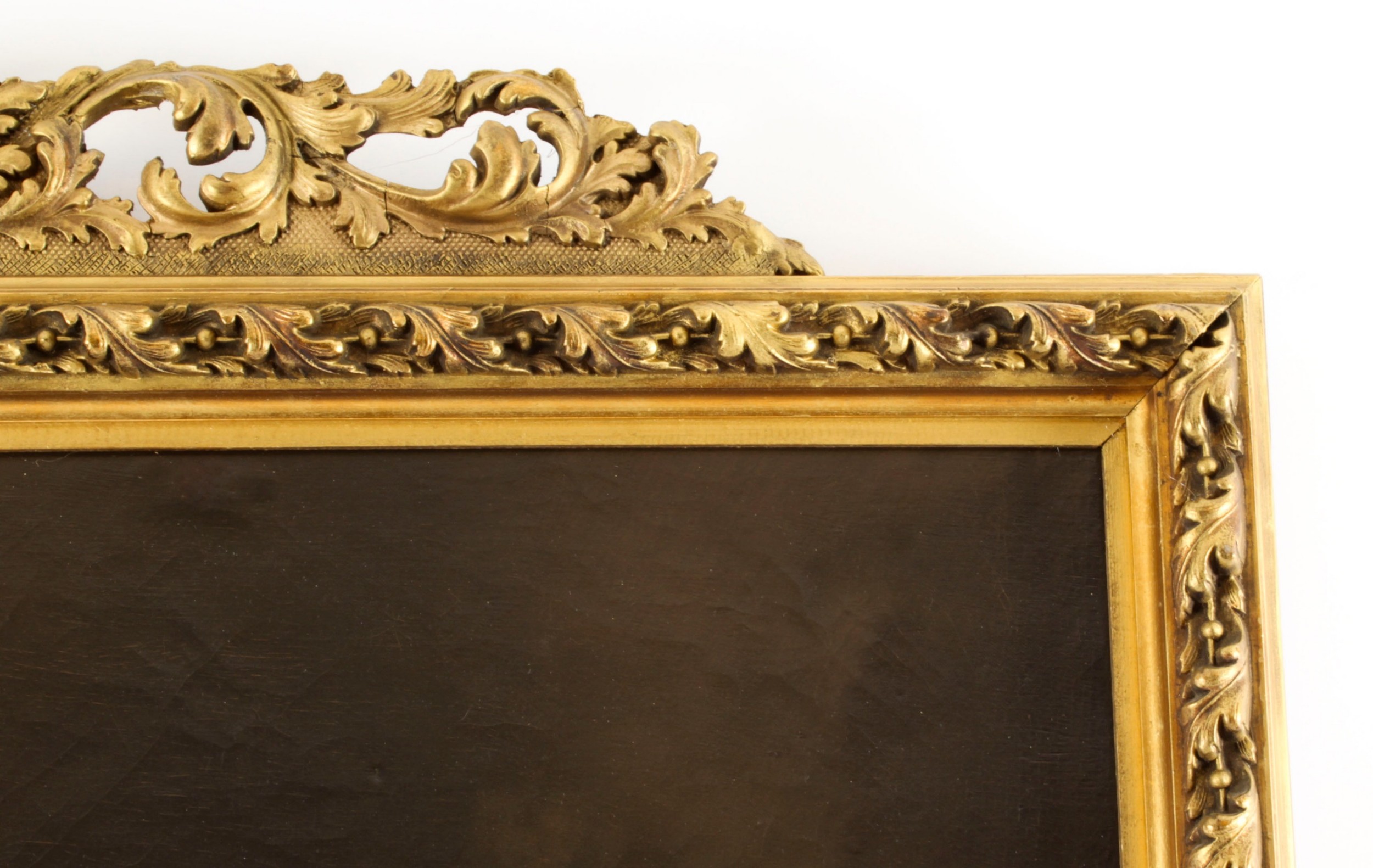
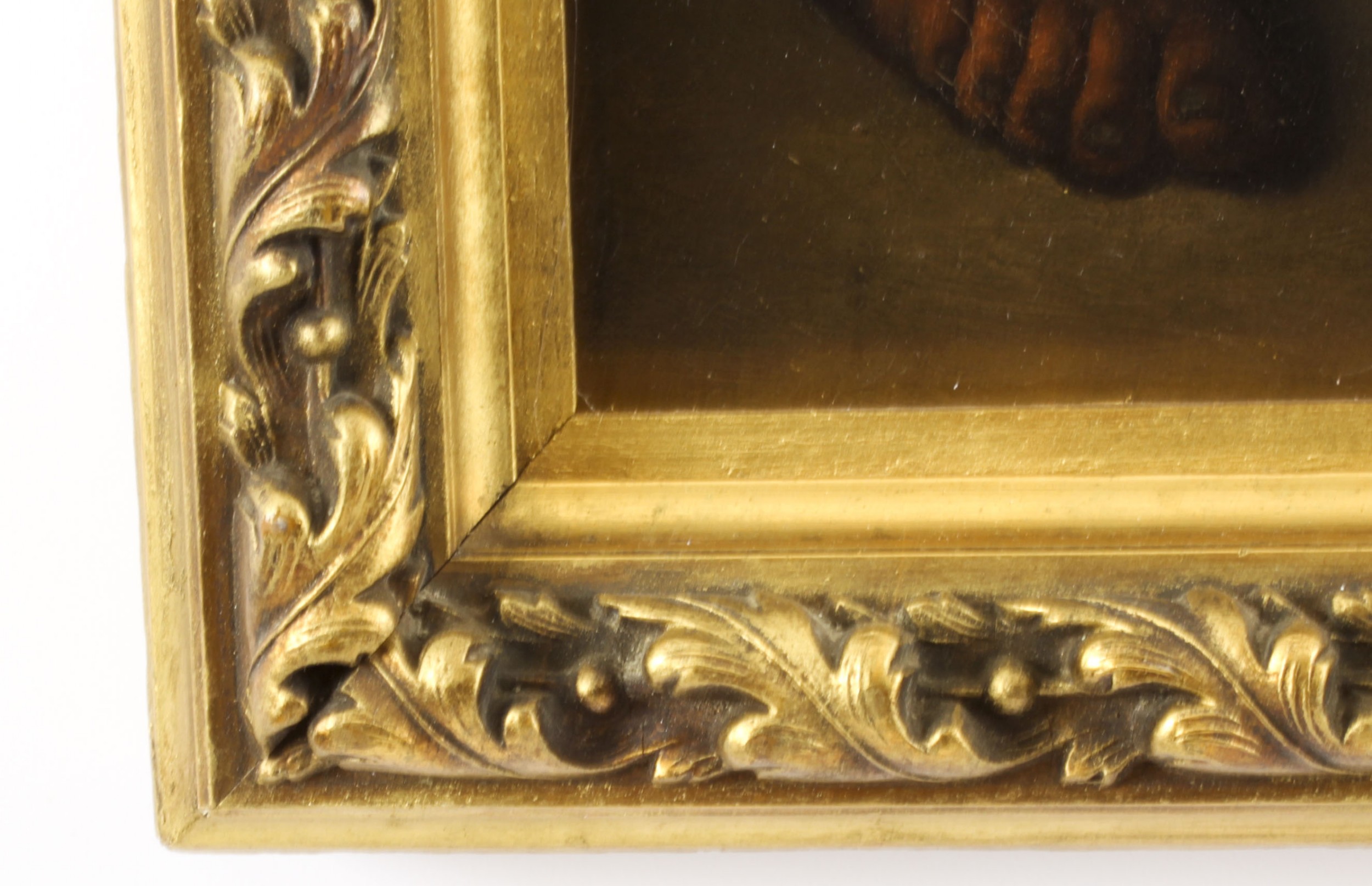
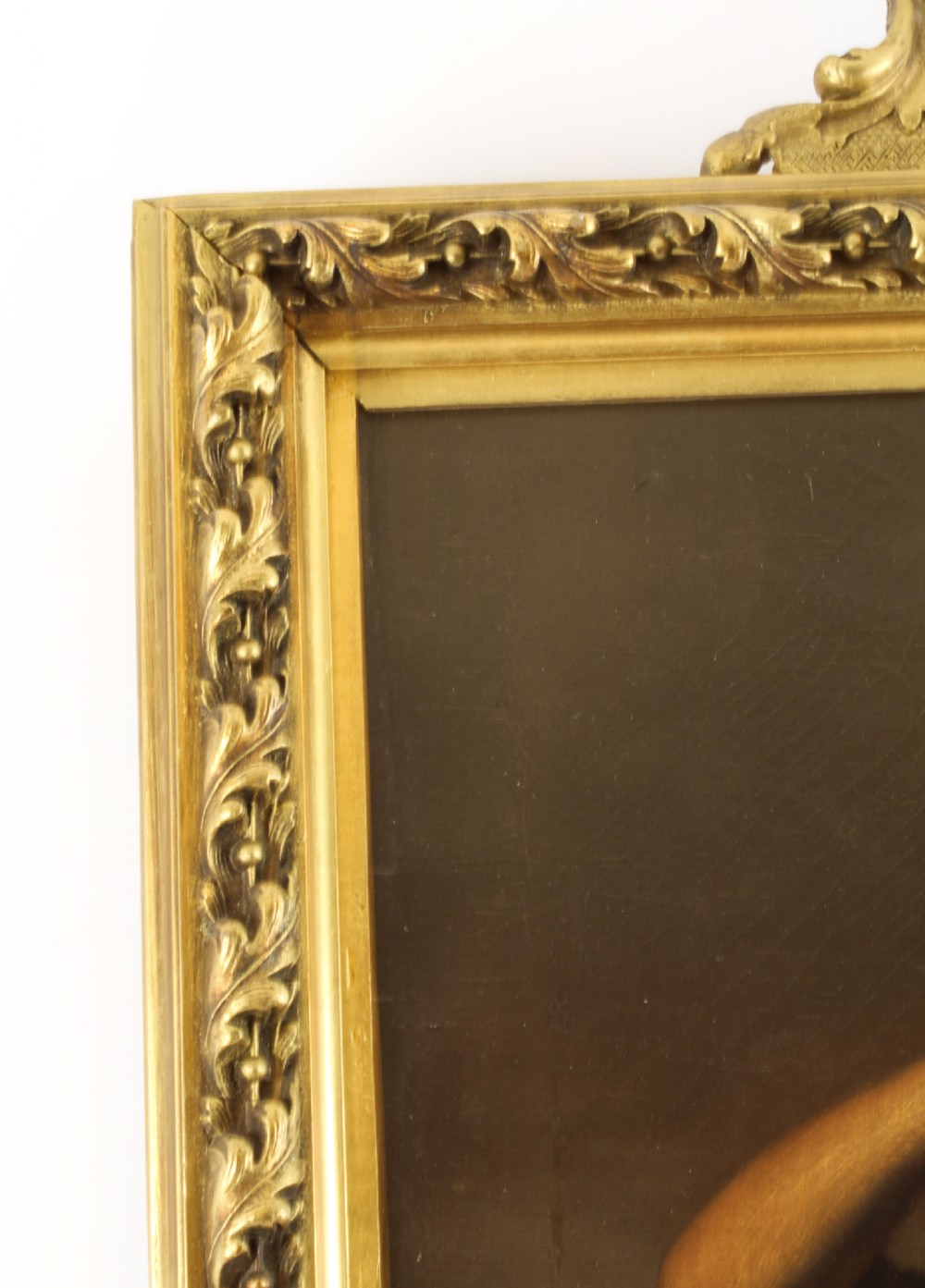
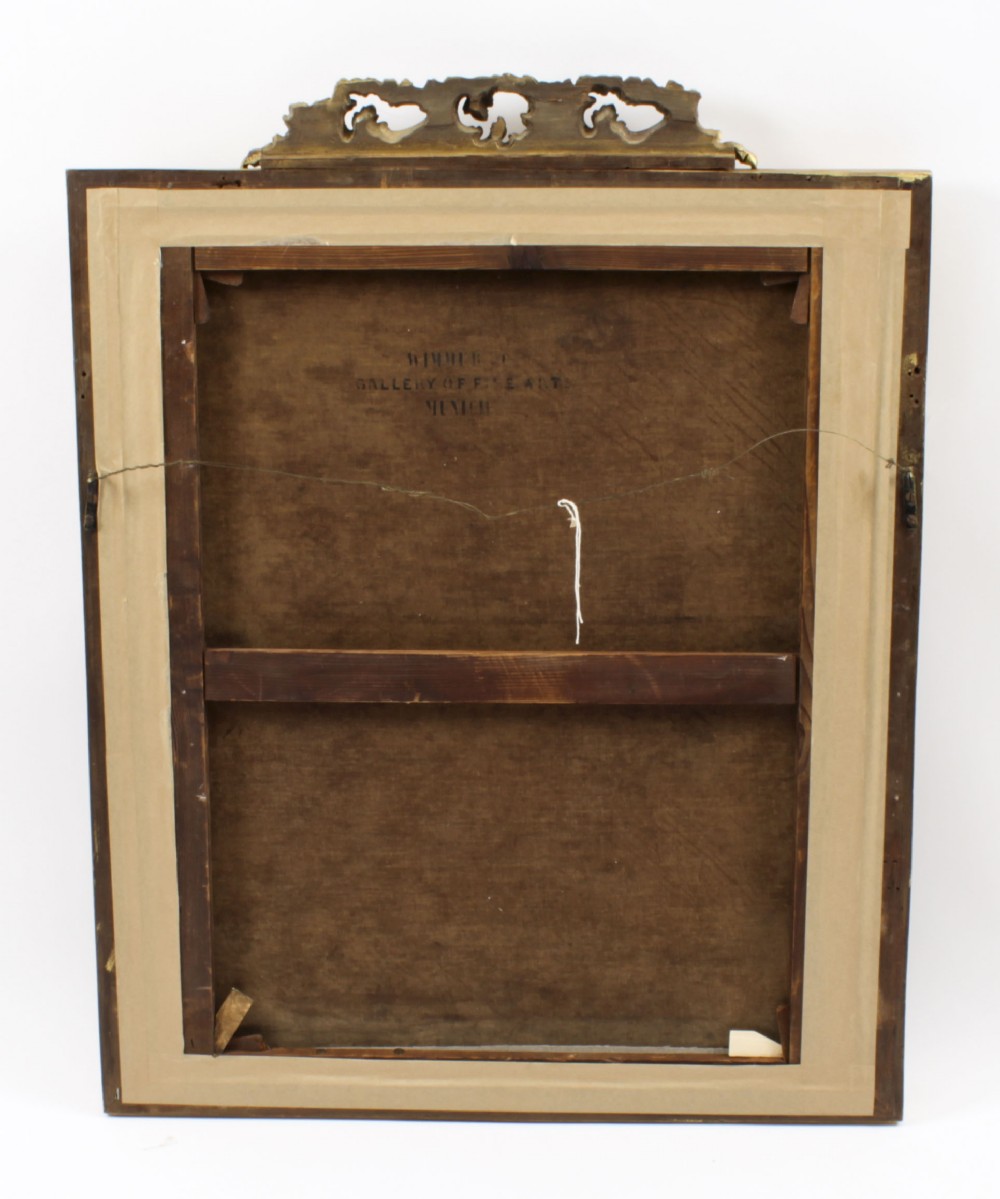
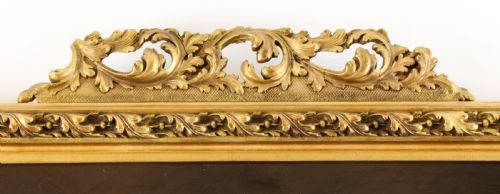
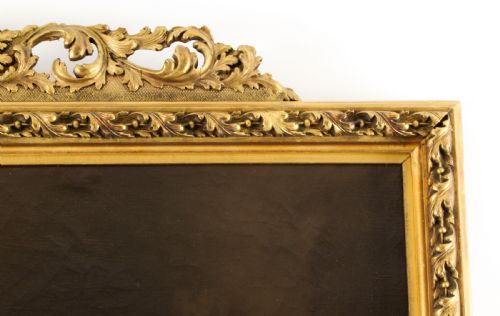
This magnificent painting is housed in its original gilded frame surmounted by a pierced cresting rail of scrolling foliage.

It is beautifully executed and as such would make a lovely addition to your collection. 
Condition:

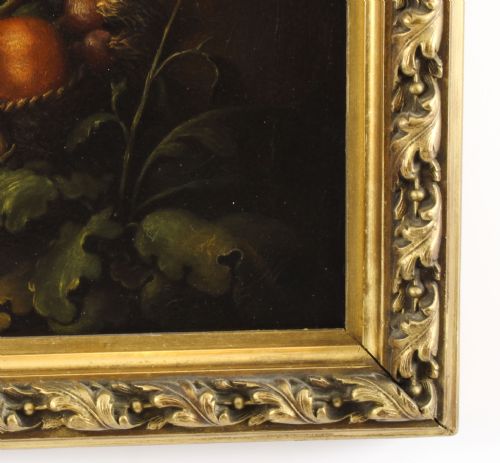
In really excellent condition the painting and frame having been beautifully cleaned, please see photos for confirmation.

Dimensions in cm:

Height 73 cm x Width 61 cm  - Painting

Height 95 cm x Width 72 cm x Depth 6 cm  - Frame
Dimensions in inches:

Height 2 foot, 5 inches x Width 2 foot - Painting

Height 3 feet, 1 inch x Width 2 foot, 4 inches x Depth 2 inches - Frame

Bartolomé Esteban Murillo

Bartolomé Esteban Murillo, (baptized January 1, 1618, Sevilla, Spain—died April 3, 1682, Sevilla), the most popular Baroque religious painter of 17th-century Spain, noted for his idealized, sometimes precious manner. Among his chief patrons were the religious orders, especially the Franciscans, and the confraternities in Sevilla (Seville) and Andalusia.
 

Among Murillo’s earliest works is the Virgin of the Rosary (c. 1642). In the vestigial style of his artistically conservative Sevillian master, Juan del Castillo, this early work combines 16th-century Italian Mannerism and Flemish realism. The 11 paintings that originally hung in the small cloister of San Francisco in Sevilla—e.g., the Ecstasy of St. Diego of Alcalá (1646)—are executed in the more contemporary naturalistic style of the Sevillian school, established by Diego Velázquez and continued by Francisco de Zurbarán. That series is characterized by realism and tenebrism (contrasting light and shade) and use of commonplace models, with an emphasis on genre or scenes of everyday life.
In the 1650s a striking transformation of style occurred, usually attributed to a visit to Madrid, where Murillo undoubtedly met Velázquez and studied the works of Titian, Peter Paul Rubens, and Anthony van Dyck in the royal collections. The softly modeled forms, rich colours, and broad brushwork of the 1652 Immaculate Conception reflect direct visual contact with the art of the 16th-century Venetians and the Flemish Baroque painters. The St. Leandro and St. Isidoro (1655) are even further removed from the simple naturalism of his earlier Franciscan saints. These seated figures, more than life size, are in the grand manner of Baroque portraiture, which had become fashionable at the Spanish court.
 

The Vision of St. Anthony (1656), one of Murillo’s most celebrated pictures, is an early example of his so-called “vaporous” style, which was derived from Venetian painting. In 1660 Murillo was one of the founders and first

Physical Dimensions
Height
95cm (37.40")
Width
72cm (28.35")
Depth
6cm (2.36")
Declaration

Regent Antiques has dated this 18th Century Oil Painting to the 18th Century.

Reference Numbers
Sellingantiques Reference
SA1117241
Dealers Internal Reference
A2853a
Description
This is a delightful antique Spanish oil on canvas painting after Bartolome' Esteban Murillo, depicting two peasant boys eating grapes and melon, Circa 1780 in date. 
It features a dog staring at two seated boys while they eat fruit with a basket of fruit in the foreground.
Regent Antiques

This lively realist portrait of street urchins constitutes an appealing record of everyday life at that time.

fig 1. An 18th-century oil painting depicting two boys with a dog and fruit, housed within a gilded frame with a scrolled top crest.
fig 1. Antique Oil Painting Grape and Melon Eaters After Bartolome' Murillo 18th C

This superbly accomplished painting is executed in the style of Murillo's later works where he continued to evolve to the very end. In the last decade of his life, Murillo took Rubens's lesson even closer to heart, during this period his brushwork became looser and more visible than ever before, sometimes even to the point that the canvases appear unfinished.

fig 2. An 18th-century oil painting depicting two boys with a dog and fruit, housed within a gilded frame with a scrolled top crest.
fig 2. Antique Oil Painting Grape and Melon Eaters After Bartolome' Murillo 18th C

Murillo also reduced his palette to the more sober hues of mauve, grey, brown, and carmine, making his late style more refined than in any previous period.  

His style of painting the street children of his native Seville was unprecedented. He employed great naturalism, employing a sombre palette and strong chiaroscuro, contrasting lights and darks, and very little background detail. They are caught, like a photographic snapshot, playing or eating, but are very rarely aware of an onlooker.

fig 3. An 18th-century oil painting depicting two boys with a dog and fruit, housed within a gilded frame with a scrolled top crest.
fig 3. Antique Oil Painting Grape and Melon Eaters After Bartolome' Murillo 18th C

This magnificent painting is housed in its original gilded frame surmounted by a pierced cresting rail of scrolling foliage.

It is beautifully executed and as such would make a lovely addition to your collection. 

fig 4. An 18th-century oil painting depicting two boys with a dog and fruit, housed within a gilded frame with a scrolled top crest.
fig 4. Antique Oil Painting Grape and Melon Eaters After Bartolome' Murillo 18th C

Condition:

In really excellent condition the painting and frame having been beautifully cleaned, please see photos for confirmation.

Dimensions in cm:

Height 73 cm x Width 61 cm  - Painting

Height 95 cm x Width 72 cm x Depth 6 cm  - Frame

fig 5. An 18th-century oil painting depicting two boys with a dog and fruit, housed within a gilded frame with a scrolled top crest.
fig 5. Antique Oil Painting Grape and Melon Eaters After Bartolome' Murillo 18th C

Dimensions in inches:

Height 2 foot, 5 inches x Width 2 foot - Painting

Height 3 feet, 1 inch x Width 2 foot, 4 inches x Depth 2 inches - Frame

Bartolomé Esteban Murillo

Bartolomé Esteban Murillo, (baptized January 1, 1618, Sevilla, Spain—died April 3, 1682, Sevilla), the most popular Baroque religious painter of 17th-century Spain, noted for his idealized, sometimes precious manner. Among his chief patrons were the religious orders, especially the Franciscans, and the confraternities in Sevilla (Seville) and Andalusia.

fig 6. An 18th-century oil painting depicting two boys with a dog and fruit, housed within a gilded frame with a scrolled top crest.
fig 6. Antique Oil Painting Grape and Melon Eaters After Bartolome' Murillo 18th C


Among Murillo’s earliest works is the Virgin of the Rosary (c. 1642). In the vestigial style of his artistically conservative Sevillian master, Juan del Castillo, this early work combines 16th-century Italian Mannerism and Flemish realism. The 11 paintings that originally hung in the small cloister of San Francisco in Sevilla—e.g., the Ecstasy of St. Diego of Alcalá (1646)—are executed in the more contemporary naturalistic style of the Sevillian school, established by Diego Velázquez and continued by Francisco de Zurbarán. That series is characterized by realism and tenebrism (contrasting light and shade) and use of commonplace models, with an emphasis on genre or scenes of everyday life.

fig 7. An 18th-century oil painting depicting two boys with a dog and fruit, housed within a gilded frame with a scrolled top crest.
fig 7. Antique Oil Painting Grape and Melon Eaters After Bartolome' Murillo 18th C

In the 1650s a striking transformation of style occurred, usually attributed to a visit to Madrid, where Murillo undoubtedly met Velázquez and studied the works of Titian, Peter Paul Rubens, and Anthony van Dyck in the royal collections. The softly modeled forms, rich colours, and broad brushwork of the 1652 Immaculate Conception reflect direct visual contact with the art of the 16th-century Venetians and the Flemish Baroque painters. The St. Leandro and St. Isidoro (1655) are even further removed from the simple naturalism of his earlier Franciscan saints. These seated figures, more than life size, are in the grand manner of Baroque portraiture, which had become fashionable at the Spanish court.

fig 8. An 18th-century oil painting depicting two boys with a dog and fruit, housed within a gilded frame with a scrolled top crest.
fig 8. Antique Oil Painting Grape and Melon Eaters After Bartolome' Murillo 18th C


The Vision of St. Anthony (1656), one of Murillo’s most celebrated pictures, is an early example of his so-called “vaporous” style, which was derived from Venetian painting. In 1660 Murillo was one of the founders and first

Height
95cm (37.40")
Width
72cm (28.35")
Depth
6cm (2.36")
Date of Manufacture

Regent Antiques has dated this 18th Century Oil Painting to the 18th Century.

Reference Numbers
Sellingantiques Ref
SA1117241
Dealers Internal Ref
A2853a
Regent Antiques
Regent Antiques
Sellingantiques verified Since Sep 2016

We specialise in english and continental furniture, silver, porcelain and decorative items.

Dealer Profile

You can view the stock and full dealer information on the Regent Antiques Profile Page

Trade Associations

Regent Antiques is a registered member of LAPADA  CINOA
PDF SHARE
SAVE
An 18th-century oil painting depicting two boys with a dog and fruit, housed within a gilded frame with a scrolled top crest.
1 / 13
Archive I An 18th-century oil painting depicting two boys with a dog and fruit, housed within a gilded frame with a scrolled top crest.

Antique Oil Painting Grape and Melon Eaters After Bartolome' Murillo 18th C
Archive II An 18th-century oil painting depicting two boys with a dog and fruit, housed within a gilded frame with a scrolled top crest. View II
Archive III An 18th-century oil painting depicting two boys with a dog and fruit, housed within a gilded frame with a scrolled top crest. View III
Archive IV An 18th-century oil painting depicting two boys with a dog and fruit, housed within a gilded frame with a scrolled top crest. View IV
Archive V An 18th-century oil painting depicting two boys with a dog and fruit, housed within a gilded frame with a scrolled top crest. View V
Archive VI An 18th-century oil painting depicting two boys with a dog and fruit, housed within a gilded frame with a scrolled top crest. View VI
Archive VII An 18th-century oil painting depicting two boys with a dog and fruit, housed within a gilded frame with a scrolled top crest. View VII
Archive VIII An 18th-century oil painting depicting two boys with a dog and fruit, housed within a gilded frame with a scrolled top crest. View VIII
Archive IX An 18th-century oil painting depicting two boys with a dog and fruit, housed within a gilded frame with a scrolled top crest. View IX
Archive X An 18th-century oil painting depicting two boys with a dog and fruit, housed within a gilded frame with a scrolled top crest. View X
Archive XI An 18th-century oil painting depicting two boys with a dog and fruit, housed within a gilded frame with a scrolled top crest. View XI
Archive XII An 18th-century oil painting depicting two boys with a dog and fruit, housed within a gilded frame with a scrolled top crest. View XII
Archive XIII An 18th-century oil painting depicting two boys with a dog and fruit, housed within a gilded frame with a scrolled top crest. View XIII
FURTHER BROWSING

Visitors also looked at these ⇣

Enlarged Archival View
Location
Manor Warehouse
318 Green Lanes
London
N4 1BX
United Kingdom
Verified Since Sep 2016
Items For Sale 659
Items Sold 2,608
Regent Antiques
Regent Antiques
Verified Since Sep 2016
View Dealer Info
Location: Manor Warehouse, 318 Green Lanes, London, N4 1BX, United Kingdom
Verified
Sep 2016
For Sale
659
Sold
2,608
An 18th-century oil painting depicting two boys with a dog and fruit, housed within a gilded frame with a scrolled top crest.
Antique Oil Painting Grape and Melon Eaters After Bartolome' Murillo 18th C
Ref: SA1117241
An 18th-century oil painting depicting two boys with a dog and fruit, housed within a gilded frame with a scrolled top crest.
Detail View 1
Detail View 2
Detail View 3
Detail View 4
Detail View 5
Detail View 6
Detail View 7
Detail View 8
Detail View 9
Detail View 10
Detail View 11
Detail View 12
Archival Detail
Every single antique dealer on our platform is individually approved by our internal team. We verify their professional trade history, ethical standards, and photographic quality to ensure a secure, high-standard buying environment. Upon joining, every dealer agrees to a strict 9-point code of conduct. While issues can occasionally arise, our dealers typically resolve them swiftly and directly with the buyer. In fact, since our founding in 2002, Sellingantiques has only had to step in to help resolve an issue on roughly five occasions—a true testament to the quality of our dealers and their dedication to your happiness.
Our dealers are highly experienced in packing and shipping fragile, high-value antiques. Because you are in direct contact with the dealer, you will be able to easily go through all available shipping and insurance options together to ensure your item arrives safely.
Antiques are the ultimate green purchase. By choosing historical pieces over newly manufactured goods, you completely eliminate the carbon footprint of modern mass production while preserving exceptional, timeless craftsmanship.

Baroque genre paintings from the 18th century frequently depict everyday scenes, street urchins, and rural life using dramatic contrast between light and shadow, known as chiaroscuro.

Paintings from this period were executed using oil-based pigments applied to hand-stretched linen canvas or wood panels, finished with natural resin varnishes and housed in carved giltwood frames.

Period pieces display age-appropriate craquelure patterns across the paint surface, hand-cut canvas stretchers, hand-forged tacks, and natural oxidisation on the reverse of the frame.

Anchor the artwork as a central focal point above a console table or mantelpiece to allow the rich, dramatic tones and ornate gilding to contrast against contemporary neutral walls.

Keep the artwork away from direct sunlight, humidity fluctuations, and heat sources, dusting gently with a soft dry brush while avoiding water, chemical cleaners, or damp cloths.
items
Add keywords to the filter
Price
£100
£250000
Era
Movements
Material
Origin
Stock Location
Freshness
Online Payments
Categories