12,704  PAGES BROWSED TODAY PAGES TODAY 36  ANTIQUES UPLOADED TODAY NEW ARRIVALS
ID #SA1167003
FOR SALE
£1,050
Email
Save
A Ship Entering the Tamar - Antique Oil Painting
Rue des Fontenelles
for sale €1,229     $1,334
£1,050

Rue des Fontenelles

Sellingantiques Verified Since Mar 2015
View Dealers Stock Page
  • About Us
    Specialists in french antiiques, decorative objects and french and european paintings.
Id #SA1167003
PDF SHARE
SAVE

A Ship Entering the Tamar - Antique Oil Painting

18th century
Description

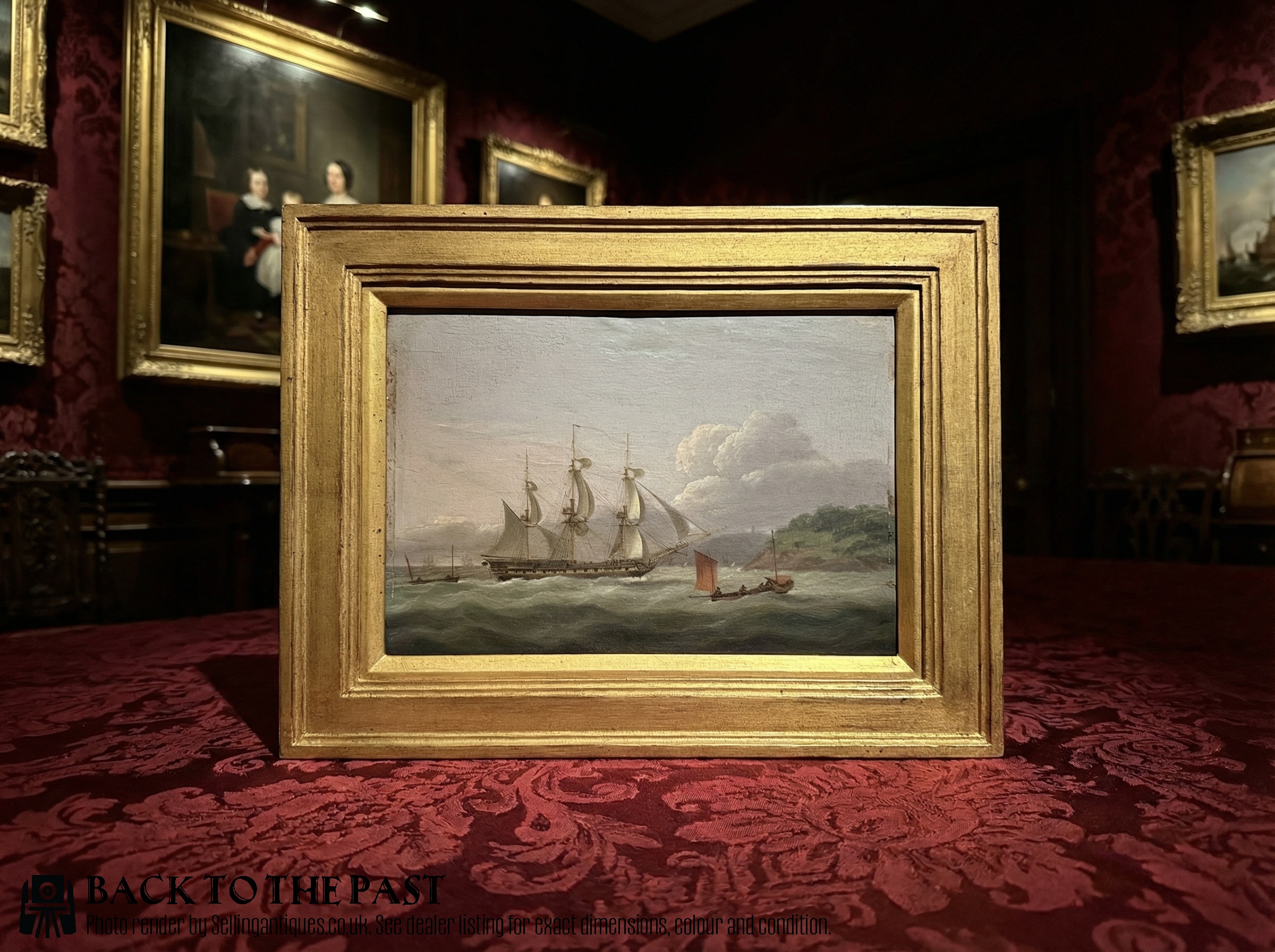
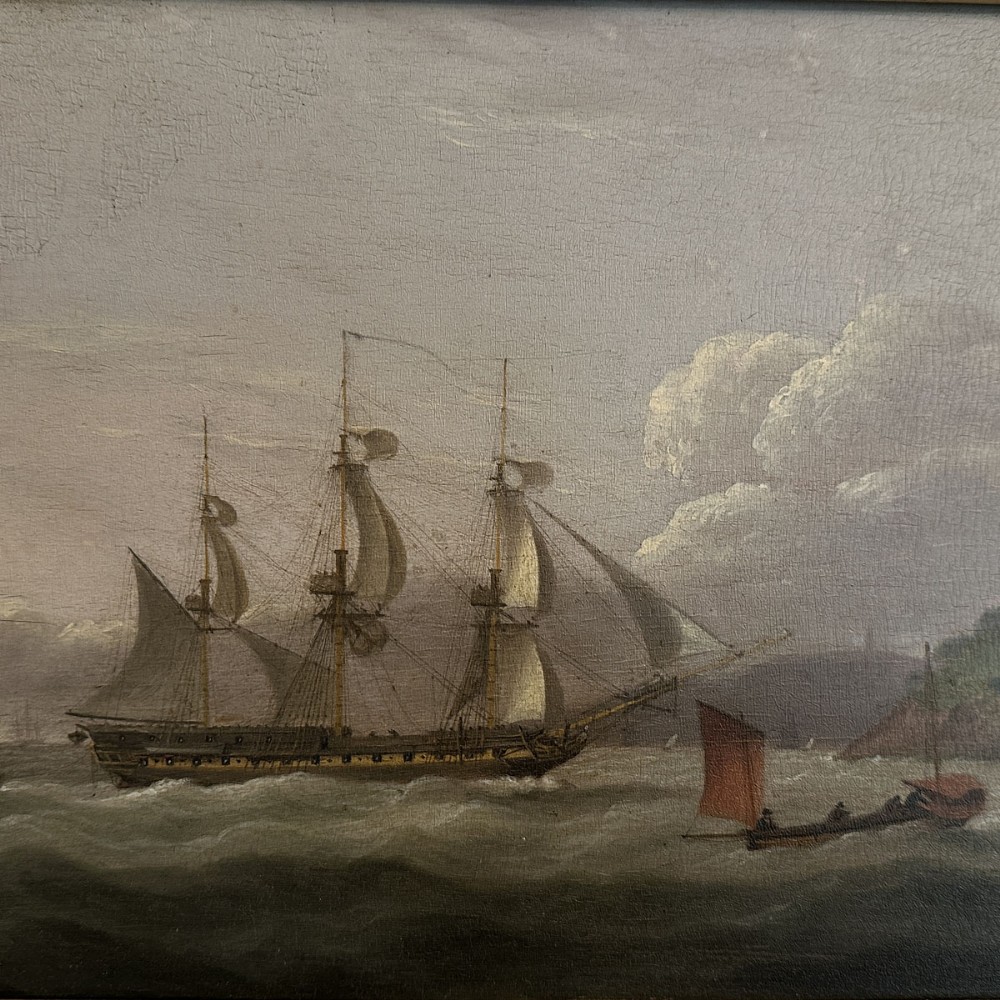
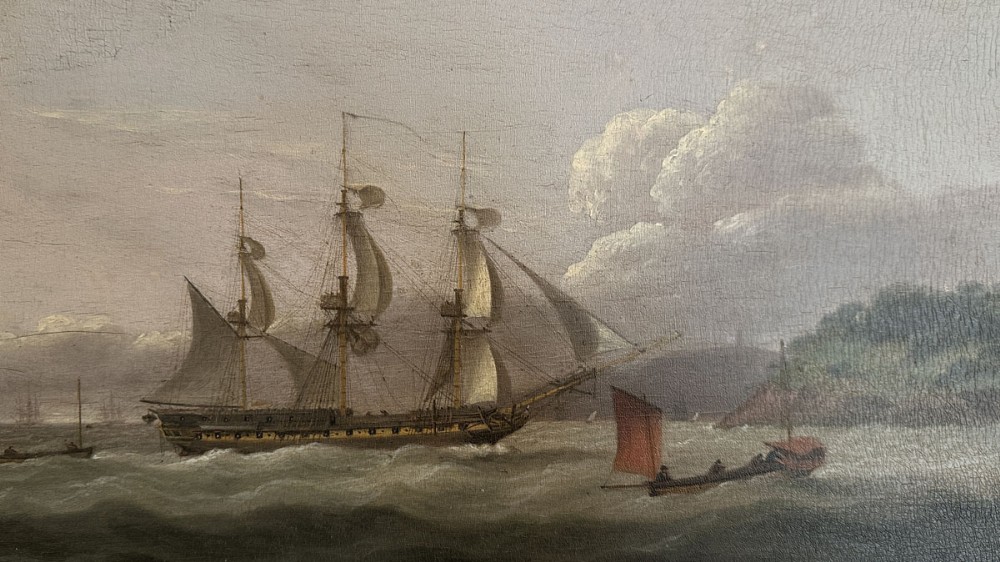
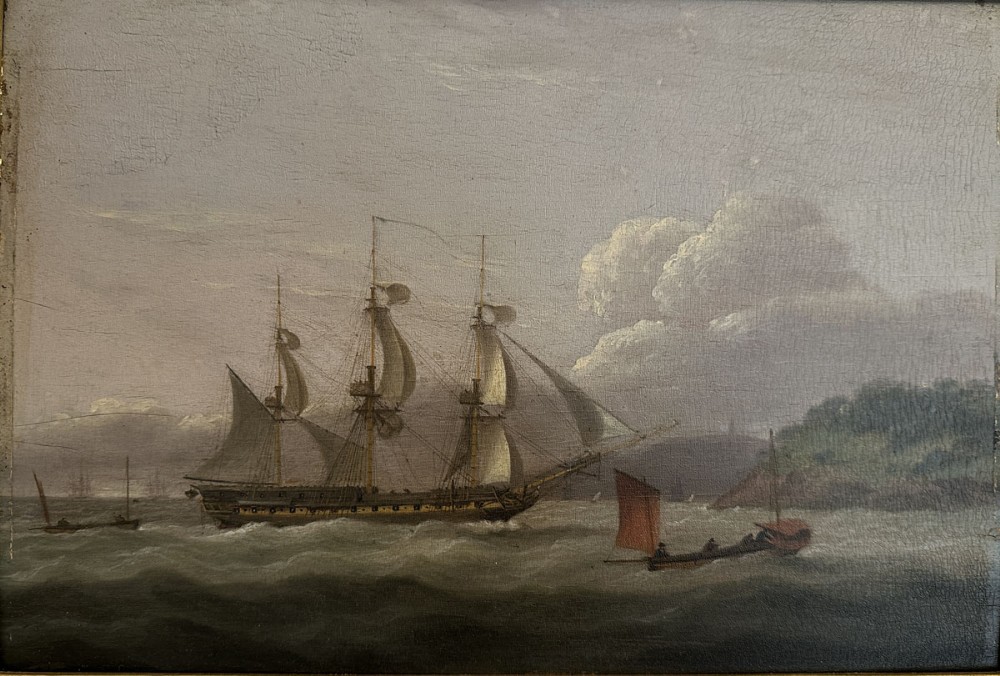
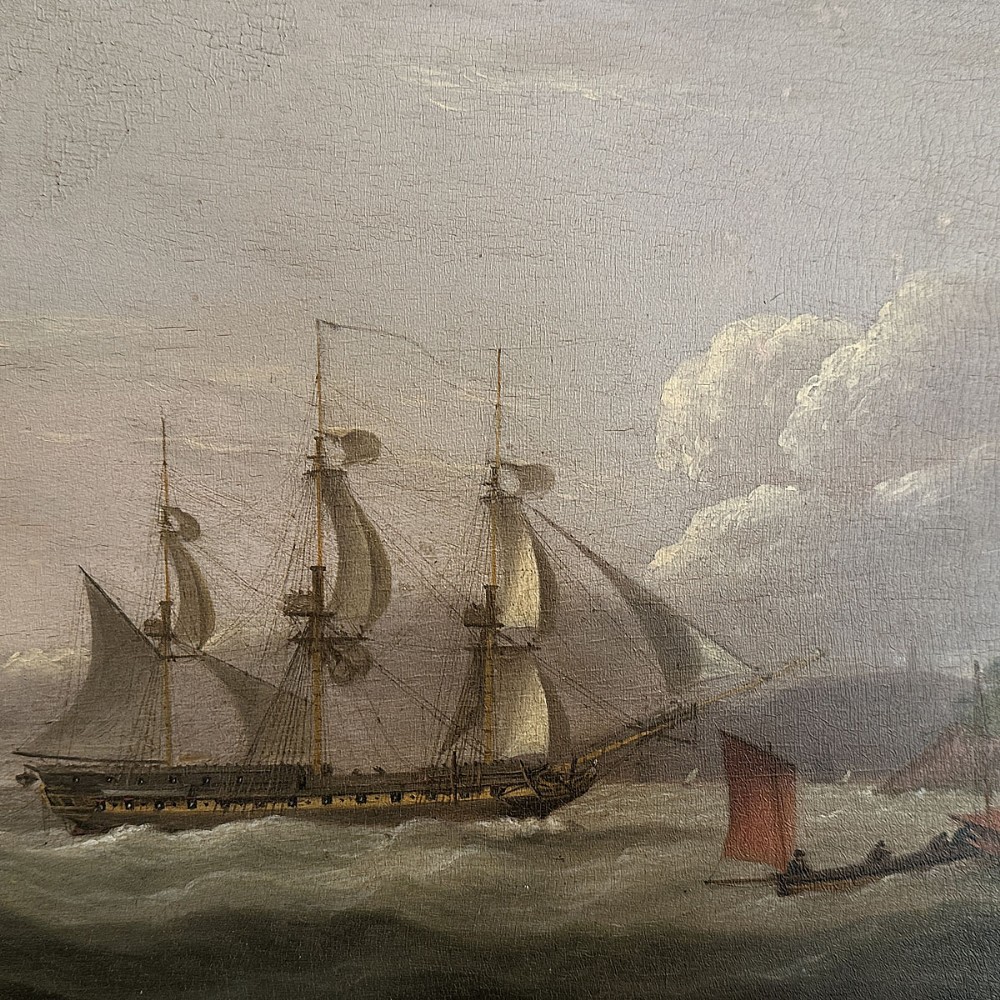
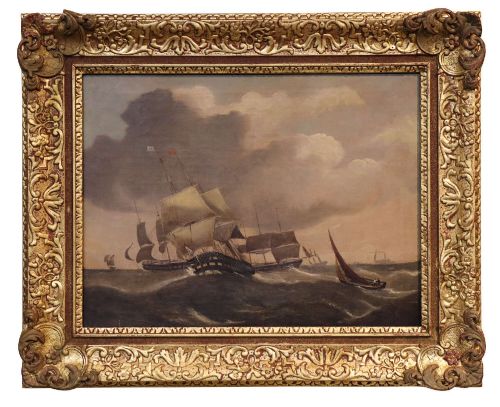
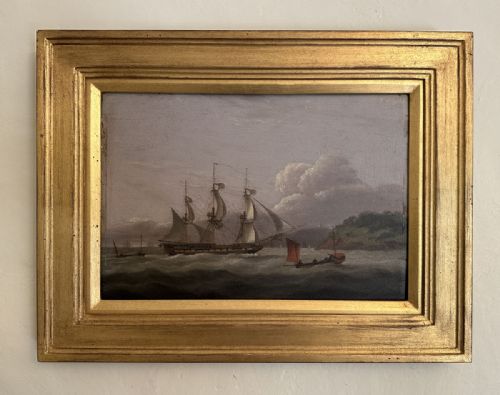
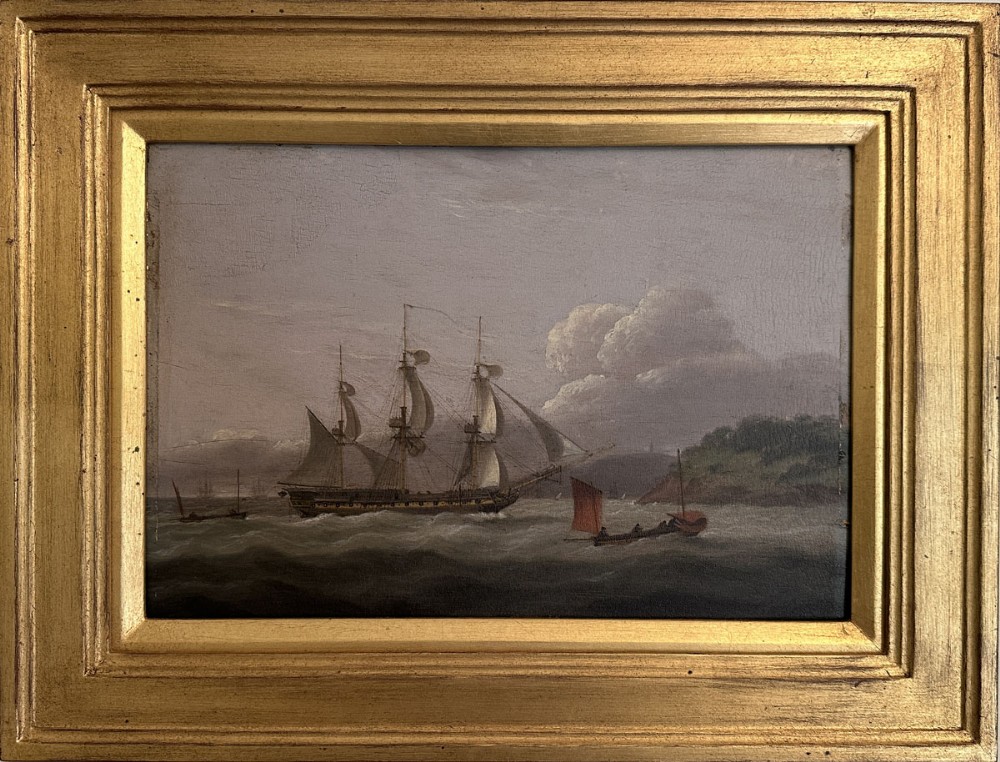
Late 18th/early 19th century marine showing a ship entering the Tamar by the British artist Thomas Luny (1759-1837). The oil on wooden panel has signs of age and is mounted in a simple gilt frame.

Thomas Luny was born in Cornwall and was an English artist and painter, mostly of seascapes and other marine-based works. At the age of eleven, Luny left Cornwall to live in London where he became the apprentice of Francis Holman, a marine painter who would have a great and long lasting artistic influence on Luny. He remained in Holman's London studio until 1780 which, was first situated in Broad Street, St. George’s, and later relocated to Old Gravel Lane. In September 1777 he visited France and it was during this particular expedition, Luny almost certainly strayed from France itself. His first exhibited picture in London, seen at the Society of Artists that same year, was given the title A distant view of the island of Madeira and Porto Santo, suggesting that an engraving had inspired his choice of subject. Similarly, it is unlikely that Luny was on hand for the Battle of the Nile, 1798, and the bombardment of Algiers, 1816, both of which he illustrated with dramatic atmosphere and credible realism. After leaving Holman's studio in 1780, Luny moved to Leadenhall Street during 1783. It was around this time that Luny was frequently exhibiting at the Royal Academy, in a total of twenty-nine exhibitions between 1780 and 1802. In Leadenhall Street, Luny became acquainted with a "Mr. Merle", a dealer and framer of paintings who promoted Luny's paintings for over twenty years, to great success. Luny also found a wealthy source of business in Leadenhall Street, where the British East India Company had their headquarters; their officers commissioned many paintings and portraits from Luny. This relationship between the Company and Luny also had several non-monetary benefits for Luny; it seems probable that, considering the great detail and realistic look of many of his sketches of locations such as Naples, Gibraltar, and Charleston, South Carolina, Luny was occasionally invited as a guest on the Company's ships on special occasions and voyages. Several years later, in 1807, Luny decided to move again, this time to Teignmouth in Devon. While he received a number of commissions (mostly from ex-mariners, local gentry and the like), and he seemed to be as successful in his work as he was in London, Luny was by that time suffering with arthritis in both of his hands. This, however, did not seem to have much impact on the quality of his artistic work, and it did not appear to serve to slow or deter him in his work in the slightest. In fact, he continued painting until his death on September 30, 1837.
His work is exhibited at the National Maritime Museum at Greenwich, and in the Royal Albert Memorial Museum in Exeter. It is estimated that he produced over 3,000 works in his lifetime, with over 2,200 between 1807 and his death.

Dimensions - 49 x 38 cm

Physical Dimensions
Height
38cm (14.96")
Width
49cm (19.29")
Depth
4cm (1.57")
Declaration

Rue des Fontenelles has dated this Antique Maritime Oil Painting to the 18th Century.

Reference Numbers
Sellingantiques Reference
SA1167003
Description
Late 18th/early 19th century marine showing a ship entering the Tamar by the British artist Thomas Luny (1759-1837). The oil on wooden panel has signs of age and is mounted in a simple gilt frame.
Thomas Luny was born in Cornwall and was an English artist and painter, mostly of seascapes and other marine-based works.
Rue des Fontenelles

At the age of eleven, Luny left Cornwall to live in London where he became the apprentice of Francis Holman, a marine painter who would have a great and long lasting artistic influence on Luny. He remained in Holman's London studio until 1780 which, was first situated in Broad Street, St. George’s, and later relocated to Old Gravel Lane. In September 1777 he visited France and it was during this particular expedition, Luny almost certainly strayed from France itself. His first exhibited picture in London, seen at the Society of Artists that same year, was given the title A distant view of the island of Madeira and Porto Santo, suggesting that an engraving had inspired his choice of subject. Similarly, it is unlikely that Luny was on hand for the Battle of the Nile, 1798, and the bombardment of Algiers, 1816, both of which he illustrated with dramatic atmosphere and credible realism. After leaving Holman's studio in 1780, Luny moved to Leadenhall Street during 1783. It was around this time that Luny was frequently exhibiting at the Royal Academy, in a total of twenty-nine exhibitions between 1780 and 1802. In Leadenhall Street, Luny became acquainted with a "Mr. Merle", a dealer and framer of paintings who promoted Luny's paintings for over twenty years, to great success. Luny also found a wealthy source of business in Leadenhall Street, where the British East India Company had their headquarters; their officers commissioned many paintings and portraits from Luny. This relationship between the Company and Luny also had several non-monetary benefits for Luny; it seems probable that, considering the great detail and realistic look of many of his sketches of locations such as Naples, Gibraltar, and Charleston, South Carolina, Luny was occasionally invited as a guest on the Company's ships on special occasions and voyages. Several years later, in 1807, Luny decided to move again, this time to Teignmouth in Devon. While he received a number of commissions (mostly from ex-mariners, local gentry and the like), and he seemed to be as successful in his work as he was in London, Luny was by that time suffering with arthritis in both of his hands. This, however, did not seem to have much impact on the quality of his artistic work, and it did not appear to serve to slow or deter him in his work in the slightest. In fact, he continued painting until his death on September 30, 1837.

fig 1. An antique oil painting depicting a three-masted sailing vessel amidst ocean waves near a hilly coastline under a cloudy sky.
fig 1. A Ship Entering the Tamar - Antique Oil Painting

His work is exhibited at the National Maritime Museum at Greenwich, and in the Royal Albert Memorial Museum in Exeter. It is estimated that he produced over 3,000 works in his lifetime, with over 2,200 between 1807 and his death.

Dimensions - 49 x 38 cm

Height
38cm (14.96")
Width
49cm (19.29")
Depth
4cm (1.57")
Date of Manufacture

Rue des Fontenelles has dated this Antique Maritime Oil Painting to the 18th Century.

Reference Numbers
Sellingantiques Ref
SA1167003
Rue des Fontenelles
Sellingantiques verified Since Mar 2015

Specialists in french antiiques, decorative objects and french and european paintings.

Dealer Profile

You can view the stock and full dealer information on the Rue des Fontenelles Profile Page

PDF SHARE
SAVE
An antique oil painting depicting a three-masted sailing vessel amidst ocean waves near a hilly coastline under a cloudy sky.
1 / 9
Archive I An antique oil painting depicting a three-masted sailing vessel amidst ocean waves near a hilly coastline under a cloudy sky.

A Ship Entering the Tamar - Antique Oil Painting
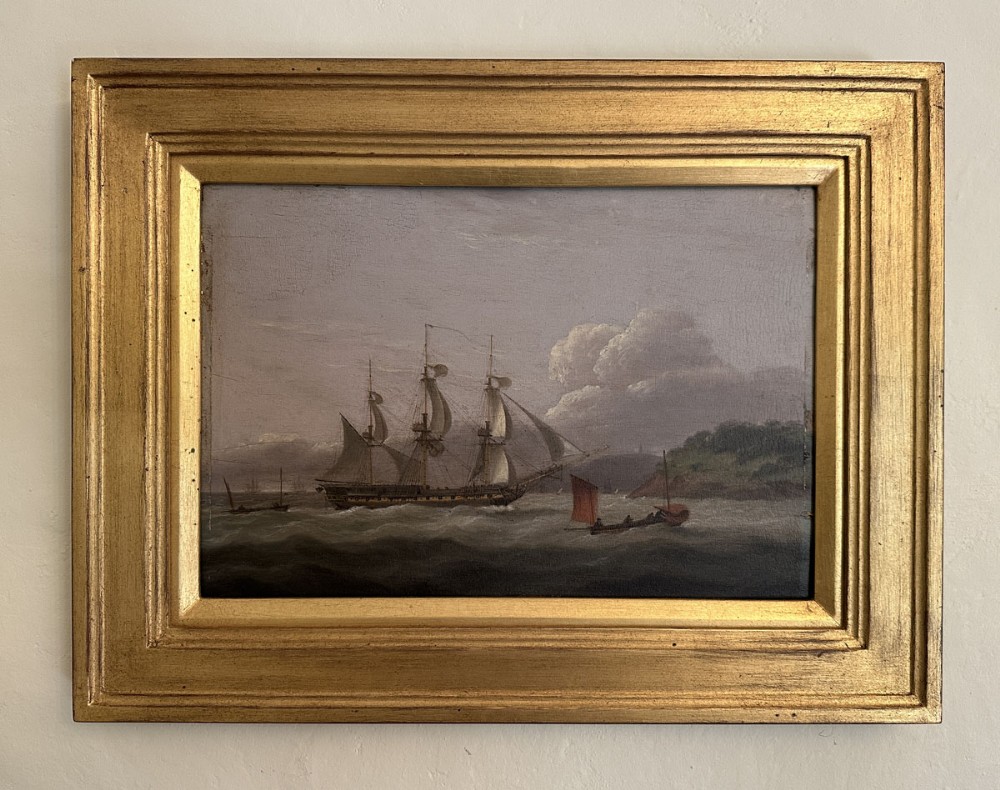
Archive II An antique oil painting depicting a three-masted sailing vessel amidst ocean waves near a hilly coastline under a cloudy sky. View II
Archive III An antique oil painting depicting a three-masted sailing vessel amidst ocean waves near a hilly coastline under a cloudy sky. View III
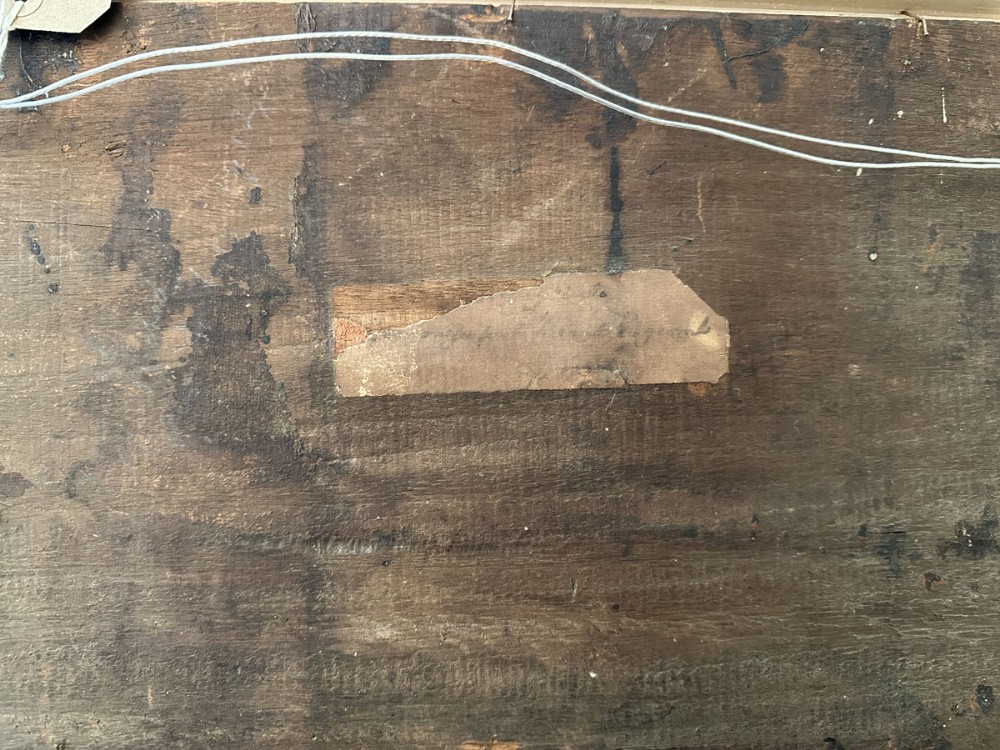
Archive IV Scale Reference for An antique oil painting depicting a three-masted sailing vessel amidst ocean waves near a hilly coastline under a cloudy sky.
Archive V An antique oil painting depicting a three-masted sailing vessel amidst ocean waves near a hilly coastline under a cloudy sky. View V
Archive VI An antique oil painting depicting a three-masted sailing vessel amidst ocean waves near a hilly coastline under a cloudy sky. View VI
Archive VII An antique oil painting depicting a three-masted sailing vessel amidst ocean waves near a hilly coastline under a cloudy sky. View VII
Archive VIII An antique oil painting depicting a three-masted sailing vessel amidst ocean waves near a hilly coastline under a cloudy sky. View VIII
Archive IX An antique oil painting depicting a three-masted sailing vessel amidst ocean waves near a hilly coastline under a cloudy sky. View IX
FURTHER BROWSING

Visitors also looked at these ⇣

Enlarged Archival View
Location
Chagford
Devon
United Kingdom
Verified Since Mar 2015
Items For Sale 155
Items Sold 1,180
Rue des Fontenelles
Verified Since Mar 2015
View Dealer Info
Location: Chagford, Devon, United Kingdom
Verified
Mar 2015
For Sale
155
Sold
1,180
An antique oil painting depicting a three-masted sailing vessel amidst ocean waves near a hilly coastline under a cloudy sky.
A Ship Entering the Tamar - Antique Oil Painting
Ref: SA1167003
An antique oil painting depicting a three-masted sailing vessel amidst ocean waves near a hilly coastline under a cloudy sky.
Detail View 1
Detail View 2
Detail View 3
Detail View 4
Detail View 5
Detail View 6
Detail View 7
Scale Reference
Archival Detail
Every single antique dealer on our platform is individually approved by our internal team. We verify their professional trade history, ethical standards, and photographic quality to ensure a secure, high-standard buying environment. Upon joining, every dealer agrees to a strict 9-point code of conduct. While issues can occasionally arise, our dealers typically resolve them swiftly and directly with the buyer. In fact, since our founding in 2002, Sellingantiques has only had to step in to help resolve an issue on roughly five occasions—a true testament to the quality of our dealers and their dedication to your happiness.
Our dealers are highly experienced in packing and shipping fragile, high-value antiques. Because you are in direct contact with the dealer, you will be able to easily go through all available shipping and insurance options together to ensure your item arrives safely.
Antiques are the ultimate green purchase. By choosing historical pieces over newly manufactured goods, you completely eliminate the carbon footprint of modern mass production while preserving exceptional, timeless craftsmanship.

Maritime painting emerged as a major artistic movement in Britain during the 17th and 18th centuries, influenced by Dutch sea painters. It documented naval history, trade routes, and vessel designs, becoming an established genre supported by naval officers and private collectors.

Artists typically painted with hand-ground oil pigments mixed with linseed oil, applied onto stretched linen or cotton canvas. Wooden stretcher bars held the fabric taut, and paintings were frequently sealed with natural dammar or mastic varnishes.

Authentic period paintings display uniform surface craquelure, natural age-related yellowing of varnish, and hand-woven canvas textures. Historical accuracy in vessel rigging, flags, and naval architecture also helps verify age and origin.

A maritime oil painting functions as a focal point above a mantelpiece, a sideboard, or within a dark-painted library space. It pairs effectively with natural timber, brass accents, and structured architectural mouldings.

Keep the artwork away from direct sunlight, radiator heat sources, and areas of high humidity to prevent canvas warping and paint flaking. Clean gently using a dry, soft-feather duster and consult a professional conservator for varnish restoration.
items
Add keywords to the filter
Price
£100
£250000
Era
Movements
Material
Origin
Stock Location
Freshness
Online Payments
Categories