



Cornwall Maritime Wall Art
Cornwall maritime wall art brings the rugged harbours, fishing luggers, and Atlantic light of the south-west directly into a room through historic paintings and watercolours.
Cornwall Maritime Wall Art
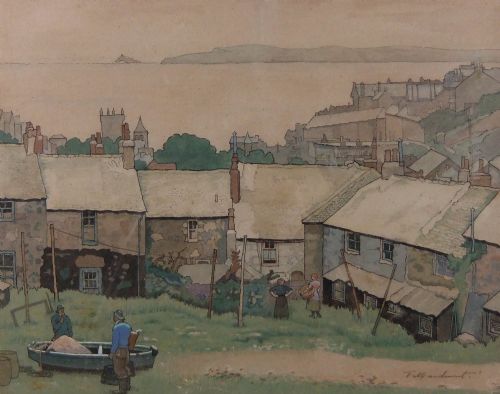
When you search for cornwall maritime wall art, you encounter a focused selection of historic paintings and watercolours depicting the harbours, coasts, and fishing fleets of the south-west. The pieces you are most likely to meet on this page range from late nineteenth century watercolours of St Ives and Newlyn to early twentieth century oil paintings capturing Mevagissey, Polperro, and Falmouth.
The regional schools of painting dominate this selection, notably the Newlyn and St Ives groups, which recorded local fishermen, coastal villages, and maritime activity in great detail. These works preserve a visual record of historic Cornish ports before modern alterations transformed the waterfronts.
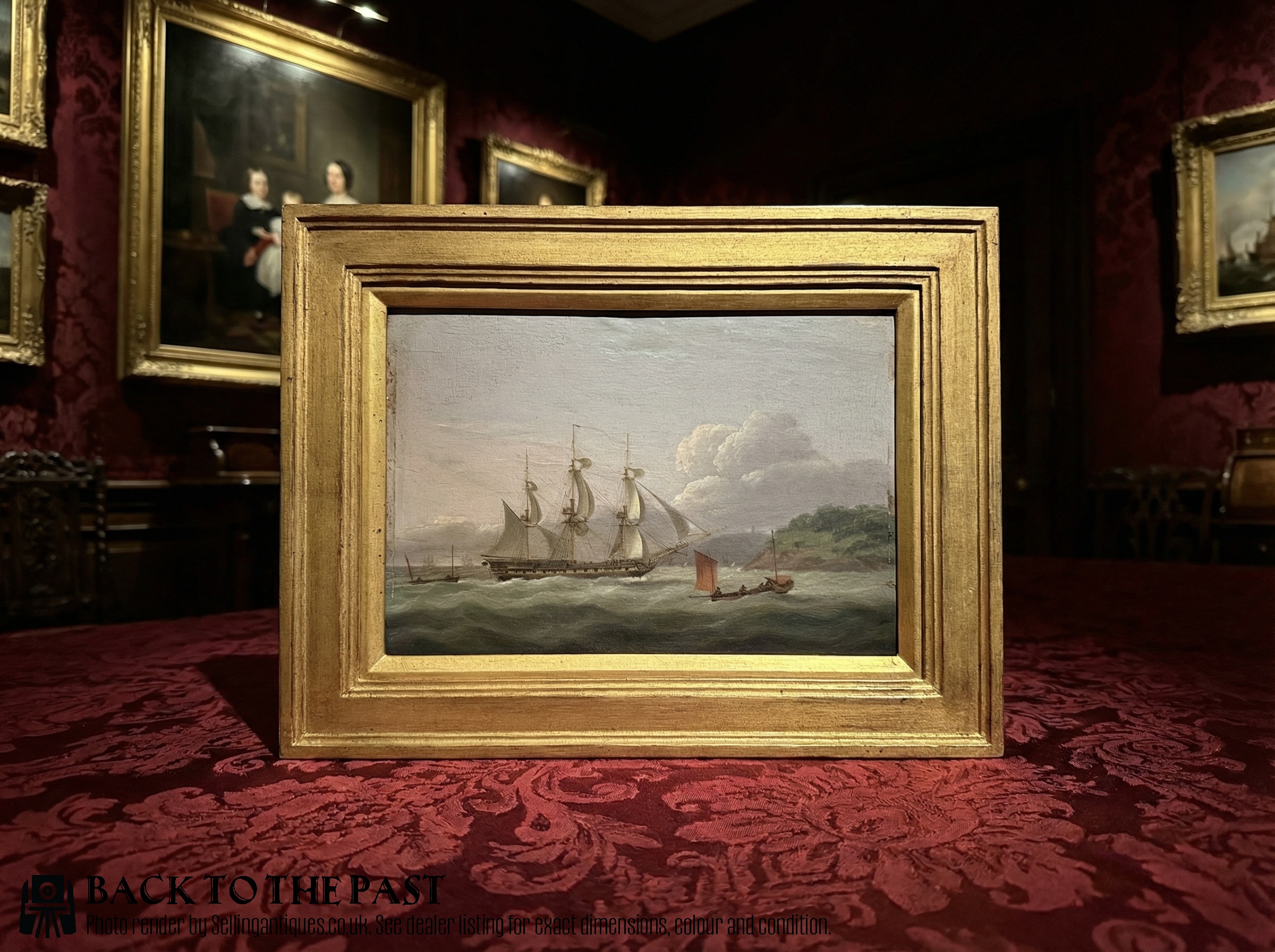
Framed artwork appears frequently, often housed in period wood or gilt wood frames that complement the maritime subject matter. Subjects range from tranquil harbour scenes at low tide to dramatic coastal seascapes under variable Atlantic skies.
Materials and Techniques
The works rely upon traditional artist materials, predominantly oil paint on canvas or watercolour applied to paper. Canvas supports often carry textured oil brushwork that captures the weight of the sea and the surfaces of wooden boats, while paper watercolours utilise transparent washes to render coastal light and open skies.
Frames are constructed from wood, occasionally with gilt decoration, providing structural support and protection behind glass for the more delicate paper works and watercolours. Pastels and woodblock prints also appear among the varied media, offering different surface textures within the same maritime theme.
Listings span from the eighteenth century to the mid twentieth century, featuring oils, watercolours, pastels, and woodblock prints.
Assessing Quality and Execution
Quality rests upon the artist's ability to capture atmospheric light and spatial depth, distinguishing accomplished plein-air observation from formulaic topographical illustration. Stronger pieces demonstrate confident brushwork, particularly in the rendering of water, rigging, and architectural forms along the quayside.
Condition of the medium and the paper or canvas plays a significant role, with stable pigments and minimal fading preserving the original tonal balance. The presence of a period frame appropriate to the date of the artwork further elevates the integrity of the piece.
William Banks Fortescue·Thomas Maidment·George F Pennington·Edward Matthew Elliott·Charles Napier Hemy·Richard Harry Carter·Gyrth Russell·William Pitt·Ernest F Hill·Ralph Todd·William Lee Hankey·Hendrik Yan Wolter·S J Lamorna Birch·Henry Scott Tuke
The Cornwall Maritime Wall Art Glossary
- Newlyn School
- An art colony based in the Cornish fishing village of Newlyn from the late nineteenth century onwards. Artists focused on plein-air realism, depicting local fisherfolk and coastal life.
- St Ives School
- A twentieth century grouping of artists associated with the Cornish port of St Ives. Their work evolved from traditional maritime realism towards varied modernist interpretations.
- Lugger
- A traditional two-masted fishing vessel with lug sails common around the Cornish coast. These boats feature frequently in regional marine art.
- Watercolour
- A painting method in which the pigments are suspended in a water-based solution. It is traditionally applied to paper to achieve luminous coastal effects.
- Gilt Wood
- Wood carved and coated with a thin layer of gold leaf or metallic gilt paint. It is commonly found on period picture frames.
Cornwall Maritime Wall Art: Frequently Asked Questions
What subjects appear in this art?
The artworks primarily depict Cornish harbours, fishing boats, coastal villages, and maritime shipping scenes. Locations such as St Ives, Mevagissey, Polperro, and Falmouth recur frequently across the different periods.
Artists focused on the daily labour of fishermen, local craft moored in tidal harbours, and the changing weather along the Atlantic coastline.
How should I frame and hang these pieces?
Many works arrive in historic wood or gilt wood frames that suit the Victorian and early twentieth century origins of the paintings. It is best to preserve these original housings where structural stability allows.
Hang the artwork away from direct sunlight and damp environments to protect the paper, canvas, and pigments from fading or moisture damage.
How do I distinguish between periods?
Late nineteenth century pieces often reflect traditional Victorian fine art techniques with detailed draughtsmanship and narrative focus. Edwardian and 1920s works frequently show the influence of plein-air observation and the Newlyn or St Ives artistic communities.
Mid-century examples tend towards broader brushwork and lighter palettes, reflecting shifts in British painting styles after the First World War.
What is the difference between oil and watercolour works here?
Oil paintings use heavy pigment suspension on canvas or wood boards, offering rich textures and deep tones well suited to dramatic seascapes and moody skies. Watercolours utilise paper supports under glass, delivering lighter, translucent effects that capture subtle coastal light.
Both mediums were widely practised by artists working along the Cornish coast during the historic art colony era.