



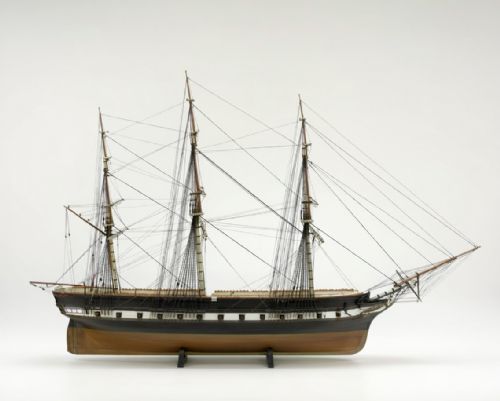
Three Masted Ship Painting
These three masted ship painting works bring the age of sail into a room with canvas, oil, and wood.
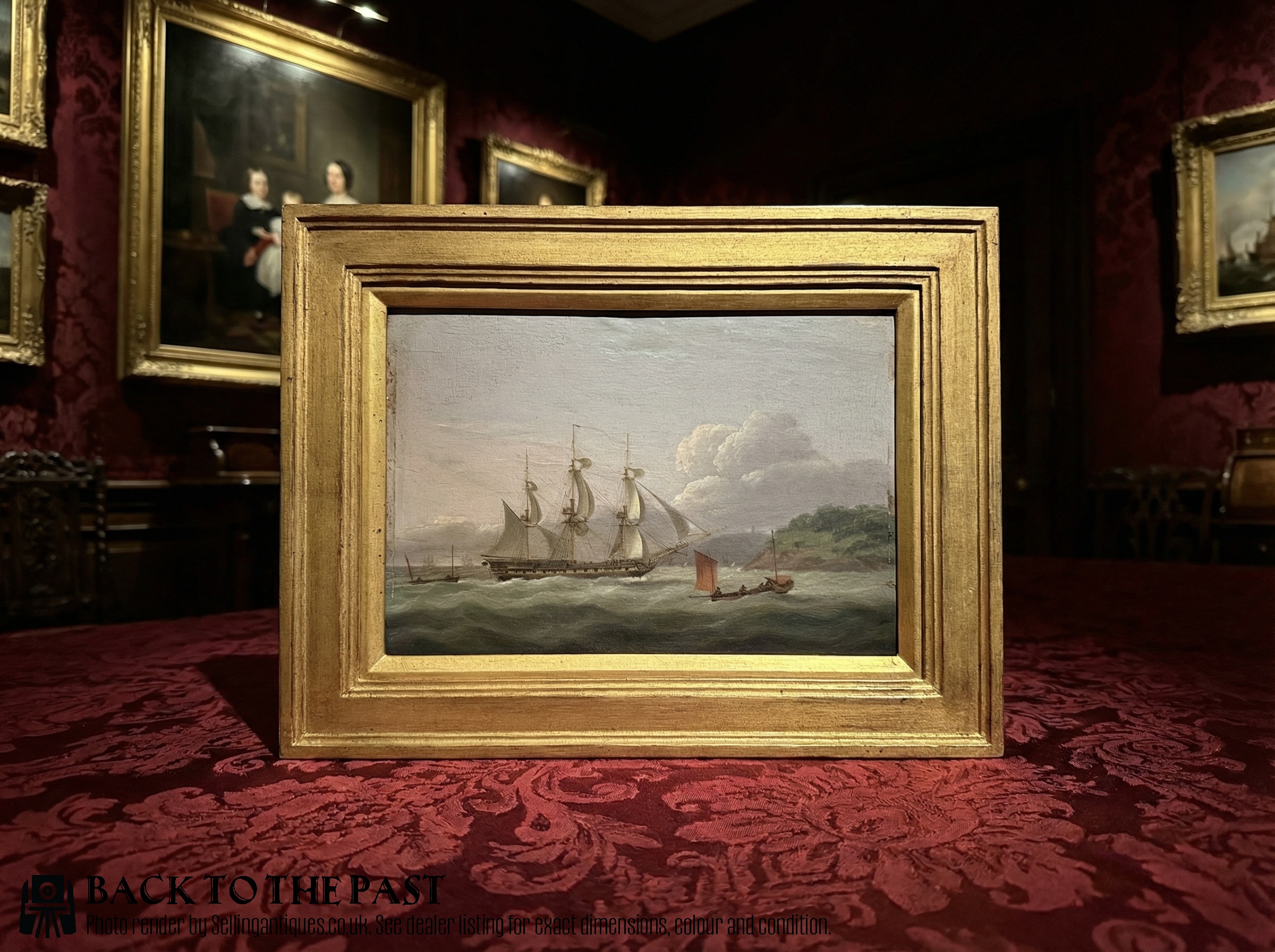
Three Masted Ship Painting
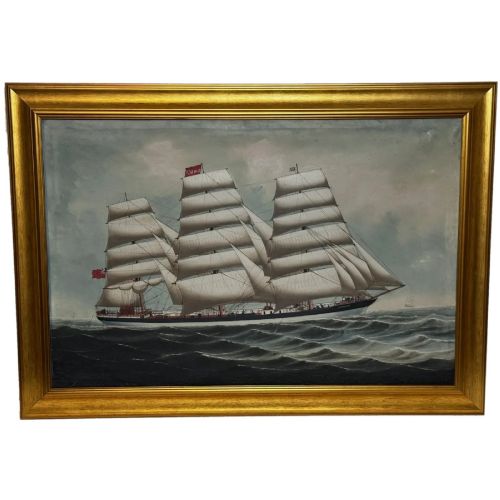
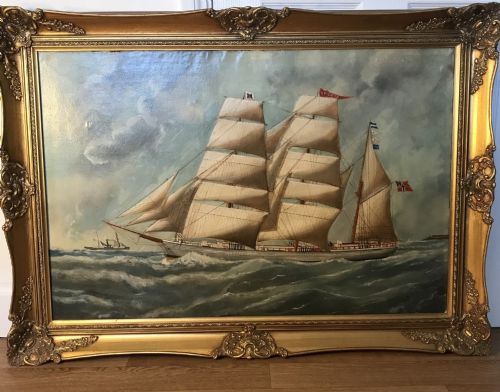
A three masted ship painting captures the scale and rigging of large sailing vessels across the eighteenth, nineteenth, and twentieth centuries. These works range from detailed oil on canvas scenes to naive depictions and layered shadow boxes.
Most examples found here date from the nineteenth century or the Edwardian period, often showing schooners, barques, and clippers under full sail or in stormy seas. Artists recorded named vessels such as the Panay and the Hippolyta alongside anonymous historical craft.
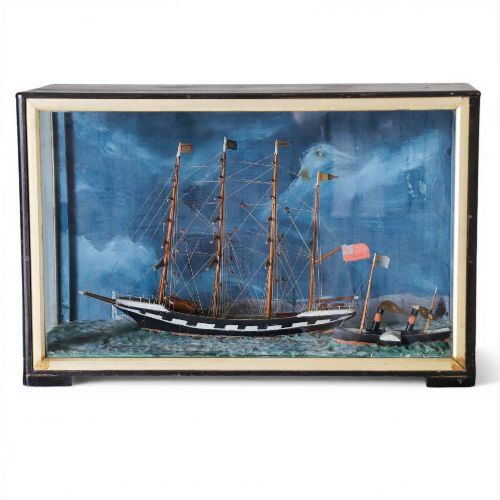
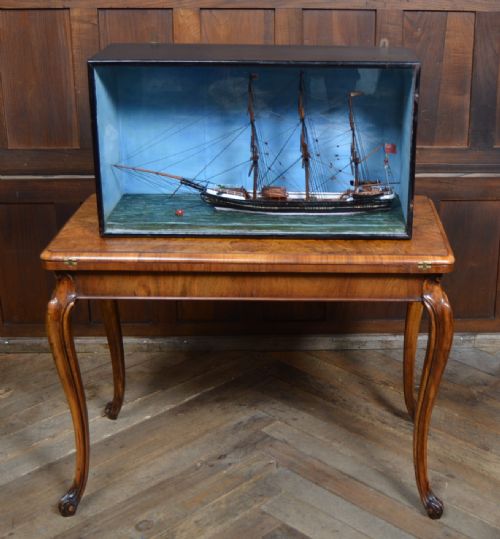
Alongside flat canvases, buyers frequently encounter maritime dioramas and cased model ships that combine painted backdrops with carved wooden hulls and textile rigging. These mixed media pieces share the same visual language as traditional marine paintings.
Materials and construction
Painters relied primarily on oil on canvas, applying pigment to stretched fabric to build up deep waters and pale skies. Giltwood and plain wood frames often enclose these works, protecting the edges and complementing the maritime subject matter.
Three-dimensional pieces utilise carved wood, fabric sails, and painted plaster or glass elements to create depth within shadow boxes and dioramas. Scratch-built models and training models incorporate meticulous manual work to replicate rigging and hull construction.
Sailors occasionally built intricate scratch models during long voyages, turning scraps of wood and thread into lasting miniature barques.
Variations in quality
Quality rests on the precision of the rigging and the accuracy of the vessel's proportions as rendered by the painter or model maker. Skilled hands capture the precise anatomy of a barque or schooner, whereas naive works prioritize bold presence over exact nautical detail.
The integration of the painted background with physical elements in dioramas distinguishes finer examples from simpler constructions. Preservation of the original canvas, glass, and wooden framing also shapes the character of each piece.
Reginald Arthur Borstel·Richard Ball Spencer·Henry Loos
The Three Masted Ship Painting Glossary
- Barque
- A sailing vessel with three or more masts having the fore-mast and main-mast square-rigged and the mizzen-mast fore-and-aft rigged. This rig allowed for efficient long-distance trade during the nineteenth century.
- Schooner
- A type of sailing vessel characterised by fore-and-aft rigs on all of-or two or more-of her masts. They were favoured for speed and manoeuvrability in coastal waters.
- Diorama
- A three-dimensional scene in which carved and painted models are set against a painted background inside a shallow case. Maritime examples often place a model ship before a painted coastal or stormy sky.
- Giltwood
- Wood that has been treated with gold leaf or a gold-coloured metallic finish. It appears frequently on the frames surrounding nineteenth-century marine canvases.
- Turneresque
- A style of painting that evokes the atmospheric, light-filled seascapes associated with J.M.W. Turner. It emphasises swirling water and dramatic weather over rigid topographical accuracy.
Three Masted Ship Painting: Frequently Asked Questions
What is a three masted ship painting?
A three masted ship painting is a marine artwork depicting large sailing vessels such as barques, schooners, and clippers upon the water. These pieces document maritime history through oil on canvas, sometimes accompanied by framed dioramas.
They record named vessels and anonymous craft alike, produced by artists working from the eighteenth century through the mid-twentieth century.
How do I date a marine painting?
Dating relies on the style of the canvas, the framing materials, and the specific rigging of the depicted vessels. Nineteenth-century works often feature distinct giltwood frames and specific naval or merchant ship types.
Details such as clothing on figures or the presence of steam barges in the background help narrow the period further.
Where were these maritime artworks displayed?
These paintings and dioramas traditionally hung in maritime offices, sea captains' homes, and merchant houses with ties to shipping. They served as proud records of specific voyages and commercial vessels.
Today, they suit studies, living rooms, and hallways with traditional or nautical decor schemes.
What is the difference between a painting and a diorama?
A traditional painting is a two-dimensional work executed in oil on canvas, showing depth through perspective and brushwork. A diorama adds physical depth by placing a carved wooden model ship against a painted background inside a glass-fronted case.
Both forms capture marine subjects but utilise different mediums to achieve realism.