



Maritime Ship Portrait
A maritime ship portrait captures the precise lines of a named vessel, offering a direct record of naval and merchant history.
Maritime Ship Portrait
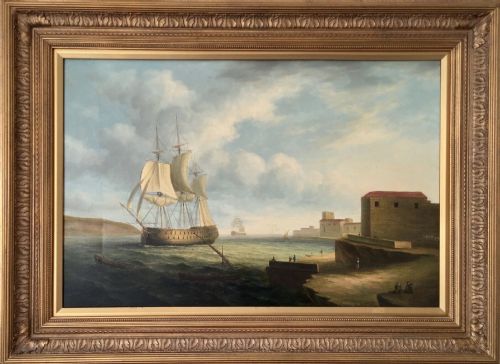
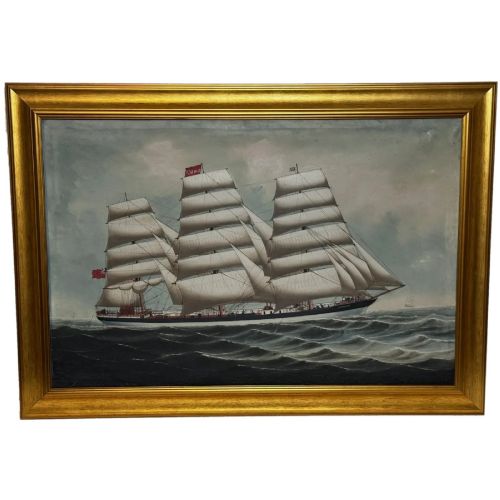
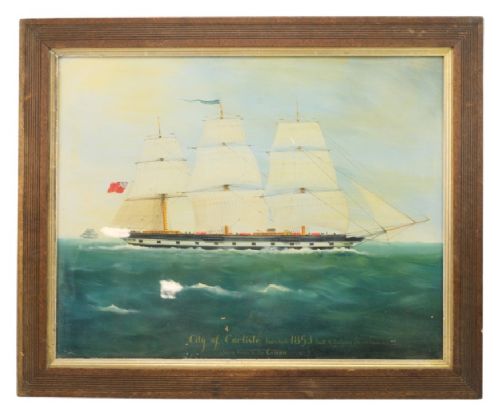
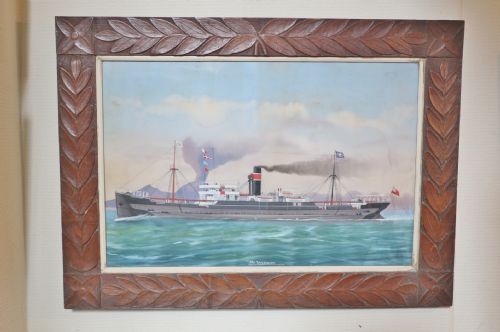
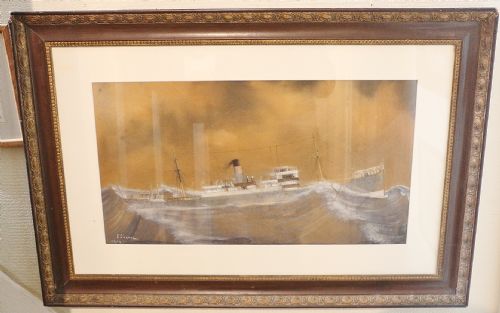
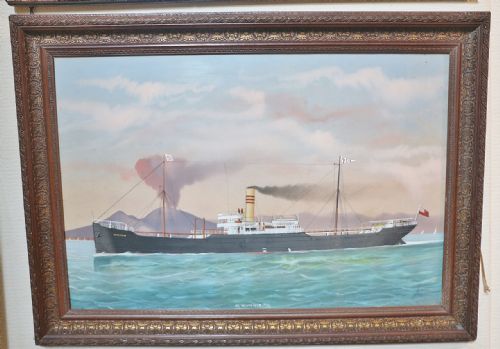
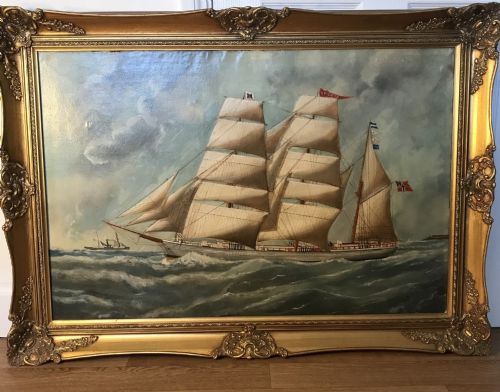
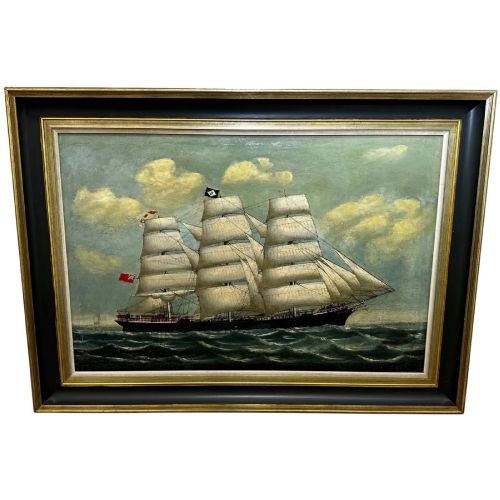
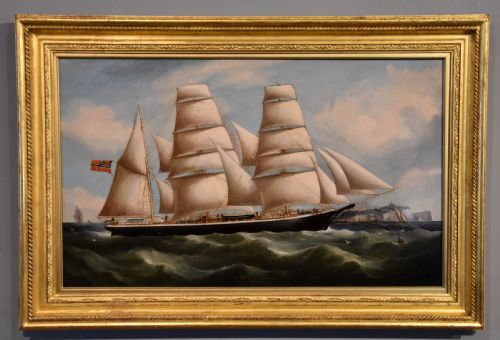
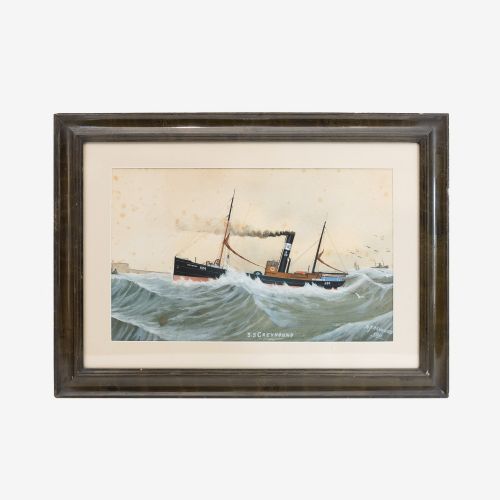
A maritime ship portrait focuses on specific named vessels, from nineteenth-century clippers and barques to early twentieth-century steamships and naval cruisers. These works document individual ships often shown under sail or steam, sometimes positioned near recognisable harbours, lighthouses, or coastlines.
The pieces on this page appear primarily as oil paintings on canvas or panel, alongside watercolours, gouache, charcoal, and framed photographs. They span periods from the Victorian and Edwardian eras through to the mid-twentieth century, reflecting changing maritime technologies and artistic styles.
Materials and techniques
Artists working on these subjects utilised oil paint on canvas or wooden panel, applying pigment to render the hull, rigging, and surrounding water with topographical accuracy. Watercolours and gouache on paper also appear frequently, often finished with fine detail to delineate flags and signal pennants.
Framing materials reflect the period of production, utilising original oak, giltwood, and gold leaf frames that complement the tonal palette of the maritime scene.
Sailors occasionally kept painted tributes to their vessels tucked inside lockers, ensuring the ship sailed on even after land intervened.
Assessing quality in ship portraits
Quality rests upon the accuracy of the vessel's rigging, hull proportions, and architectural details, which distinguish a specialist marine artist from a general topographical painter. Works by identified pierhead painters or documented practitioners show a deeper understanding of naval architecture and sea conditions.
The handling of light on water and the atmospheric rendering of stormy or calm seas contribute significantly to the visual success of the composition. Preserved original framing in wood or giltwood further enhances the integrity of the piece.
Reginald Arthur Borstel·Lai Fong·Richard B. Spencer·Alexander Harwood·Vincenzo D’Esposito·Joseph Heard·WF Mitchell·Samuel John Milton Brown·Johan Jens Neumann
The Maritime Ship Portrait Glossary
- Pierhead painting
- A genre of ship portrait created specifically to be sold to sailors or shipowners when a vessel arrived at a port. These works prioritize accurate details of the named ship over artistic license.
- Barque
- A sailing vessel with three or more masts where the foremast and mainmast are square-rigged and the mizzenmast is fore-and-aft rigged. This rig appears frequently in nineteenth-century maritime art.
- Gouache
- An opaque water-based medium used by artists to achieve matte, saturated colour fields. It often appears combined with watercolour in detailed works on paper.
- Panel
- A rigid support for painting, commonly made of wood, used by artists before canvas became universal. Wooden panels provide a smooth surface for fine linear work.
- Giltwood
- Wood carved and coated with gold leaf or metallic paint to create a decorative frame. These frames are period-specific accessories to many oil paintings.
Maritime Ship Portrait: Frequently Asked Questions
What is a ship portrait?
A ship portrait is a specialised painting or work on paper depicting a named vessel with technical accuracy. Artists focused on recording the specific rigging, hull design, and flag details of individual commercial or naval ships.
Unlike general seascapes, the primary subject is the vessel itself rather than the open ocean or coastline. These works served as records for captains, owners, and crews who felt a strong personal connection to their ships.
How can I tell who built the ship in the painting?
Many ship portraits include painted lettering on the hull, stern, or within the lower margin identifying the name of the vessel. Signal flags shown flying from the masts often spell out the ship's registration letters or international code.
Researching the named vessel in shipping registers or Lloyd's lists can reveal the shipyard, such as Harland and Wolff, and the year the ship was launched. Background landmarks like specific lighthouses or harbour walls also help pinpoint the location and era.
Where were pierhead paintings displayed?
Pierhead paintings were traditionally commissioned or purchased when a ship docked in port, often by the captain, officers, or crew members. They were intended to hang in domestic settings as a point of pride regarding a sailor's specific vessel.
Today, these works suit studies, living rooms, or hallways where traditional maritime or naval history is displayed. Their original frames often match the domestic interiors of the Victorian and Edwardian periods from which they originate.
How do I date a maritime painting?
Dating relies on a combination of the vessel type, artistic style, and materials used in the support and framing. The transition from wooden sailing barques to iron-hulled steamers and WWI-era vessels provides a clear chronological framework.
Signatures, inscriptions on the reverse, and stylistic markers associated with specific periods like the Edwardian era or mid-nineteenth century offer further evidence. Original oak or giltwood frames also provide clues to the approximate decade of production.