


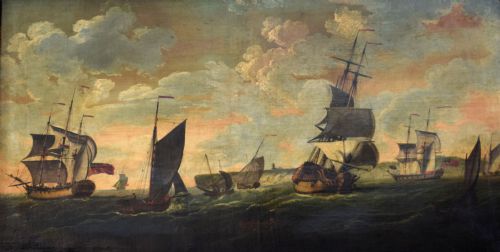
Georgian Marine Oil Painting
A georgian marine oil painting brings the drama of the age of sail onto a wall with turbulent seas and historic vessels.
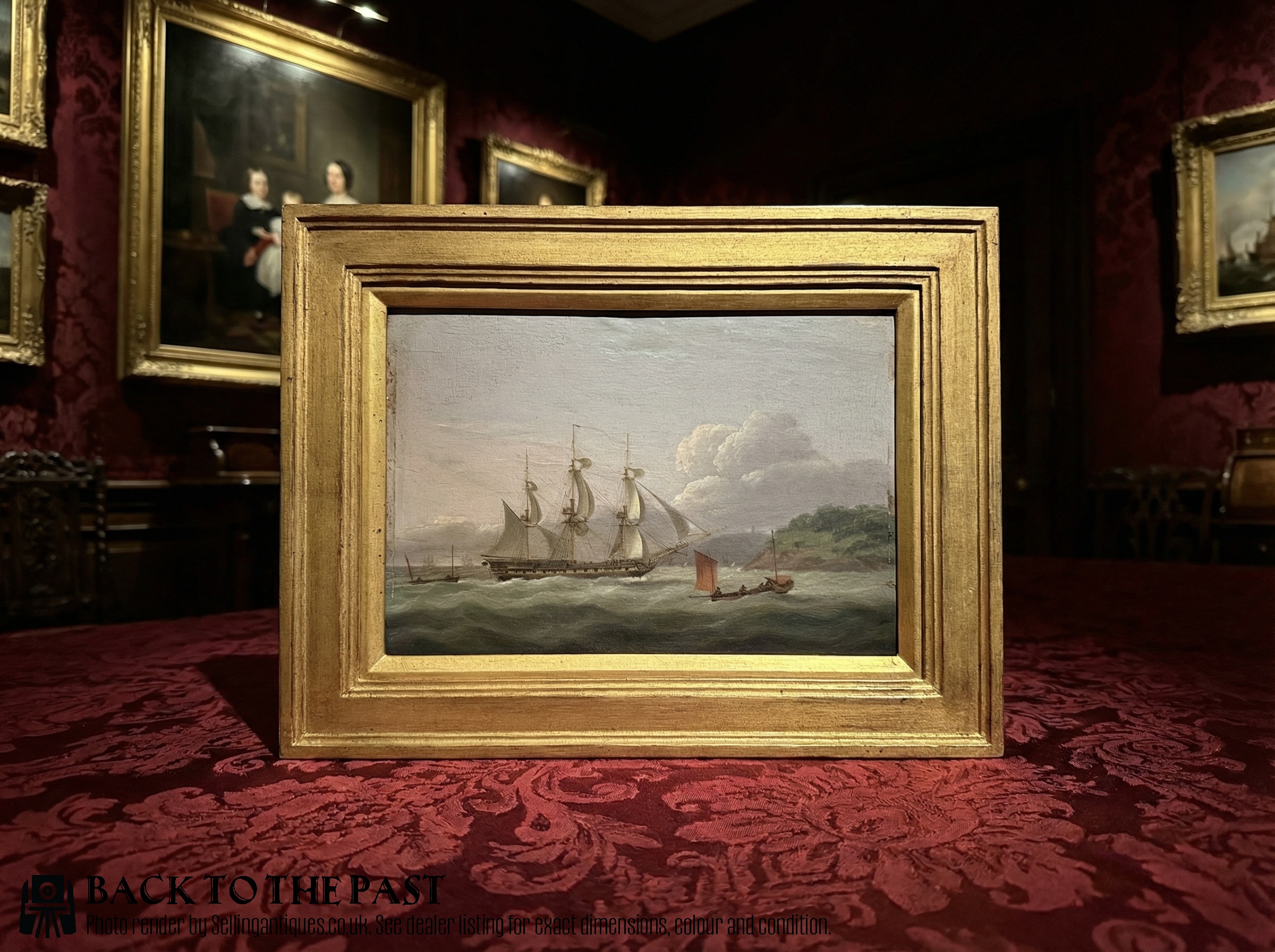
Georgian Marine Oil Painting
A georgian marine oil painting captures naval engagements, coastal shipping, and harbour scenes from the eighteenth and early nineteenth centuries. These works record historic events such as battles involving warships with raised sails and cannon, alongside quieter moments like fishing boats heading out in brisk winds. Buyers encounter pieces spanning the Georgian, Regency, and early nineteenth-century periods, often housed in period frames.
The subjects range from specific historical vessels like HMS Swift and Lord Howe on the HMS Queen Charlotte to broader coastal landscapes and harbour views. Canvases depict galleons, frigates, and smaller coastal craft navigating choppy waters under varied skies. Most examples on offer originate from the eighteenth and early nineteenth centuries, reflecting the maritime dominance and artistic output of the era.
How they were made
Artists painted these works using oil paint on stretched canvas, building up rich textures to render water, sky, and timber vessels. The technique relies on layered brushwork to create the shifting light on open seas and the intricate rigging of warships.
Many surviving examples retain their original or period frames fashioned from wood, gesso, and giltwood. These ornate surrounds complement the maritime subject matter and protect the edges of the canvas.
Cannon smoke drifts perpetually across these canvases, freezing naval gunpowder battles in eternal quiet.
What varies in quality
The sophistication of the vessel rigging and the atmospheric rendering of the water distinguish superior works from simpler decorative pieces. Master painters handled sea spray, wind, and cloud formations with a convincing sense of movement and depth.
The integration of the original frame also influences the overall character of the piece. Giltwood frames with period gesso ornamentation enhance the presence of an eighteenth-century canvas significantly.
George Morland·Francis Holman
The Georgian Marine Oil Painting Glossary
- Marine painting
- Artwork depicting ships, sea views, coastal landscapes, and naval engagements. This genre gained immense popularity during the Georgian period alongside Britain's maritime expansion.
- Giltwood
- Wood carved and coated with gold leaf or a gold-coloured finish. It provides a bright, reflective border typical of fine Georgian picture frames.
- Frigate
- A fast, medium-sized warship with three masts used extensively during the eighteenth century. These vessels frequently appear in naval battle scenes and coastal views.
- Gesso
- A plaster-like mixture applied to wooden frames before gilding. It provides a smooth base for intricate moulded decoration.
Georgian Marine Oil Painting: Frequently Asked Questions
What subjects appear in these paintings?
Paintings from this era depict naval battles, warships with raised sails, coastal shipping, and harbour scenes with figures. Artists also recorded specific vessels and historical engagements involving figures like Lord Howe.
Scenes range from dramatic sea battles with cannon fire to quieter compositions showing fishing boats heading out into brisk winds.
How do I date a marine painting?
Dating relies on the style of the vessel rigging, the costume of any coastal figures, and the construction methods of the canvas and stretcher. Period frames in giltwood and gesso also offer reliable clues to the era of creation.
Stylistic shifts between mid-eighteenth-century works and later Regency pieces help narrow the timeframe.
Where should I hang a marine painting?
These works suit traditional reception rooms, studies, or hallways where their rich oil pigments can catch natural light. Pairing them with period furnishings creates a cohesive historical interior.
Ensure the canvas hangs away from direct sunlight and damp environments to protect the oil paint and giltwood frame.
What materials make up the frames?
Period frames are typically constructed from wood finished with gesso and giltwood. The gesso allows for intricate moulded ornamentation along the borders.
These traditional materials give the frames their characteristic weight and golden sheen.