




Traditional Maritime Wall Decor
Traditional maritime wall decor brings coastal history into a room through oil paintings, watercolours, and wooden ship components.
Traditional Maritime Wall Decor
Traditional maritime wall decor encompasses marine oil paintings, watercolours, and ship fittings designed for interior display. Buyers looking for these pieces will encounter Victorian coastal scenes, maritime realism, and folk art interpretations.
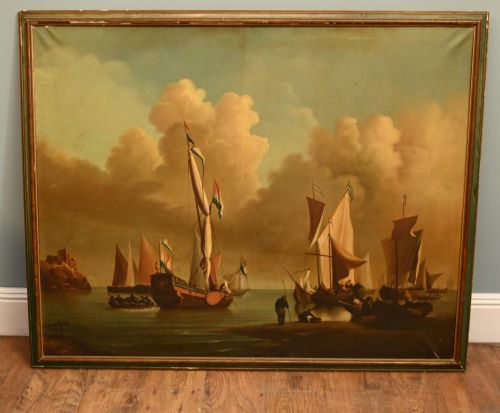
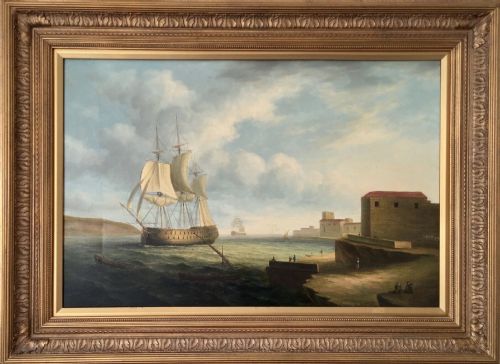
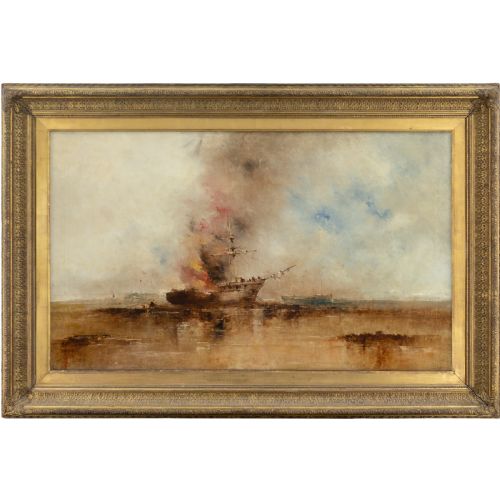
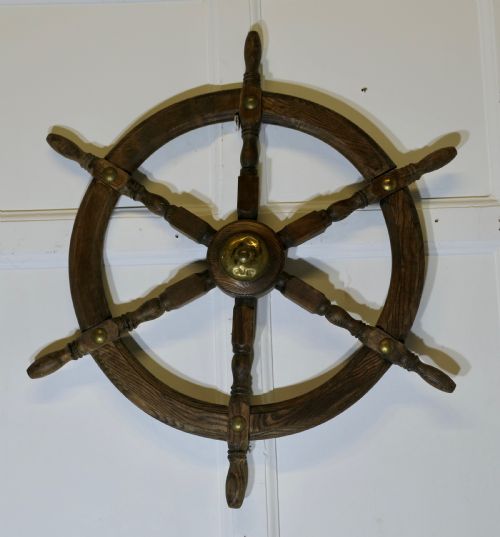
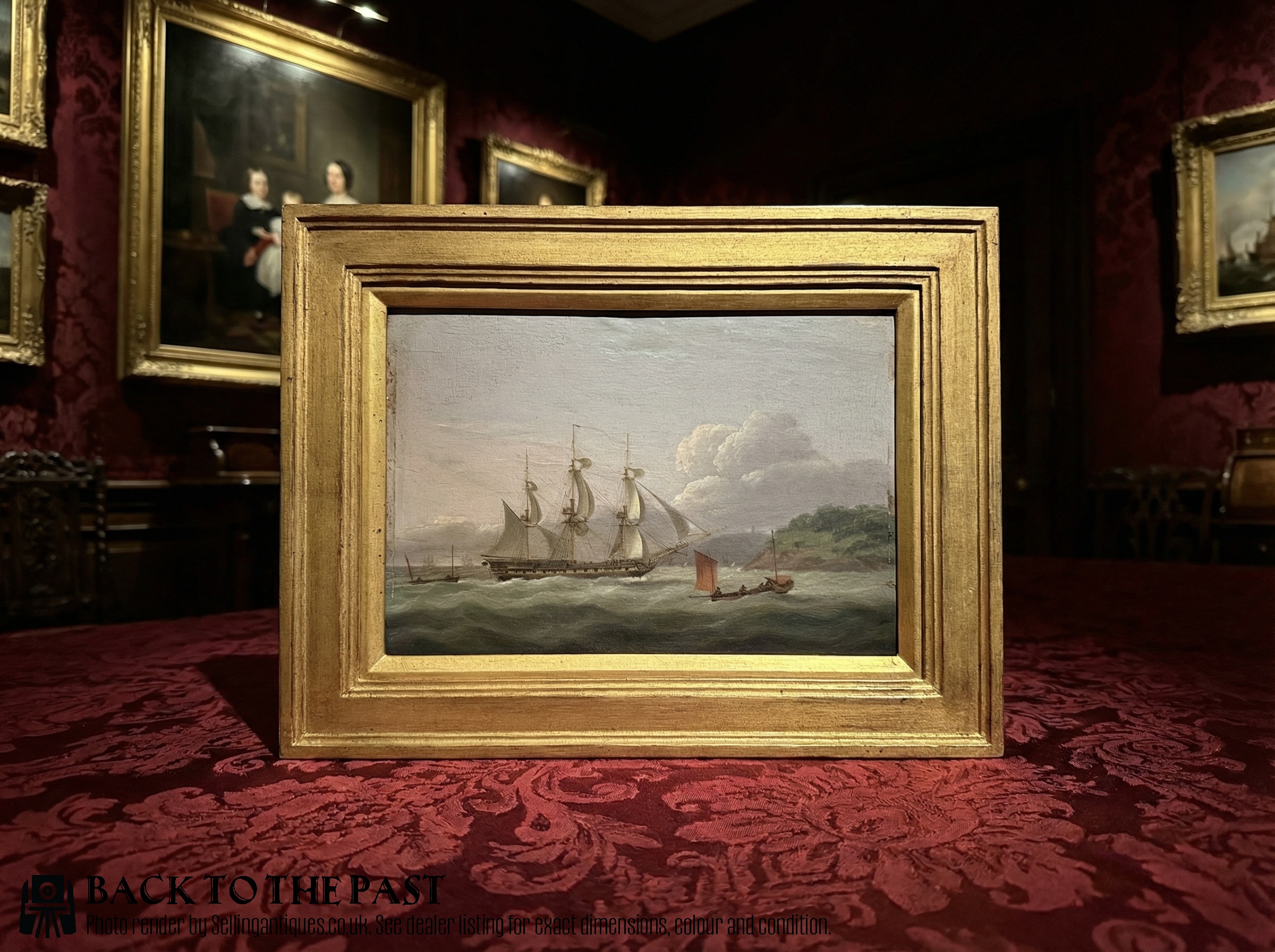
The most common forms on this page are oil paintings on canvas or panel depicting sea battles, harbour views, and warships. Alongside these pictorial works are functional wooden objects such as ship's wheels and tillers.
Originating from periods spanning the eighteenth century through to the mid-twentieth century, these items reflect British coastal heritage and naval history. Each piece offers a tangible link to seafaring traditions through varied artistic mediums.
Materials and construction methods
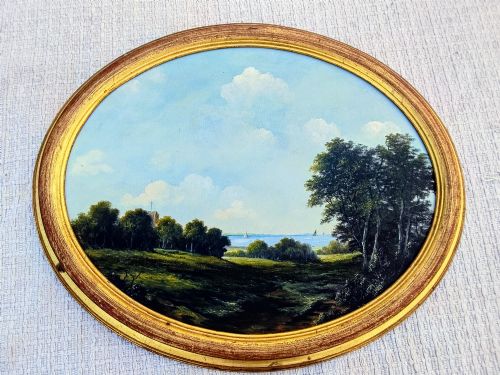
The artwork relies on oil paint applied to canvas, panel, or board, often set within gilded wood or plain oak frames. Watercolours on paper provide a lighter alternative for depicting ships and lochs.
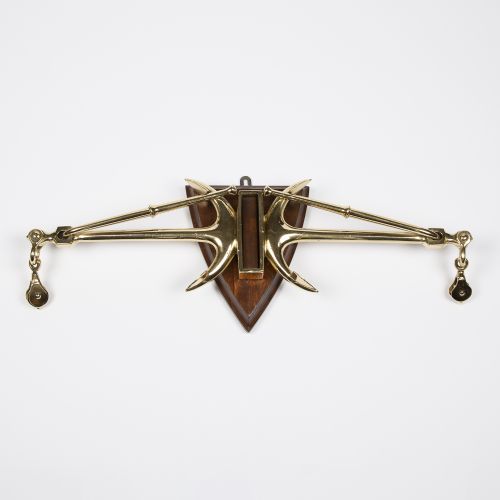
Three-dimensional wall elements utilise robust timbers such as oak, sometimes finished in historic paint schemes like deep red. Brass components and iron fittings frequently accompany these wooden structures for operational authenticity.
Listings feature oil paintings on canvas, panel, and board alongside watercolours on paper, dating from the eighteenth century to the mid-twentieth century.
Distinctions in quality and execution
Superior execution in the paintings is evident in the handling of maritime atmospheric conditions, vessel rigging accuracy, and coastal light. Weaker examples show stiffer composition and less detailed rendering of sea and sky.
For wooden artefacts such as ship's wheels and tillers, quality lies in the integrity of the timber, original surface patination, and the honesty of wear. Pieces retaining uncompromised historic paint surfaces stand apart from heavily restored or altered items.
James Hardy·William McAlpine·Dion Pears·Micheal Matthews·James Kinnear
The Traditional Maritime Wall Decor Glossary
- Gilded wood
- Wood coated with a thin layer of gold leaf or gilt pigment. This finish was commonly applied to framing for marine paintings to enhance display.
- Panel
- A flat solid surface used as a support for oil painting instead of canvas. Wood panels were frequently utilised in nineteenth-century marine works.
- Watercolour
- A painting method where pigment is suspended in a water-based solution on paper. These works are typically mounted behind glass with protective framing.
- Ship's wheel
- A steering mechanism connected to the ship's rudder. Smaller surviving examples are often adapted for wall mounting as interior decor.
- Tiller yoke
- A horizontal bar fitted to the head of a boat's rudder for steering. These wooden marine artefacts are collected for their sculptural qualities on walls.
Traditional Maritime Wall Decor: Frequently Asked Questions
How do I hang a heavy ship's wheel?
Heavy wooden ship's wheels require secure anchorage into wall studs using appropriate heavy-duty fixings. Distributing the weight evenly prevents strain on the historic timber.
Ensure the wall bracket supports the central hub rather than relying solely on the outer handles. Consulting a professional installer is advisable for larger nineteenth-century examples.
Are oil paintings on canvas sensitive to light?
Oil paintings on canvas are susceptible to damage from direct sunlight and extreme humidity fluctuations. Displaying them away from south-facing windows preserves the integrity of the oil pigments and canvas support.
Maintaining a stable indoor climate prevents the canvas from slackening and protects the surrounding gilt wood frame from cracking.
How do I date a marine oil painting?
Dating relies on stylistic evidence, artist signatures, framing techniques, and the type of vessel depicted. Naval architecture and rigging styles changed noticeably between the eighteenth and twentieth centuries.
Examination of the canvas weave, stretcher construction, and panel preparation provides further chronological markers for Victorian and earlier works.
What is the difference between an oil painting and a watercolour?
Oil paintings use pigments bound in a drying oil, applied to canvas or wood panel with greater textural depth. They are robust enough to hang without glass protection.
Watercolours use water-soluble pigments on paper and require framing behind glass to prevent moisture and atmospheric damage to the paper support.
Can I clean historic painted wood surfaces?
Historic painted surfaces require minimal intervention to preserve original patination and pigment layers. Dusting gently with a soft, dry brush is generally sufficient for regular maintenance.
Moisture and chemical cleaners should be avoided on painted items like red ship's wheels to prevent lifting or stripping the aged finish.